
8 Best Motorcycle Tires for Wet Roads: Rain-Tested Picks That Grip
 Jake Miller
9 min read
Jake Miller
9 min read
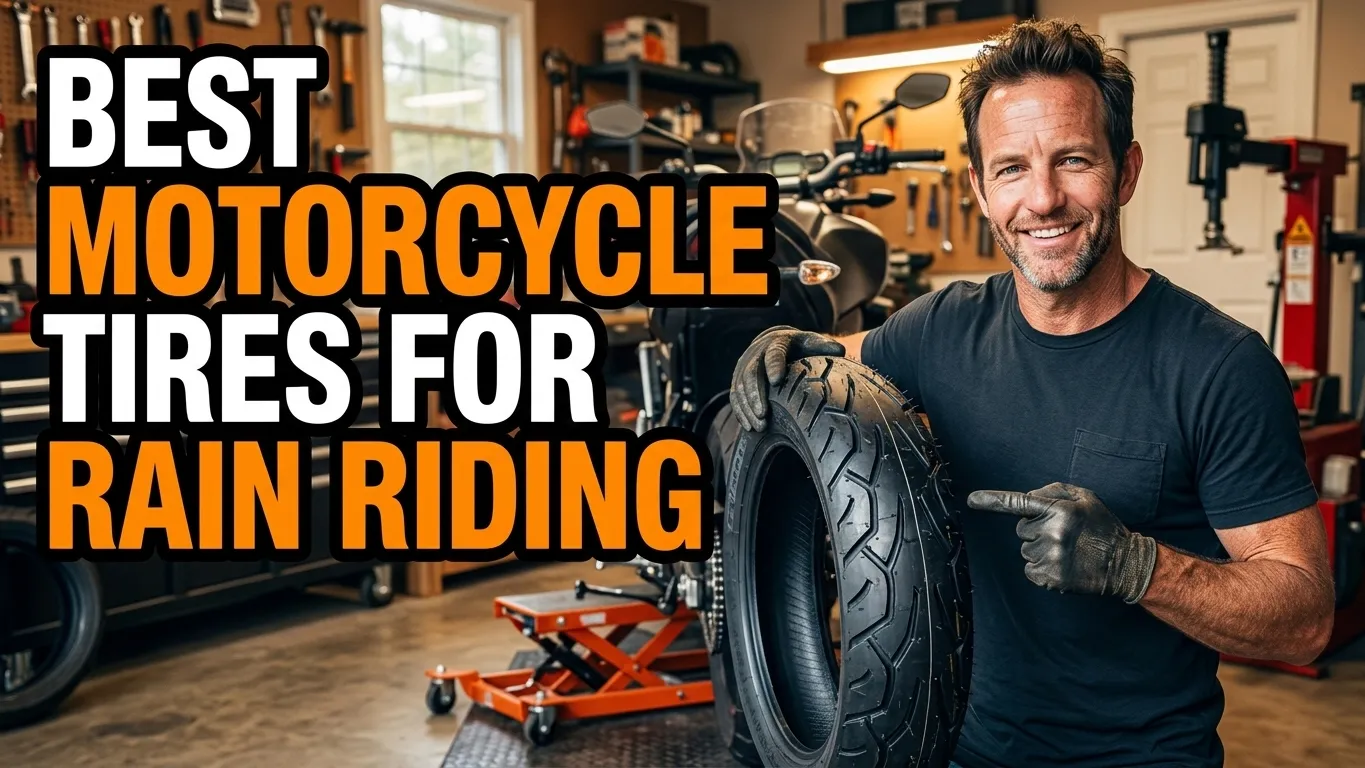
I’ve been caught out by rain more times than I can count. A sunny morning turns into a wet commute, a mountain pass disappears into cloud, or a touring day ends in a downpour on a slick two-lane road. In every one of those moments, my tires decided whether I felt calm or sweaty-palmed.
Over the years I’ve ridden on a lot of rubber, and I’ve learned that wet-weather grip isn’t magic. It comes down to compound chemistry, tread design, and how well a tire keeps its shape as it wears. Below are the eight tires I’d trust most when the sky opens up, with the strengths and compromises of each.
- The Michelin Road 6 is my top all-rounder for wet grip and longevity.
- Silica-rich compounds and well-designed grooves matter more than any marketing claim.
- Cruisers, adventure bikes, and sport bikes all have excellent rain-capable options now.
- Tire age, wear, and pressure affect wet grip as much as the model you choose.
How I Judge a Good Rain Tire
Before the list, here is what I look for. A rain-capable tire needs a compound that stays pliable at low temperatures. Silica is the key ingredient, because it keeps rubber grippy when the road is cold and wet.
Tread pattern is the second factor. Grooves have to move water out from under the contact patch quickly, or the tire hydroplanes. I also care about how the tire behaves as it wears, because a tire that’s great at 100 percent tread and sketchy at 40 percent isn’t much use in real life.
Finally, I weigh feel. A rain tire should talk to me. When grip is shrinking, I want to feel it through the bars and pegs instead of getting a surprise.
1. Michelin Road 6 — Best Overall Rain Tire
If you made me pick one tire for a bike that sees mixed weather, the Michelin Road 6 would be it. I’ve ridden it through steady drizzle, heavy downpours, and cold mornings with damp tarmac, and it has never given me a nasty moment.
What Makes It Special
The Road 6 uses a silica-rich compound and Michelin’s XST Evo+ grooves, which are designed to channel water away efficiently, even as the tire wears. The GT version adds a dual-compound rear for sport-touring bikes that carry luggage and a passenger.
Expect to pay roughly $280 to $380 for a pair, depending on size. That’s not cheap, but the Road 6 lasts well, so the cost per mile is fair. It also works nicely on heavier machines, which makes it a strong pick when I’m looking at the best motorcycle tires for touring bikes.
Where It Falls Short
It’s not a track tire, and I wouldn’t ask it to be. If you ride aggressively on dry canyon roads, you may want something stickier at extreme lean angles.
2. Pirelli Angel GT II — Best for Loaded Touring in Wet Climates
The Pirelli Angel GT II is my pick when I’m loading up panniers and heading somewhere with unpredictable weather. It has a wide, stable footprint and a confidence-inspiring wet feel.
Pirelli built it with a multi-zone rear compound, harder in the center for mileage and softer on the shoulders for lean grip. The tread carries plenty of sipes and grooves to disperse water. Pricing typically lands between $290 and $390 per pair.
What I appreciate most is how progressive it feels. Even on wet painted lines, it communicates clearly before it lets go. That predictability is what I want from any tire when conditions turn bad.
Things to Know
It prefers being warm, so give it a few minutes on cold mornings before pushing it. Other than that, I have few complaints.
3. Metzeler Roadtec 02 — Best for Cold, Wet Roads
I recommend the Metzeler Roadtec 02 to anyone who rides in cooler climates, like the Pacific Northwest or northern Europe. Its compound warms up quickly and stays tacky on chilly, damp pavement.
Metzeler leaned heavily into silica and a refined tread layout. The rear uses a multi-compound construction, while the front is tuned for sharp turn-in. A pair usually costs between $260 and $350.
In my experience it’s one of the most reassuring tires in light rain. It also handles standing water well, with minimal vague or floating sensations at highway speeds.
4. Dunlop Roadsmart IV — Best Value Sport-Touring Option
Not everyone wants to spend top dollar, and the Dunlop Roadsmart IV shows that you don’t have to. It’s typically priced from roughly $240 to $330 per pair, yet it competes with tires that cost more.
Dunlop designed the Roadsmart IV with a multi-tread rear and a silica-heavy formula. The result is strong wet grip combined with impressive mileage. For daily commuters who ride rain or shine, that mix is hard to beat.
If you’re after the best tires for small motorcycle setups, the same principle applies: pick a tire with a proper wet compound in your size, even if the bike is modest. Smaller bikes have less weight pushing the tire into the road, so good rubber matters even more.
5. Bridgestone Battlax Hypersport S22 — Best for Sport Bikes in the Wet
Sport bike riders often assume wet grip means sacrificing dry performance. The Bridgestone Battlax Hypersport S22 disproves that. I’ve ridden it in sudden showers on a fast bike and felt secure the whole time.
It uses a pulse groove design that improves water evacuation, plus a compound that balances dry stickiness with wet-weather pliability. Pricing generally runs $270 to $370 per pair.
Who Should Choose It
This is the tire for riders who enjoy spirited road riding but won’t park the bike at the first cloud. It’s not meant for heavy touring loads, but for lightweight sport machines it’s a great option.
6. Continental ContiRoadAttack 4 — Best for Mixed Weather Sport Riding
The Continental ContiRoadAttack 4 has a loyal following, and I understand why. Continental has a reputation for outstanding wet grip, and this tire carries that tradition forward.
The tread design pairs a sporty profile with generous siping, helping it clear water without feeling vague. Expect to spend roughly $250 to $340 for a set. It warms up quickly, which I appreciate on short rides when the weather is unsettled.
If you ride a naked bike or sport tourer and want the best of both worlds, the ContiRoadAttack 4 is worth a serious look. It rewards smooth inputs and feels planted on wet asphalt.
7. Michelin Commander III Touring — Best for Cruisers and Baggers
Cruiser riders deserve rain-ready rubber too. The Michelin Commander III Touring is designed for heavy bikes with high torque and wide rear tires, and its wet performance is a big step above older cruiser designs.
It features a tread pattern with optimized grooves and a compound built for both longevity and wet grip. A pair typically costs around $300 to $420, depending on size. I think it makes a superb choice for baggers and tourers.
For anyone researching the best riding motorcycle tires for harley road king, this is one I’d put near the top of the shortlist. It gives a heavy touring cruiser the wet confidence it needs on long highway days.
8. Metzeler Tourance Next 2 — Best for Adventure Bikes on Wet Pavement
Adventure bikes spend plenty of time on wet asphalt, and the Metzeler Tourance Next 2 is built for that reality. It’s a road-biased dual-sport tire that grips well in the rain while still tolerating gravel and dirt roads.
Its tread pattern is designed to evacuate water while keeping a stable feel on loose surfaces, and the compound is silica-enhanced for wet traction. Pricing lands between roughly $250 and $350 per pair.
Know Its Limits
This is not a true off-road tire. If your riding is mostly dirt, look at the best all terrain motorcycle tires for off road riding instead, and for sandy conditions check the best all terrain motorcycle tires for desert riding. But for adventure bikes that live mostly on pavement, the Tourance Next 2 is excellent in the wet.
How to Get the Most From Any Rain Tire
A great tire only performs if you take care of it. Here are the habits that have saved me the most grief over the years.
Check Pressure Often
Pressure changes with temperature, and wet seasons are often cooler. I check mine weekly and always when cold. Follow the pressures listed on your bike’s swingarm or in the manual, not a number from an internet forum.
Respect Tire Age
Rubber hardens over time, even on tires that look fine. I replace mine around five years from the date code, regardless of tread depth. An old tire will never match the wet grip of a fresh one.
Ride Smoothly
Even the best tire can’t overcome abrupt inputs. In the rain I brake earlier, squeeze the lever progressively, and avoid sudden throttle changes. I also treat painted lines, metal covers, and tar snakes as ice rinks.
Watch for Wear
Wet grip falls off quickly once a tire is nearly worn. If the grooves are shallow or the center looks flat, I replace it early. Saving a few dollars isn’t worth a slide.
Choosing the Right Tire for Your Bike
The best tire depends on what you ride and how. For sport-touring and commuting, I lean toward the Michelin Road 6 or Dunlop Roadsmart IV. For heavy touring, the Pirelli Angel GT II is hard to ignore.
For cruisers, the Michelin Commander III Touring is my go-to. For adventure bikes on mostly paved roads, the Metzeler Tourance Next 2 fits nicely. And for sportier machines, the Bridgestone S22 and Continental ContiRoadAttack 4 both deliver.
Whatever you choose, buy from a reputable dealer and have the tires mounted and balanced properly. A great tire installed badly will never perform to its potential.
Final Thoughts From the Saddle
Rain riding doesn’t have to be stressful. With the right tires, good habits, and a little patience, wet roads become just another kind of ride. I’ve come to enjoy the quiet focus that a rainy day demands.
If I had to start from scratch tomorrow, I’d put a set of Michelin Road 6 tires on my bike and head out without worry. Whichever tire you pick from this list, you’ll be starting with a serious advantage, and that’s worth a lot when the sky turns gray.
Frequently Asked Questions
Do I need special tires to ride in the rain?
You don’t need dedicated rain tires, but you do need a modern silica-rich compound and a tread pattern that evacuates water well. Most current sport-touring, touring, and adventure tires are designed to do exactly that.
What tire pressure is best for riding in the rain?
Stick to the manufacturer’s recommended cold pressure. Running pressures too low or too high on wet roads can reduce the contact patch’s effectiveness, so check pressure weekly during wet seasons.
How do I know when my tires are too worn for wet roads?
Wet grip drops off long before a tire is legally bald. Once the tread grooves are close to the wear indicators, or the center of the tire looks squared off, replace it, especially if you ride in the rain often.
Are sport-touring tires better than sport tires in the rain?
Generally yes. Sport-touring tires use deeper grooves and compounds tuned for cooler, wetter conditions, while pure sport tires prioritize dry grip at high lean angles. Some modern sport tires, like the Michelin Power 5, are very capable in the wet too.

Related Articles

8 Best Cruiser Motorcycle Tires for Street Riding: My Real-World Picks
I rank the 8 best cruiser motorcycle tires for street riding, from Michelin to Pirelli, with real notes on grip,…
Jake Miller
9 min read

8 Best Michelin Motorcycle Tires for Every Riding Style (Tested Picks)
Looking for the best Michelin motorcycle tires? I break down my 8 favorite models for sport, touring, adventure, cruiser, and…
Jake Miller
9 min read

Yamaha Tire Pressure Guide: The Right PSI for Safer, Smoother Rides
Learn the right tire pressure for your Yamaha, from sportbikes to cruisers and dirt bikes. Check, adjust and maintain PSI…
Jake Miller
9 min read