
8 Best Motorcycle Tires for Single Track: Grip, Durability and Trail Tested Picks
 Jake Miller
9 min read
Jake Miller
9 min read
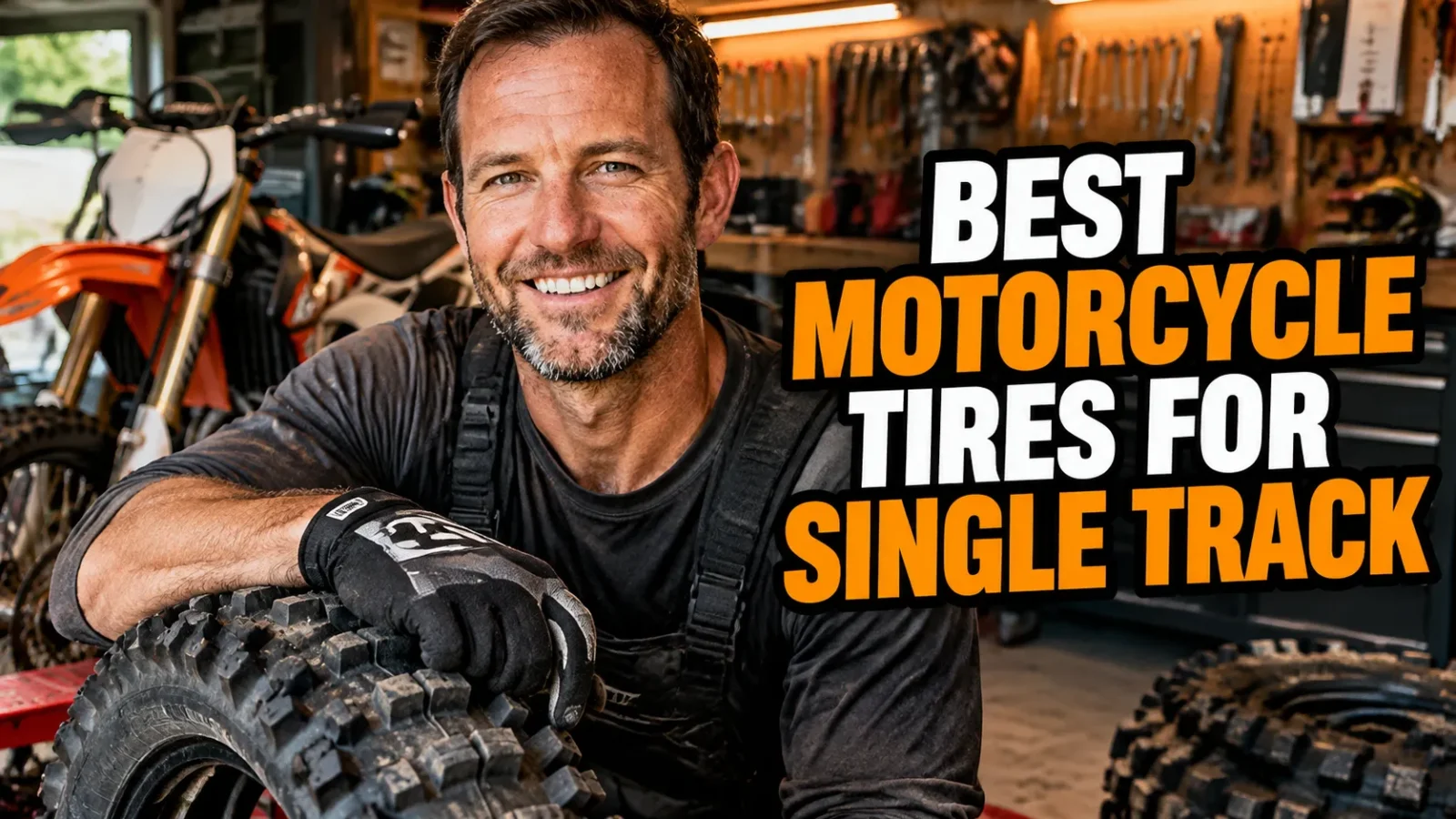
I’ve spent more weekends than I can count threading my bike through tight, rooty, rocky single track, and I’ll tell you this: nothing changes how a bike feels on the trail faster than a tire swap. The right rubber turns a sketchy, skittering ride into one where you trust the front end and the rear hooks up on every climb.
Over the years I’ve run, borrowed and wrecked on a lot of tires. This list is built from my own experience and the patterns I see across the riders I trail ride with. I’ve included options for dirt bikes, enduro rigs and dual sport machines, so you can pick the one that matches your terrain, bike and budget.
- The Dunlop Geomax MX33 is my best all-around pick for mixed single track.
- For rocks, roots and hard-pack, I reach for the Michelin StarCross 5 Medium or Pirelli Scorpion MX32 Mid Soft.
- Dual sport riders get the best balance from the Dunlop D606 or Continental TKC 80.
- Terrain matching matters more than brand, so pick your compound based on your dirt.
1. Dunlop Geomax MX33 — Best All-Around Single Track Tire
If I could only run one tire on varied trails, it would be the Dunlop Geomax MX33. It’s designed as an intermediate-to-soft terrain tire, and in my experience it hooks up well in everything from loam to packed dirt with a few embedded rocks.
The MX33 has a wide, well-spaced knob pattern that clears mud nicely and bites on corner entry. Prices typically run around $70 to $110 for the front and $90 to $140 for the rear, depending on size. That’s fair for a tire this versatile.
Why I Like It
The front MX33 tracks predictably when I lean it over, which is exactly what I want on off-camber trails. The rear drives well on climbs without feeling nervous.
The tradeoff is wear. If you spend a lot of time on hard rocky ground, the knobs will round off faster than a harder compound would.
2. Michelin StarCross 5 Medium — Best for Hard-Pack and Mixed Terrain
The Michelin StarCross 5 Medium is my go-to when the trail is firm and a bit slippery on top. It’s built for intermediate to hard terrain, with a pattern that stays stable when the dirt gets dry and dusty.
What stands out to me is how the StarCross 5 feels on edge. The front carries a precise, planted feel, and the rear delivers consistent forward bite on hard surfaces where softer tires tend to squirm.
Who It Suits
This is a great fit if you ride hard-packed desert or rocky mountain trails. Expect to pay roughly $75 to $120 for the front and $90 to $150 for the rear.
If your trails are deep, soft and loamy, step up to the soft version of the same family instead.
3. Pirelli Scorpion MX32 Mid Soft — Best for Loamy, Changing Conditions
The Pirelli Scorpion MX32 Mid Soft is one of the tires I recommend most often to friends who ride east of the Rockies, where trails flip from loam to mud to roots in a single mile. The Mid Soft version is tuned for just that kind of variety.
I like how the Scorpion MX32 gives me a forgiving feel when traction suddenly changes. The knob layout grips well on both braking and acceleration, so I’m not surprised mid-corner.
Durability Notes
It’s priced similarly to the Michelin and Dunlop options, usually landing between $80 and $150 per tire. Wear is reasonable for a soft-leaning tire, though I wouldn’t use it on long pavement connectors.
4. Bridgestone Battlecross E50 Enduro — Best Dedicated Enduro Tire
The Bridgestone Battlecross E50 Enduro is built specifically for off-road enduro and technical trail riding. The casing is designed to handle rocks and roots without feeling stiff, which is a big deal when you’re picking lines through nasty terrain.
On my rear wheel, the E50 gives a confident, controlled feel at lower speeds. That matters on tight single track where I’m constantly feathering the clutch and balancing the bike.
Real-World Performance
It works well on hard and intermediate terrain, and it holds up better than most soft-compound tires over a season. Pricing generally sits around $90 to $160 depending on the size you need.
If you’re after the best grip tires for motorcycle riding on technical trails, tires like this one belong in the conversation. For a broader look at traction-focused choices, check out my guide to the best grip tires for motorcycle.
5. Dunlop D606 — Best Dual Sport Tire for Mellow Single Track
Not everyone rides a dedicated dirt bike, and the Dunlop D606 has been a staple for dual sport riders for years. It’s a DOT-approved knobby, so you can ride to the trailhead on pavement and still have real traction once you hit the dirt.
I’ve found the D606 works best on dry, firm trails with moderate rocks. In deep mud or slick roots it’s out of its element, and I wouldn’t pretend otherwise.
Street Manners
The upside is predictable road manners and a long life compared with a pure off-road tire. Expect around $70 to $120 per tire, which is a good value for a bike that does double duty.
If your riding includes a lot of pavement, you may also want to compare it with options in my roundup of the best brand for motorcycle tires. Here’s my take on the best brand for motorcycle tires if you’re unsure who to trust.
6. Continental TKC 80 — Best for Adventure Bikes on Rugged Trails
The Continental TKC 80 is the tire I see on a lot of heavier adventure bikes that venture off pavement. Its aggressive, widely spaced blocks dig into loose dirt, gravel and mud far better than a typical 50/50 tire.
On a heavy machine, I appreciate how the TKC 80 stays stable under load. It doesn’t feel flighty when I’m carrying luggage or navigating a rutted climb.
Tradeoffs I Notice
Road noise and wear are the cost of that aggressive tread. On pavement it hums, and mileage will be lower than a street-biased tire.
Prices typically range from $100 to $180 per tire depending on the size, so budget accordingly.
7. Metzeler Karoo 3 — Best Long-Lasting Trail and Adventure Tire
The Metzeler Karoo 3 gets my vote for riders who want solid dirt performance without sacrificing too much tire life. It’s a street-legal dual purpose tire that leans more toward off-road than a typical hybrid.
In my experience, the Karoo 3 feels especially good on gravel roads and moderate single track. It has a stable, reassuring character that lets me relax a bit on long rides.
Where It Fits
It’s not a mud tire, and it won’t match a pure enduro knobby in technical sections. But for mixed-use adventure riding, it’s a smart middle ground, usually priced at roughly $100 to $190 per tire.
If your rides include twisty pavement on the way in, my notes on the best motorcycle tires for cornering offer some helpful context on how profile and compound affect lean-angle confidence.
8. Kenda Washougal II K775 — Best Budget Pick
The Kenda Washougal II K775 is the budget-friendly tire I recommend to newer riders or anyone who burns through rubber quickly. It’s a straightforward knobby that offers decent traction at a price that doesn’t sting.
I won’t claim the Washougal II matches premium tires for feel or edge grip. But for casual trail riding and learning, it gets the job done, typically for around $45 to $85 per tire.
Honest Expectations
You’ll notice it’s less refined on hard, rocky terrain, and the compound can feel greasy when things get damp. Still, for the money, it’s a practical way to get fresh knobs on your bike.
How I Choose the Right Single Track Tire
Terrain is the first thing I consider. Soft loam and mud want soft or intermediate-soft compounds with taller, more widely spaced knobs. Hard-pack, rocks and roots favor intermediate-hard tires with more supportive knobs.
Next, I think about my bike and riding style. A heavier adventure bike needs a stiffer casing and load rating, while a lightweight dirt bike benefits from a flexible casing that conforms to obstacles.
Tire Pressure and Setup
Pressure matters almost as much as the tire itself. I typically start around 12 psi on rocky trails and adjust a couple of pounds either way. Too low and you’ll invite pinch flats; too high and the bike skips instead of hooking up.
Consider heavy-duty tubes, tire liners or mousses if you ride rocky terrain. A cheap tube can ruin an otherwise perfect setup.
Heat, Climate and Season
Climate affects compound performance too. In hot, dry regions, harder compounds resist wear and stay predictable. If you ride in high temperatures, my guide to the best motorcycle tires for az heat explains what to look for in extreme conditions.
Mixing Dirt and Pavement
If your bike is also a commuter or weekend canyon carver, consider how much asphalt you’ll see. Some riders even keep a second wheelset for street use. And if you ever dabble in circuit riding on a different bike, take a look at my picks for the best motorcycle street dot tires for track days, since the priorities there are completely different.
Final Thoughts From My Trail Experience
After years of trial and error, my conclusion is simple: there’s no single perfect tire, but there is a perfect tire for your trails. The Dunlop Geomax MX33 is my easiest recommendation for most riders, while the Michelin StarCross 5 Medium and Bridgestone Battlecross E50 shine on harder, more technical ground.
If you ride a dual sport, the Dunlop D606 and Metzeler Karoo 3 balance dirt capability with real-world road manners. And if the budget is tight, the Kenda Washougal II keeps you riding without breaking the bank.
Whatever you choose, check your pressure, inspect your tires often, and be honest about the terrain you ride. Fresh knobs matched to the dirt will make you faster, safer and a lot more confident out there.
Frequently Asked Questions
What tire pressure should I run on single track?
Most riders do well between 10 and 14 psi on tight, rocky trails, depending on weight, tire casing and whether you run mousses or tubes. Lower pressure improves traction but raises the risk of pinch flats, so adjust in small steps.
Can I use a dual sport tire on single track?
Yes, for mellow to moderate trails. Tires like the Dunlop D606 work well on dry, hard-packed trails, but they give up traction in mud, roots and loose rock compared with a true knobby.
How often should I replace single track tires?
It depends on terrain and how much pavement you ride. Many riders replace a rear knobby every 300 to 800 miles, or sooner once the knobs round off and the tire stops hooking up.
Soft, medium or hard terrain tires: which should I choose?
Match the tire to your dirt. Soft and intermediate compounds suit loamy or muddy trails, while intermediate-hard options handle hard-pack and rocks better and last longer.

Related Articles

8 Best Cruiser Motorcycle Tires for Street Riding: My Real-World Picks
I rank the 8 best cruiser motorcycle tires for street riding, from Michelin to Pirelli, with real notes on grip,…
Jake Miller
9 min read

8 Best Michelin Motorcycle Tires for Every Riding Style (Tested Picks)
Looking for the best Michelin motorcycle tires? I break down my 8 favorite models for sport, touring, adventure, cruiser, and…
Jake Miller
9 min read

Yamaha Tire Pressure Guide: The Right PSI for Safer, Smoother Rides
Learn the right tire pressure for your Yamaha, from sportbikes to cruisers and dirt bikes. Check, adjust and maintain PSI…
Jake Miller
9 min read