
First-Class Sport Touring Motorcycle Tires: What I Actually Run and Why
 Jake Miller
7 min read
Jake Miller
7 min read
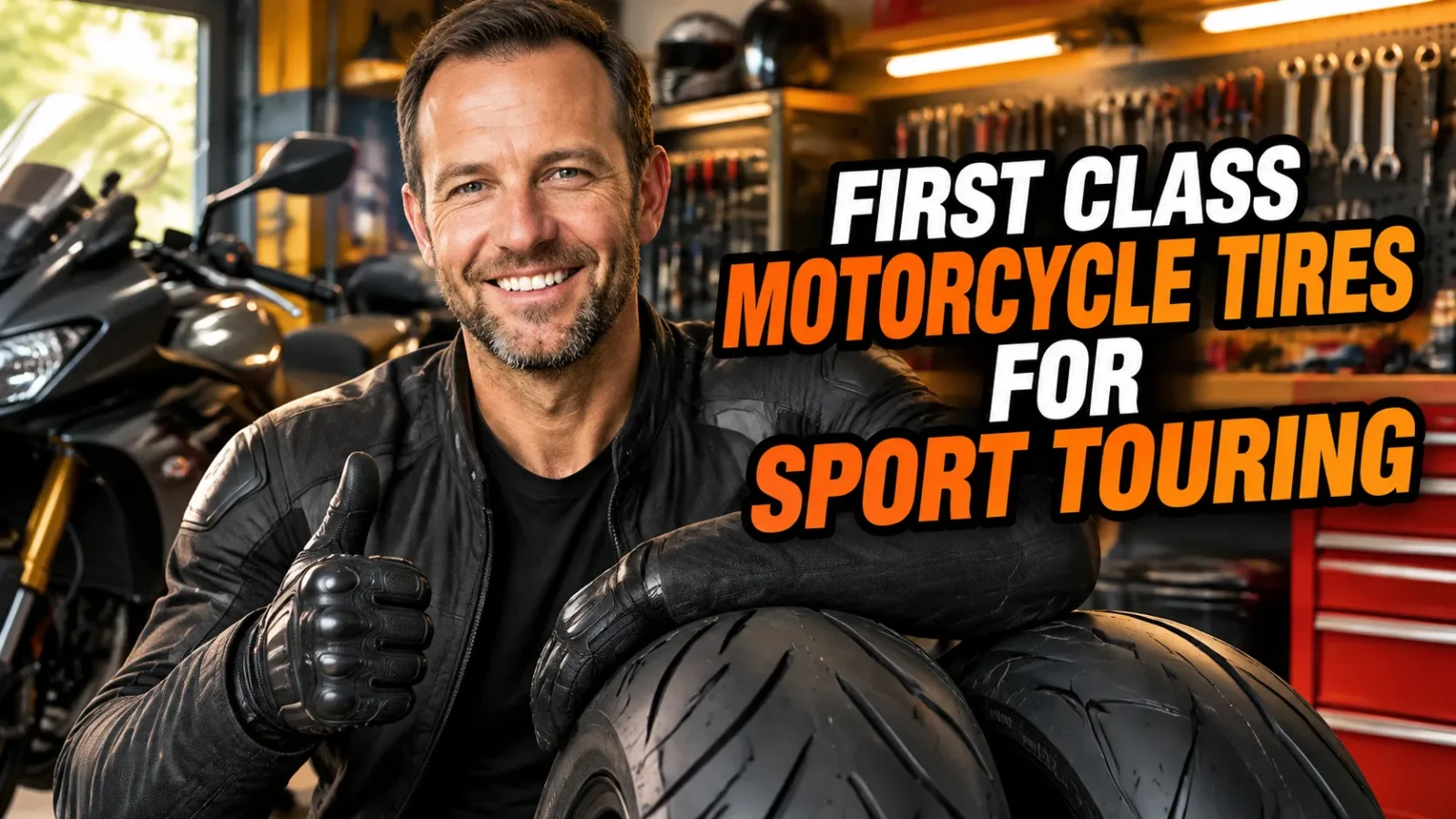
I’ve spent the last decade doing exactly what sport touring bikes were built for: 400-mile days, mountain passes at sunrise, motorway slogs in the rain, and the occasional two-up weekend with the panniers stuffed full. In that time I’ve burned through more sets of tires than I care to count, and I’ve learned the hard way that this category is where good rubber matters most.
A sport touring tire has to do something genuinely contradictory. It needs to grip hard enough that you trust it mid-corner at a decent lean angle, but it also has to survive 8,000 miles of straight-line motorway abuse without squaring off into a trapezoid. Get that balance wrong and you either spend a fortune on replacements or you scare yourself silly in the wet.
So this is my honest, rider-to-rider breakdown of what I look for, what I’ve actually run, and how I make a set of tires last far longer than most people think possible.
- For me, the sweet spot is a dual-compound tire with a hard centre band and soft shoulders, which is what makes real mileage and real grip possible at the same time.
- Wet performance is the single biggest differentiator between a good tire and a first-class one, and it’s the last thing most riders test before buying.
- GT or heavy-duty versions are worth the extra money on big bikes and two-up touring, but they’re overkill on a 450 lb naked.
- Pressures and suspension setup matter more than brand loyalty. I’ve seen a mediocre tire outperform a premium one purely because the owner actually checked their gauge.
- My rule of thumb: replace the rear around 6,000 to 8,000 miles and the front at roughly double that, or whenever the wear bars disappear.
Why This Category Is the Hardest to Get Right
Sport tires are easy to love. They’re sticky, they warm up fast, and they flatter you in the corners. Touring tires are easy to live with. They last forever, they’re stable, and they shrug off a loaded bike. Sport touring tires have to be both, and that tension is exactly why the good ones cost what they do.
The engineering trick is dual or multi-compound construction. The centre of the tread uses a harder, more abrasion-resistant rubber so it survives motorway miles. The shoulders use a softer compound so you still get grip when you lean the bike over. In my experience, the gap between a budget tire and a premium one shows up almost entirely in how well those two zones blend together.
What I Actually Look For Before I Buy
I don’t buy on brand name alone anymore. I’ve been disappointed by big logos and pleasantly surprised by lesser-known options. These are the four things I weigh up.
Wet Grip Above All Else
This is non-negotiable for me. I ride in the rain. Not because I enjoy it, but because tours don’t wait for the weather. A tire that feels vague in the wet ruins an entire trip because you spend every corner bracing for a slide instead of enjoying the road.
What I look for is silica content in the compound and a tread pattern that actually evacuates water rather than just looking aggressive. Deep, well-spaced grooves with a continuous centre channel are what I want. Wide, shallow sipes that look dramatic in marketing photos often do very little.
The Mileage Versus Grip Trade-Off
Every tire sits somewhere on a spectrum between sticky and durable. You cannot max out both. What I want is a tire that doesn’t fall off a cliff in the last 20 percent of its life.
Some tires grip brilliantly for 4,000 miles and then turn wooden. Others stay consistent all the way to the wear bars. I’d rather have a tire that’s 90 percent good for 9,000 miles than one that’s 100 percent good for 4,000 and then terrifying.
How Fast It Warms Up
Cold-morning grip matters more than most reviews admit. If I’m leaving a hotel at 6am in October, I want to feel confident within a couple of miles, not ten.
Lighter, more flexible carcasses warm faster. Stiffer, heavier constructions take longer but hold their heat better on a long, fast day. I’ll take faster warm-up for real-world riding and accept a bit of movement at full pace.
Stability Under Load
A fully loaded sport tourer weighs a lot more than the spec sheet suggests. I want a rear tire that doesn’t squirm or overheat when I add a passenger, three panniers, and a top box. That’s a carcass question as much as a compound one.
The Tires I’d Actually Recommend
Here’s where I’ve landed after years of testing, and a few friendships that survived me borrowing bikes purely to try their rubber.
Michelin Road 6 and Road 6 GT
If someone asked me to name one tire and walk away, this would be it. The Road 6 is the benchmark for me. Wet grip is genuinely outstanding, and I’ve comfortably seen 9,000 miles from a rear on a 120 horsepower sport tourer.
The trade-off is price and a slightly firmer feel over sharp bumps. It also isn’t the sportiest option if you want to chase litre bikes through a canyon. For long-distance confidence, though, nothing has beaten it in my experience.
Pirelli Angel GT II
This is my pick when I want a bit more feel and feedback. It turns in sharply and communicates beautifully through the bars. I find it slightly more engaging than the Michelin, especially on a lighter sport tourer.
Mileage is a touch behind the Road 6 in my notes, and the rear tends to flatten a little sooner if you do a lot of straight-line motorway work. Still, on a twisty tour it’s the tire I’d choose.
Dunlop Roadsmart IV
The Roadsmart IV surprised me. It’s quiet, stable, and remarkably good in the wet, which I didn’t expect given Dunlop’s sportier reputation. On a heavy bike, it feels planted in a way that gives you real confidence at speed.
Warm-up is slightly slower than the Pirelli, and I find the front a bit less talkative. But for a rider who wants stability and longevity over sharp steering, it’s an excellent choice.
Bridgestone Battlax T33
Bridgestone’s sport touring line has quietly become very strong. The T33 is a big step forward in wet performance over the older T31, and it’s the value pick of this group in my view.
I’d describe it as well-rounded rather than outstanding in any single area. It grips well, lasts well, and costs less than the premium competition. That’s a genuinely compelling combination.
Continental ContiRoadAttack 4
If your priority is dry-road feel, this is the one I’d point you to. It’s the sportiest tire in this category, with superb feedback and quick steering. On a fast, twisty tour it’s an absolute joy.
Its weakness is outright longevity. I’ve never managed the mileage from a Conti that I get from a Michelin. It’s a trade I’ll happily make for a short, aggressive trip, but not for a 5,000-mile tour.
Metzeler Roadtec 02
Metzeler sits in the same family as Pirelli and shares some of that character, but with a slightly more touring-focused bias. Grip in the cold and wet is excellent, and I find the front particularly confidence-inspiring.
Do You Actually Need the GT Version?
I get asked this constantly, and my answer is always the same: it depends entirely on your bike and how you ride it. GT versions have a stiffer carcass designed to handle heavier loads without deforming.
If your bike is over roughly 500 pounds wet, or you regularly ride two-up with luggage, buy the GT. The standard version will overheat and wear unevenly under that load, and you’ll spend the money you saved on an early replacement.
On a lighter bike ridden solo, the GT is a waste. It’ll warm up slower, ride more harshly, and cost more. I’ve made that mistake once and won’t repeat it.
Pressures, Setup, and the Stuff That Actually Matters
Here’s the thing most riders don’t want to hear
Frequently Asked Questions
How many miles should I expect from a first-class sport touring tire?
In my experience, a quality sport touring rear tire lasts between 6,000 and 10,000 miles depending on your right wrist, bike weight, and how often you ride two-up. The front usually goes 8,000 to 12,000 miles. If you are seeing far less than that, check your pressures and suspension setup before blaming the rubber.
Do I need the GT version of a sport touring tire?
If your bike weighs more than roughly 500 pounds wet, or you regularly ride two-up with luggage, the GT or heavy-duty carcass version is worth it. It runs cooler and holds its shape under load. On a lighter bike, the standard version warms up faster and costs less, so you are not gaining much by going GT.
Are sport touring tires good enough for track days?
For a novice or intermediate track day in dry conditions, yes, they will hold up fine. You will feel the softer sidewall squirm under hard cornering and they will overheat sooner than a dedicated sport tire. I still run them on track days, but I drop my pace and keep sessions short.
What tire pressures should I run for sport touring?
Start with the manufacturer’s recommendation, usually around 36 psi front and 42 psi rear on a heavy sport tourer. For a lighter bike or solo riding, dropping a couple of psi front and rear adds grip and comfort. Always check pressures cold, and re-check when you load up with luggage or a passenger.

Related Articles

8 Best Cruiser Motorcycle Tires for Street Riding: My Real-World Picks
I rank the 8 best cruiser motorcycle tires for street riding, from Michelin to Pirelli, with real notes on grip,…
Jake Miller
9 min read

8 Best Michelin Motorcycle Tires for Every Riding Style (Tested Picks)
Looking for the best Michelin motorcycle tires? I break down my 8 favorite models for sport, touring, adventure, cruiser, and…
Jake Miller
9 min read

Yamaha Tire Pressure Guide: The Right PSI for Safer, Smoother Rides
Learn the right tire pressure for your Yamaha, from sportbikes to cruisers and dirt bikes. Check, adjust and maintain PSI…
Jake Miller
9 min read