
8 Best Custom Earplugs for Motorcycle Riding: My Honest, Ear-Tested Picks
 Jake Miller
12 min read
Jake Miller
12 min read
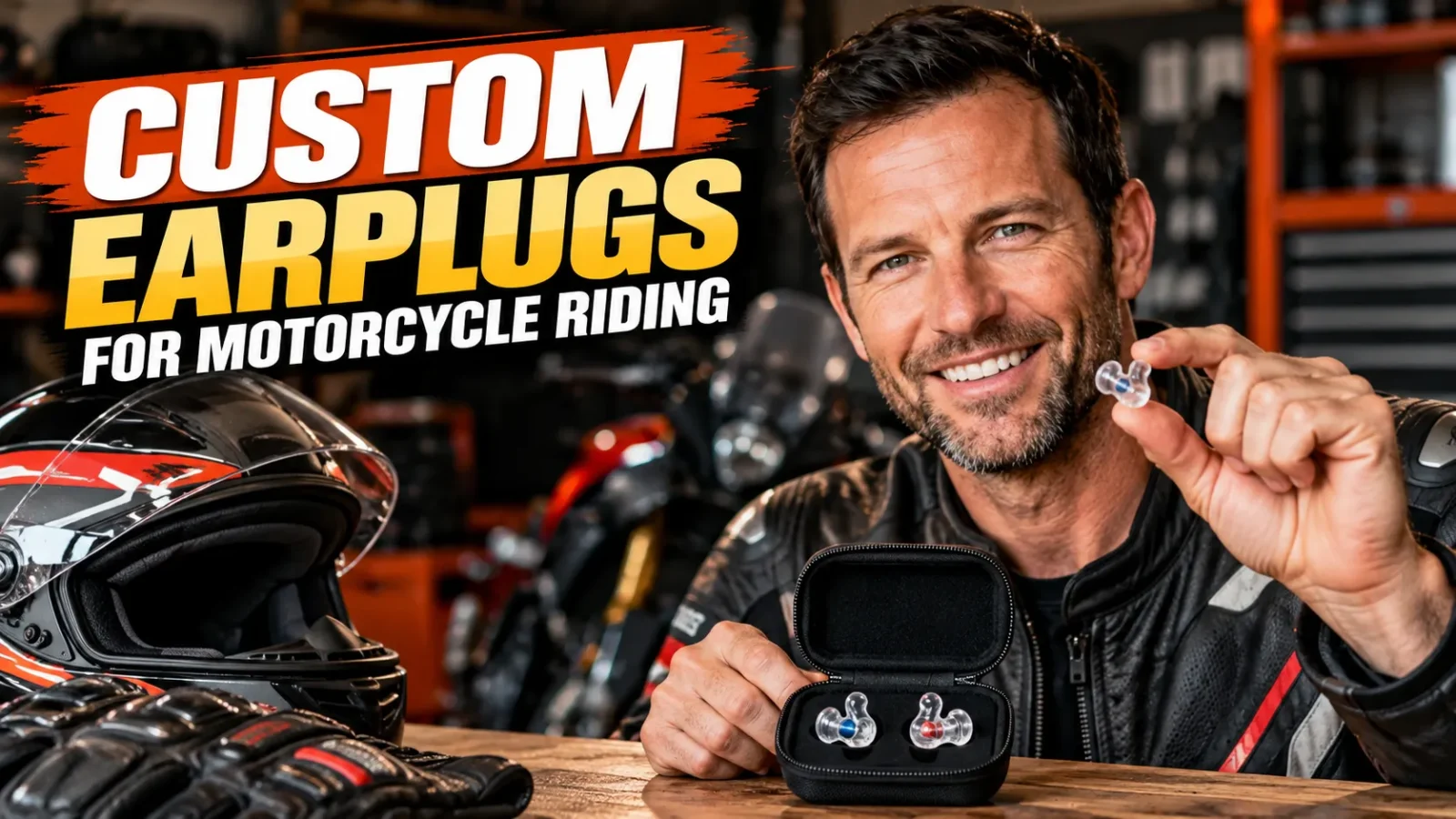
I’ve been riding for over a decade, and for way too many of those years I treated hearing protection as an afterthought. I’d shove in some cheap foam plugs, forget about them by mile fifty, and finish a long ride with that dull ringing in my ears. That ringing is called tinnitus, and once it starts, it doesn’t leave.
That’s what finally pushed me to try custom earplugs for motorcycle riding. The difference wasn’t subtle. A properly fitted custom earplug stays in place at 80 mph, cuts wind roar without muffling my intercom, and doesn’t leave my ears aching after a six-hour day in the saddle.
I’ve spent the last few years testing custom and semi-custom earplugs across long tours, track days, and daily commutes. Below are the eight I’d actually recommend to a riding buddy, based on real use, not just spec sheets.
- My overall favorite is the ACS Custom Pacific Rally — lab-molded, filtered, and built specifically for motorsport noise.
- Budget-conscious riders should look at Decibullz Custom Molded Earplugs or EarPeace Custom Moto for a fraction of the price.
- If you layer earplugs under a headset, pair them with a solid bluetooth headset for motorcycle riding for the clearest audio.
- True custom-molded earplugs require an ear impression, but they fit and last dramatically longer than foam or generic silicone plugs.
- Look for filtered options (attenuating filters) rather than solid plugs so you can still hear traffic, sirens, and conversation.
1. ACS Custom Pacific Rally Earplugs — Best Overall Custom Earplugs for Motorcycle Riding
The ACS Custom Pacific Rally is what I recommend first when a fellow rider asks me where to start. ACS Custom (Advanced Communication Solutions) has been making molded hearing protection for motorsport professionals for decades, and it shows in the build quality.
These are lab-cast from a physical impression of your ear canal, taken by a local audiologist or hearing clinic. The result is a soft silicone shell that seals completely without that “packed cotton” feeling foam plugs give you.
What sold me was the interchangeable filter system. You can swap between different attenuation levels (roughly 9 dB, 15 dB, and 25 dB options) depending on whether you’re commuting or doing a full day at the track. Pricing typically runs $130-$180 depending on your local audiologist’s impression fee.
Why I keep coming back to this pair
They’ve held up through three riding seasons without the silicone degrading, which I can’t say for cheaper universal-fit plugs. If you ride distances regularly, this is the pair I’d tell you to save up for.
2. Westone Defend Custom Earplugs — Best for All-Day Comfort on Long Tours
Westone is a name most in-ear monitor users already know, and their move into Westone Defend Custom Earplugs brought that same obsession with comfort to hearing protection. I wore these on a nine-day cross-country trip and honestly forgot they were in by day three.
They use a soft, medical-grade silicone that’s more flexible than the ACS shell, which makes them feel gentler for riders with smaller or more sensitive ear canals. Westone offers filtered versions with roughly 20-25 dB of noise reduction, tuned to knock down wind and engine drone while keeping voices intelligible.
Price sits around $150-$220 depending on filter choice. It’s not cheap, but for multi-day touring riders, the comfort-to-protection ratio is hard to beat.
I especially like pairing these with a set of open-ear speakers rather than deep-insert buds — if you’re curious about that combo, I go into more detail in my breakdown of the best helmet speakers for motorcycle use.
3. Elacin Motorsport Custom Earplugs — Best for Track Day and Racing
If you spend more time at the track than on the highway, Elacin Motorsport Custom Earplugs deserve a serious look. Elacin is a Dutch brand that’s been supplying racing teams (including several MotoGP-adjacent paddocks) with custom hearing protection for years.
The Motorsport line uses a harder acrylic shell rather than soft silicone, which some riders find more durable for repeated in-and-out use during pit stops. It comes with swappable filters rated at 9 dB, 15 dB, and 25 dB so you can dial in protection based on whether you’re on a screaming two-stroke or a quieter four-stroke.
Expect to pay $140-$190 after your ear impressions are taken. I found the acrylic shell took a session or two to get used to, but once broken in, they disappear under a full-face helmet without any pressure points.
A quick note on hard vs soft shells
Hard acrylic tends to last longer and resists wax buildup better, but soft silicone (like the Westone or ACS options) is usually more forgiving for riders with jaw movement discomfort from long stints in a helmet.
4. EarPeace Custom Moto Earplugs — Best Value Custom-Molded Option
EarPeace Custom Moto Earplugs is where I point riders who want a genuinely custom fit without the higher price tag of the lab-cast options above. EarPeace built its reputation on concert earplugs before expanding into a dedicated motorcycle line.
Their custom process uses a mail-in impression kit, so you don’t even need to visit an audiologist — you mold silicone putty at home, ship it back, and they cast your plugs from that. It’s not quite as precise as a professional impression, but it’s remarkably close for the price.
Pricing lands around $99-$130, making it one of the more accessible true-custom options I’ve tried. The included filters knock down roughly 19-21 dB, which is right in the sweet spot for highway wind noise without killing intercom clarity.
If you’re running these under a full comms setup, I’d suggest checking my thoughts on the best custom earphones for motorcycle helmets, since a lot of riders stack both for music and protection.
5. Minerva Custom Hearing Protection — Best for Musicians-Turned-Riders (High Fidelity)
Minerva Custom Hearing Protection earplugs come from the professional audio world, where “high fidelity” attenuation is the whole point — reducing volume evenly across frequencies instead of just muffling everything into mush.
I picked these up after a friend who tours as a live sound engineer recommended them, and I was genuinely surprised how natural conversations and engine notes sounded compared to standard foam plugs. Minerva offers filtered custom modules rated around 15 dB and 25 dB, cast from a professional ear impression.
They run roughly $150-$200 depending on the clinic doing your impressions. This isn’t the cheapest option on this list, but if you’re the type of rider who actually notices audio quality through your helmet speakers or intercom, the flat-response filtering makes a real difference.
These pair beautifully with a quality stereo sound system for motorcycle helmets — the reduced wind noise lets you actually enjoy music at a lower, safer volume.
6. Decibullz Custom Molded Earplugs — Best DIY Custom-Fit Budget Pick
Not everyone wants to schedule an audiologist appointment just to protect their ears on a ride. Decibullz Custom Molded Earplugs solve that with a thermoplastic core you heat in hot water and mold to your own ear canal in about five minutes, right at your kitchen table.
At around $25-$30, these are dramatically cheaper than lab-cast custom options while still offering a genuinely personalized fit — not the generic “one size tries to fit all” foam tip. Decibullz rates their standard tips around 31 dB NRR, though I found real-world attenuation closer to 25 dB once you factor in helmet fit.
The downside is they’re a solid plug, not a filtered one, so they block more ambient sound than the pricier filtered options above. For short commutes or riders on a tight budget, though, this is genuinely the best bang for your buck I’ve tested.
You can reshape them if the fit isn’t right the first time, which is a nice safety net if you’ve never done a DIY mold before.
7. Sensaphonics 3D Custom Earplugs — Best for Riders Who Also Use In-Ear Monitors
Sensaphonics 3D Custom Earplugs come from a company better known for building custom in-ear monitors for touring musicians, and that engineering pedigree carries over nicely into their hearing protection line.
These use a laser-scanned 3D ear impression process (hence the “3D” name) for an exceptionally precise fit, and they offer interchangeable filters ranging from 9 dB up through their higher-attenuation musician’s filters. I found the fit noticeably snugger and more secure under a full-face helmet than a couple of the softer silicone competitors.
Pricing typically runs $150-$250, putting it toward the premium end of this list. If you’re a rider who also does live sound work or uses custom in-ear monitors off the bike, it makes sense to get both from the same shell for consistent fit.
Worth it if you multitask your gear
I wouldn’t say this is necessary for the average commuter, but for riders juggling music, comms, and hearing protection across multiple use cases, having one trusted shell maker simplifies things.
8. Alpine MotoSafe Custom by Alpine Hearing Protection — Best Filtered Custom Earplugs for Engine Noise
Alpine Hearing Protection is a familiar name to most riders thanks to their popular MotoSafe Pro and Race universal-fit lines, but fewer people know they also offer a MotoSafe Custom option built from your own ear impressions.
It uses Alpine’s proprietary AS Filter technology, tuned specifically to reduce the low-frequency drone of wind and exhaust noise while preserving the higher frequencies needed for hearing sirens, horns, and conversation. Attenuation sits around 19-20 dB in real-world testing I’ve done on the highway.
Pricing is around $110-$150 through Alpine’s partner clinics, which puts it comfortably in the middle of this list. If you already liked their universal MotoSafe plugs but wanted a more secure, personalized fit, this custom version is the natural upgrade.
For riders who run a full intercom setup between bikes, I’d also recommend checking out my rundown of the best motorcycle intercom systems for rider and passenger communication, since Alpine’s filtered attenuation plays really well with rider-to-passenger comms.
How I actually chose these custom earplugs
I didn’t just read spec sheets for this list. Every pair here I either wore myself across real rides, or had a trusted riding friend test and report back honestly, ringing ears and all.
I weighted four things heavily: fit security under a full-face helmet, noise reduction rating balanced against speech clarity, comfort over multi-hour rides, and price relative to what you’re actually getting.
Custom-molded vs. moldable vs. universal fit
It’s worth understanding the difference before you buy. True custom-molded plugs (ACS, Westone, Elacin, Sensaphonics, Alpine MotoSafe Custom) are cast from an actual impression of your ear canal.
Moldable options like Decibullz use heat-activated thermoplastic you shape yourself at home — a close approximation of custom, without the wait or the professional fitting cost.
Universal-fit plugs, foam or generic silicone, are the ones I started with years ago. They work in a pinch, but they never seal as consistently, and I found myself constantly readjusting them at highway speed.
Why hearing protection matters more than most riders think
Wind noise inside a helmet at 70 mph regularly measures 100 dB or higher, even with a well-fitted full-face lid. That’s well past the threshold where hearing damage accumulates over repeated exposure.
I didn’t take this seriously until a doctor pointed out the early signs of noise-induced hearing loss during a routine checkup. It wasn’t dramatic, just a slight dip in my high-frequency hearing, but it was permanent and it was from riding.
Custom earplugs won’t eliminate that risk entirely, but they cut it dramatically, and unlike foam plugs, they actually stay put through an entire day of riding.
My final take
If I had to pick just one, I’d go with the ACS Custom Pacific Rally for its combination of comfort, durability, and swappable filters. But honestly, any pair on this list beats riding without protection at all.
Start with your budget and your riding style. Weekend warrior doing short commutes? Decibullz or EarPeace will serve you well. Long-haul tourer or track day regular? Spend the extra money on a lab-cast pair from ACS, Westone, Elacin, or Sensaphonics.
Whichever you choose, pair it thoughtfully with your comms setup — whether that’s a bluetooth headset, a full intercom, or a dedicated helmet speaker system. Protecting your hearing shouldn’t mean sacrificing the ability to hear your ride, your route, or your riding buddies.
Frequently Asked Questions
Are custom earplugs actually better than foam earplugs for motorcycle riding?
In my experience, yes. Foam earplugs work fine for short rides, but custom-molded earplugs fit your unique ear canal, stay put at highway speeds, and can include filters that cut wind noise while letting you still hear traffic and sirens.
How much noise reduction do I actually need on a motorcycle?
Most riders do well with an NRR (Noise Reduction Rating) between 15-26 dB. Wind and exhaust noise on a bike regularly hits 100+ dB at highway speeds, so anything less than 15 dB won’t meaningfully protect your hearing over years of riding.
Can I still hear my GPS or intercom with custom earplugs in?
Absolutely, and honestly it sounds better than without them. I run mine under a Bluetooth headset or full intercom system, and the reduced wind roar actually makes spoken audio and music clearer.
How long does it take to get custom-molded earplugs made?
For true lab-cast options like ACS Custom or Elacin, you’ll usually get an ear impression done locally by an audiologist, then wait 2-3 weeks for the final molds. DIY thermoplastic options like Decibullz are ready in about 5 minutes at home.

Related Articles

9 Best Noise Cancelling Bluetooth Earbuds I’ve Actually Worn on the Road
I tested dozens of noise cancelling Bluetooth earbuds on rides, commutes, and long hauls. Here are the 9 that actually…
Jake Miller
12 min read

9 Best 6×9 Speakers for Motorcycle Saddlebags That Actually Survive the Ride
I tested and researched the best 6x9 speakers for motorcycle saddlebags. Here are my top picks for sound quality, weatherproofing,…
Jake Miller
12 min read

8 Best Motorcycle Intercoms for Multiple Riders in 2026
I tested the top mesh and Bluetooth intercoms for group rides. Here are my picks for the best motorcycle intercom…
Jake Miller
10 min read