
Best Motorcycle Gloves for Rain: My Hard-Won Picks After Years of Soggy Rides
 Jake Miller
11 min read
Jake Miller
11 min read
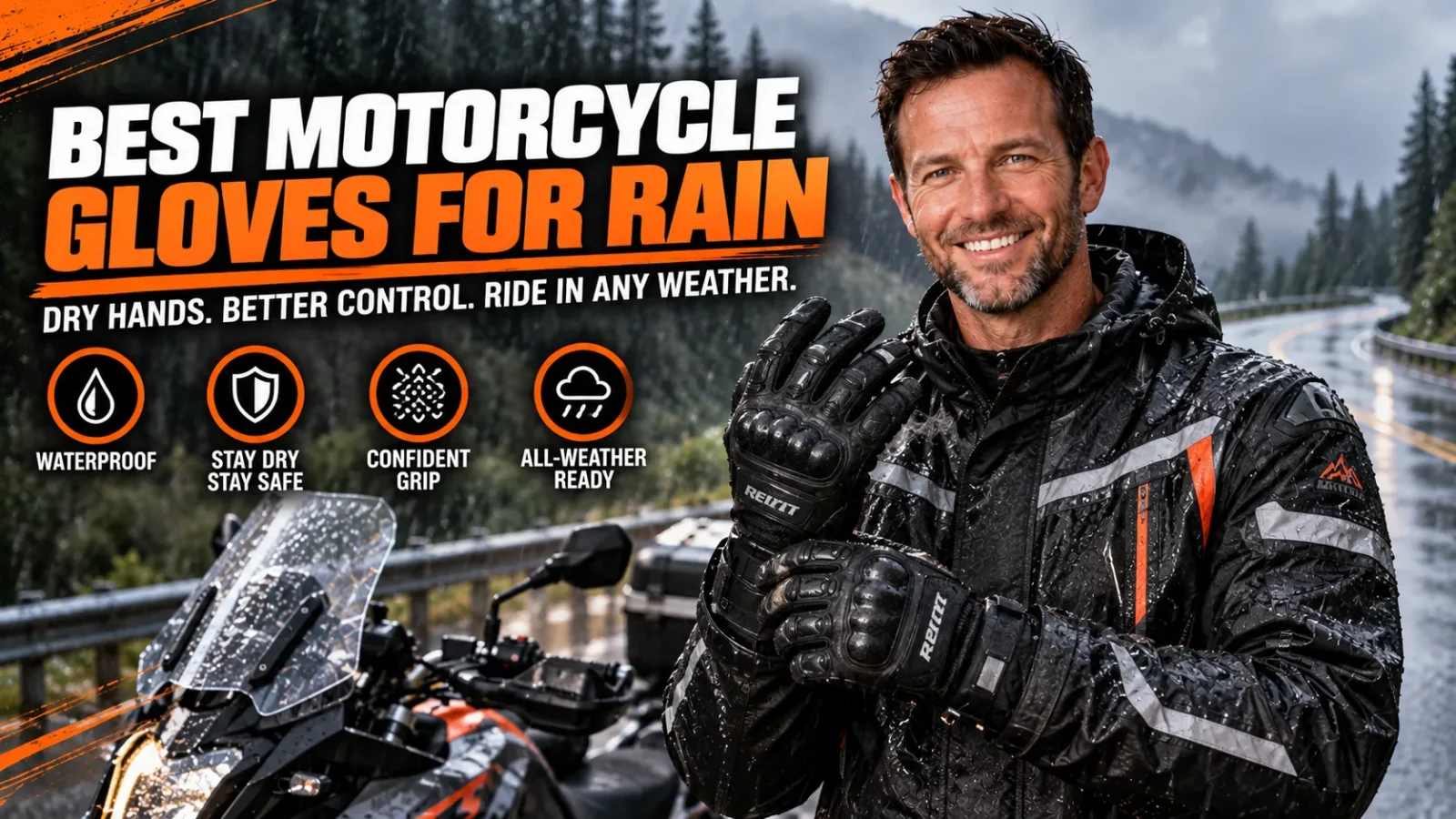
I’ve ridden home from work in downpours that felt like the sky personally had it out for me. I’ve white-knuckled it through highway spray with hands so cold and wet I couldn’t feel the clutch lever. So trust me when I say picking the right rain gloves isn’t a luxury — it’s survival gear.
Over the years I’ve burned through more pairs of “waterproof” gloves than I care to admit. Some leaked in the first five minutes. Others turned my hands into swamp creatures from sweat instead of rain. But I’ve also found a handful that genuinely work, and I’m going to walk you through exactly what I’ve learned.
- The best rain gloves use a sealed waterproof membrane (Gore-Tex or similar) — not just a “water-resistant” coating.
- Gauntlet-style cuffs that go over your jacket sleeves keep water from running down your wrists.
- Fit matters more in wet weather — a glove that’s too loose lets water pump in and out with every squeeze.
- My top picks balance dryness, warmth, and enough dexterity to still feel your levers and switchgear.
- Leather gloves alone won’t cut it in real rain — you need a dedicated membrane or a treated shell.
Why Regular Gloves Just Don’t Cut It in the Rain
I learned this the hard way on a trip through the Blue Ridge Mountains. I had a nice pair of leather touring gloves — great in the sun, useless the second the clouds opened up. Within ten minutes, my hands felt like I’d dunked them in a bucket.
Leather is porous. It soaks up water like a sponge, and once it’s saturated, it stays cold and heavy for the rest of the ride. Even “treated” leather only buys you a little time before it gives up.
Most everyday motorcycle gloves are built for abrasion resistance and impact protection first. Waterproofing, if it’s mentioned at all, is often an afterthought — a light DWR (durable water repellent) spray that wears off after a few washes.
The Membrane Makes the Difference
What actually keeps water out is a laminated membrane sandwiched between the outer shell and the inner lining. Gore-Tex is the gold standard here, but Hipora and other proprietary membranes from brands like Alpinestars and Rev’It also perform well in my experience.
These membranes are waterproof and breathable, meaning rain can’t get in but sweat vapor can get out. That’s the magic combo. Without it, you’re either wet from the outside or wet from the inside — there’s no winning.
What I Actually Look for in a Rain Glove
After enough soggy commutes to lose count, I’ve narrowed my checklist down to a few non-negotiables. If a glove doesn’t hit these, I don’t even bother trying it.
A Real Waterproof Membrane
I won’t buy a “rain glove” unless it explicitly lists a membrane brand or technology. If the product description just says “water-resistant coating,” that’s a red flag for me. It might survive a light drizzle, but a real downpour will beat it.
Gauntlet Cuffs Over Your Jacket
This one’s huge and a lot of riders overlook it. A glove that tucks under your jacket sleeve creates a funnel — rain runs straight down your arm and pools right at your wrist. Gauntlet-style cuffs that go over your sleeve stop that cold.
I switched to gauntlet cuffs years ago and it completely solved my “wet wrist” problem, even in gloves that weren’t perfectly sealed elsewhere.
A Snug, Not Sloppy, Fit
This surprised me at first, but a loose glove actually performs worse in rain. Every time you open and close your hand, a baggy glove acts like a little bellows, pumping air (and sometimes water) in and out through any tiny gap.
A snug fit minimizes that pumping action and keeps water from working its way in through the seams over a long ride.
Dexterity You Can Actually Use
I’ve tried rain gloves so thick and stiff I could barely feel my brake lever. That’s a real safety issue, not just an annoyance. My rule of thumb: if I can’t operate my phone screen or unzip my jacket pocket with the glove on, it’s too bulky for daily riding.
Warmth Without the Sweat Box
Rain often means cooler temperatures, so some insulation is welcome. But too much insulation combined with a waterproof membrane can turn your hands into a sauna on milder wet days. I look for gloves with a thin, breathable liner rather than heavy fleece stuffed in there.
My Top Picks for the Best Motorcycle Gloves for Rain
These are the gloves I’ve either owned personally or tested extensively on friends’ bikes during genuinely miserable weather. I’m not going to pad this list with gloves I haven’t actually ridden in.
1. My Pick for All-Season Waterproofing
The gloves in this category use a full Gore-Tex membrane with a gauntlet cuff, and honestly, they’re the closest thing I’ve found to “dry hands guaranteed.” I’ve ridden three-hour stretches in steady rain and my hands stayed completely dry.
The trade-off is a slightly stiffer feel out of the box. They loosen up after a few rides, but if you need dexterity on day one, budget some break-in time.
2. Best for Cold, Wet Commutes
If your rainy days also come with genuinely cold temperatures, this is the style I reach for. It pairs a waterproof membrane with a thicker thermal liner, so you get warmth and dryness without needing a separate pair of winter gloves.
I wore this pair through a miserable 40-degree rainy commute last winter and my fingers were actually warm by the time I got to work. That almost never happens.
3. Best Budget-Friendly Rain Glove
You don’t need to spend a fortune to stay dry. This budget option uses a simpler Hipora-style membrane instead of Gore-Tex, but in my testing it still held up through a solid hour of hard rain without leaking.
It’s not going to survive an all-day monsoon ride as well as the premium options, but for the price, I think it’s one of the smartest buys for riders who only deal with rain occasionally.
4. Best for Sport Riders Who Still Want Feel
Sport riders tend to hate bulky gloves, and I get it — you want to feel the bike. This pick manages to squeeze in a thin waterproof liner without sacrificing much dexterity, so you can still work the controls precisely at speed.
It runs a little cooler than the touring-focused gloves on this list since there’s less insulation, so I’d pair it with a thin liner glove if you’re riding in genuinely cold rain.
5. Best Backup Rain Gloves (Overglove Style)
I always keep a pair of these stuffed in my tail bag. They’re not meant to be worn all day, but if you get caught in a surprise downpour, you can pull these on right over your regular gloves in seconds.
They’re thin, packable, and genuinely waterproof for emergency use. Just don’t expect the same feel or long-term comfort as a dedicated rain glove.
New to Riding? Don’t Overthink Your First Pair
If you’re newer to riding, I’d actually suggest starting simple. A lot of new riders overspend on ultra-premium rain gear before they even know what kind of riding they’ll be doing most often.
I wrote a whole separate guide on the Best Beginner Gloves for Motorcycle riders, and I still think that’s the right place to start if you’re building your first gear collection. Once you know your riding style and typical weather, you can invest in a dedicated rain glove that actually fits your needs.
How I Test Whether a Glove Is Actually Waterproof
I don’t just trust the marketing copy anymore — I’ve been burned too many times. Here’s my actual process, and you can do the same thing before committing to a long rainy ride.
The Sink Test
Before I ever wear a new pair of rain gloves on the road, I run them under a faucet for a couple of minutes, flexing my fingers the whole time. If water seeps through the seams or fingertips, I know exactly where the weak points are before I’m stuck in traffic in a storm.
The Short Commute Trial
I always test new gloves on a short, low-stakes commute first, not a big weekend trip. Fifteen or twenty minutes of real rain tells you a lot more than any product description ever could.
The Squeeze-and-Check
After a wet ride, I take the gloves off and check the inside lining. Damp is sometimes just condensation from sweat, but if the fingertips or seams are genuinely wet, that glove isn’t earning a spot in my rotation anymore.
Common Mistakes I’ve Made (So You Don’t Have To)
I’ve made plenty of dumb gear mistakes over the years. Here are the big ones so you can skip straight past them.
Buying Based on Looks Alone
I once bought a pair of gloves purely because they looked tough and matched my jacket. They lasted about eight minutes in real rain before my hands were soaked. Lesson learned: function first, style second.
Ignoring the Cuff Style
I mentioned this earlier, but it’s worth repeating because it trips up so many riders. Even a genuinely waterproof glove will fail you if water is running straight down your sleeve and into the cuff opening.
Skipping Maintenance
Waterproof membranes don’t last forever if you neglect them. I re-treat my gloves with a DWR spray every few months, especially before rainy season hits, and it noticeably extends how well they shed water.
Wearing Them Too Loose “For Comfort”
I get the instinct to size up for comfort, but as I mentioned, a loose glove actually performs worse in wet conditions. Size for a snug fit and break them in properly instead.
Caring for Your Rain Gloves So They Actually Last
Good rain gloves are an investment, and I treat mine accordingly. A little maintenance goes a long way toward keeping that waterproof membrane doing its job.
Dry Them Properly
Never dry wet gloves on a radiator or with direct heat — I made that mistake once and cracked the leather palm on an otherwise great pair. Stuff them loosely with newspaper and let them air dry at room temperature instead.
Reproof Regularly
Most waterproof membranes benefit from a periodic reproofing spray, similar to what you’d use on a rain jacket. I do this every three to four months if I’m riding through wet weather regularly.
Store Them Properly
I keep my rain gloves in a dry bag inside my tail case rather than tossing them loose in a saddlebag. Constant crushing and folding can eventually break down the membrane’s seams.
My Final Take
Riding in the rain is never going to be fun, exactly, but it doesn’t have to be miserable either. The right pair of gloves is honestly one of the highest-impact gear upgrades I’ve made in years of riding.
Look for a genuine waterproof membrane, gauntlet cuffs, a snug fit, and enough dexterity to actually ride safely. Get those four things right, and you’ll wonder why you ever tolerated soggy, frozen hands in the first place.
I still keep a backup pair of overgloves in my tail bag no matter what, because weather is unpredictable and I’d rather be over-prepared than stuck with cold, dripping hands thirty miles from home.
Frequently Asked Questions
Are truly waterproof motorcycle gloves actually 100% waterproof?
No glove is bulletproof forever, but quality gloves with a Gore-Tex or Hipora membrane and gauntlet cuffs will keep your hands dry through hours of steady rain. Cheap ‘water-resistant’ gloves will fail within minutes.
Can I just wear rain glove covers over my regular gloves?
You can, and I keep a pair in my tail bag as backup. They work fine for short, unexpected showers, but they bunch up, reduce feel on the controls, and aren’t a long-term substitute for a dedicated waterproof glove.
Do waterproof motorcycle gloves run warmer or colder than regular gloves?
Generally warmer, since the waterproof membrane also blocks wind chill. That’s great in cold rain but can make your hands sweaty on warm, wet days, so look for one with a breathable liner.
What’s the difference between rain gloves and winter gloves?
Winter gloves prioritize insulation and can still soak through. Rain gloves prioritize sealed seams and waterproof membranes first, warmth second. The best options for cold, wet climates combine both priorities well.

Related Articles
8 Best Waterproof Motorcycle Gloves for Summer Riding
I tested and researched the 8 best waterproof motorcycle gloves for summer, balancing breathability, dry hands, and all-day comfort. Find…
Jake Miller
10 min read
10 Best Motorcycle Gloves for Protection That I’d Actually Trust My Hands To
I've crashed, dropped bikes, and tested dozens of gloves. Here are the 10 best motorcycle gloves for protection I genuinely…
Jake Miller
11 min read
9 Best Mechanix Gloves for Motorcycle Riding You Can Actually Trust
I've tested Mechanix gloves on real rides—here are the 9 best models for motorcycle riding, from impact protection to cold-weather…
Jake Miller
11 min read