
Best Motorcycle Jacket for Spring Riding: My Honest Picks After Years of Unpredictable Weather
 Jake Miller
13 min read
Jake Miller
13 min read
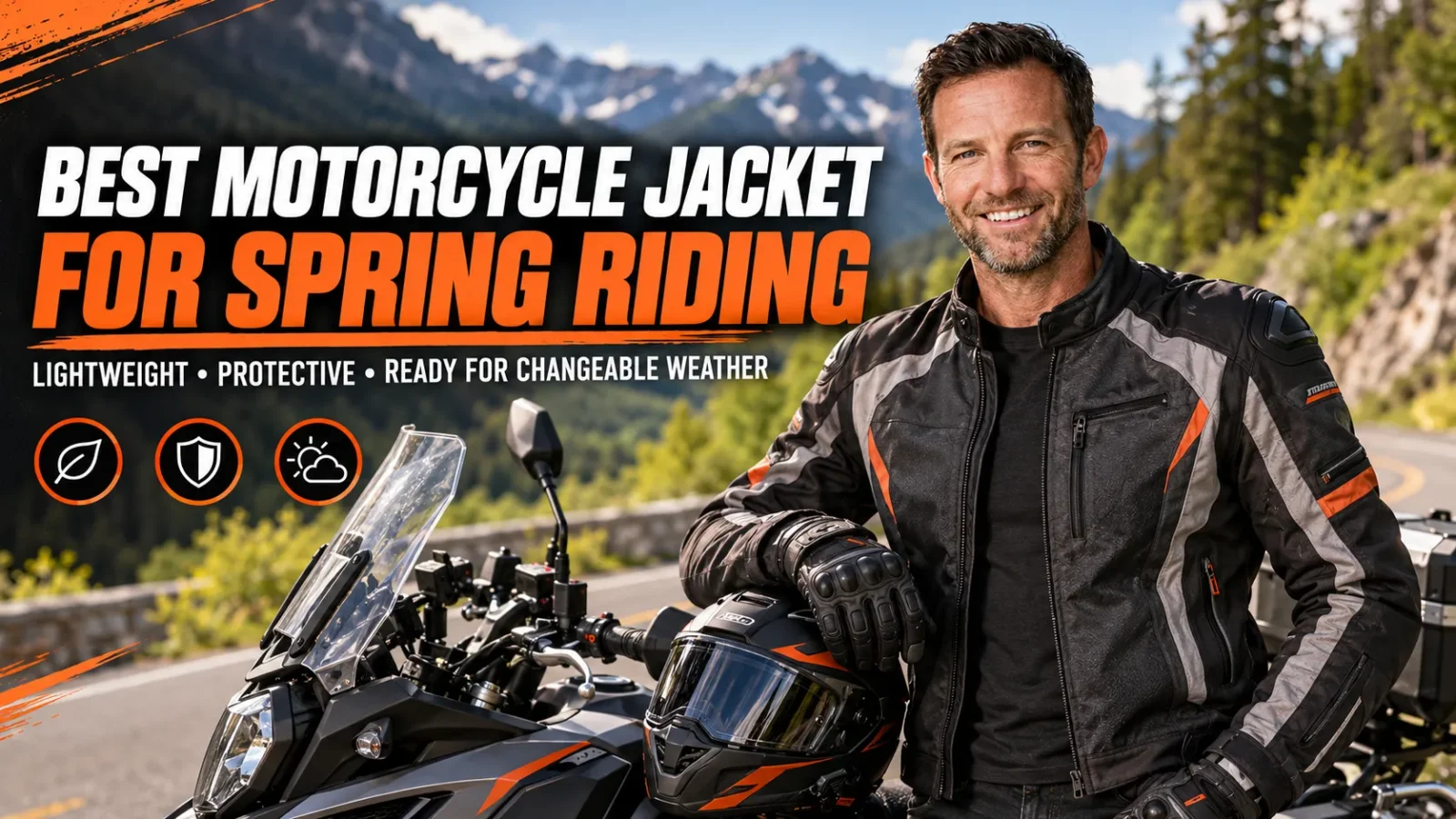
Spring riding is my favorite season and my biggest gear headache, all at once. One morning I’m scraping frost off my mirrors, and by afternoon I’m sweating at a stoplight in full gear. If you’ve ever felt that same frustration, you know exactly why picking the right jacket matters so much this time of year.
I’ve cycled through more spring jackets than I care to admit, chasing that perfect balance of warmth, airflow, and rain protection. Some were total disasters. A few became gear I still reach for years later. In this post, I’m sharing everything I’ve learned so you don’t have to make the same expensive mistakes I did.
If you want the full rundown on jacket types, materials, and construction before diving into spring-specific picks, my Ultimate Guide to Motorcycle Jackets is a great place to start. It covers the fundamentals that everything below builds on.
- The best spring jacket has a removable thermal liner and adjustable vents so it works across a wide temperature range.
- I prioritize a waterproof or water-resistant textile shell with CE-rated armor over pure style points.
- Textile jackets generally outperform leather for spring’s unpredictable rain and temperature swings.
- Fit matters more than most riders think, especially when you’re layering underneath.
- My top picks range from budget-friendly mesh-textile hybrids to premium adventure-style jackets.
Why Spring Weather Makes Jacket Shopping So Tricky
Spring is a season of extremes packed into a single ride. I’ve left my house in near-freezing temps and come home in what felt like summer. No other season demands this much versatility from a single piece of gear.
This is exactly why a heavy winter jacket or a breezy summer mesh jacket both fall short. You need something that can transform throughout the day, ideally without you having to strap a bag to your bike full of backup layers.
The Temperature Swing Problem
I’ve learned the hard way that a 30-degree temperature swing between dawn and midday isn’t unusual in March or April. A jacket that traps heat perfectly at 7 a.m. can feel like a sauna by noon.
The solution isn’t one magic fabric. It’s smart design: removable liners, strategically placed vents, and shells that breathe without sacrificing protection.
Rain Happens Fast in Spring
Spring showers show up uninvited, and they show up quickly. I’ve been caught in downpours that started as a light drizzle within five minutes. A jacket that can’t handle sudden rain isn’t a spring jacket, no matter how good it looks.
What I Actually Look For in a Spring Motorcycle Jacket
After years of trial and error, I’ve narrowed my checklist down to a handful of non-negotiables. These are the features that separate a genuinely great spring jacket from one that just looks the part.
Removable Thermal Liners
This is the single biggest game-changer for spring riding, in my experience. A zip-out thermal liner means I can bundle up for a chilly morning commute and then shed it entirely once the sun climbs higher.
Without this feature, you’re stuck choosing between too hot or too cold for at least part of every ride. With it, one jacket genuinely covers you from 45 degrees to 75 degrees.
Strategic Ventilation
Zippered vents on the chest, back, and arms make a massive difference once temperatures climb. I look for vents that actually channel air through the jacket rather than just decorative zippers that do nothing.
If you’re someone who runs hot no matter the season, it’s worth checking out my thoughts on the best mesh motorcycle jackets for men, since some hybrid designs borrow heavily from mesh construction for exactly this reason.
Weatherproofing Without the Bulk
A built-in or included waterproof membrane is essential. I avoid jackets that only claim to be “water-resistant” through the outer fabric alone, because that promise tends to fail after the first real storm.
If waterproofing is your top priority above everything else, I’ve done a deep dive into the best waterproof jacket for motorcycle options that’s worth a look too.
CE-Rated Armor
No matter how mild the weather gets, I never compromise on protection. Every jacket I own has CE-rated armor at the shoulders and elbows, and I strongly recommend a back protector too.
If terms like CE rating still feel a bit fuzzy, my article on motorcycle jacket safety ratings explained breaks it down in plain language. I also wrote a dedicated piece called Understanding Safety Ratings: What is “CE” if you want the deeper technical explanation, plus a shorter CE Rating Explained summary.
For back protection specifically, I’d point you to my guide on Motorcycle Armor & Back Protectors, since not every jacket includes one out of the box.
Textile or Leather for Spring? My Honest Take
I get asked this constantly, and my answer is almost always textile for spring specifically. Leather is fantastic for abrasion resistance and looks incredible, but it doesn’t adapt to changing weather nearly as well.
Textile jackets ventilate better, dry faster, and typically pack in features like removable liners far more often than leather does. If you want the full comparison before deciding, my breakdown of Leather vs. Textile Jackets: Which is Right for You? covers every angle.
That said, I know plenty of riders who love the classic look of a cafe-style leather jacket enough to make it work. If that’s you, my picks for the best cafe motorcycle jacket for the money might be worth a browse.
My Top Picks for Spring Riding
I’m not going to pretend there’s one universal “best” jacket, because riding style, budget, and climate all shift the answer. Instead, here’s how I’d steer different riders based on what actually matters to them.
Best All-Around Pick
For most riders, I recommend a 3-in-1 adventure-style textile jacket with a removable liner, multiple vents, and a waterproof shell. These jackets aren’t flashy, but they’re the ones I personally put the most miles on every spring.
If you ride an ADV or dual-sport bike and want something built for exactly this kind of versatility, check out my thoughts on the best value adventure jacket for motorcycle riders on a budget.
Best Budget Option
You genuinely don’t need to spend a fortune to get solid spring performance. I’ve had good luck recommending options in my Best Motorcycle Jackets Under $500 roundup, and if you’re on an even tighter budget, my guide to the best motorcycle jacket for under $200 has some surprisingly capable picks.
Best for New Riders
If you’re newer to riding, I always steer people toward something forgiving in fit and easy to layer. My Best Motorcycle Jackets for Beginners list and my more general best motorcycle jacket for beginners guide both dig into what really matters when you’re still building your gear collection.
Best for Riders Who Run Hot
Some of us just sweat more, and that’s fine. I’ve written specifically about the best perforated jacket for motorcycle riders who need serious airflow, plus an under-layer guide covering the best windproof under layers for perforated motorcycle jacket setups for those chilly spring mornings.
Best for Naked and Standard Bikes
Riding a naked bike means more wind exposure and less fairing protection, which changes what I look for in a jacket. My picks for the best motorcycle jacket for naked bike riders factor this in directly.
Fit Matters More Than People Realize
I can’t stress this enough: a jacket that fits poorly undermines everything else on this list, including the armor. If the shoulder padding sits an inch off your actual shoulder, it’s not protecting you properly in a crash.
Spring layering makes fit even trickier because you’re adding and removing insulation throughout the day. I always size my jacket to fit well with a light base layer underneath, then rely on the removable liner for the colder stretches.
My motorcycle jacket fitting guide walks through exactly how to check armor placement, sleeve length, and torso fit before you commit to buying.
Fit Considerations for Different Body Types
Standard sizing genuinely doesn’t work for everyone, and I’ve heard from plenty of readers frustrated by this. If you’re taller than average, my guide to the best motorcycle jacket for tall riders addresses sleeve and torso length issues directly.
For riders with a larger build, I’ve covered the best motorcycle jacket for fat guys and a similar guide on the best motorcycle jacket for big guys to help you find brands that actually size generously and fairly.
And if you’re tall but on the leaner side, standard “big and tall” sizing often doesn’t fit right either. My piece on the best motorcycle jacket for tall skinny riders tackles that specific gap.
Regional Spring Weather Changes the Calculus
I always tell readers that “spring” means something wildly different depending on where you live. A jacket that’s perfect for spring in Phoenix would be miserable in Portland, and vice versa.
Wetter, Cooler Climates
If you’re riding somewhere with frequent rain and cooler temps well into May, waterproofing and a solid liner matter far more than ventilation. My guide to the best jackets for seattle motorcycle riders leans hard into this exact scenario.
Generally cooler climates deserve their own consideration too, and my roundup of the best motorcycle jacket for cool weather covers jackets that keep you warm without overheating once the sun comes out.
Warmer, Drier Climates
Spring in Texas or Florida can feel more like early summer by April, so airflow becomes the priority almost immediately. Check out my thoughts on the best motorcycle jacket for texas riders and separately the best motorcycle jacket for florida riders, since humidity changes what “breathable” really needs to mean.
California’s spring climate varies wildly by region, from coastal fog to inland heat, and I’ve tried to address that range in my guide to the best motorcycle jacket for california riders specifically.
Don’t Forget About Wind
Wind chill is the sneaky enemy of spring riding that a lot of people underestimate. Even at 60 degrees, highway speeds can make it feel considerably colder, especially on an exposed bike.
A dedicated windproof layer or a jacket with a built-in wind barrier makes a bigger difference than most riders expect. I’ve written specifically about the best wind jacket for motorcycle riders dealing with exactly this problem, plus a guide to the best windproof hoody for motorcycle jacket setups if you want a versatile layering piece.
Matching the Jacket to Your Riding Style
I’ll admit that a lot of my recommendations depend heavily on how and what you ride. A commuter jacket and a touring jacket solve very different problems, even if both technically work in spring conditions.
If you’re not sure where to start, my guide on How to Choose the Right Motorcycle Jacket for Your Riding Style is genuinely one of the most useful things I’ve written on this topic.
For Touring Riders
Long spring road trips demand serious adaptability, since you might cross multiple climate zones in a single day. My picks for the best motorcycle jacket for touring 2026 and the broader best motorcycle touring jackets for 2026 both prioritize exactly this kind of versatility.
Premium options are worth considering here too, and I’ve spent time with several jackets in my best klim jacket for motorcycle touring review if budget isn’t your main constraint.
For Adventure and Dual-Sport Riders
ADV riders deal with even wider conditions, from muddy backroads to highway stretches. My guide to the best dual sport motorcycle jacket for the money and the best adventure motorcycle jacket for the money both dig into jackets built for that kind of variability.
For Cafe Racer and Vintage Style Fans
I get it, sometimes the look matters just as much as the function. If you’re chasing a specific aesthetic, my picks for the best motorcycle jackets for cafe racer builds and the best looking jacket for a vintage motorcycle both balance style with real protection.
Bomber-style jackets have also made a serious comeback lately, and my roundup of the best bomber jackets for motorcycle riders covers some genuinely solid spring-friendly options in that style.
Don’t Overlook Jacket Care This Season
Spring riding means more rain, more mud, and honestly, more grime than most other seasons combined. Keeping your jacket clean isn’t just about looking good, it actually extends the life of the waterproofing and materials.
For textile jackets, I follow the steps in my guide on How to Wash Your Motorcycle Jacket after particularly muddy or wet rides. Leather owners should instead check out my process in How to Clean a Leather Jacket.
If you’ve got a brand new leather piece, breaking it in properly also matters for comfort during longer spring rides. My guide on How to Break In a New Leather Motorcycle Jacket covers exactly how I approach it.
Knowing When It’s Time to Retire a Jacket
I still see riders wearing jackets that are clearly past their prime, and it genuinely worries me from a safety standpoint. Armor degrades, seams weaken, and waterproofing fails over time, even if the jacket still looks fine on the outside.
If you’re unsure whether your current jacket still has your back, my article on When to Replace Your Jacket lays out the warning signs clearly.
Where I’d Actually Buy One
I’m often asked whether it’s worth buying jackets online sight unseen, and honestly, it depends on the retailer’s return policy and sizing charts. I’ve had good experiences shopping through the retailers I mention in my roundup of the best online store for motorcycle jackets.
If new isn’t in the budget right now, buying used is a completely legitimate option too, as long as you inspect the armor and seams closely. My guide to the best place for used motorcycle jackets covers where I’ve had the best luck personally.
A Few Final Thoughts Before You Buy
I know this is a lot of information, but spring riding gear genuinely deserves this level of thought. You’re asking one jacket to handle frost, sunshine, rain, and everything in between, sometimes all within a single afternoon ride.
My honest advice: prioritize a removable liner and real waterproofing first, then worry about styling second. Everything else, from brand to color, is really just personal preference once those fundamentals are covered.
Whatever you choose, make sure it’s genuinely CE-rated and properly fitted before your first big spring ride. That combination has kept me comfortable and protected through more unpredictable spring seasons than I can count, and I’m confident it’ll do the same for you.
Frequently Asked Questions
What makes a jacket good specifically for spring riding?
The best spring jackets balance breathability with weather protection. Look for removable thermal liners, zippered vents, and a waterproof membrane so you can adapt to a 40-degree morning that turns into a 75-degree afternoon.
Is textile or leather better for spring motorcycle riding?
I lean toward textile for spring because it handles rain and temperature swings more gracefully. You can read my full breakdown in Leather vs. Textile Jackets: Which is Right for You? to decide for your own riding habits.
Do I still need CE-rated armor in a lightweight spring jacket?
Absolutely. Weather-appropriate doesn’t mean less protective. I always check for CE-rated armor at the shoulders and elbows, which you can learn more about in my CE Rating Explained guide.
How do I know if my spring jacket fits correctly?
A good spring jacket should feel snug enough that armor stays in place but roomy enough for a light base layer. My motorcycle jacket fitting guide walks through exactly how to check this.

Related Articles

8 Best Motorcycle Jacket Materials (And the Real Jackets That Use Them Best)
I break down the best motorcycle riding materials for jackets—leather, textile, mesh, and laminate—with real jacket picks I've tested for…
Jake Miller
11 min read

9 Best Paints for Nylon Motorcycle Riding Jackets That Actually Hold Up on the Road
I tested 9 paints for nylon motorcycle jackets so you don't have to guess. Here's what actually sticks, flexes, and…
Jake Miller
12 min read

9 Best Female Motorcycle Jackets That Actually Fit Right in 2026
I've tested dozens of women's motorcycle jackets over the years. Here are my 9 favorites for fit, protection, and style—from…
Jake Miller
11 min read