
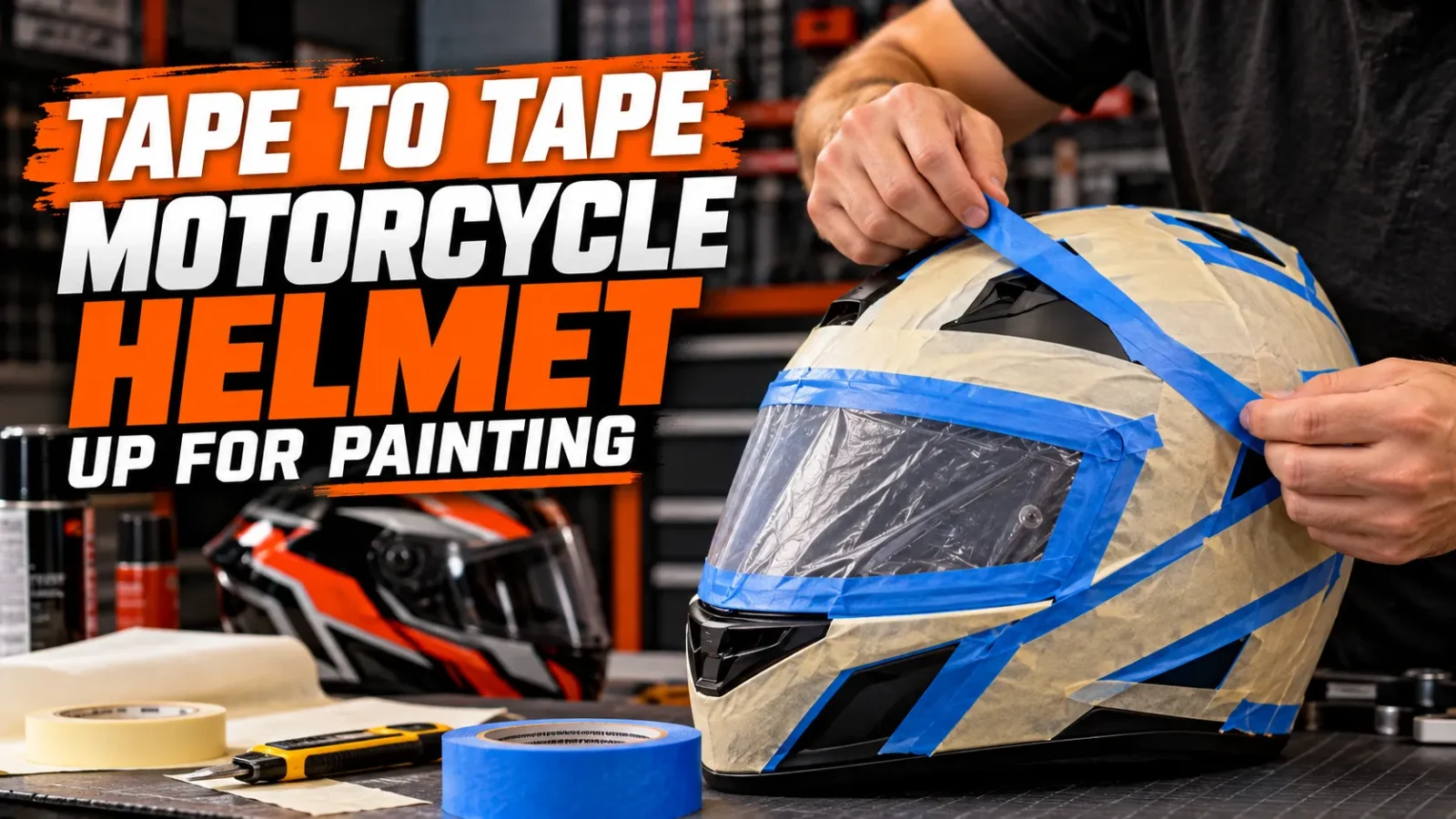
I’ve repainted more helmet shells than I can count at this point, and I can tell you the paint job is only as good as the masking underneath it. Overspray creeping under a cheap strip of tape has ruined more than one custom design I was proud of. It’s a heartbreaking way to lose an afternoon of careful clear-coating.
Before you even think about primer, it pays to know your helmet inside and out. If you haven’t already, take a look at my Ultimate Guide to Motorcycle Helmets for a refresher on shell materials, certifications, and construction before you start cutting tape lines near vents or seams.
In this guide, I’m breaking down the exact tapes I reach for when masking a shell, why each one earns its spot in my toolbox, and where each one falls short. These are all real, specific products I’ve actually used on my own helmets and customer projects, not vague category filler.
- My overall favorite for curved shells is 3M 471+ Vinyl Tape because it stretches around vents and chin bars without lifting.
- For razor-sharp two-tone lines, 3M Fine Line Tape 218 is unmatched, especially on curved surfaces.
- Budget-conscious painters should grab FrogTape Multi-Surface, it’s cheap, clean-release, and easy to find locally.
- If you’re heat-curing clear coat, only use high-temp tapes like 3M 2727 or IPG 5145 to avoid adhesive residue baking on.
- Always test a small strip on an inconspicuous part of the shell first, especially on carbon fiber or gel-coated finishes.
What I Look for Before Committing to a Roll of Tape
Not all tape is created equal, and a helmet shell throws some unique challenges at you that a car door panel doesn’t. You’re dealing with tight compound curves, vent openings, and often a mix of shell materials.
Shell material actually matters more than most people think. If you’re not sure what you’re working with, my breakdown of Carbon Fiber vs. Polycarbonate Helmets explains how each surface reacts differently to solvents, heat, and adhesive.
I also always double-check my Motorcycle Helmet Fitment Guide notes before painting, since I like to remove the liner and cheek pads completely, and it’s smart to know how they go back in correctly afterward.
With that groundwork out of the way, here’s my full rundown of the tapes that actually earn a permanent spot in my paint booth.
1. 3M 471+ Vinyl Tape — Best Overall for Compound Curves
This is the tape I grab first, every single time, no matter what part of the helmet I’m masking. 3M 471+ Vinyl Tape is a thin, flexible vinyl tape originally designed for pinstriping and automotive lane marking, and it happens to be perfect for helmet shells.
What makes it special is how it stretches. I can pull it around a vent opening or the curve of a chin bar without a single wrinkle, which is exactly where cheaper tapes tend to bunch up and let paint sneak underneath.
It comes in widths from 1/8 inch up to an inch, so you can use narrow rolls for detail lines and wider rolls for bulk coverage. It runs around $8-$15 per roll depending on width, and one roll genuinely lasts through several full helmet projects.
The adhesive is aggressive enough to hold through multiple coats of base and clear, but it still releases cleanly without pulling up primer. I’ve left it on shells for over 48 hours with zero residue left behind.
2. 3M Scotch 233+ Automotive Refinish Masking Tape — Best High-Heat Line Tape
3M Scotch 233+ is a green crepe paper tape that’s been a staple in body shops for decades, and for good reason. It’s rated to handle up to 325°F, which makes it a safe bet if your paint schedule includes a bake cycle.
I like this one specifically for masking around vents on a full-face shell, where sharp edges and small radiuses need a tape that holds a crisp line under pressure. It resists solvent bleed-through from lacquer-based paints better than standard masking tape.
A roll typically runs $6-$10, and it’s easy to find at any auto parts store, which makes it a convenient pickup when you’re already gathering primer and clear coat. It’s not as stretchy as vinyl tape, so I reserve it for straighter runs rather than tight curves.
One thing worth noting: this tape is genuinely engineered for the paint booth, not the hardware store aisle. That heat rating difference is the reason I never substitute standard blue tape when I’m curing clear coat in a heat box.
3. 3M Fine Line Tape 218 — Best for Razor-Sharp Two-Tone Lines
If you’re doing a two-tone paint job or a graphic with a hard edge, 3M Fine Line Tape 218 is what I reach for. This is the same tape used across the automotive custom paint industry for pinstripes and flame jobs, and it performs just as well on a helmet shell.
The low-tack, smooth polyethylene film conforms tightly to curves without lifting, which gives you an incredibly crisp paint line with almost no bleed. I’ve used it for tank-to-shell matching paint schemes and it nailed the line every time.
It’s sold in narrow widths, usually 1/16 inch to 1/4 inch, priced around $10-$14 per roll. That narrow width is intentional; it’s meant for defining edges, not covering large areas, so I always pair it with a wider tape or paper for bulk masking.
Because this tape has such light adhesion, I don’t recommend it for edges that will see heavy handling or repeated coats without reinforcement. Lay it down, spray your line, and pull it while the paint is still workable for the cleanest release.
4. Tamiya 87030 Masking Tape — Best for Fine Detail and Graphics
This one might surprise you since it’s marketed toward scale model builders, but Tamiya 87030 Masking Tape has become a favorite among helmet painters doing intricate logo work or pinstriping.
It’s a thin, low-tack paper tape available in narrow widths like 6mm, 10mm, and 18mm, which makes it perfect for tight lettering, small vent trim, or curved logo outlines that standard automotive tape is just too wide or too stiff to handle.
A roll costs around $5-$7, and while that seems pricey for the length, a little goes a long way on detail work. I keep a few widths on hand specifically for visor edge trim and small graphic accents.
The trade-off is that it’s not meant for large-area coverage or high-heat curing, so I treat it strictly as a detail tool rather than my primary masking tape.
5. FrogTape Multi-Surface Painter’s Tape — Best Budget Pick for General Masking
FrogTape Multi-Surface is the tape I recommend to anyone just getting started with helmet painting who doesn’t want to invest in a full lineup of specialty tapes right away. It’s widely available at hardware stores and runs about $6-$9 per roll.
What sets FrogTape apart from generic blue or green painter’s tape is its PaintBlock Technology, a polymer that reacts with water-based paint to form a barrier and seal the edges. That means noticeably less bleed-through compared to bargain-bin masking tape.
I use it primarily for masking off the interior of the shell, the visor mechanism, and larger flat panel sections where I’m not chasing a razor-sharp custom line. It removes cleanly even after sitting for a day or two, which takes the stress out of longer multi-coat projects.
It’s not rated for the high heat of a bake cycle, so if your process involves oven curing, treat this as your general-purpose tape and switch to something like 3M 233+ for anything going into the heat.
6. 3M Scotch-Blue 2090 Long Mask Tape — Best for Delicate Surfaces
3M Scotch-Blue 2090 is technically a painter’s tape built for interior trim and delicate wall surfaces, but it’s become one of my go-to choices for masking a visor or an existing clear-coated shell I don’t want to risk damaging.
Its UV-resistant adhesive is engineered to stay put for up to 14 days without leaving residue, which is genuinely useful if your paint project stretches out over a weekend or longer due to drying time between coats.
Pricing sits around $7-$11 per roll, and it’s sold at basically every hardware store, so restocking mid-project is never an issue. I especially like it for masking the visor and pinlock posts, where I want zero chance of adhesive pulling at the anti-fog coating.
Keep in mind this tape isn’t designed for sharp automotive paint lines the way fine line tape is. I use it as a protective barrier tape, not a line-defining tool.
Why Delicate-Surface Tape Matters More Than You Think
A lot of guys skip this step and just use whatever’s in the garage to cover the visor, and I get it, it feels like overkill. But visors are usually polycarbonate with anti-scratch and anti-fog coatings, and aggressive tape adhesive can genuinely etch or haze that coating if it sits too long.
I always treat the visor and any exposed graphics or reflective panels with the gentlest tape in my kit. It’s a small detail, but it’s saved me from replacing a visor more than once.
7. IPG 5145 Premium Grade Masking Tape — Best Value High-Temp Option
IPG 5145 (from Intertape Polymer Group) is a natural rubber adhesive masking tape rated to handle up to 200°F, and it’s become my budget-friendly alternative to pricier automotive-branded tapes when I need heat resistance without the premium price tag.
It’s a crepe paper tape with good conformability, so it handles moderate curves reasonably well, though it’s not quite as flexible as vinyl tape on tight radiuses. A roll typically runs $4-$7, making it one of the most affordable heat-tolerant options out there.
I use this one for masking off the base of the shell near the edge trim when I know the helmet will sit in a heated garage space or under warm lights during clear coat flash-off. It holds its line well and doesn’t leave a gummy residue behind.
If you’re painting in small batches or just doing touch-up work rather than a full custom job, this tape gives you solid heat tolerance without needing to buy a full box of the pricier automotive brands.
8. 3M 2727 High Temperature Green Masking Tape — Best for Two-Tone Paint and Oven Curing
When I’m doing a full two-tone job that requires baking the clear coat in a heat box, 3M 2727 High Temperature Masking Tape is what goes on the shell. This green tape is rated up to 400°F, well beyond what most home paint booths will ever hit, giving you a solid safety margin.
It’s built with a silicone adhesive designed specifically to resist high-temperature paint processes without softening, melting, or leaving behind gummy adhesive transfer onto your fresh paint.
Pricing runs about $9-$13 per roll, a bit more than standard crepe tape, but worth it if oven curing is part of your regular process. I’ve had shells sit taped in a heat box at 250°F for over an hour with zero tape failure or bleed.
This isn’t a tape I’d use for everyday masking since it’s overkill for room-temperature air-dry paint, but if your process involves any real heat, it’s the one tape in this list I wouldn’t substitute.
How I Actually Approach Masking a Full Helmet Shell
My process usually starts with the vents. I use narrow 3M 471+ around every opening first since that’s where compound curves are the worst offenders for paint bleed.
From there, I move to the visor and pivot mechanism with Scotch-Blue 2090, then use FrogTape or paper to cover the interior shell completely. Fine line tape only comes out at the very end, once I’m laying down a specific graphic or two-tone split.
If you’re working on a modular or flip-front lid rather than a standard full-face, masking gets more complicated around the chin bar hinge. My guide on Full Face vs. Modular vs. Open Face Helmets covers the structural differences that affect how I approach masking each style.
It’s also worth being mindful of the certification sticker inside the shell and any DOT or ECE markings. Never paint over or damage these, and if you want to understand why they matter so much, check out my article on Helmet Safety Ratings Explained before you start prepping.
A Few Mistakes I’ve Made So You Don’t Have To
Early on, I used generic dollar-store masking tape on a carbon shell and left it on for three days waiting on weather to clear. When I pulled it, it left a sticky adhesive ghost line that took lacquer thinner and a lot of patience to fully remove.
I’ve also learned the hard way that pressing tape down with bare fingers isn’t enough on a curved vent opening. Now I always burnish the edges with a plastic squeegee or an old credit card to make sure there’s zero gap for paint to creep under.
Lastly, don’t skip testing your tape on a scrap piece of the same material if you can get one, or at least an inconspicuous spot inside the shell. Adhesive strength varies enough between batches and brands that a quick test saves you from an ugly surprise.
My Final Take
If I had to keep just one tape in my kit, it’d be 3M 471+ Vinyl Tape for its unbeatable flexibility around curves. But realistically, a proper helmet paint job benefits from a small arsenal: 471+ for curves, 218 for sharp lines, and a heat-rated tape like 2727 if you’re curing clear coat.
Good masking tape is genuinely one of the cheapest investments you can make in a paint job that might otherwise cost you a full weekend of work. Spend the extra few dollars on the right roll, and your lines, your clear coat, and your patience will all thank you.
Frequently Asked Questions
What tape do professional painters use to mask motorcycle helmets?
Most pros reach for 3M 471+ Vinyl Tape or 3M Fine Line Tape 218 for sharp graphic lines, combined with a general painter’s tape like 3M Scotch-Blue 2090 for bulk coverage of areas like the visor and vents.
Can I use regular painter’s tape on a helmet shell?
Regular painter’s tape works fine for masking large flat-ish areas, but it struggles on tight curves like the chin bar or vent openings. For those spots, a stretchy vinyl tape or fine line tape will hug the contours much better and prevent paint bleed.
Will masking tape damage my helmet’s clear coat or gel coat?
Cheap tapes with aggressive adhesive can pull up clear coat if left on too long or exposed to heat. Stick with tapes rated for automotive refinishing, like 3M 233+ or FrogTape, which are designed to release cleanly without lifting the surface underneath.
Do I need special tape if I’m baking or heat-curing the paint?
Yes. If you’re clear-coating and curing your helmet in a low-heat booth or oven, use a high-temperature tape like 3M 2727 Green Masking Tape or IPG 5145, both rated well above standard painter’s tape’s heat tolerance.

Related Articles

8 Best Motorcycle Headsets for Half Helmets (Tested & Reviewed)
I've tested the top Bluetooth headsets for half helmets so you don't have to. Here are my 8 favorites for…
 Jake Miller
10 min read
Jake Miller
10 min read
9 Best Motorcycle Goggles for Half Helmets I’ve Actually Ridden In
I tested the best motorcycle goggles for half helmets on real rides. Here are my honest picks for wind, bugs,…
Jake Miller
13 min read

8 Best Helmet Speakers for Motorcycle Riders in 2026
I tested and researched the best helmet speakers for motorcycle riders. See my top picks for sound quality, easy install,…
Jake Miller
11 min read