
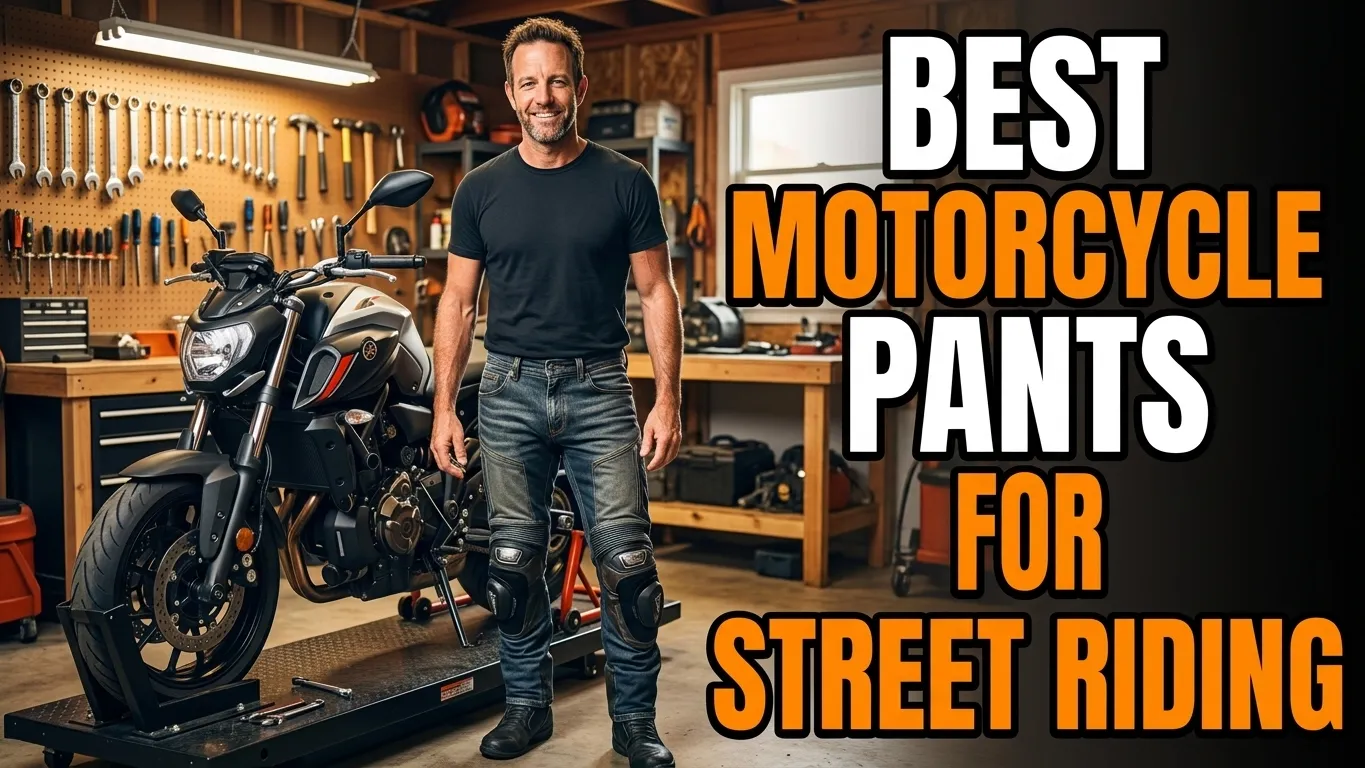
I still cringe when I think about my first few years of street riding. I wore regular jeans, a leather jacket, and hoped for the best. That changed after a low-side slide on gravel left me with road rash on my hip. Since then, I’ve tested more than 30 pairs of motorcycle pants — from budget riding jeans to premium Gore-Tex touring shells. I’ve worn them in 100°F heat, torrential rain, and everything in between.
In this article, I’m sharing my honest, first-person picks for the best motorcycle pants for street riding. These are the pants I actually reach for, based on real-world comfort, protection, and value. I’ll tell you exactly why each one made my list, and who it’s best for.
- My top overall pick is the REV’IT! Tornado 3 Pants for hot-weather street riding.
- For all-weather versatility, the Alpinestars Andes V3 Drystar Pants are hard to beat.
- If you want the look of normal jeans with real protection, go with Rokker Rokkertech Jeans.
- Budget-conscious riders should check out the Bull-it SR6 Jeans.
- Premium touring riders will love the Klim Latitude Pants.
1. REV’IT! Tornado 3 Pants — Best Mesh Summer Pants
When the temperature hits 90°F, I don’t want heavy textile pants. The REV’IT! Tornado 3 Pants are my go-to for hot street rides. They’re made from a high-density polyester mesh that flows a ridiculous amount of air.
What surprises me is the protection. You get SEEFLEX CE-level 2 armor at the knees, and pockets for hip armor. The Tornado 3 also includes a removable hydratex|Lite waterproof liner, so you’re covered if you get caught in a summer shower.
I’ve worn these on 400-mile days and stayed comfortable. The price is around $300, which is fair for the versatility. If you want to match them with a jacket, see my guide to best motorcycle jackets.
2. Alpinestars Andes V3 Drystar Pants — Best All-Weather Textile
If I could only own one pair of motorcycle pants for street riding, it might be the Alpinestars Andes V3 Drystar. They’re the Swiss Army knife of riding pants. The Drystar membrane is waterproof and breathable, so they work in rain or shine.
For armor, you get CE Level 1 Nucleon Flex Plus protectors at the knees. There are also pockets for hip armor (sold separately). I’ve crashed in a similar pair of Alpinestars pants and walked away with only bruises. That earns my trust.
The Andes V3 costs about $250. They’re not the lightest or coolest for extreme heat, but for three-season street riding, they’re incredibly versatile. I also recommend pairing them with a solid pair of motorcycle gloves.
3. Klim Latitude Pants — Best Premium Touring
I’ll be honest: the Klim Latitude Pants are expensive. At around $600, they cost more than most riders spend on their first bike. But after wearing them for a season, I understand why.
The Latitude uses a Gore-Tex performance shell that is guaranteed waterproof and highly breathable. You get D3O CE Level 1 armor at the knees and hips. The materials feel bombproof, and the fit is adjustable without being bulky.
These are the pants I grab for long-distance street touring in unpredictable weather. If you ride through mountains or commute year-round, the Latitude is worth the investment. For footwear, check my picks for best motorcycle boots.
4. Rokker Rokkertech Jeans — Best Single-Layer Riding Jeans
Most riding jeans feel like sandpaper or have bulky liners. The Rokker Rokkertech Jeans are different. They’re single-layer, meaning the abrasion resistance is woven directly into the denim. No liners, no bulk.
I’ve worn these to dinner and to work without looking like I’m headed to a track day. But don’t let the style fool you. Rokkertech denim offers impressive abrasion resistance, and the jeans include SAS-TEC CE Level 1 armor at the knees. Hip armor is optional.
At around $400, they’re pricey for jeans. But if you want one pair that looks normal and protects well, I haven’t found better. They’re my top pick for urban street riding.
5. Dainese New Drake Air Tex Pants — Best Ventilated Sport Pants
For spirited street riding, I want pants that move with me. The Dainese New Drake Air Tex Pants are designed for exactly that. They use a mix of mesh and textile panels to keep you cool while holding up in a slide.
The New Drake Air Tex comes with composite protectors at the knees. The fit is athletic and pre-curved, which feels great on a sportbike. I’ve worn them on canyon runs and commutes alike.
Pricing is around $300. If you want Dainese quality without the flagship price, these are a smart choice. Just remember that mesh pants are best for warm, dry conditions.
6. Bull-it SR6 Jeans — Best Value Riding Jeans
Not everyone wants to spend $400 on riding jeans. That’s where the Bull-it SR6 Jeans come in. They use a Covec liner for abrasion resistance, and they include CE Level 2 armor at the knees. That’s a impressive spec for the price.
I’ve used these as my daily commuter jeans for months. The fit is relaxed, and they come in several colors. They’re heavier than normal jeans, but that’s the trade-off for protection.
At around $200, the SR6 is the best value in this list. If you’re on a tight budget but refuse to ride in regular denim, start here.
7. Rukka Armas Pants — Best Extreme Weather Protection
When I ride in freezing rain or near-freezing temperatures, I reach for the Rukka Armas Pants. They are the most protective textile pants I’ve ever worn. The Gore-Tex Pro membrane is completely waterproof and extremely breathable.
Rukka includes D3O CE Level 2 armor at the knees and hips as standard. The outer shell is abrasion-resistant Cordura. Every detail, from the zippers to the adjustable waist, feels over-engineered in the best way.
Yes, they cost over $1,000. But for riders who commute year-round in harsh climates, the Armas can replace multiple pairs of pants. It’s an investment in comfort and safety.
8. Olympia Moto Sports Ranger Pants — Best Convertible All-Season
I love gear that does double duty. The Olympia Moto Sports Ranger Pants are full textile pants with a twist: the lower legs zip off to become shorts. That’s brilliant for changing temperatures on a long ride.
They come with a waterproof and breathable liner, plus CE Level 2 armor at the knees. The Ranger pants are designed to be worn over your regular clothes, making them great for commuting. I’ve worn them over slacks and jeans with no issues.
The price is around $300. If you want one pair of pants that handles cool mornings, hot afternoons, and rain, the Ranger is a clever choice. It’s not the most stylish option, but it’s one of the most practical.
After years of testing, I’m confident that any of these eight pants will serve you well on the street. Match them with a quality jacket, gloves, and boots, and you’ll be ready for whatever the road throws at you. Ride safe.
Frequently Asked Questions
Are riding jeans as safe as textile motorcycle pants?
Modern riding jeans like Rokker Rokkertech use single-layer abrasion-resistant denim that can meet or exceed the safety of basic textile pants. However, for high-speed touring or extreme weather, Gore-Tex textile pants still offer better overall protection and features.
What type of armor should I look for in street riding pants?
Look for CE Level 2 armor at the knees and hips. Brands like D3O, SAS-TEC, and Knox are common. Many pants include pockets for hip armor, but it’s often sold separately.
Can I wear motorcycle pants over regular jeans?
Yes, some overpants like the Olympia Ranger are designed to be worn over your regular clothes. They typically have full-length side zippers for easy on/off.
How much should I spend on motorcycle pants for street riding?
You can find decent riding jeans for $150-$250. Premium textile pants with waterproof membranes and CE Level 2 armor range from $250-$600. High-end Gore-Tex options can exceed $800.

Related Articles
8 Best Motorcycle Overpants for Commuting in a Suit: Ride to Work Without Wrinkles
I tested the best motorcycle overpants for commuting in suits. From waterproof shells to mesh summer options, these picks keep…
 Jake Miller
8 min read
Jake Miller
8 min read
8 Best Motorcycle Pants for Women Who Wear a US Size 18
After years of squeezing into gear that never fit, I rounded up the 8 best motorcycle pants for women in…
Jake Miller
9 min read
10 Best Jeans for Riding a Motorcycle: Real-World Picks I’ve Actually Worn
After years of commuting and touring, here are the 10 best jeans for riding a motorcycle, from single-layer UHMWPE to…
Jake Miller
10 min read