
Utah Motorcycle License Costs: Fees, Training, and What I’d Budget
 Jake Miller
10 min read
Jake Miller
10 min read
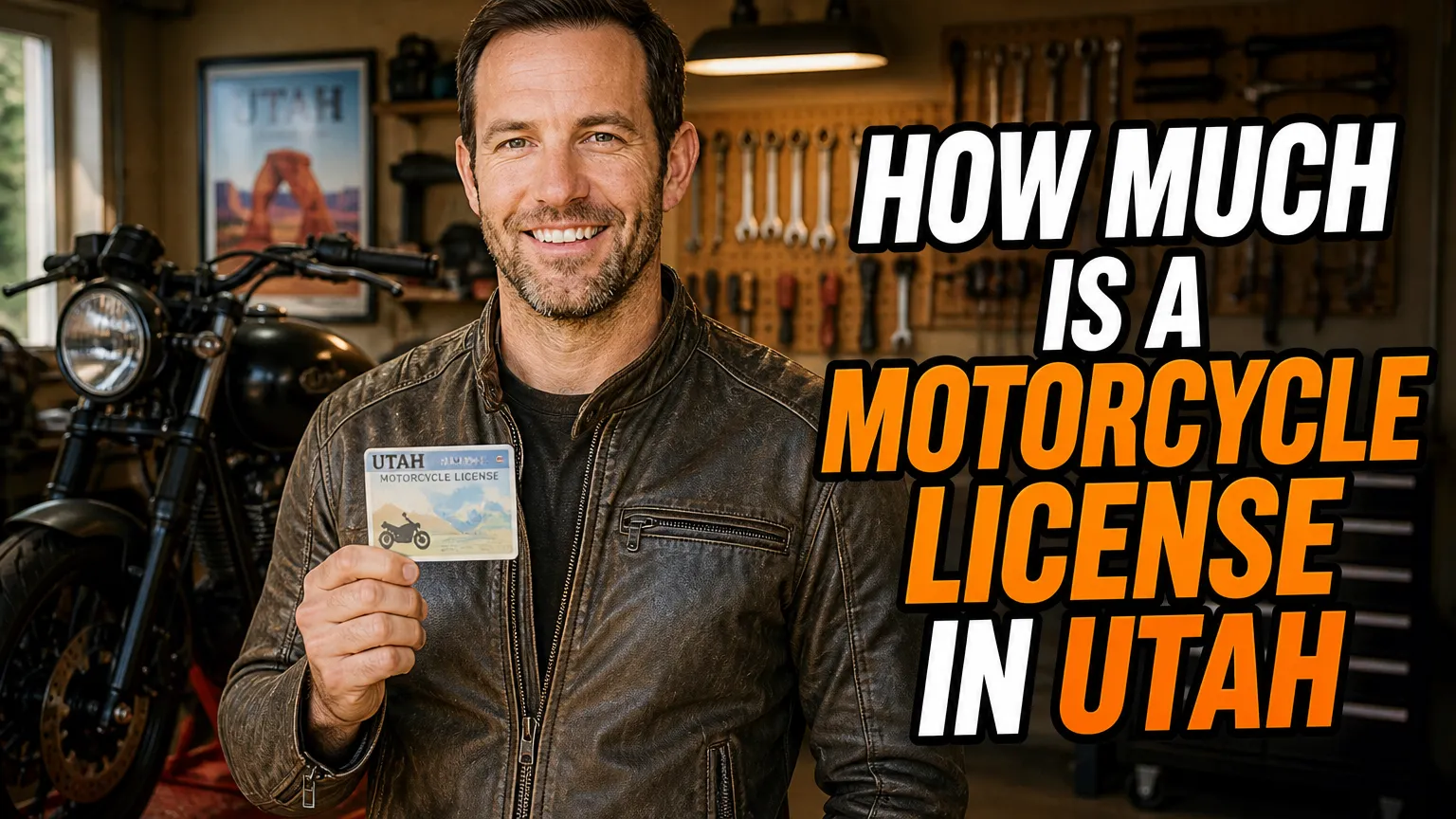
When I started comparing the cost of riding legally in Utah, I learned that “the license fee” is only one part of the budget. The total can include a permit, testing, and a motorcycle safety course, depending on the route I choose and whether I already have a Utah driver license.
So, how much is a motorcycle license in Utah? The short answer is that the motorcycle endorsement fee itself is relatively small, but training and other steps can make the full cost quite different from rider to rider. Here’s how I break down the fees and plan for the total without getting surprised at the counter.
- I’d budget $9 for the Utah motorcycle endorsement fee, then verify the current fee schedule before applying.
- A learner permit, tests, or a safety course can add to the total; course prices vary by provider.
- If I already have a valid Utah license, I may only need to pay the endorsement fee and any applicable testing or training costs.
- I’d check Utah DLD rules first because the right steps depend on my age, license status, and chosen route.
My quick cost breakdown
Utah adds motorcycle riding privileges to a driver license as a motorcycle endorsement. The Utah Driver License Division’s published fee schedule lists a $9 motorcycle endorsement fee. I treat that as the starting point, not a guaranteed all-in price, because my total depends on what else I need to complete.
If I already hold a valid Utah driver license, I wouldn’t assume I need to pay for a whole new license just to add the motorcycle privilege. I’d check whether I need a permit, an exam, or an approved course, then confirm any related charge with the Utah Driver License Division before making plans.
If I’m applying for my first Utah driver license at the same time, I’d include the base license fee as well as the motorcycle endorsement fee. The exact base fee can depend on the license type and situation, so I’d use the division’s current fee schedule rather than rely on an old online estimate.
Typical expenses I’d account for
- Motorcycle endorsement: The listed fee is $9, subject to change.
- Learner permit: I’d check whether I need one and what the current fee is before starting.
- Knowledge or skills testing: Costs and arrangements may depend on where and how I test.
- Safety course: Tuition varies by training provider and course.
- Base driver license: This applies if I’m getting a Utah license for the first time or renewing one at the same time.
That’s why I don’t give myself one fixed “Utah motorcycle license price” without asking a few questions first. A rider with an active license and a rider who needs a first license, permit, and training may face very different totals.
What I’d budget for the full process
For planning, I’d separate the costs into two buckets: the state licensing charges and anything I choose or need for training and testing. The state fee is the easier part to pin down. Course tuition is more variable, so I’d compare approved providers in my area before deciding on a final budget.
If I already have a Utah driver license
If my Utah driver license is current, I’d start by checking the motorcycle endorsement requirements and the fee schedule. My basic estimate would begin with the $9 endorsement fee, then I’d add any permit or testing costs that apply to my route.
If I take an approved rider course, I’d include the course tuition as a separate, potentially larger expense. For a rough planning figure, I might set aside a few hundred dollars for training, but I’d get the actual price directly from the provider because course fees, schedules, and included materials can differ.
If I need a Utah driver license too
If I don’t already have a Utah driver license, I’d budget for the appropriate base license fee in addition to the motorcycle-related costs. I’d also confirm whether I’m eligible to apply for a motorcycle endorsement at the same time or whether I need to complete another licensing step first.
In this situation, I’d avoid relying on a single number from a forum or an old blog post. The base license fee, age-based rules, testing steps, and permit requirements can all affect my total, so I’d confirm them with Utah DLD before I pay for a course or schedule an appointment.
If I’m comparing course and test routes
I’d compare the price of an approved safety course with the cost and logistics of testing on my own. A course can cost more upfront, but it may include structured coaching and may satisfy the skills-test requirement when it meets Utah’s rules. I’d check exactly what completion does—and doesn’t—replace before enrolling.
My practical budget would therefore look like this: the applicable license and endorsement charges, plus a permit or tests if required, plus course tuition if I choose that option. I’d leave a little room for repeat testing or another appointment rather than build a plan that only works if everything goes perfectly the first time.
How I’d get a motorcycle endorsement in Utah
I’d begin with the official requirements rather than assume the process is identical for every rider. Age, whether I already hold a Utah license, and whether I use an approved course can affect the steps I need to take.
- Check my starting point. I’d confirm whether my existing license is valid, whether I need a learner permit, and which motorcycle class or endorsement applies.
- Review the current rules. I’d read the Utah DLD motorcycle information and check which knowledge and skills requirements apply to me.
- Choose a training or testing route. I’d compare an approved safety course with the testing options available to me.
- Gather the required documents. I’d check the DLD instructions so I don’t arrive without identification or other required paperwork.
- Complete the applicable steps and pay the fees. I’d verify the latest prices and appointment requirements before heading in.
I like this order because it helps me avoid spending money on a course before I know whether it fits the licensing route I plan to use. Utah’s official motorcycle licensing information is the place I’d check for current instructions and links to relevant services.
Why I’d take the permit step seriously
A learner permit can be useful for practicing, but it comes with restrictions. I’d read those restrictions carefully and follow them rather than treating a permit like a full motorcycle endorsement. The permit rules are part of riding legally, not just a box to tick on the way to the next test.
I’d also check the permit’s validity period and any age-specific requirements before applying. That way, I could plan practice time and appointments around the actual rules instead of discovering that a deadline or restriction affects my schedule later.
Is a motorcycle safety course worth the money?
In my view, a good beginner course can be worth the cost even when it makes the initial budget bigger. Learning from an instructor gives me a structured way to practice basic controls, braking, turning, and hazard awareness before I take those skills onto busy roads.
A course may also offer a licensing advantage if Utah accepts its completion in place of a skills test for my situation. I’d never assume every class qualifies, though. Before I pay, I’d ask the provider whether the course is approved for Utah licensing purposes and confirm the result with the DLD.
What I’d check before enrolling
- Whether the provider and specific course are accepted for the Utah licensing process.
- What tuition includes, such as a motorcycle, helmet, or other equipment.
- Whether I need to bring my own protective gear.
- What happens if weather, illness, or a scheduling issue means I miss a session.
- Whether course completion changes a test requirement for my age and license status.
I’d compare the full value, not just the headline tuition. A cheaper course may require me to supply more gear or travel farther, while a more expensive class might include equipment and a convenient schedule. The right choice is the one that fits both my budget and the learning support I want.
Costs I might overlook
When I estimate the licensing total, I try to separate “required to get endorsed” from “smart to budget for before riding.” Gear may not be part of the state license fee, but I wouldn’t want my first riding budget to stop at the paperwork.
A properly fitting helmet, gloves, jacket, pants, and sturdy footwear can add a meaningful amount. I’d also plan for insurance, registration, and any motorcycle-related expenses that apply to the bike I intend to ride. Those aren’t all licensing charges, but they matter to the real cost of getting on the road.
Testing and appointment costs
I’d confirm whether a testing location charges separately for a knowledge or skills test, and whether I need to provide a motorcycle for the skills portion. Requirements and arrangements can vary, so I wouldn’t assume that a state fee covers every service I might use.
If I need a retest, I’d check whether there is an additional charge and how soon I can schedule it. I also like to factor in travel time and time away from work, because those practical costs can be easy to overlook when I’m only comparing dollar amounts.
How I’d keep the total down without cutting corners
I’d start by using the Utah DLD site to confirm the exact steps for my circumstances. That simple check can help me avoid paying for a service that doesn’t meet the state’s requirements or booking a test before I’m eligible.
Next, I’d compare nearby approved courses and ask what tuition includes. If I already own suitable gear, I’d check whether I can bring it; if not, I’d price the required items before enrolling. I wouldn’t choose a class based on price alone if its schedule or instruction quality didn’t work for me.
I’d also prepare for any knowledge test using the official Utah motorcycle materials. Studying in advance is a low-cost way to feel more confident and reduce the chance of needing another appointment. For me, a little preparation is a better savings strategy than rushing through the process.
My bottom line on Utah motorcycle licensing costs
When someone asks me how much a motorcycle license costs in Utah, I give the honest answer: the endorsement fee is listed at $9, but the real total depends on the rest of the process. A current Utah license may keep the state-fee portion relatively low, while a first license, learner permit, testing, or course tuition can raise the amount.
I’d verify every fee and requirement with Utah DLD before I apply, because amounts and procedures can change. Then I’d compare approved training options and budget for the gear and riding expenses I’ll need beyond the license itself.
That approach gives me a much more useful number than a single headline price. I can plan for the actual route I’ll take, get the right training, and focus on becoming a safer rider instead of worrying about unexpected steps at the last minute.
Frequently Asked Questions
How much does a motorcycle endorsement cost in Utah?
Utah lists a $9 motorcycle endorsement fee, but I’d confirm the current amount with the Utah Driver License Division before applying.
How much should I budget for a motorcycle license in Utah?
With an existing valid Utah license, I’d budget at least the endorsement fee, plus any permit, testing, or training costs that apply. A course can raise the total substantially.
Can I avoid the motorcycle skills test in Utah?
An approved motorcycle safety course may satisfy the skills-test requirement. I’d confirm course eligibility and current licensing rules with Utah DLD before enrolling.
Do I need a motorcycle learner permit before getting endorsed in Utah?
A permit may be part of the process, depending on your situation. I’d check Utah DLD’s current requirements for your age, license status, and chosen testing or training route.

Related Articles
Your Roadmap to Riding Legally: UK Motorcycle Licence Steps, Tests and Age Rules
Learn the UK motorcycle licence route, from CBT and theory to A1, A2 or unrestricted A. I explain age rules,…
Jake Miller
10 min read

Can-Am Spyder in California: The License You Need Before You Ride
Riding a Can-Am Spyder in California? I explain whether a Class C license is enough, when an M1 endorsement matters,…
Jake Miller
9 min read

Electric Motorcycle Licensing: What I’d Check Before Riding
Learn when an electric motorcycle needs a licence, how laws differ by location and bike class, and what I check…
Jake Miller
10 min read