
Your Roadmap to Riding Legally: UK Motorcycle Licence Steps, Tests and Age Rules
 Jake Miller
10 min read
Jake Miller
10 min read
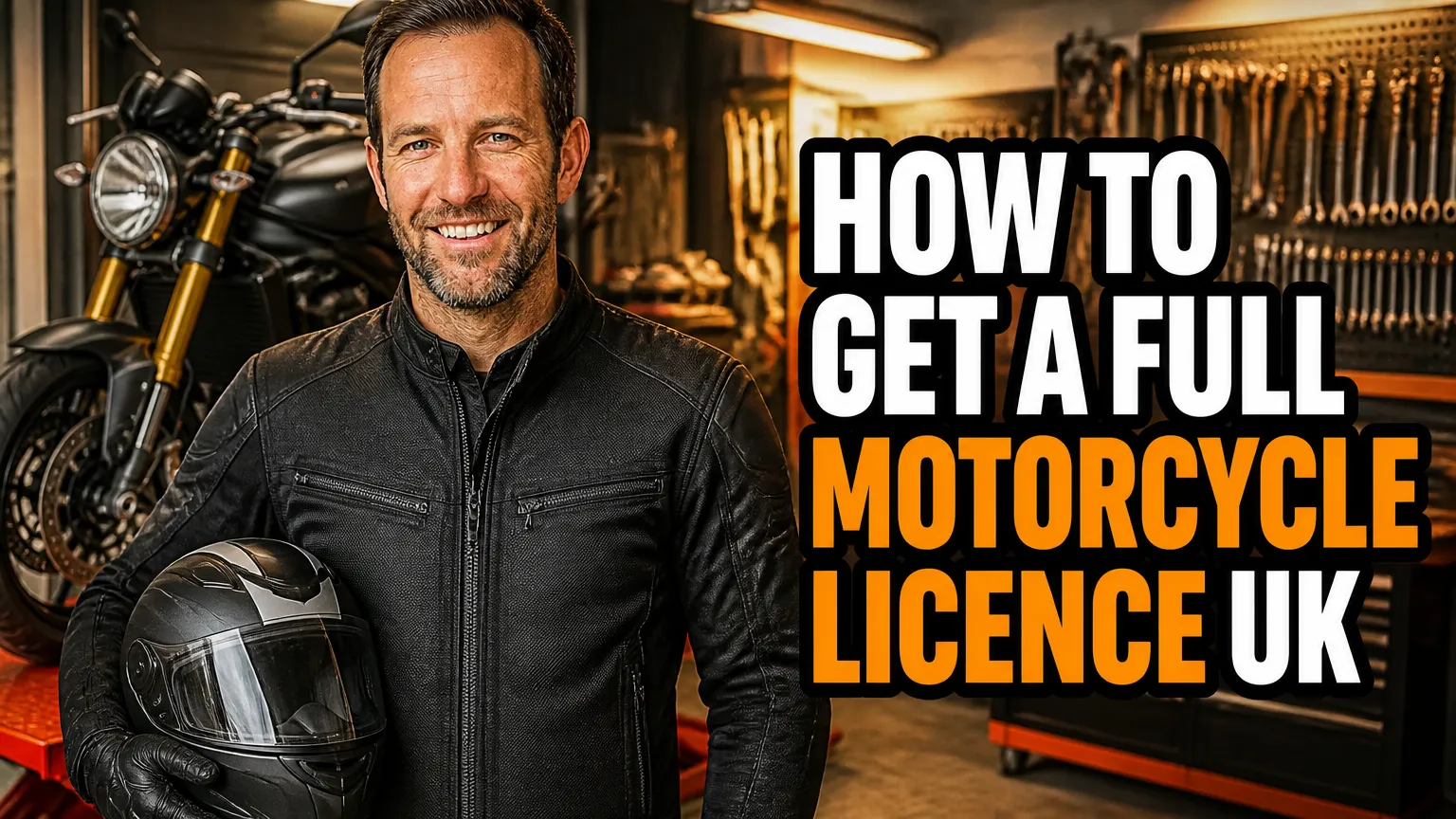
Working out how to get a full motorcycle licence in the UK can feel like a maze of ages, bike limits and test names. I find it much easier when I break it into a few decisions: which motorcycle category I can aim for, whether I need CBT, and which tests apply to my route.
In this guide, I’ll walk through those choices in a practical order. The rules below mainly cover Great Britain; if you live in Northern Ireland, I recommend checking the current Driver and Vehicle Agency requirements before booking training or tests.
- I choose between A1, A2 and unrestricted Category A based mainly on my age and riding plans.
- For most learners, CBT is the first step, but it is not a full motorcycle licence.
- The usual test route includes motorcycle theory, Module 1 and Module 2, with some exceptions for progressive access.
- I check the current DVLA and DVSA rules before applying, because eligibility and test requirements depend on my route.
First, I choose the motorcycle licence category that fits me
When I plan my licence, I start with the category rather than choosing a bike first. UK motorcycle entitlements are divided into different classes, and each one sets limits on the machines I can ride and the age at which I can qualify.
The main options are A1, A2 and Category A. A1 is the light motorcycle category, A2 allows more power, and Category A gives me unrestricted motorcycle entitlement once I meet its age and test conditions.
A1: a light motorcycle licence from age 17
I can usually take the A1 route from age 17. It allows me to ride a motorcycle up to 125cc and 11kW, subject to the category’s power-to-weight limit. Unlike riding on a learner’s CBT entitlement, a full A1 licence does not come with the same learner restrictions.
I consider A1 a useful option if I want a recognised full motorcycle licence but do not yet meet the age requirement for A2. It can also be a stepping stone: later, I can look at moving up to another category and check the tests and eligibility that apply at that time.
A2: a step up from age 19
From age 19, I can usually apply for an A2 licence. The motorcycle must have a maximum power output of 35kW and meet the applicable power-to-weight rules. There are also restrictions on how powerful a motorcycle can be before it is restricted, so I always check that a particular model is eligible rather than relying on its advertised description.
For me, A2 can be a good balance: it opens up more choice than A1 while keeping me within a defined power category. If I later want an unrestricted Category A licence, I may be able to use progressive access after holding A2 for at least two years.
Category A: unrestricted motorcycles
If I’m 24 or older, I can usually take the direct-access route to Category A. If I’m younger, progressive access may let me qualify from age 21, provided I have held an A2 licence for at least two years and meet the other requirements.
“Unrestricted” means I’m not limited to the A1 or A2 power category, but it doesn’t remove the need for the right licence entitlement, appropriate insurance or a roadworthy motorcycle. I still need to pass the relevant practical test on a suitable machine.
I check my starting point before booking anything
Before I pay for training, I check that my driving licence has the right provisional motorcycle entitlement. I also make sure the details are correct and that I understand which category I’m working towards. If anything on my licence is unclear, I check with the relevant licensing authority rather than guessing.
A full car licence does not normally give me a full motorcycle licence. In most cases, I still need to follow the motorcycle learner route and meet the motorcycle test requirements. There are limited exceptions for particular entitlements, so I verify my own circumstances against current official guidance.
I also keep an eye on the dates attached to my documents. A motorcycle theory test pass certificate is generally valid for two years, so I plan my practical tests within that period. If it expires before I pass, I may need to take the theory test again.
CBT is often my first road-riding step
For most new riders, the first practical step is Compulsory Basic Training, usually called CBT. It is training rather than a test, and completing it gives me a certificate of completion rather than a full motorcycle licence.
CBT covers basic motorcycle control, road positioning, observation and riding in traffic. I see it as a chance to build safe habits with an instructor before riding independently as a learner. The training provider must be approved, so I check that before I book.
What CBT lets me do, and what it doesn’t
With a valid CBT certificate and the correct provisional entitlement, I can generally ride a learner-legal motorcycle on the road within the rules for my category. On a 125cc motorcycle, that usually means a machine no more powerful than 11kW. I must display L plates and follow learner restrictions.
Those restrictions generally mean I cannot carry a passenger or ride on motorways as a learner. CBT is not the same as passing the tests for A1, A2 or Category A, and it does not give me full motorcycle entitlement. I check the exact conditions that apply to my licence and bike before setting off.
A CBT certificate is normally valid for two years. If I have not passed the relevant practical test by the time it expires, I will usually need to complete CBT again to continue riding under learner rules. That deadline is one reason I like to map out my training and test dates early.
I prepare for the motorcycle theory test
For a standard licence route, I need to pass the motorcycle theory test before I can take the practical tests. It includes multiple-choice questions and a hazard perception section. A car theory test does not usually replace the motorcycle theory test, so I make sure I book the correct one.
My preparation starts with the Highway Code and motorcycle-specific learning materials. I practise identifying developing hazards, not just memorising answers. That matters on the test, but it also helps me make safer decisions when I’m actually riding among traffic.
I book the theory test only when I’m reasonably confident with both parts. Once I pass, I note the expiry date and organise the practical stages with enough time to avoid having to repeat the theory test unnecessarily.
I take the practical tests in two parts
The motorcycle practical test has two modules: Module 1, which takes place off-road, and Module 2, which takes place on the road. I need to pass both for the relevant licence category, and I make sure the motorcycle I use meets that category’s test requirements.
Module 1: control and manoeuvres
Module 1 tests low-speed and higher-speed motorcycle handling in an off-road area. Manoeuvres can include moving the motorcycle, controlled stops, turning, a U-turn, and exercises that assess my ability to handle the bike safely at speed.
I find that practising slowly and consistently is more useful than trying to rush through the manoeuvres. If I’m learning with a school, I ask how its bikes are set up and what practice space is available. Familiarity with the controls helps me focus on the task rather than making last-minute adjustments on test day.
Module 2: riding on the road
Module 2 checks how I ride in real traffic conditions. The examiner assesses my observation, road positioning, speed choice, awareness and response to hazards, as well as my ability to follow directions safely.
I try to ride as I would on a normal journey: clearly, calmly and predictably. I pay particular attention to observations at junctions, blind spots and changes in traffic conditions. A safe ride is more important than trying to look fast or overly confident.
How I work out which test route applies
The route depends on the category I’m aiming for and whether I’m applying directly or progressing from a lower category. For a first full motorcycle licence, I generally need CBT, a motorcycle theory test and the practical modules for the category I want, subject to the specific rules that apply to me.
If I’m moving from A2 to unrestricted Category A through progressive access, the process can differ. For example, I may not need to take the theory test again if I already hold the relevant entitlement, but I still need to meet the age and licence-holding requirements and pass the appropriate practical test. I confirm the latest details with official guidance before booking.
I don’t assume that completing one category automatically upgrades me to another. I check whether I need a new test, whether my existing theory pass is still valid, and whether I have held the previous category for long enough. A quick check at the planning stage can save me from booking the wrong test.
What I budget for and how I choose training
The total cost can include CBT, lessons, a theory test, practical test fees, motorcycle hire and protective equipment. Costs vary by area and provider, and I may need extra training or another test attempt. I compare the full likely cost rather than looking only at the first advertised lesson price.
When I choose a training school, I check that it is approved and ask what the price includes. I also ask whether the school provides a bike and protective equipment for training and tests, how it handles cancellations, and what happens if I need more practice before I’m ready.
I prefer training that gives me clear feedback instead of simply counting lesson hours. A good instructor should help me understand what I’m doing well, what needs work and how to practise safely. I also make sure I’m comfortable with the bike’s weight and controls before I commit to a test date.
Common mistakes I try to avoid
- Confusing CBT with a full licence: I remember that CBT allows learner riding under conditions; it does not itself grant A1, A2 or Category A entitlement.
- Choosing the wrong test category: I check the age rules and motorcycle requirements before I book a practical test.
- Leaving too little time: I plan around the theory certificate’s validity and allow room for training and test availability.
- Assuming my car licence is enough: I check my motorcycle entitlement separately, even if I have driven for years.
- Riding outside learner conditions: I confirm the rules on L plates, passengers and motorway use before riding on CBT entitlement.
My final checklist before I ride independently
Before I ride without learner restrictions, I check that I have passed the tests for the motorcycle category I want and that the entitlement appears correctly on my licence. I also make sure the bike matches my licence category, is taxed and insured as required, and has a valid MOT where one is needed.
I invest in properly fitting protective gear and keep practising observation, positioning and hazard awareness after passing. Getting the licence is a major milestone, but I see safe riding as an ongoing skill rather than something I complete on test day.
If I’m unsure which route fits me, I write down my age, current licence entitlements, CBT status and riding goal, then compare those details with the latest official requirements. That simple approach helps me work out the next step, whether it’s booking CBT, preparing for theory or aiming for the unrestricted route.
Frequently Asked Questions
Do I need to pass CBT before getting a full motorcycle licence in the UK?
In most cases, you need a valid CBT certificate before riding a motorcycle on the road as a learner. You will also need to meet the requirements for your chosen licence route and pass the relevant tests.
At what age can I get an unrestricted motorcycle licence in the UK?
You can usually take the direct-access route to an unrestricted Category A licence at 24. You may qualify from 21 through progressive access if you have held an A2 licence for at least two years.
Can I ride a 125cc motorcycle on a full car licence?
A full car licence alone does not usually let you ride a 125cc motorcycle. You generally need a provisional motorcycle entitlement and a valid CBT certificate, subject to specific exceptions.
What tests do I need to pass for a full motorcycle licence?
Depending on your route, you may need a motorcycle theory test and practical Module 1 and Module 2 tests. Progressive access from A2 to Category A has different theory-test requirements, so check the current rules before booking.

Related Articles
Your Roadmap to Riding: Getting a Motorcycle Licence in Alberta
Learn how I’d approach Alberta’s motorcycle licence process, from eligibility and the Class 6 knowledge test to supervised practice, road…
Jake Miller
11 min read
Utah Motorcycle License Costs: Fees, Training, and What I’d Budget
Find Utah motorcycle endorsement fees, permit and training costs, testing options, and realistic total budgets, plus the steps I’d take…
Jake Miller
10 min read

Can-Am Spyder in California: The License You Need Before You Ride
Riding a Can-Am Spyder in California? I explain whether a Class C license is enough, when an M1 endorsement matters,…
Jake Miller
9 min read