
9 Best Cameras for Motorcycle Travel: My Tested Picks for Long-Haul Rides
 Jake Miller
12 min read
Jake Miller
12 min read
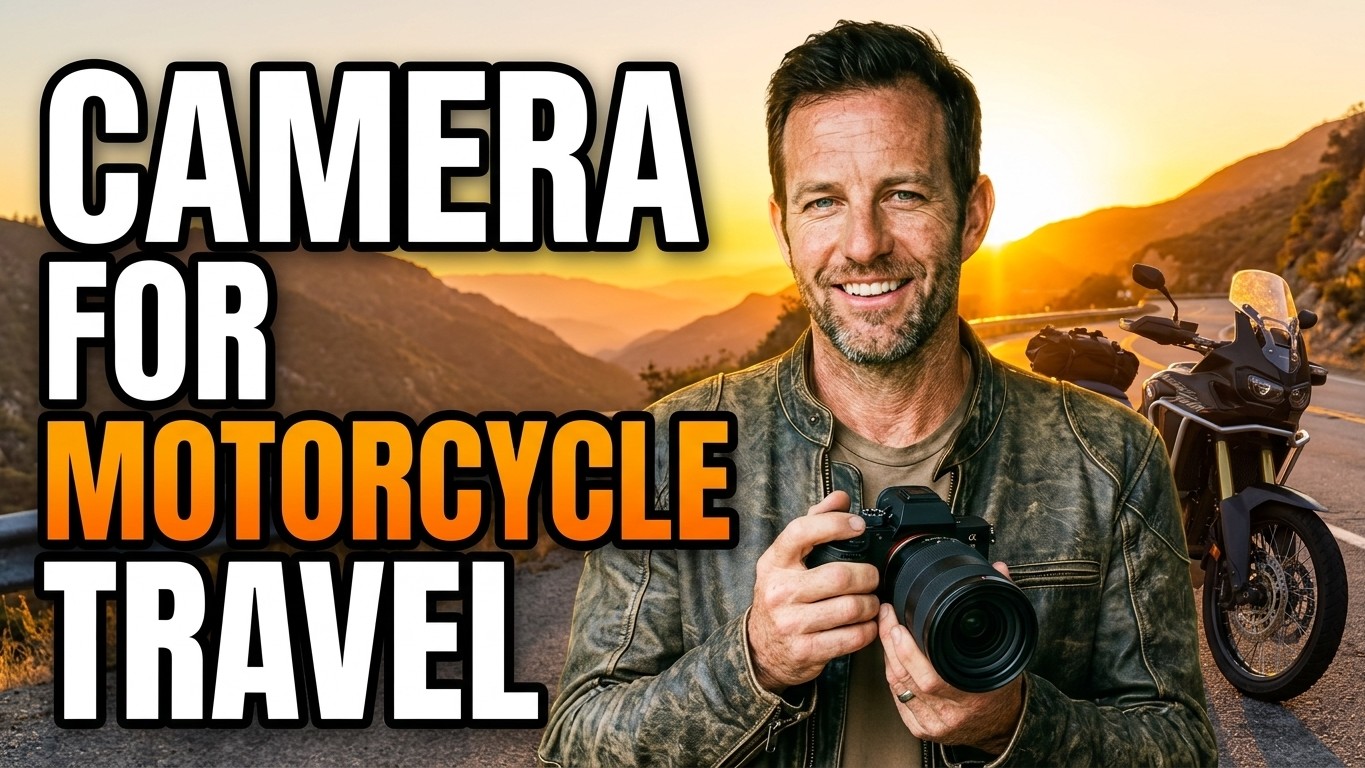
I’ve strapped a lot of cameras to a lot of helmets over the years, and I’ve ruined my fair share of footage in the process. Vibration, wind noise, dead batteries at golden hour, fogged-up lenses in the rain — I’ve dealt with all of it on long-distance motorcycle trips.
So when people ask me what the best camera for motorcycle travel actually is, I don’t give a one-size-fits-all answer. It depends on whether you’re chasing cinematic footage, quick social clips, or just a reliable record of the ride in case something goes wrong.
Below are the nine cameras I keep coming back to, based on real trips through everything from desert highways to alpine switchbacks. I’ll tell you exactly what each one is good at, and where it falls short.
- The GoPro HERO13 Black is my go-to all-rounder for helmet and chest-mounted motorcycle footage.
- If low light and battery life matter most, the DJI Osmo Action 5 Pro is the toughest competitor GoPro has faced in years.
- For scenic touring routes where you want to capture everything, the Insta360 X4‘s 360° reframing is a genuine game-changer.
- On a tight budget, the Akaso Brave 8 delivers surprisingly stable 4K footage for a fraction of the price.
- Don’t skip the mounting hardware — my picks for the best GoPro mounts for motorcycle helmets matter as much as the camera itself.
1. GoPro HERO13 Black — Best Overall Camera for Motorcycle Travel
I’ll be upfront: the GoPro HERO13 Black is still my default recommendation for most riders, and it’s the camera I personally reach for on multi-week trips. It shoots 5.3K video at up to 60fps, has HyperSmooth 6.0 stabilization, and handles the constant vibration of a motorcycle better than almost anything else I’ve tested.
What really sold me on this generation is the new magnetic mounting system. GoPro finally ditched the fiddly buckle mounts for a quick-release magnetic swap, which means I can pull the camera off my helmet at a gas stop in about two seconds.
Battery life is still the HERO13’s weak point on long riding days, so I always carry two spares in my tank bag. Price sits around $399 for the body alone, though I’d recommend the Creator Edition bundle if you plan on doing handheld shots at stops too.
Why It Works for Touring
The HERO13’s waterproofing (33 feet without a case) means I never worry about sudden rain on a pass. If you’re still deciding between GoPro generations or competing brands, I broke down the full lineup in my guide to the best GoPro camera for motorcycle helmets.
2. DJI Osmo Action 5 Pro — Best for Low Light and Battery Life
DJI has been closing the gap with GoPro for years, and with the Osmo Action 5 Pro, I genuinely think they’ve pulled ahead in a couple of key areas. The 1/1.3-inch sensor is noticeably larger than GoPro’s, and it shows the moment the sun starts dropping behind the mountains.
I’ve ridden into dusk more times than I can count trying to make it to a campsite before dark, and this is the only action camera that’s given me usable footage in those conditions. The dual native ISO sensor genuinely changes what’s possible in low light on a bike.
Battery life is the other big win here — DJI rates it at up to 4 hours of continuous 4K recording, which roughly doubles what I get out of most competitors. At around $349, it’s also slightly cheaper than the GoPro flagship.
The touchscreen is bright enough to see with gloves on in direct sunlight, which sounds minor until you’ve squinted at a dim screen on the side of a highway trying to check your framing.
3. Insta360 X4 — Best 360° Camera for Scenic Routes
The Insta360 X4 changed how I shoot on twisty mountain roads. Instead of picking one angle and hoping I nailed it, I mount this thing on a selfie stick behind my head and let it capture everything in 360 degrees, then I reframe the perfect shot afterward on my phone.
It shoots 8K 360 video and up to 4K in single-lens mode, and the “invisible selfie stick” effect makes it look like a drone is following you down the road. Riders on scenic tours through places like the Alps or the Pacific Coast Highway get incredible mileage out of this feature.
At roughly $499, it’s not cheap, and the reframing workflow does take some getting used to. But if you’ve ever missed a shot because you were watching a hairpin turn instead of your camera angle, you’ll understand why I keep this in my top-loader bag on scenic trips.
A Word on Editing Time
I’ll be honest — 360 footage takes longer to edit than standard action cam clips. I only reach for the X4 on days I know I’ll actually sit down and process footage that evening or once I’m home.
4. Insta360 GO 3S — Best Tiny Clip-On Camera
The Insta360 GO 3S is the camera I use when I don’t want to think about a camera at all. It’s about the size of a large thumb, clips onto my jacket collar or helmet chin bar magnetically, and just quietly records the ride.
It shoots 4K video, which is a big step up from the previous GO generation, and the Action Pod it comes with doubles as a charging case and a mini tripod for stops. I’ve used mine to grab quick clips at fuel stations without ever pulling out my phone.
It’s not going to replace a proper action camera for your main POV footage — battery life is short and stabilization isn’t quite HERO13 territory. But as a lightweight second camera for candid moments, nothing else comes close. Expect to pay around $399 for the 64GB version.
5. DJI Osmo Pocket 3 — Best Gimbal Camera for Vlogging Stops
Once I’m off the bike, the DJI Osmo Pocket 3 is what comes out of my tank bag. It’s a pocket-sized gimbal camera with a 1-inch sensor, which is a huge sensor for something this small, and the footage looks noticeably more “cinematic” than typical action cam clips.
I use this for walk-and-talk vlogging at viewpoints, interviews with other riders, and any shot where I want smooth, professional-looking movement without carrying a full gimbal rig. The flip-out screen makes framing yourself effortless.
At around $519, it’s an investment on top of your action camera, not a replacement for one. It’s also not built for mounting on the bike itself — this one lives in my jacket pocket for when I stop.
6. Sony ZV-E10 II — Best Mirrorless Camera for Serious Vlogging
If you’re building a real travel channel around your motorcycle trips, at some point an action camera alone won’t cut it. That’s where the Sony ZV-E10 II comes in — it’s an APS-C mirrorless camera built specifically for vlogging, with a flip-out screen and Sony’s excellent autofocus.
I pack this for trips where I know I’ll be doing sit-down pieces to camera, landscape shots, and interviews with locals along the route. The larger sensor makes a massive difference in image quality compared to any action camera, especially in low light.
It’s not something I’d mount to my helmet — it’s too bulky and not weatherproof enough for that role. Priced around $999 body-only, I treat it as the “B-camera” that lives in my panniers for planned shots, not spontaneous riding footage.
7. Akaso Brave 8 — Best Budget Action Camera
Not everyone wants to drop $400 on a camera for a hobby they’re just getting into, and I get that. The Akaso Brave 8 is the budget pick I actually trust, and I’ve put one through a full week of gravel roads without a single failure.
It shoots stabilized 4K30 video, has a dual screen setup so you can frame shots from the front, and comes with a solid mounting kit in the box. At around $130, it’s a fraction of the cost of the big names.
The stabilization isn’t as refined and low light performance drops off noticeably compared to GoPro or DJI. But for someone testing the waters of helmet cam footage, or for a backup camera to run alongside your main one, it punches well above its price. I go deeper on options like this in my best cheap action camera for motorcycle roundup.
8. Ricoh Theta X — Best 360 Camera for Scenic Panoramas
The Ricoh Theta X takes a different approach than the Insta360 X4 — it’s built primarily around still photography and panoramas rather than video reframing, and honestly, that’s exactly why I love it for certain stops.
When I pull over at a scenic overlook, I pop this out, hit one button, and get a full spherical still image of the entire view in seconds — no stitching multiple shots together manually. The 1-inch sensors produce genuinely sharp panoramic stills.
It does shoot 5.7K 360 video too, but I mainly use it for photography rather than as a helmet-mounted action camera. At around $799, it’s a niche purchase, but if you’re the type who stops constantly for photos, it saves a ton of time. It’s also weather-resistant enough to handle a sudden mountain drizzle.
9. DJI Mini 4 Pro — Best Drone for Aerial Motorcycle Travel Shots
No ground-level camera can give you the establishing shots a drone can, and the DJI Mini 4 Pro is the one I pack for trips where the scenery deserves it. At under 249 grams, it doesn’t require the more restrictive drone registration in many regions, which matters a lot when you’re crossing borders on a bike.
It shoots 4K/60fps HDR video with omnidirectional obstacle sensing, which I appreciate when I’m flying near tree lines or canyon walls I’m not totally familiar with. Flight time is roughly 34 minutes per battery, and I usually carry two.
Packing a drone on a motorcycle takes some Tetris skills with your luggage, but the aerial shots of your bike winding through a mountain pass are worth the extra planning. Prices run around $759 for the Fly More Combo, which I’d recommend for the extra batteries alone.
How I Actually Choose a Camera for a Trip
I don’t bring every camera on every ride. Honestly, most days I’m running just the GoPro HERO13 Black on my helmet and calling it done. The extra gear comes out for trips I know are special — multi-week tours, unfamiliar countries, or routes I’ve been wanting to document properly for years.
Here’s roughly how I think through it before I pack.
Length and Type of Trip
For a weekend loop, I keep it simple — one action camera, maybe two batteries. For a three-week international tour, I’ll bring a primary action cam, a backup budget cam like the Akaso Brave 8, and the Osmo Pocket 3 for stops.
Climate and Conditions
Riding through rain, dust, or extreme heat changes what I trust. The DJI Osmo Action 5 Pro’s low-light performance matters a lot more on trips with shorter daylight hours, while waterproofing matters more in tropical or coastal routes.
What You’re Actually Making
If you’re just keeping memories and a safety record, a single reliable action camera is plenty. If you’re building content for YouTube or Instagram, you’ll want at least one B-camera like the Sony ZV-E10 II or Osmo Pocket 3 for variety in your shots.
Mounting Matters as Much as the Camera
I can’t stress this enough — the camera is only half the equation. A great camera on a bad mount produces shaky, useless footage, and a mediocre camera on a rock-solid mount can still surprise you.
I’ve tested chin mounts, side mounts, and top mounts extensively, and my picks are laid out in detail in my guide to the best GoPro mounts for motorcycle helmets. Chin mounts generally give the most stable footage since they move less relative to your head.
If you’re going the adhesive route rather than a bolt-on mount, prep and curing time matter more than people realize. I walk through my exact process, including which adhesives actually survive highway vibration, in my GoPro adhesive mount setup guide.
Action Cameras Beyond the Big Two Brands
GoPro and DJI dominate the conversation, but they’re not the only players worth knowing about, especially if you’re comparing specs before you buy. I cover the wider field, including some less obvious contenders, in my breakdown of the best action cameras for motorcycle helmets.
Battery and Storage Habits I Swear By
No camera on this list will save you if you run out of battery or storage mid-ride. I learned this the hard way missing an entire mountain pass because I forgot to format a card the night before.
My routine now: charge everything overnight without exception, format cards the night before a big riding day, and always carry at least one spare battery per camera I’m running. For multi-day trips, I bring a small power bank rated for at least 20,000mAh.
I also shoot in shorter clip segments rather than one continuous multi-hour recording. It’s easier to manage files, and if a card fails, I lose minutes instead of an entire day’s footage.
My Final Take
If you only take one thing from this list, let it be this: the GoPro HERO13 Black and the DJI Osmo Action 5 Pro are both excellent, and you genuinely can’t go wrong picking whichever one is on sale when you’re ready to buy. Both will handle motorcycle vibration, weather, and long days on the road.
If your budget is tighter, the Akaso Brave 8 will still get you quality footage worth sharing. And if you’re chasing something more cinematic for a passion project, pairing an action camera with the DJI Osmo Pocket 3 or a proper drone like the DJI Mini 4 Pro takes your footage to a completely different level.
Whatever you choose, spend as much thought on your mounting setup as you do on the camera itself. I’ve seen a $400 camera produce garbage footage from a loose mount, and I’ve seen a $130 camera look great because it was rock solid on a rider’s helmet. Ride safe, and I hope this gets your next trip properly documented.
Frequently Asked Questions
What is the best camera for motorcycle travel on a budget?
The Akaso Brave 8 is my top budget pick, offering stabilized 4K footage and a rugged build for well under $150. I’ve got a full rundown in my best cheap action camera for motorcycle guide.
Should I mount my camera on my helmet or my bike?
I run both when I can, but a helmet mount gives the most immersive POV footage. Check my breakdown of the best GoPro mounts for motorcycle helmets before you buy anything.
Are adhesive mounts safe for highway speeds?
Yes, if you use the right adhesive and curing time. I always let mine cure for 24 hours before hitting highway speeds, and I detail my exact process in my GoPro adhesive mount setup guide.
Is a 360 camera worth it for motorcycle touring?
For scenic touring routes, absolutely. A 360 camera like the Insta360 X4 lets me reframe the shot after the ride, so I never miss the view because I was watching the road instead of aiming a lens.

Related Articles

6 Best Rear View Cameras for Motorcycle: Riders Who Want Eyes in the Back of Their Head
I've tested the top rear view cameras for motorcycles so you don't have to. Here are my real-world picks for…
Jake Miller
12 min read

8 Best Cameras for Riding Motorcycle in 2026 (Rider-Tested Picks)
I've mounted, crashed, and rain-soaked dozens of cameras on my helmet and bike. Here are the 8 best cameras for…
Jake Miller
9 min read

8 Best Motorcycle Cameras for Honda CB500F Riders in 2026
I ride a Honda CB500F daily and tested cameras built for it. Here are the 8 best motorcycle cameras for…
Jake Miller
11 min read