
6 Best Rear View Cameras for Motorcycle: Riders Who Want Eyes in the Back of Their Head
 Jake Miller
12 min read
Jake Miller
12 min read
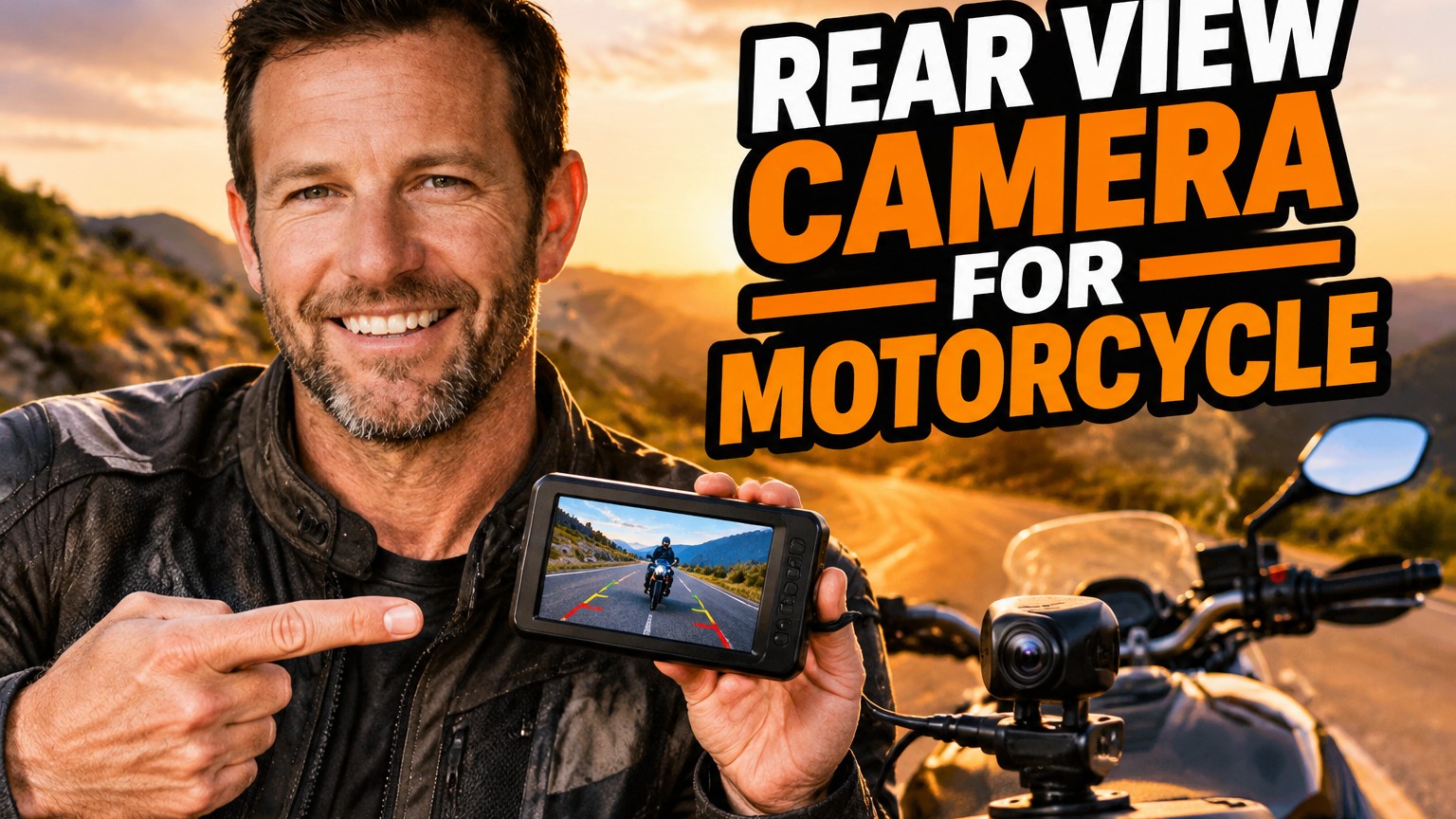
I’ve spent more miles than I’d like to admit staring into mirrors that vibrate too much to actually see anything useful. Somewhere around my third close call with a car drifting into my lane, I decided it was time to add a rear view camera to my bike instead of just squinting harder.
Since then, I’ve mounted, wired, and lived with half a dozen different systems across three different motorcycles. Some were fantastic. A couple were genuinely frustrating to install. I’m going to walk you through the ones I’d actually recommend to a friend, based on real riding time, not just spec sheets.
- My overall favorite is the INNOVV K5 for its sharp dual-channel footage and rock-solid waterproofing.
- If you’re touring long distances, the VSYS M6 Pro‘s built-in live monitor is a genuine game-changer.
- Budget riders should look at the BlueskySea DV128 or INNOVV C5 for solid performance under $200.
- A rear view camera and a helmet action camera solve different problems, and I explain why you might want both.
- Waterproofing, mounting flexibility, and live-view capability matter more than resolution numbers alone.
What I Actually Look for in a Motorcycle Rear View Camera
Before I get into my picks, let me explain my criteria, because “rear view camera” means different things to different riders. Some people want a live feed on their handlebars, like a digital mirror. Others want a system that records constantly and can double as evidence if something goes wrong behind them.
I care about four things above everything else: waterproofing, mounting flexibility, image clarity in low light, and whether the system actually survives vibration. A camera that looks great on a bench but rattles loose on washboard pavement is useless to me.
I also weigh price against long-term reliability. Cheap systems that die after six months aren’t actually cheap. With that in mind, here’s my rundown.
1. INNOVV K5 — Best Overall Rear View Camera System
The INNOVV K5 is the system I keep coming back to, and it’s currently mounted on my own adventure bike. It’s a dual-channel setup with a front and rear camera, both shooting sharp 1080p footage, and both housed in genuinely rugged, waterproof shells rated well beyond what I’ve ever needed on flooded backroads.
What sold me is how usable the rear camera feels as an actual mirror substitute. INNOVV sells an optional small display that mounts near your dash, giving you a live rear feed while you ride, not just a recording for later.
Why I Rate It So Highly
The build quality is the standout here. I’ve had the K5 through a full riding season, including a couple of downpours, and the connectors haven’t given me a single moment of corrosion or signal drop. That’s rare in this category.
It also has built-in Wi-Fi, so I can pull footage straight to my phone without pulling an SD card in the rain. At around $300 to $350 depending on the bundle, it’s not cheap, but I consider it the closest thing to a “buy it once” option on this list.
Who It’s For
If you ride year-round, commute in traffic, or just want the most dependable rear view camera you can bolt to a motorcycle, the K5 is my top pick without much hesitation.
2. VSYS M6 Pro — Best for Long-Distance Touring
The VSYS M6 Pro is the system I’d point touring riders toward first. It pairs a 2.7K front camera with a 1080p rear camera, and it includes a 4-inch color monitor that mounts right on your handlebars or fairing.
That monitor is the real selling point for me. Unlike systems that only record, the M6 Pro gives you a live rear feed you can actually glance at mid-ride, which feels a lot like having a second set of mirrors that never fog up.
Real-World Performance
I ran this system on a two-week trip through some genuinely miserable weather, and the IP67-rated cameras never blinked. Parking mode is a nice bonus too, since it keeps recording motion-triggered footage even when the bike’s off, which is handy at crowded rest stops.
Pricing typically lands between $220 and $260, which I think is fair given you’re getting a live display included rather than as a pricey add-on.
Minor Gripes
The menu system takes some getting used to, and I’d recommend setting everything up in your garage before your first ride rather than fumbling with settings on the road.
3. BlueskySea B1M — Best Value Dual-Channel Camera
The BlueskySea B1M is where I send riders who want a dual-channel system without spending north of $250. It shoots 1080p on both the front and rear cameras and comes with a compact 3-inch screen for live viewing or footage review.
I was honestly surprised by how capable this thing is for the price, which usually sits around $130 to $160. The waterproofing held up fine through a rainy commute season, and loop recording worked exactly as advertised without me having to babysit the SD card.
Where It Falls Short of the Pricier Options
Night footage isn’t quite as crisp as what I get from the INNOVV K5, and the mounting hardware feels a bit more plasticky. For the price, though, I think it’s one of the smartest buys in this whole category.
My Take
If you’re testing the waters with your first rear view camera setup and don’t want to commit $300 right away, the B1M is a genuinely solid entry point that doesn’t feel like a compromise.
4. INNOVV C5 — Best Budget Pick
The INNOVV C5 is the stripped-down sibling of the K5, and it’s the one I recommend most often to riders on a tighter budget. You still get dual 1080p cameras and the same waterproof housing INNOVV is known for, just without some of the premium extras like Wi-Fi.
Priced around $180, it delivers footage quality that genuinely surprised me given the cost difference from the K5. I used it as a backup system on my second bike for a full winter, and it never let me down in freezing temps.
What You’re Trading Off
No Wi-Fi means you’re pulling the SD card manually to review footage, which is a small inconvenience I got used to quickly. There’s also no built-in GPS module option, so if you want ride data overlays, you’ll need to look elsewhere.
For riders who mainly want reliable rear coverage without the bells and whistles, the C5 punches well above its price point.
5. INNOVV K3 — Best Compact, Discreet Setup
The INNOVV K3 is my pick for riders who want a rear view camera system that doesn’t scream “I have a camera rig” from across the parking lot. The cameras themselves are noticeably smaller than the K5’s, which makes them easier to tuck under a tail section or fairing.
It still records dual-channel 1080p footage and includes app connectivity for quick footage transfers. I appreciated how unobtrusive it looked on my naked bike, where I didn’t want bulky housings breaking up the bike’s lines.
Performance Notes
Image quality is close to the K5 in daylight, though I noticed a slight dip in low-light clarity when I compared clips side by side. At roughly $280, it sits in the upper-middle of this list price-wise.
If a sleek, low-profile setup matters more to you than absolute top-tier night performance, the K3 is worth the premium over the C5.
6. BlueskySea DV128 — Best for a Simple Rear-View-Only Setup
Not everyone wants a full dual-channel system, and that’s exactly why I keep the BlueskySea DV128 on this list. It’s a more basic dash cam setup, but it works great as a dedicated rear-facing unit paired with a compact 2-inch display.
At around $90 to $120, it’s the most affordable option here by a good margin. I put one on my commuter bike specifically because I didn’t need front-facing footage, just a reliable way to see what’s coming up behind me in traffic.
Honest Limitations
The screen is small, and I wouldn’t call the night footage impressive. But as a pure “extra set of eyes” tool rather than a full recording rig, it does exactly what I need it to do without overcomplicating things.
Who Should Buy This
City commuters and riders who mainly worry about tailgaters and lane-splitting traffic will get the most value here. It’s not a touring camera, and I wouldn’t market it as one.
Rear View Cameras vs. Action Cameras: They’re Not the Same Job
I get asked constantly whether a GoPro can just replace a dedicated rear view camera, and my honest answer is no, not really. Action cameras are built to capture beautiful footage for later, while a rear view system is built to give you information right now, while you’re still riding.
That said, I run both on most of my bikes because they solve different problems. If you’re curious about the recording side of things, I put together a full breakdown of the best gopro camera for motorcycle helmet setups that pair nicely alongside a rear view system.
Mounting matters just as much as the camera itself. I’ve gone through more mount failures than I’d like to admit, which is why I always point riders toward my guide on the best go pro mounts for motorcycle helmets before they buy anything.
A Note on Adhesive Mounts
If you’re combining a helmet-mounted action cam with your handlebar rear view system, adhesive quality can make or break the whole setup at highway speed. I learned this the hard way after losing a camera on the interstate, which is why I now only trust the options covered in my best go pro adhesive mount setup for motorcycle helmet guide.
If You’re Still Comparing Action Cameras
For riders trying to decide between a rear view system and a more traditional recording setup, I’d suggest reading my roundup of the best action camera for motorcycle helmets before making a final call. And if budget is your main constraint, my guide to the best cheap action camera for motorcycle options is worth a look too.
How to Actually Install These Without Losing Your Mind
I won’t sugarcoat it, installing a rear view camera system is more involved than slapping on a phone mount. You’re running wires, tapping into your bike’s electrical system, and finding a mounting point that survives vibration.
Wiring Basics I’ve Learned the Hard Way
Always wire through a fused connection, ideally straight to the battery with an inline fuse, rather than tapping an accessory circuit that might not handle continuous draw well. I fried one cheap camera early on by ignoring this, and it wasn’t fun replacing it.
Route cables along existing harnesses and use zip ties generously. Loose cable is the number one reason I’ve seen these systems fail, not the cameras themselves.
Mounting Placement Tips
For the rear camera, I like mounting it under the tail light or license plate bracket, angled slightly upward to capture the lane behind you rather than just the road surface. It took me a couple of tries to get the angle right on my own bike.
For the front camera on dual-channel systems, tucking it near the windscreen or headlight nacelle usually keeps it protected from direct road debris while still capturing a clean forward view.
What Separates a Great System From a Mediocre One
Waterproof Rating Actually Matters
Every product on my list carries at least an IP67 rating, and I don’t recommend going lower than that if you ride in any kind of weather. I’ve had cheaper, unrated cameras fog up and die within a single rainy season.
Live View vs. Record-Only
This is the biggest fork in the road when picking a system. The VSYS M6 Pro and INNOVV K5 both offer genuine live-view capability, which changes how you actually ride with them. Record-only systems like the DV128 are fine, but they won’t help you avoid a hazard in the moment.
Storage and Loop Recording
Every system here uses loop recording onto a microSD card, automatically overwriting old footage once the card fills up. I always recommend a high-endurance card rated for continuous dash cam use, since standard cards wear out fast under this kind of write cycle.
My Final Take
If I had to recommend just one system to a fellow rider, I’d still hand them the INNOVV K5. It’s held up the longest for me, the footage quality is the best on this list, and the live-view option genuinely changes how confident I feel merging on the highway.
But I don’t think there’s a wrong choice here depending on your budget and riding style. The VSYS M6 Pro is fantastic for touring, the BlueskySea B1M is the smartest value buy, and the DV128 is perfect if you just want something simple bolted on for commuting.
Whatever you pick, I’d genuinely encourage you to get one. Mirrors are great, but they’ve never once saved me from a blind spot surprise the way a good rear view camera has.
Frequently Asked Questions
Do I really need a rear view camera on my motorcycle?
You don’t need one the way you need mirrors, but a rear view camera fills in the blind spots mirrors can’t cover, especially at highway speed or when lane-splitting. I consider it a huge upgrade for situational awareness, not a replacement for your mirrors.
Can I use a GoPro instead of a dedicated rear view camera?
You can, but it’s not the same job. A GoPro is built for capturing footage, not for giving you a live feed while you ride. If you want a hybrid setup, check out my guide to the best gopro camera for motorcycle helmet for the recording side of things.
How much should I expect to spend on a good motorcycle rear view camera system?
Budget setups like the BlueskySea DV128 start around $100 to $120, while full dual-channel systems with live monitors, like the VSYS M6 Pro or INNOVV K5, run anywhere from $200 to $350 depending on GPS and accessory options.
Are these cameras waterproof enough for daily riding?
Every camera on my list carries at least an IP67 rating, which means they’ve handled rain, road spray, and even the occasional car wash for me without issue. Just make sure connectors are seated properly and dielectric grease is applied during install.

Related Articles

8 Best Cameras for Riding Motorcycle in 2026 (Rider-Tested Picks)
I've mounted, crashed, and rain-soaked dozens of cameras on my helmet and bike. Here are the 8 best cameras for…
Jake Miller
9 min read

9 Best Cameras for Motorcycle Travel: My Tested Picks for Long-Haul Rides
I've tested action cams, 360 cameras, and mirrorless bodies on thousands of touring miles. Here are the 9 best cameras…
Jake Miller
12 min read

8 Best Motorcycle Cameras for Honda CB500F Riders in 2026
I ride a Honda CB500F daily and tested cameras built for it. Here are the 8 best motorcycle cameras for…
Jake Miller
11 min read