
8 Best Cameras for Riding Motorcycle in 2026 (Rider-Tested Picks)
 Jake Miller
9 min read
Jake Miller
9 min read
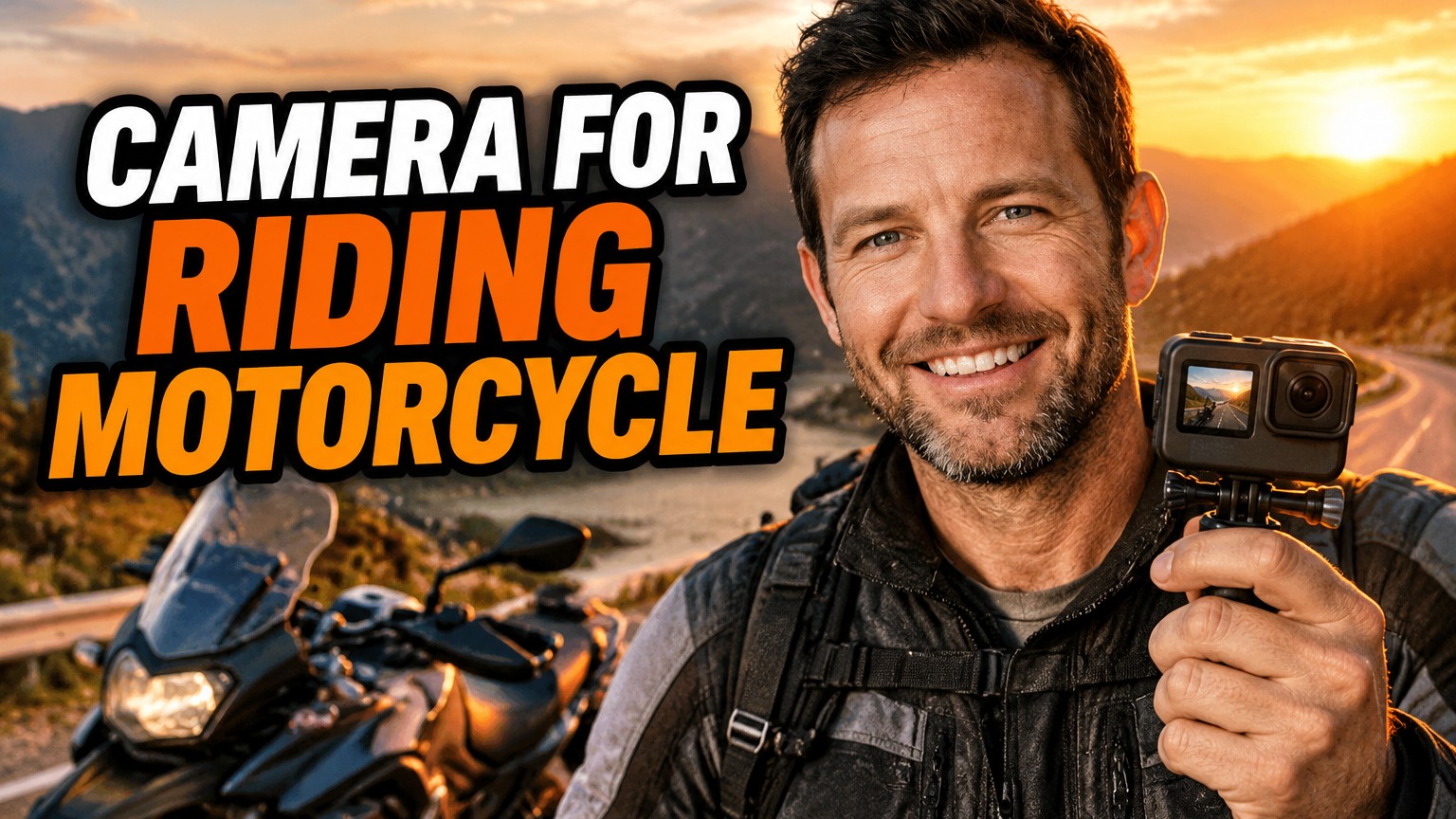
I’ve been strapping cameras to my helmet and handlebars for over a decade, and I’ve gone through more mounts, batteries, and cracked lenses than I’d like to admit. Finding the best camera for riding motorcycle trips isn’t just about megapixels — it’s about vibration resistance, wind noise, battery life in the cold, and whether the thing survives a tip-over in a parking lot (ask me how I know).
In this guide, I’m sharing the exact cameras I’ve personally used or tested extensively, from daily commutes to multi-day touring trips. No generic “top pick” fluff — just real gear, real specs, and my honest take on what’s worth your money.
- The GoPro Hero 13 Black is my top all-around pick thanks to its stabilization, durability, and massive accessory ecosystem.
- If you want footage you can reframe after the ride, the Insta360 X4 shoots true 8K 360-degree video that’s a game-changer for group rides.
- For low-light and dusk commutes, the DJI Osmo Action 5 Pro genuinely outperforms the competition.
- Budget-conscious riders should look at the SJCAM SJ8 Pro or DJI Osmo Action 4 — both punch above their price.
- Mounting matters as much as the camera itself — I’ll link my full breakdowns on helmet mounts and adhesive setups below.
1. GoPro Hero 13 Black — Best Overall Camera for Riding Motorcycle
The GoPro Hero 13 Black is the camera I recommend to almost every rider who asks me where to start. It shoots 5.3K video at 60fps, has HyperSmooth 6.0 stabilization that makes even choppy backroads look buttery smooth, and it’s waterproof to 33 feet without a housing.
What really sold me on this generation is the new modular front lens system — you can swap in a wider or a Macro lens depending on the ride. Battery life sits around 90-100 minutes of 4K recording, which is enough for most of my day rides between swaps.
At roughly $399 for the body, it’s not cheap, but the accessory ecosystem is unmatched. If you’re serious about helmet footage, I’ve written a full deep dive on the best gopro camera for motorcycle helmet setups that pairs nicely with this guide.
Why it works for riding
The horizon leveling feature alone is worth the price for me. When I’m leaned over in a corner, the footage still looks level and cinematic instead of tilted and nauseating to watch back.
2. Insta360 X4 — Best 360-Degree Camera for Motorcycle Trips
I was skeptical about 360 cameras until I actually used the Insta360 X4 on a canyon road trip. It captures 8K 360-degree footage, meaning I can reframe the shot in editing and decide later whether I want a front view, rear view, or a dramatic drone-style flyover effect.
Mounted on a selfie stick attached to my tank bag, the invisible-stick effect makes it look like a drone is following me down the highway. It’s genuinely one of the coolest effects I’ve produced with any camera, motorcycle or otherwise.
Battery life is around 135 minutes of 8K recording, and it’s waterproof to 33 feet on its own. It runs about $499, which feels steep, but the flexibility in post-production footage is unlike anything a traditional action camera offers.
If 360 capture interests you, I go much deeper into this category in my guide to the best 360 camera for motorcycle riding, comparing it against other spherical options on the market.
3. DJI Osmo Action 5 Pro — Best for Low-Light and Night Rides
I do a lot of dawn commutes and dusk canyon runs, and the DJI Osmo Action 5 Pro has genuinely surprised me with how clean its low-light footage looks. DJI’s new 1/1.3-inch sensor pulls in noticeably more light than most competitors in this price range.
It shoots 4K at up to 120fps for slow-motion corner shots, and the dual OLED touchscreens (front and rear) make framing a front-facing shot on my bars incredibly easy without guessing angles.
Battery life is excellent too — I’ve gotten close to 240 minutes in some tests, which is nearly double what I get from other flagship action cameras. It’s priced around $349, undercutting GoPro while matching or beating it in several categories.
Standout feature
10-bit color and D-Log M profile give me way more flexibility in color grading afterward, which matters if you’re building a YouTube channel around your rides like I am.
4. Insta360 Go 3S — Best Ultra-Compact, Discreet Option
Sometimes I don’t want a bulky camera on my helmet, especially on hot days when every extra ounce and wind-drag point matters. The Insta360 Go 3S is a tiny thumb-sized camera (only 35.5g) that clips onto a chest mount, helmet chin bar, or even a magnetic pendant.
It shoots 4K at 30fps or 2.7K at 60fps, and despite its size, the stabilization is surprisingly solid for casual rides and commutes. The Action Pod accessory adds a screen and extra battery life when I need it.
At around $399 for the 64GB version, it’s not the cheapest option, but the sheer convenience of a nearly invisible camera is hard to beat for minimalist riders who hate bulky gear on their lid.
5. Insta360 Ace Pro 2 — Best Image Quality for the Price
Co-engineered with Leica, the Insta360 Ace Pro 2 has genuinely impressed me with its color science straight out of the camera — less color correction needed in editing compared to most action cameras I’ve owned.
It features a 1/1.3-inch sensor, 8K30 recording, and a flip-up touchscreen that’s fantastic for checking framing before I pull out of my driveway. Low-light performance rivals the DJI Osmo Action 5 Pro, which is saying something.
Priced around $349-$399 depending on the bundle, it includes a dual battery base that charges spares while the camera is docked — a small feature that’s saved me on multiple full-day rides.
6. SJCAM SJ8 Pro — Best Budget Pick
Not everyone wants to spend $400 on a helmet camera, and I get that. The SJCAM SJ8 Pro has been my go-to recommendation for riders on a tighter budget for a few years now, and it still holds up.
It shoots native 4K at 30fps using a Sony IMX377 sensor, has electronic image stabilization, and is waterproof to 98 feet with the included housing. For around $110-$130, the value here is honestly hard to beat.
Footage isn’t quite as crisp as the flagship options above, and stabilization can struggle on rougher roads, but for casual commuting and documenting group rides, it does the job without breaking the bank.
7. DJI Osmo Action 4 — Best Value Alternative
If the Action 5 Pro is slightly out of budget, the previous-generation DJI Osmo Action 4 is still an outstanding choice and often discounted to around $259-$279 now that the newer model is out.
It shares a lot of the same DNA — the 1/1.3-inch sensor, excellent low-light capture, and magnetic quick-release mounting system that I’ve come to genuinely prefer over adhesive-only setups on hot days when glue can soften.
Battery life is rated around 160 minutes, and the dual-screen design carries over from the newer model too. For riders who want DJI’s image quality without paying flagship prices, this is my pick.
8. Sena Prism Tube — Best Integrated Helmet Camera
The Sena Prism Tube is a bit of a niche pick, but I’ve used it on trips where I wanted a genuinely low-profile camera built specifically for motorcycle helmets rather than adapted from a general action-camera design. It records 2.7K video and integrates with Sena’s mesh communication headsets.
The tube shape mounts flush against the side of most full-face helmets, and it pairs with the Sena Camera app for quick clip sharing after a ride. It’s not going to out-resolve a GoPro, but the form factor is uniquely built for riders.
Priced around $299, it’s a solid option if you already run Sena comms and want camera integration without adding a bulky separate unit to your helmet.
How I Choose a Camera Before Every Ride
After years of trial and error (and a few destroyed cameras), I’ve settled on a checklist I run through before buying any new unit. It’s less about specs on paper and more about how the camera survives real riding conditions.
Durability and weatherproofing
Vibration, rain, road grime, and the occasional drop are unavoidable. I always check the native waterproof rating and whether the camera needs a bulky case, which can affect wind noise and mounting stability at highway speeds.
Mounting matters more than you think
A great camera on a bad mount produces useless, shaky footage. I’ve experimented with dozens of setups over the years, and getting this right made a bigger difference in my footage quality than any camera upgrade.
For helmet mounting specifically, I put together a full comparison of the best go pro mounts for motorcycle helmets covering chin mounts, side mounts, and top mounts.
If you’re going the adhesive route (which I generally prefer for a cleaner look), I also break down the best go pro adhesive mount setup for motorcycle helmet options that actually hold up at speed without peeling off in the rain.
Battery life and heat management
I’ve had cameras overheat and shut down mid-ride on hot summer days, which is incredibly frustrating when you’re trying to capture a specific stretch of road. Look for models with good thermal management and consider carrying a spare battery regardless of which camera you choose.
Audio quality
Wind noise is the enemy of good motorcycle footage. Most modern action cameras have wind-reduction settings, but I’ve found that mounting position (away from direct helmet airflow) makes a bigger difference than any software fix.
Helmet Camera vs. Bike-Mounted Camera
I get asked constantly whether a helmet mount or a bike mount is “better,” and honestly, I run both depending on the ride. Helmet cameras follow my head movement, which is great for showing exactly what I saw and reacted to.
Bike-mounted cameras on the tank, tail, or bars give steadier, more cinematic footage since they’re isolated from my head movements. For trip vlogs, I lean toward tank mounts; for documenting near-misses or traffic incidents, helmet mounts win every time.
My Final Take
If I had to recommend just one camera to a friend starting out, it would still be the GoPro Hero 13 Black for its balance of durability, ecosystem, and image quality. But depending on your priorities — low-light performance, 360-degree flexibility, or budget — any of the eight cameras above will serve you well.
For a broader comparison across categories and price points, I’d also point you toward my full roundup of the best action camera for motorcycle helmets, which covers a few additional models I couldn’t fit into this list.
Whatever you choose, the best camera for riding motorcycle trips is ultimately the one you’ll actually remember to charge, mount properly, and use every single ride. Ride safe, and get out there and capture it.
Frequently Asked Questions
Do I need a helmet camera or a bike-mounted camera?
Both work, but I prefer helmet mounts for POV footage that follows my head movement, which is great for showing hazards and near-misses. Bike-mounted cameras (tank or handlebar) give steadier footage and don’t add weight to your helmet. Many riders, myself included, run one of each for full coverage.
What’s the best camera for riding motorcycle trips in bad weather?
The DJI Osmo Action 5 Pro and GoPro Hero 13 Black are both waterproof to 33-49 feet without a case and perform well in rain and low light, which matters a lot on long-distance or all-weather rides.
How long does helmet camera footage typically last on one battery?
Most flagship action cameras like the GoPro Hero 13 Black or Insta360 Ace Pro 2 give me roughly 90-150 minutes of continuous 4K recording per battery, depending on resolution and temperature. I always carry a spare battery or a power bank for full-day rides.
Are 360 cameras worth it for motorcycle riding?
I think so, especially for documenting group rides or reframing shots after the fact. Check out my breakdown of the best 360 camera for motorcycle riding if you want footage you can reframe in any direction during editing.

Related Articles

6 Best Rear View Cameras for Motorcycle: Riders Who Want Eyes in the Back of Their Head
I've tested the top rear view cameras for motorcycles so you don't have to. Here are my real-world picks for…
Jake Miller
12 min read

9 Best Cameras for Motorcycle Travel: My Tested Picks for Long-Haul Rides
I've tested action cams, 360 cameras, and mirrorless bodies on thousands of touring miles. Here are the 9 best cameras…
Jake Miller
12 min read

8 Best Motorcycle Cameras for Honda CB500F Riders in 2026
I ride a Honda CB500F daily and tested cameras built for it. Here are the 8 best motorcycle cameras for…
Jake Miller
11 min read