
7 Beginner-Friendly Cruisers That Give Bigger Riders Room to Ride
 Jake Miller
12 min read
Jake Miller
12 min read
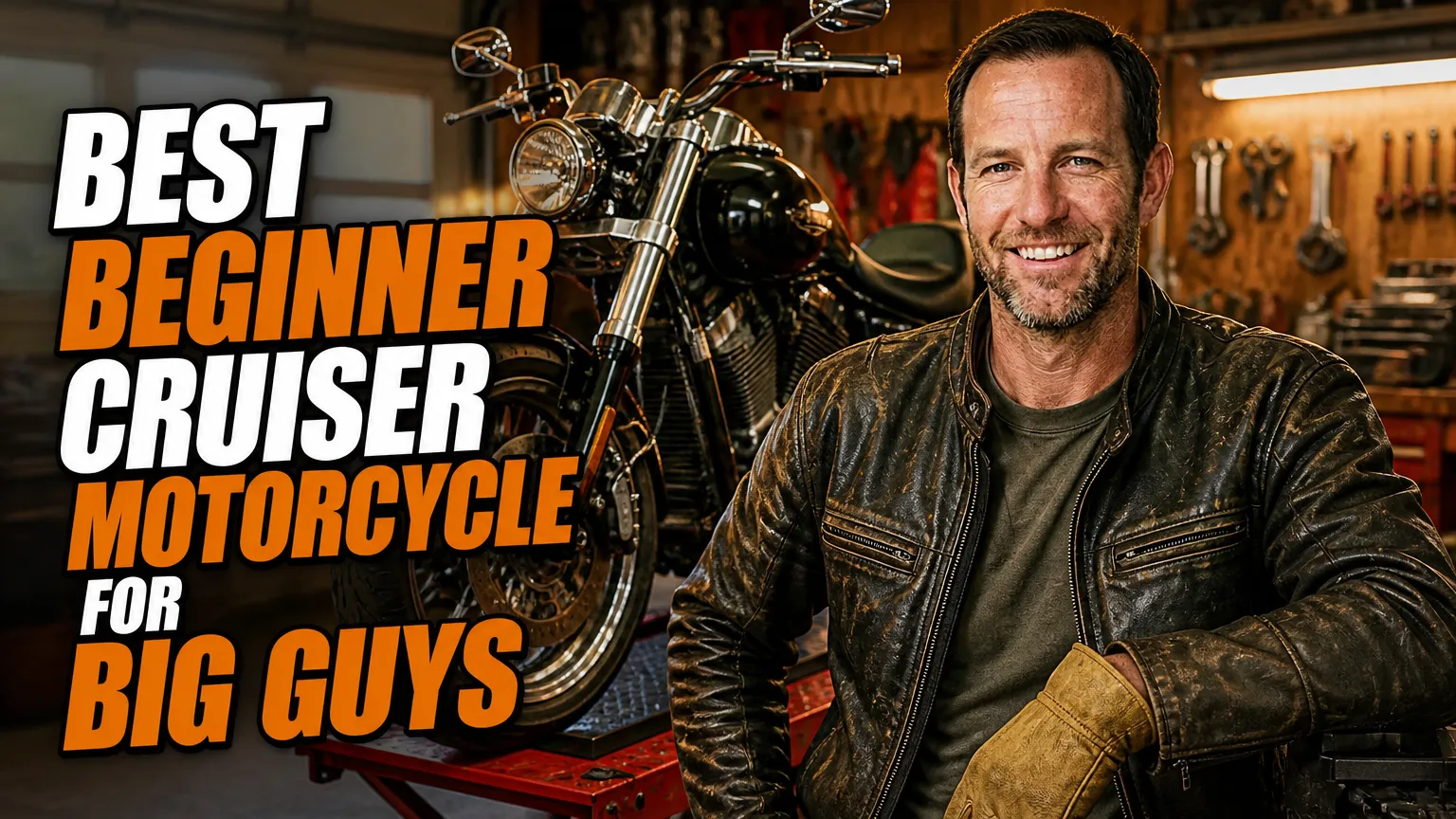
I look for three things when I’m choosing a beginner cruiser for a bigger rider: manageable power, a comfortable fit, and enough capacity for the rider and any gear. A low seat can make a motorcycle feel approachable, but it doesn’t automatically mean there’s enough room for long legs or a broad frame.
My picks below include lighter, lower-displacement options and larger cruisers that make sense for some new riders with good training and careful throttle control. I’d always confirm the motorcycle’s payload rating in its manual and sit on, or test ride, any bike before buying.
- I’d put the Kawasaki Vulcan S at the top of my list for its adjustable fit and useful middleweight engine.
- I’d consider the Honda Rebel 500 or CFMOTO 450CL-C if low weight and accessible power matter most.
- I’d treat heavier 650cc and 805cc cruisers as conditional choices, not automatic beginner recommendations.
- I’d check payload, legroom, reach, and low-speed handling before focusing on engine size or seat height.
1. Kawasaki Vulcan S — My Best All-Around Fit Pick
I’d begin my search with the Kawasaki Vulcan S because its 649cc parallel-twin engine offers enough performance for regular roads without putting it in the same category as a high-powered large-displacement cruiser. Its power delivery is generally more approachable than the spec sheet alone might suggest, though I’d still practice smooth throttle control as a new rider.
The Vulcan S stands out to me for Kawasaki’s Ergo-Fit system. Depending on the model and setup, Kawasaki offers different seat, handlebar, and footpeg positions to help riders find a better fit. That adjustability is especially useful when I’m comparing bikes for a longer-legged rider, since moving the footpegs can make more difference than a low seat height.
What I’d check before buying
The Vulcan S has a low seat, around 27.8 inches, and a curb weight close to 500 pounds, depending on model year and equipment. That weight is manageable for many riders once moving, but I’d pay attention to how it feels when backing up, parking, or making a tight turn. Those situations often tell me more about fit than a quick showroom sit.
Prices vary by year, trim, and location, so I’d check the current local listing rather than rely on a single figure. For me, the Vulcan S is the strongest starting point on this list when a rider wants a cruiser look with more options for dialing in the riding position.
2. Honda Shadow Phantom — My Pick for a Traditional Cruiser Feel
I’d look at the Honda Shadow Phantom if I wanted a classic cruiser stance and a relaxed, steady feel. Its 745cc V-twin and shaft final drive make it a straightforward option for riders who prefer a traditional layout. I’d still take time to get comfortable with its weight, which is roughly in the mid-500-pound range depending on year and equipment.
The Phantom’s low seat, roughly 25.6 inches on recent versions, can make stops feel reassuring. But I wouldn’t assume that the low saddle means spacious ergonomics: I’d pay close attention to knee bend and foot placement, especially if I’m tall. Before buying, I’d also check the latest model-year specifications and price because equipment and availability can change.
Why I’d recommend a careful test ride
I like the Shadow Phantom’s simple, unhurried character for a rider who wants to cruise rather than chase aggressive acceleration. I’d use a beginner course and a test ride to judge whether its weight feels comfortable at walking pace. If I’m buying used, I’d inspect service records, tires, brakes, and any modifications to the handlebars or controls.
For a broader fit comparison, I’d also read this guide to the best beginner motorcycle for big and tall. I find it useful to compare seat height with actual reach to the controls instead of treating seat height as the only measure of comfort.
3. Honda Rebel 500 — My Lightweight, Lower-Power Choice
I’d consider the Honda Rebel 500 when easy handling and accessible power matter more than a full-size cruiser feel. Its 471cc parallel-twin engine, low seat of about 27.2 inches, and curb weight around 408 pounds with ABS make it one of the easier bikes here to maneuver at low speeds. Exact specifications can vary by model year and market.
That lower weight can be a real benefit for me when practicing tight turns, pushing the bike into a parking space, or recovering from a slightly awkward stop. The trade-off is that the Rebel 500 can feel compact, particularly to a tall rider or someone who wants a more open leg position. I’d sit on one for more than a minute before deciding it fits.
Who I think it suits
I’d choose the Rebel 500 if I wanted a modern, approachable bike for commuting, local roads, and learning the basics. It isn’t the roomiest option, and I wouldn’t expect its smaller engine to feel effortless in every high-speed passing situation with a heavy load. For many new riders, though, its manageable weight is a meaningful advantage.
If body size and seat comfort are the main concerns, I’d compare advice in this guide to the best beginner motorcycle for fat guys. I’d also verify the Rebel’s payload limit in the owner’s manual rather than guessing from engine size or how sturdy the bike feels.
4. CFMOTO 450CL-C — My Modern, Manageable Alternative
I’d put the CFMOTO 450CL-C on my shortlist if I wanted a newer small-displacement cruiser with a useful mix of equipment and approachable power. It uses a 449cc parallel-twin engine and a belt final drive, with ABS and a slipper clutch among its notable features. Published specifications commonly put its seat height near 27 inches and its weight around 400 pounds, though I’d verify details for the exact year and market.
I like the idea of a lighter cruiser for learning because it can reduce the effort involved in slow-speed practice. The 450CL-C’s engine is also a more sensible starting point for many new riders than a large, torque-heavy cruiser. Still, I’d compare its riding position in person; a low seat alone doesn’t tell me whether the bars and pegs suit my proportions.
What I’d weigh up
I’d check local dealer support, parts availability, warranty terms, and resale value alongside the purchase price. Those practical details matter to me as much as the feature list, especially when I’m considering a newer brand or a model with less long-term ownership history in my area.
My overall impression is that the 450CL-C makes sense for a beginner who values lighter weight and contemporary equipment. I wouldn’t choose it solely because the engine number sounds right; I’d compare its payload rating and fit with other bikes on this list before making a decision.
5. Kawasaki Eliminator — My Choice for a Lighter, More Upright Cruiser
I’d consider the Kawasaki Eliminator if I wanted a cruiser-inspired motorcycle with a lighter feel and a more upright riding position than some traditional cruisers. Its 451cc parallel-twin makes around 52 horsepower in commonly listed specifications, and its curb weight is roughly 388 pounds. The seat is around 28.9 inches high, so I’d expect it to feel less low-slung than the Rebel 500.
That combination appeals to me because the bike’s lower weight can help a newer rider with parking-lot practice, while its engine gives it useful flexibility for everyday riding. I’d still approach the throttle smoothly and take a training course; a lighter motorcycle is easier to manage, but it doesn’t replace good habits.
My fit notes
I’d check how the Eliminator feels through the knees and hips, particularly if I have long legs. The upright layout may work better for some larger riders than a stretched-out cruiser position, but fit is personal. I’d also confirm current pricing and specifications with a dealer because trims and equipment can differ between markets.
For me, the Eliminator is a practical choice when I want an approachable engine and don’t need a heavy, traditional V-twin. I’d test it alongside the Vulcan S rather than assume one is automatically more comfortable because of its shape or seat height.
6. Royal Enfield Super Meteor 650 — My Relaxed Middleweight Option
I’d look at the Royal Enfield Super Meteor 650 if I wanted a substantial cruiser feel without jumping straight to a very large engine. Its 648cc parallel-twin produces about 47 horsepower, and the bike includes a six-speed transmission and belt final drive. Its low seat, around 29 inches, gives it a planted feel, while its weight is roughly 531 pounds before accounting for rider and luggage.
The Super Meteor’s power is relatively modest for its displacement, which I find appealing for a rider who wants steady road manners rather than aggressive acceleration. However, I wouldn’t mistake moderate horsepower for lightweight handling. I’d practice moving it around at low speed and make sure I’m comfortable with its heft before committing.
Who I’d put on this bike
I’d see the Super Meteor as a possible fit for a beginner who has completed training, feels confident handling a heavier motorcycle, and wants a comfortable pace for longer rides. It wouldn’t be my first recommendation for someone who is nervous about weight or still learning basic balance. I’d also check the manual’s payload guidance before adding a passenger or luggage.
If two-up riding is part of my plan, I’d compare the bike’s seat, passenger setup, and load limits with this guide to the best beginner motorcycle for 2 people. I’d never assume a cruiser is suitable for two simply because it looks large.
7. Suzuki Boulevard C50 — My Traditional, Heavier Cruiser Pick
I’d consider the Suzuki Boulevard C50 for its traditional cruiser layout and 805cc V-twin. It has a low seat of roughly 27.6 inches and a shaft final drive, but its curb weight is around 611 pounds, depending on model year and equipment. That weight is the key detail I’d focus on before recommending it to a new rider.
The C50’s engine size doesn’t automatically make it unsuitable for a beginner, but I’d be cautious about its mass during parking, slow turns, and uneven stops. I’d recommend it only to someone who can manage the weight confidently and has practiced basic low-speed skills. For a brand-new rider who feels unsure, I’d start on a lighter model and revisit the C50 later.
What I’d verify before purchase
I’d check the current availability, model-year specifications, and local price because inventory can vary. On any C50, new or used, I’d inspect tires, brakes, suspension, and service history, and I’d read the owner’s manual for the exact payload information. I’d include my riding gear and any luggage when calculating the total load.
For me, the Boulevard C50 is a conditional option rather than an all-purpose beginner recommendation. It offers the classic cruiser experience, but its weight makes a proper test ride and honest self-assessment especially important.
How I’d Choose the Right Fit
I’d check the whole riding position
I’d sit on the motorcycle with both hands on the bars and my feet on the pegs, then check whether my knees feel cramped and whether I can reach the controls without stretching. I’d also look at how easily I can put a foot down and balance the bike. If possible, I’d ask a dealer about alternate seats, handlebars, or footpeg positions.
I’d calculate payload instead of guessing
I’d find the model’s gross vehicle weight rating and curb weight in the manual or manufacturer information, then use the listed payload guidance to account for myself, passenger, luggage, and riding gear. A larger engine does not necessarily mean a higher safe carrying capacity. If a salesperson can’t answer a load question, I’d look for the official documentation before buying.
I’d prioritize training and low-speed confidence
I’d take a recognized beginner riding course before shopping for a more powerful cruiser. I’d practice smooth starts, braking, tight turns, and parking-lot maneuvers on a motorcycle that feels manageable to me. A training course, protective gear, and a sensible first bike matter more than choosing the biggest engine I can afford.
I’d also keep passenger plans realistic. For riding with a partner, I’d compare comfort and carrying capacity using the best beginner motorcycle for couples guide. And I wouldn’t treat a 1,000cc motorcycle as a shortcut to comfort: I’d read this perspective on the best 1000cc motorcycle for beginner before considering a large-displacement bike as my first ride.
My Final Recommendation
If I had to choose one starting point for a bigger beginner, I’d look first at the Kawasaki Vulcan S for its adaptable fit and middleweight power. I’d consider the Honda Rebel 500, CFMOTO 450CL-C, or Kawasaki Eliminator if I wanted lower weight and accessible performance, while checking carefully that each one gave me enough room.
I’d put the Honda Shadow Phantom, Royal Enfield Super Meteor 650, and Suzuki Boulevard C50 on the list for riders who prefer a more traditional or substantial cruiser feel. My final choice would come down to fit, payload, training, and how confidently I can control the bike at walking speed, not simply the largest engine or lowest seat.
Frequently Asked Questions
What is the best beginner cruiser for a big guy?
I’d start with the Kawasaki Vulcan S for its approachable power, adjustable Ergo-Fit options, and roomier riding position.
Is a 750cc cruiser too powerful for a beginner?
Not automatically. I’d judge a bike by its throttle response, weight, and handling as well as engine size, then take a training course and test ride before deciding.
What should a heavier rider check before buying a cruiser?
I’d check the owner’s manual for payload and GVWR, then account for rider, passenger, luggage, and gear. I’d also confirm the seat, footpeg, and handlebar positions fit comfortably.
Is a low seat height enough to make a cruiser comfortable for a tall rider?
No. I’d also check knee bend, footpeg reach, handlebar reach, and how easily I can maneuver the motorcycle at low speed.

Related Articles

7 Best Cruisers for Comfortable Two-Up Motorcycle Trips
Compare seven comfortable cruisers for two-up rides, with real-world notes on passenger comfort, power, luggage, pricing, and how to choose…
Jake Miller
12 min read

8 Comfortable Cruisers That Make Two-Up Riding More Enjoyable
Find a cruiser you and your passenger can enjoy together. I compare eight comfortable motorcycles, with real-world strengths, trade-offs, and…
Jake Miller
11 min read

7 Luxury Cruisers That Make Long-Distance Riding Feel First-Class
I compare seven luxurious cruisers for long-distance comfort, power, weather protection, luggage, technology, and value to help you choose the…
Jake Miller
13 min read