
8 Best Beginner Motorcycles for Big and Heavier Riders (Tested Picks for 2025)
 Jake Miller
9 min read
Jake Miller
9 min read
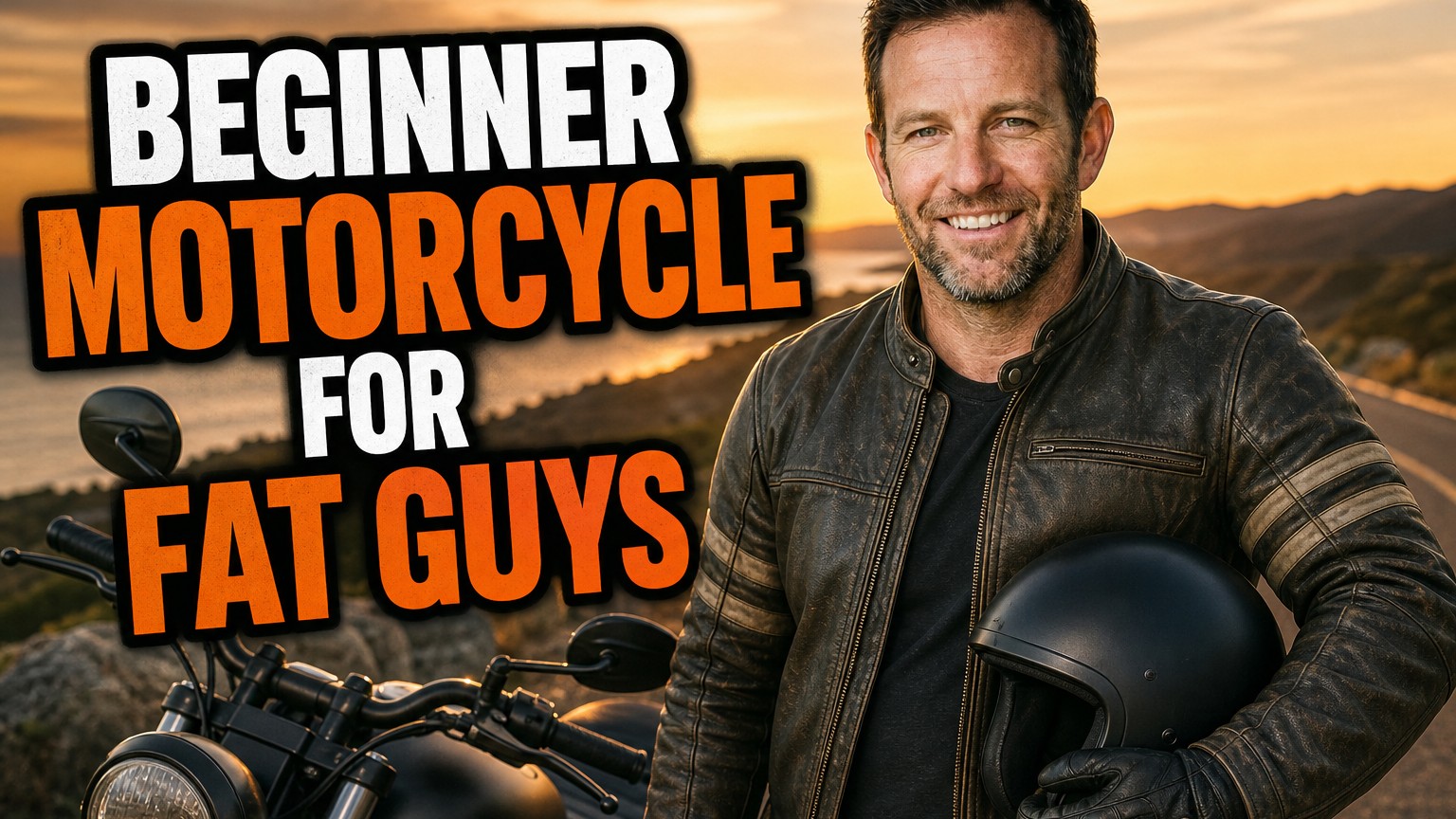
I’m not a small guy, and I remember how frustrating my first bike search was. Every beginner list pushed 250cc machines that felt like toys the moment I swung a leg over. The suspension sagged, the engine buzzed, and I worried the whole bike was working too hard.
Over the years I’ve sat on, ridden, and talked with owners about dozens of bikes. This is my shortlist of motorcycles that are friendly enough for a new rider yet sturdy enough to carry a bigger frame without feeling stressed.
- Skip the tiniest 250cc bikes and look for 350cc to 700cc machines with solid frames and decent suspension.
- My top overall pick is the Honda Rebel 500: low, forgiving, and tough.
- Standard and adventure bikes like the Suzuki SV650 and V-Strom 650 give bigger riders more room.
- Budget for suspension tuning, good tires, and quality oil to keep any bike happy under extra weight.
What I Look For When a Bigger Rider Needs a First Bike
Before the list, here’s how I judge a bike for a heavier beginner. Weight capacity numbers in the manual are only part of the story. What matters is how the bike feels at your weight, on your commute, and in your first parking-lot drills.
Frame, Suspension, and Seat
Stock suspension on budget bikes is often set for a rider around 150 to 170 pounds. If you’re well above that, the rear shock can bottom out and the front dives under braking. I look for bikes with adjustable preload or at least a firm, well-damped setup.
Seat shape matters too. A flat, wide seat with a bit of padding saves your tailbone on longer rides.
Engine Power and Torque
More mass means the engine works harder to accelerate. I prefer engines from about 350cc up to 700cc with smooth, predictable torque. They’re easy to learn on, but they won’t feel strained on the highway.
Ergonomics and Brakes
Bigger riders need room for knees, hips, and belly. I look for upright riding positions and handlebars that don’t make you hunch. Good brakes, ideally with ABS, are non-negotiable because you’re stopping extra mass.
1. Honda Rebel 500: Best Overall Pick
The Honda Rebel 500 is the bike I recommend most often. It has a 471cc parallel twin making roughly 45 horsepower, a 27.2-inch seat height, and a curb weight around 408 pounds. Pricing runs about $6,500 new.
What wins me over is the steel trellis frame and the confidence it gives. The Rebel 500 feels planted, the power is smooth, and ABS is standard. Heavier riders will appreciate that the engine has enough grunt to merge without screaming.
The stock rear shocks are a bit soft, so I’d suggest an aftermarket upgrade if you’re over 250 pounds. Even so, the Rebel 500 is easy to ride, easy to resell, and cheap to keep running.
2. Kawasaki Vulcan S: Best for Comfort and Adjustable Fit
The Kawasaki Vulcan S uses a 649cc parallel twin that makes around 60 horsepower. Curb weight is near 500 pounds, and the seat sits at about 27.8 inches. Expect to pay roughly $7,500 to $8,500.
Its party trick is the Ergo-Fit system. You can choose from different seat and footpeg positions, which is a huge win for a larger rider who needs more legroom. I’ve seen guys over six feet tall fit comfortably after a few tweaks.
The Vulcan S has a low, stable feel and plenty of midrange torque. It carries weight well, and the mass actually helps it feel calm at highway speeds.
3. Royal Enfield Meteor 350: Best Budget Cruiser
If money is tight, the Royal Enfield Meteor 350 is a lovely option. It has a 349cc air/oil-cooled single making about 20 horsepower, a curb weight near 421 pounds, and a price around $4,500 to $4,800.
It’s not fast, and I won’t pretend otherwise. But the Meteor 350 has a relaxed cruiser stance, a comfortable seat, and a thumpy character that makes you want to slow down and enjoy the ride.
I’d call it a great fit for a bigger rider sticking mostly to city streets and back roads. The frame feels sturdy, and the dual-channel ABS is a nice safety bonus.
4. Suzuki SV650: Best Standard for Growing Skills
The Suzuki SV650 is a legend for a reason. Its 645cc V-twin makes about 75 horsepower, the bike weighs roughly 435 pounds, and the seat is around 30.9 inches. New pricing lands near $7,700.
The SV650 feels roomy, with an upright seating position that suits larger riders. The throttle is smooth, the chassis is predictable, and the engine has a long history of reliability.
Why I Like It for Heavier Beginners
The V-twin torque pulls strongly from low revs, so you’re not constantly chasing the redline. Low-RPM Easy Start and traction control also make it more beginner-friendly than older SVs. It grows with you, which means you won’t outgrow it in six months.
5. Suzuki V-Strom 650: Best for Taller, Heavier Riders
The Suzuki V-Strom 650 is my go-to for big guys who want an upright, adventure-style bike. It has the same dependable 645cc V-twin, around 70 horsepower, a curb weight of about 470 pounds, and a tall seat near 32 inches. Pricing starts around $9,000.
The riding position is airy and relaxed. Your knees aren’t cramped, the bars are wide, and the windscreen helps on longer rides. I’ve found the V-Strom 650 to be one of the most forgiving bikes for rider weight.
The tall seat can be intimidating if you’re short, but it has an adjustable height range. Traction control and ABS are standard.
6. Honda NC750X: Best for Commuting and Storage
The Honda NC750X is the practical pick. Its 745cc parallel twin makes about 58 horsepower with lots of low-end torque, and it weighs roughly 470 to 480 pounds depending on the transmission. It costs around $8,000.
The standout feature is the front storage compartment, where a gas tank would normally be. I’ve stuffed a full-face helmet in there. There’s also an optional Dual Clutch Transmission, which is great if clutch control scares you.
With its sturdy frame, long-travel suspension, and torquey motor, the NC750X shrugs off extra weight. It’s not flashy, but it’s sensible and remarkably capable.
7. Triumph Speed 400: Best Modern Roadster
The Triumph Speed 400 brings British style to the beginner market. Its 398cc single makes about 40 horsepower, the curb weight is near 375 pounds, and the seat is about 31.1 inches. It runs about $5,000 to $5,500.
The Speed 400 is light yet feels solid. Torque is strong for its size, the brakes are good, and the upright ergonomics give bigger riders plenty of room. I find it more lively than the Meteor 350.
I’d say it’s best for guys on the lighter end of “heavier,” or those willing to upgrade the rear shock. The quality of the fit and finish is a real pleasure.
8. Royal Enfield Himalayan 450: Best Budget Adventure Bike
The Royal Enfield Himalayan 450 is a newer entry with a liquid-cooled 452cc single making about 40 horsepower. It weighs around 430 pounds, has a seat near 31.9 inches, and costs roughly $6,000.
Long-travel suspension is the main draw. The Himalayan 450 soaks up bumps and potholes, and that extra travel gives heavier riders more margin before the suspension bottoms out.
It’s also easy to work on and affordable to own. If your roads are rough or you dream of light off-road adventures, this is a smart place to start.
How I Set Up Any Bike for a Heavier Rider
The bike you buy is only half the equation. A few small changes can make a huge difference in comfort and safety.
Adjust Suspension Sag
Setting rider sag properly is the most important tweak. Increase rear preload until the bike sits at the right height with you aboard. If the stock springs can’t handle it, a heavier-rate spring is a worthwhile upgrade.
Check Tire Pressure Often
More weight means more load on your tires. I check pressure every week and keep it near the high end of the recommended range for the load. Good tires also matter, so don’t cheap out.
Don’t Neglect Oil and Maintenance
A heavier load works the engine harder, so fresh, quality oil is cheap insurance. If you’re researching, I found this guide to the best motor oil for 4 stroke motorcycle engines helpful for understanding viscosity ratings.
You can also compare the top engine oil for 4 stroke motorcycle options if you want a deeper look. And if you’re wondering what is the best engine oil for 4 stroke motorcycle models like the ones above, that article breaks it down simply.
Riders outside the US may like this rundown of the best engine oil for 4 stroke motorcycle in india, especially if you’re considering a Royal Enfield. For a general overview, see this page on the best engine oil for motorcycle use.
Common Mistakes I See Bigger Beginners Make
Buying Too Small
A tiny 250 can feel buzzy and underpowered with a heavier rider. You may outgrow it in weeks and lose money on the trade-in. I’d rather you start with a bit more bike that’s still gentle.
Ignoring Gear Fit
Riding gear in your size is essential. Many brands cut jackets and pants small, so look for proper extended sizing. Armor that doesn’t fit properly won’t protect you where it counts.
Skipping the Training Course
Take a basic rider course, such as the MSF Basic RiderCourse. It’s the best money you’ll spend, and many insurers offer discounts. I learned more in a weekend than in months of guessing.
My Final Thoughts
You don’t have to settle for a bike that feels too small or too weak. Any of these eight can be a great first motorcycle for a bigger guy, as long as you match it to your riding style and budget.
If I had to pick one, I’d go with the Honda Rebel 500 for its all-around friendliness. For more power and room, the Suzuki SV650 or V-Strom 650 are brilliant. Sit on a few, ride what you can, and trust how the bike feels under you.
Stay safe, wear your gear, and enjoy the ride. Your first bike is the start of something great.
Frequently Asked Questions
What is the best beginner motorcycle for a heavier rider?
For most riders I recommend the Honda Rebel 500 for its low seat, friendly power, and sturdy frame. If you want something sportier, the Suzuki SV650 is a strong second choice.
Is a 250cc motorcycle too small for a big guy?
Often, yes. Many 250cc bikes have light frames and soft suspension, and they run out of power quickly with a heavier rider and gear. A 400cc to 700cc bike usually gives a much better experience.
Can I upgrade the suspension to handle more weight?
Yes. Stiffer fork springs and a heavier-rate rear shock or spring make a big difference. Setting preload and sag correctly is the cheapest first step.
Does rider weight affect motorcycle maintenance?
A little. Heavier loads can wear tires, brake pads, chains, and suspension seals a bit faster, so check tire pressure often and stay on top of oil changes and chain care.

Related Articles
7 Best Batteries for Motorcycles I’ve Tested and Trust in 2026
I've tested dozens of motorcycle batteries to find the best performers. From AGM to lithium, here are my top picks…
Jake Miller
15 min read

The Perfect Battery for Your Harley Davidson Softail: A Rider’s Complete Guide
Discover the perfect battery for your Harley Davidson Softail. I've tested multiple options and share real-world performance data, maintenance tips,…
Jake Miller
14 min read

The Best Battery for Your Harley Davidson: My Complete Guide After Years of Testing
Discover which battery truly performs best for Harley Davidson motorcycles. Real rider experience with AGM, lithium, and OEM options to…
Jake Miller
12 min read