
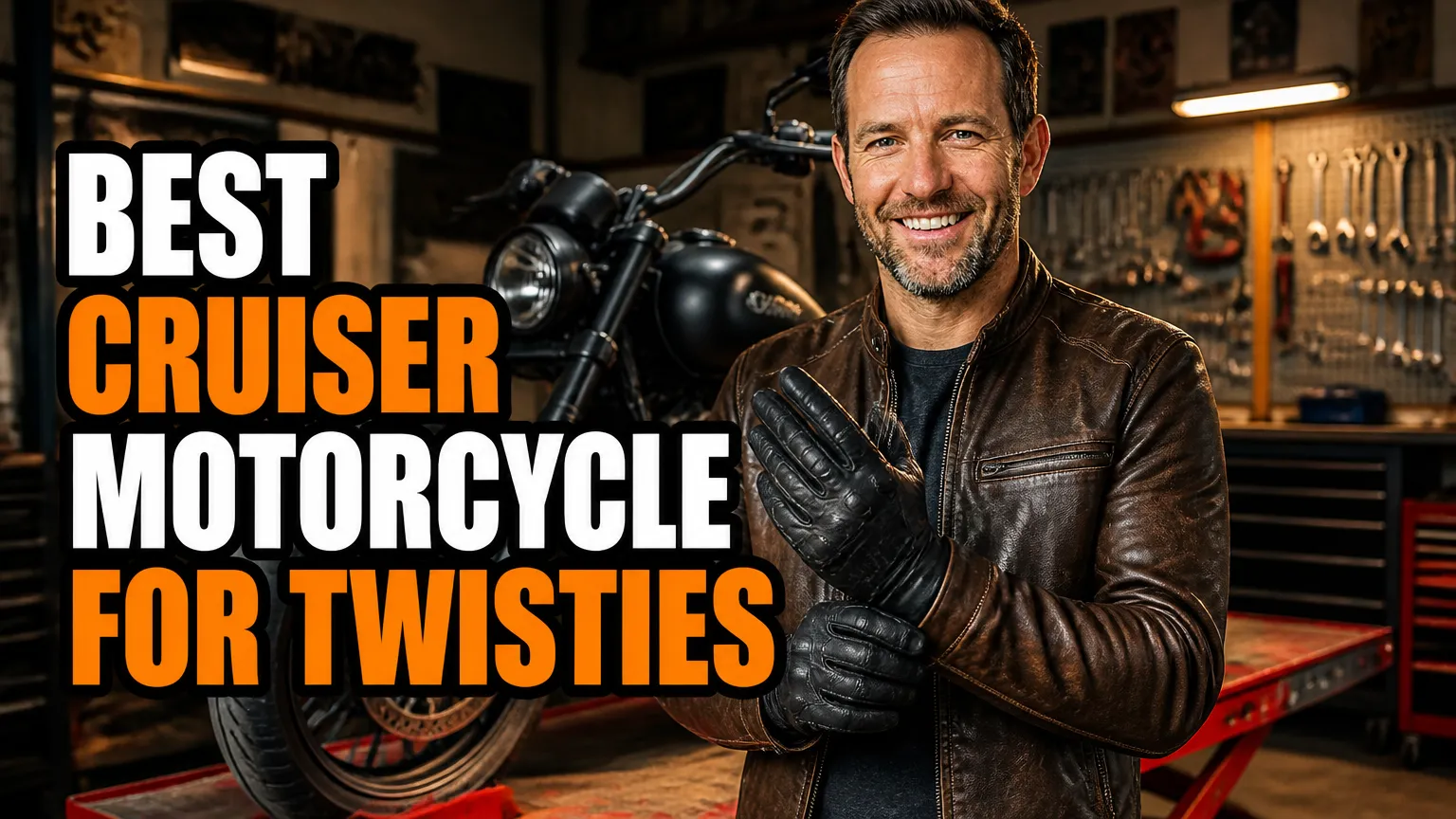
For me, a great ride through the twisties is less about chasing a knee-down photo and more about enjoying clear steering, steady brakes, and a motor that pulls smoothly out of a bend. Cruisers can deliver that kind of ride, even though their relaxed ergonomics and lower cornering clearance call for a different approach than a sportbike.
When I compare candidates for the best cruiser motorcycle for twisties, I pay attention to more than engine size. Suspension, tire profile, weight, brakes, ground clearance, and how naturally the bike changes direction all matter on a winding road.
- I’d choose the Kawasaki Eliminator ABS for an approachable, light-feeling option on tight roads.
- The Ducati Diavel V4 is my high-performance pick, while the Harley-Davidson Low Rider S brings a more traditional big-cruiser feel.
- For a balanced middleweight ride, I’d compare the Honda Rebel 1100 DCT and Indian Scout Bobber.
- I’d prioritize fit, cornering clearance, suspension, and smooth control over engine displacement alone.
How I Choose a Cruiser for Winding Roads
I want a cruiser to feel composed when I tip it into a corner and predictable when I roll back on the throttle. A well-tuned chassis and good tires can make a more modest engine a better match for a twisty route than a powerful bike that feels heavy or runs out of cornering clearance early.
I also consider riding position. Forward controls and a low seat can feel relaxed on a straight highway, but I find that a neutral position and a little room to move make it easier to manage a sequence of bends. Before buying, I’d check how the bike fits me while stationary and, if possible, ride it on roads similar to the ones I plan to enjoy.
Engine size is only one part of the decision. If I’m still learning, I’d use this guide to the best motorcycle engine size for beginners to think through what I can confidently manage. I’d also remember that a smaller-displacement motorcycle can still be engaging: these explainers cover how fast can a 150cc motorcycle go unleashing top speeds, how fast can a 300cc motorcycle go, and how fast can a 500cc motorcycle go.
Prices and specifications can change with model year, trim, and location, so I treat the ranges below as broad U.S. new-bike estimates rather than guaranteed quotes. I’d confirm the current details with a local dealer before making a decision.
1. Kawasaki Eliminator ABS — My Pick for Tight, Approachable Roads
The Kawasaki Eliminator ABS is one of the first bikes I’d consider for someone who wants cruiser styling without a heavyweight feel. Its 451cc parallel-twin engine makes around 45 horsepower, and the bike’s relatively approachable size gives me a more confidence-friendly starting point than many larger cruisers.
I like that the Eliminator uses a conventional telescopic fork, a rear shock, and ABS-equipped braking on the ABS version. Its 18-inch front and 16-inch rear wheels help give it a different, more road-focused character than a traditional cruiser on small wheels. The bike is not a sportbike, but its manageable output and lighter feel suit back roads where I value easy direction changes.
What I’d consider before buying
The Eliminator’s power is modest beside the bigger bikes on this list, so I wouldn’t choose it for effortless high-speed passing with a passenger and luggage. I would choose it for a lighter, less intimidating ride that encourages me to focus on smooth lines. Depending on model year and market, I’d expect a new ABS model to sit roughly in the $7,000 to $8,000 range.
2. Honda Rebel 1100 DCT — My Versatile All-Rounder
The Honda Rebel 1100 DCT combines a low, cruiser-style stance with a liquid-cooled 1,084cc parallel-twin engine. The engine makes roughly 87 horsepower in recent versions, giving me enough response for open roads without the huge output of a high-performance power cruiser.
What draws me to the DCT version is its automatic-style dual-clutch transmission. I can concentrate on corner entry, traffic, and throttle control without operating a clutch lever, while the bike still gives me manual shifting options. Showa suspension and ABS-equipped braking add useful everyday versatility, though I’d still compare the feel of the suspension with my weight and preferred roads.
Why I’d put it on my shortlist
I see the Rebel 1100 DCT as a strong choice for a rider who wants one motorcycle for commuting, weekend bends, and occasional longer trips. The DCT adds cost over the manual model, and its low cruiser ergonomics may not suit every rider for extended days. Depending on year and trim, I’d budget approximately $10,000 to $12,000 for a new DCT version.
If I were comparing the Rebel with smaller-displacement choices, I’d focus on the bike’s weight, fit, and the kind of riding I actually do, rather than assuming a bigger engine automatically makes the better twisty-road motorcycle.
3. Indian Scout Bobber — My Low-Slung Middleweight Choice
The Indian Scout Bobber brings a 1,250cc liquid-cooled V-twin and a distinctive stripped-down look. Recent versions make around 105 horsepower and 82 lb-ft of torque, so I’d expect a strong, satisfying drive out of corners when I’m smooth with the throttle.
Its low seat and compact bobber styling make it visually appealing, but I’d pay close attention to cornering clearance. The Scout Bobber is built with a low stance, and that can mean I need to ride within its available lean angle rather than treat it like a naked sportbike. Its conventional fork and single front brake disc are part of a straightforward setup, though I’d assess brake feel and suspension response in person.
What suits my riding style
I’d look at the Scout Bobber if I wanted a muscular, modern cruiser for spirited solo rides and everyday use. Its price varies by trim and options, but I’d plan for roughly $13,000 to $16,000 for a new bike. I’d also compare it with the standard Scout if I expected to spend more time on uneven pavement, since seat and suspension details can make a real difference to comfort.
4. Triumph Bonneville Bobber — My Classic-Style Corner Carver
The Triumph Bonneville Bobber gives me vintage-inspired design with a modern 1,200cc parallel-twin engine. Recent versions produce around 78 horsepower and 78 lb-ft of torque, with the kind of broad, accessible response I enjoy on a road where I’m frequently rolling on and off the throttle.
I appreciate that Triumph pairs the Bobber’s classic appearance with modern equipment, including ABS, traction control, and a 47mm Showa fork on recent models. The single-seat layout and low riding position are central to its character, but I’d check that the seat works for my body and that the limited rear suspension travel feels comfortable on rough surfaces.
Where I think it works best
For me, the Bonneville Bobber makes the most sense on well-maintained back roads and shorter rides where style and engine character matter as much as outright pace. Its low stance means I’d be measured with lean angle, and I wouldn’t expect it to match a sport-focused motorcycle through repeated tight corners. I’d budget roughly $14,000 to $17,000 for a new model, depending on year and equipment.
5. Harley-Davidson Low Rider S — My Big-Twin Back-Road Pick
The Harley-Davidson Low Rider S is a more performance-minded take on the big American cruiser. Recent versions use the Milwaukee-Eight 117 V-twin, with displacement of 1,923cc; exact power figures vary by model year and market, but the motor is known for strong low- and midrange pull.
I like the Low Rider S as a choice for riders who want the sound and feel of a big twin without giving up all interest in a winding road. An inverted front fork and dual front brake discs on recent versions give it a more capable foundation than a purely relaxed boulevard cruiser. Even so, I’d treat its size and weight as factors to manage, particularly when the road gets narrow or the corners tighten up.
How I’d ride it
I’d enjoy the Low Rider S most by looking well ahead, choosing smooth lines, and keeping a margin for its ground clearance. It is a heavy, powerful motorcycle, so I wouldn’t buy it simply because the engine is large. New-bike pricing is generally in the low-to-mid $20,000 range in the U.S., with model year, paint, and dealer costs affecting the final figure.
6. Harley-Davidson Sportster S — My Sportiest Modern Harley Cruiser
The Harley-Davidson Sportster S uses the Revolution Max 1250T liquid-cooled V-twin, rated at about 121 horsepower and 94 lb-ft of torque in recent specifications. That puts it among the most powerful options here, and I’d expect rapid acceleration when I open the throttle on a clear stretch.
The Sportster S has a 43mm inverted fork, a 320mm front brake disc, ABS, and electronic rider aids such as traction control. Its broad front tire and distinctive riding position give it a unique feel, though I wouldn’t assume that more power means easier cornering. I’d take time to learn its steering response and be realistic about the bike’s ground clearance.
Who I’d recommend it to
I’d shortlist the Sportster S if I wanted modern styling, strong acceleration, and a technology-rich package in a cruiser-shaped motorcycle. I’d think carefully about passenger comfort and the fit of the riding position before choosing it for long touring days. New pricing is usually in the mid-to-high $teens, though current model-year costs and options can move that figure.
7. Ducati Diavel V4 — My High-Performance Pick
The Ducati Diavel V4 is the most performance-focused motorcycle on my list. Its 1,158cc V4 Granturismo engine makes about 168 horsepower and 93 lb-ft of torque, supported by premium components that include a 50mm fully adjustable fork, a rear monoshock, and Brembo Stylema front brakes.
I think of the Diavel V4 as a power cruiser with serious sporting ambitions rather than a traditional laid-back cruiser. Its electronic rider aids, cornering ABS, and multiple riding modes give me useful ways to tailor the response, while its large rear tire and substantial engine output demand respect. With that much performance available, smooth inputs and good judgment matter more than chasing a fast pace.
My reasons to spend more
I’d choose the Diavel V4 for its unusual mix of comfort, equipment, and acceleration, not because I assume it will make every rider faster. The seat height, weight, and premium price may put it outside some riders’ comfort zones. In the U.S., I’d expect a new Diavel V4 to cost roughly $27,000 to $30,000 or more depending on trim and model year.
8. BMW R 12 — My Relaxed Boxer-Powered Option
The BMW R 12 brings a 1,170cc air- and oil-cooled boxer twin to a cruiser-style package. Recent specifications list around 95 horsepower and 81 lb-ft of torque, with shaft drive and a 19-inch front wheel. I like the idea of that combination for a rider who wants a distinctive engine character and a more relaxed road presence.
BMW equips the R 12 with ABS and traction control, and its shaft drive means I don’t have to maintain a chain. I’d consider the wheel size and cruiser-oriented ergonomics when judging its steering feel on tight bends. Compared with the Diavel V4, the R 12 offers a less power-focused experience; compared with a lightweight middleweight, it brings more mass to manage.
What I’d check in a test ride
I’d pay attention to how the R 12 turns in, how the boxer engine feels at low speed, and whether the handlebar and footpeg positions suit me. It could be a satisfying choice for flowing roads and mixed everyday riding, but I’d want to try it on rough pavement before committing to longer trips. I’d plan on a new-bike price around the low-to-mid $teens, with equipment packages affecting the total.
How I’d Make the Final Choice
If I wanted the easiest starting point for tight back roads, I’d begin with the Kawasaki Eliminator ABS. If I wanted more versatility and the convenience of an automatic-style transmission, I’d compare the Honda Rebel 1100 DCT. For strong acceleration and upscale equipment, the Ducati Diavel V4 stands out, while the Harley-Davidson Low Rider S offers a very different big-twin experience.
I’d take each candidate on a test ride if possible, paying attention to low-speed balance, brake feel, suspension comfort, and how naturally I can make it change direction. I’d also check how easily I can put a foot down and whether the controls let me move comfortably through a corner. A seat height or specification sheet can’t tell me everything about how a motorcycle fits.
Rider height is one part of that fit, but I wouldn’t assume an adventure bike is the only option for a shorter rider. I’d compare the actual seat shape and reach to the ground, and use this guide to the best adv motorcycle for short riders if I’m also considering an adventure-style machine.
Finally, I’d leave room in my budget for good protective gear, training, and tires suited to my roads. I don’t need to ride at the limit to enjoy a twisty route; I need a motorcycle that feels predictable and fits the way I ride. The best pick for me is the one that makes me want to take the scenic way home while leaving plenty of margin for the next corner.
Frequently Asked Questions
What makes a cruiser good for twisty roads?
I look for predictable handling, capable suspension and brakes, sensible cornering clearance, and tires suited to the bike’s weight and power.
Which cruiser is easiest to manage on tight, winding roads?
I’d start with the Kawasaki Eliminator ABS for its relatively light weight, approachable power, and easy steering.
Can a cruiser keep up with a sportbike in the twisties?
A well-ridden cruiser can be enjoyable and surprisingly quick on a winding road, but its ground clearance, tires, and riding position usually limit its pace compared with a sportbike.
Is a larger engine always better for mountain roads?
No. I value smooth throttle response, manageable weight, and predictable handling as much as displacement. A smaller bike can be more fun on tight roads.

Related Articles

7 Best Cruisers for Comfortable Two-Up Motorcycle Trips
Compare seven comfortable cruisers for two-up rides, with real-world notes on passenger comfort, power, luggage, pricing, and how to choose…
 Jake Miller
12 min read
Jake Miller
12 min read

8 Comfortable Cruisers That Make Two-Up Riding More Enjoyable
Find a cruiser you and your passenger can enjoy together. I compare eight comfortable motorcycles, with real-world strengths, trade-offs, and…
Jake Miller
11 min read

7 Luxury Cruisers That Make Long-Distance Riding Feel First-Class
I compare seven luxurious cruisers for long-distance comfort, power, weather protection, luggage, technology, and value to help you choose the…
Jake Miller
13 min read