
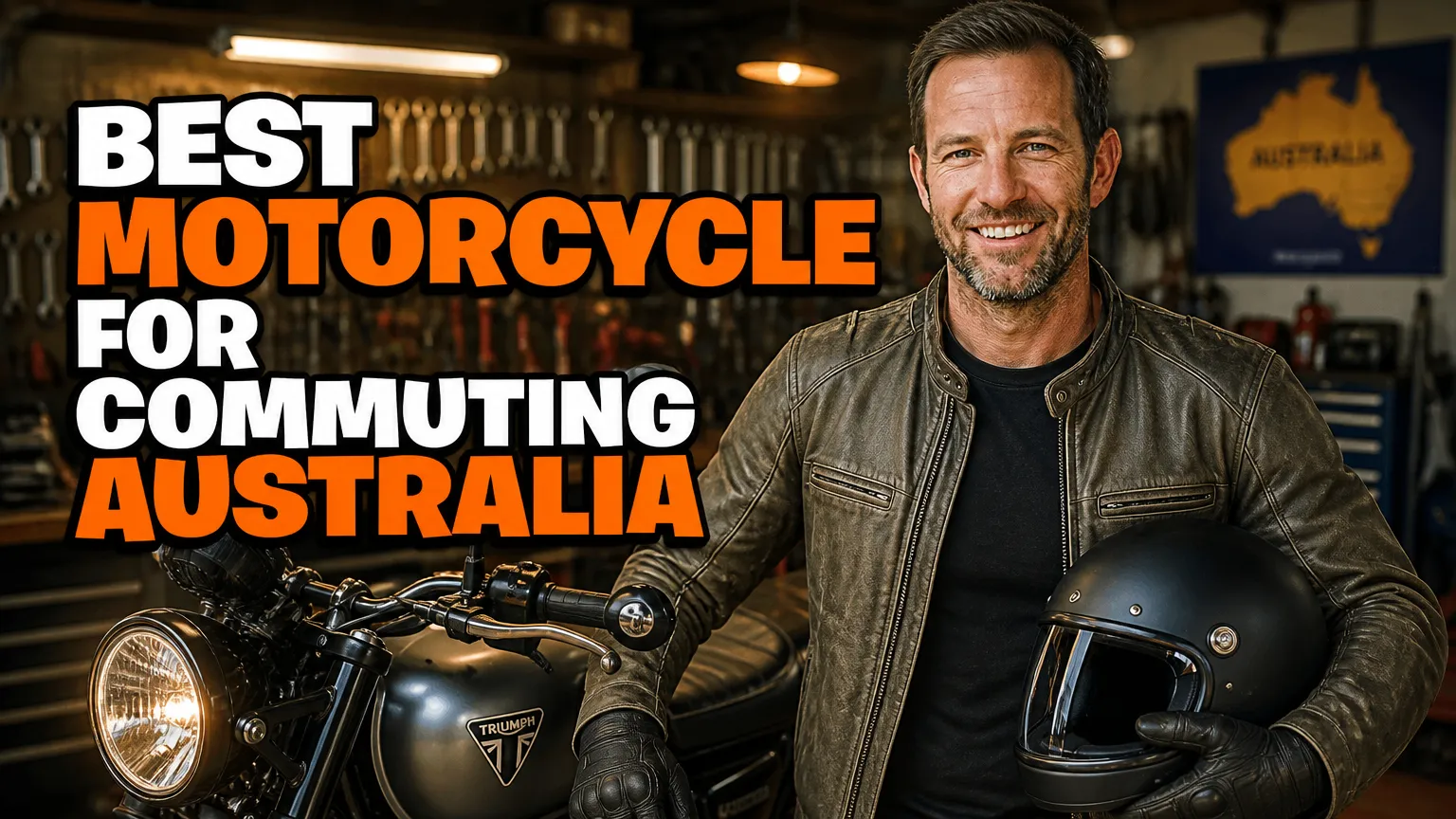
I think the best commuter motorcycle is the one that makes the everyday ride feel easy, not just the one with the biggest engine or flashiest display. In Australia, that means weighing up traffic, parking, road speeds, weather, licence restrictions and the distance I actually ride.
I’ve put together eight real models I’d consider for different commutes, from compact learner-friendly machines to larger bikes for regular highway travel. Prices and specifications can vary by model year and dealer, so I’d confirm the current Australian version and check local LAMS rules before I buy.
- I’d choose the Honda CB500 Hornet as my balanced all-rounder for mixed urban and open-road commuting.
- I’d shortlist the Yamaha MT-03 or Royal Enfield Hunter 350 for approachable, learner-friendly city riding.
- I’d look at the Honda NX500 for regular highway miles and the Suzuki GSX-8S for a more powerful, unrestricted option.
- I’d compare comfort, insurance, servicing and security costs as carefully as the purchase price.
How I choose a commuter motorcycle
My ideal commuter is easy to balance at low speed, predictable when traffic bunches up and comfortable enough that I don’t dread the ride home. I also look for ABS, a sensible riding position and controls I can use easily with gloves on.
I consider the whole cost of ownership, not only the sticker price. Fuel use, scheduled servicing, tyres, insurance, protective gear and secure parking all affect whether a bike is a good daily choice for me.
Licence eligibility matters, too. I always check the current official learner-approved motorcycle list for my state or territory because approval can depend on the exact model and version. Riders comparing more choices can browse my guide to the best motorcycle for commuting.
1. Honda CB500 Hornet — My balanced all-round commuter
The Honda CB500 Hornet is the one I’d start with if I wanted a middleweight that can handle city streets without feeling out of its depth on faster roads. Its 471cc parallel-twin produces about 35kW and 43Nm, giving me useful overtaking response without the intimidating power of a larger unrestricted machine.
I like the practical proportions: a roughly 785mm seat height, a 17.1-litre fuel tank and a relatively upright riding position. ABS is part of the package, while its manageable engine character makes the Hornet a compelling option for riders who want one motorcycle for weekday commutes and weekend errands.
Why I’d consider it
I’d choose the CB500 Hornet for a commute that mixes slow traffic with stretches of highway or suburban arterial road. It has more breathing room than a small single-cylinder bike at higher speeds, but it remains approachable compared with a full-power 650cc naked bike.
Its main trade-off is that it doesn’t offer much wind protection, and the purchase price will generally sit above smaller learner-focused options. I’d budget for a screen or other comfort accessories if my regular route includes long, exposed highway stretches.
2. Yamaha MT-03 — My pick for a light, approachable city bike
The Yamaha MT-03 uses a 321cc parallel-twin engine that makes approximately 30.9kW and 29.6Nm. I find that combination appealing for an urban commute: it’s lively enough to keep up with traffic, while the bike’s compact feel can make tight turns and parking-lot manoeuvres less stressful.
A seat height around 780mm helps make the MT-03 accessible to a wide range of riders. It also has ABS and a 14-litre tank, which gives me a useful buffer between fuel stops without making the bike feel bulky.
What I’d keep in mind
I’d put the MT-03 high on my list if I were new to motorcycling or spent most of my time filtering through city traffic where legal. Its light, upright naked-bike layout is less intimidating than a larger motorcycle, and its twin-cylinder engine is smoother than many small singles.
On the other hand, I wouldn’t choose it mainly for long-distance highway commuting. It can handle faster roads, but wind exposure and the smaller engine make a bigger twin like the NX500 more appealing if high-speed riding is a large part of my week.
3. Kawasaki Z500 — My lively middle ground
The Kawasaki Z500 gives me a step up in engine capacity without moving into a heavy, full-size naked bike. Its 451cc parallel twin produces around 33.4kW and 42.6Nm, while the approximately 785mm seat height and compact street-bike layout help keep it approachable in town.
I’m drawn to the Z500 because its engine has more low- and mid-range pull than I’d expect from a small city bike. That can make merging and overtaking feel less demanding, especially when I’m carrying a backpack or climbing a long incline.
Where it fits best
I’d consider the Z500 for someone who wants a nimble daily bike but also rides beyond the city on weekends. It has ABS and a 14-litre tank, though I’d check the exact Australian trim and equipment before comparing it with rivals, as specifications can differ by year.
For me, its biggest question is whether its price and ergonomics suit my actual commute. I’d ride it back-to-back with the CB500 Hornet rather than assume that one is automatically better: fit, throttle response and dealer support can matter more than a small difference on a spec sheet.
4. KTM 390 Duke — My sharper choice for urban riding
The current-generation KTM 390 Duke has a 399cc single-cylinder engine producing about 33kW and 39Nm. I see it as a punchy, tech-rich option for a rider who enjoys a more assertive feel and wants a motorcycle that remains compact enough for daily city use.
Its equipment can include a colour TFT display, ride modes, traction control and cornering ABS, depending on the exact market version. The 15-litre tank and approximately 800mm seat height are also useful figures to consider when I’m weighing everyday range and whether I can comfortably reach the ground.
My practical take
I’d pick the 390 Duke if I wanted a fun, responsive bike that could make a familiar commute feel less routine. Its single-cylinder engine gives me lively response, but it may feel busier than a twin on sustained highway runs.
I’d also check the service schedule and local dealer access before buying. Equipment and LAMS status can vary by model year and Australian approval, so I’d confirm both directly rather than relying on an overseas review or an old listing.
5. Royal Enfield Hunter 350 — My relaxed city runabout
The Royal Enfield Hunter 350 takes a more laid-back approach. Its 349cc single-cylinder engine makes about 20.2hp and 27Nm, and its 13-litre fuel tank gives it a useful capacity for regular local trips. With a seat height around 800mm, it offers a manageable stance for many riders.
I like the Hunter 350’s straightforward character. It has ABS and a classic roadster shape, and its modest power can be a welcome fit for city streets where I rarely need rapid acceleration or high-speed performance.
Who I think it suits
I’d consider the Hunter 350 if my commute is mostly urban, my pace is relaxed and I value an accessible, uncomplicated motorcycle. It can be an appealing learner-friendly choice, but I’d confirm the particular Australian model’s LAMS status and equipment before purchasing.
I wouldn’t make it my first pick for a long daily highway run. Its performance is better suited to town and moderate-speed roads, so I’d test it on the actual kind of route I ride and think carefully about wind exposure, vibration and comfort over time.
6. Honda NX500 — My choice for longer, exposed commutes
The Honda NX500 is a useful option when my commute includes more open road, rougher surfaces or changeable weather. It shares a 471cc parallel-twin platform with the CB500 Hornet, producing about 35kW and 43Nm, but its adventure-style design gives me a more upright riding position and added wind protection.
I’d pay attention to the taller stance and roughly 830mm seat height when deciding whether it fits me. The 17.5-litre fuel tank is a practical advantage for longer distances, and ABS is included. Its screen and fairing help with airflow, although I’d still assess the protection at my own height and riding speed.
Why I’d take it over a naked bike
I’d favour the NX500 if I regularly cross exposed roads or want a motorcycle that feels more at home on a weekend ride. The extra bodywork can make daily travel more comfortable, and the twin-cylinder engine gives me useful flexibility without requiring a large-displacement bike.
That versatility comes with a higher price and a taller seat than many compact commuters. If touring is a major part of my plans, I’d also compare it with the options in my guide to the best motorcycle for touring australia.
7. Yamaha MT-07 — My unrestricted pick for a mixed commute
The Yamaha MT-07 is the bike I’d consider when I have an unrestricted licence and want a stronger engine for faster roads. Its 689cc parallel twin makes approximately 54kW and 67Nm, delivering a noticeable jump in acceleration over the smaller learner-oriented models on this list.
Its upright naked-bike ergonomics suit commuting, and the engine has a strong spread of usable torque. I’d check the Australian model year for current display and rider-assistance equipment, as these details can change between versions.
The trade-off I’d weigh
I’d choose the MT-07 if my route includes regular highway travel and I want enough performance for weekend rides as well. But more power can mean higher insurance costs and greater temptation to ride beyond the conditions, so I’d be realistic about my experience and the kind of riding I actually do.
It is not the most economical or least expensive option here, and I’d take time to assess throttle response and seat comfort in a proper test ride. For me, it makes sense when I want an all-round motorcycle rather than a machine dedicated solely to short urban trips.
8. Suzuki GSX-8S — My premium-feeling naked-bike option
The Suzuki GSX-8S is a middleweight naked bike powered by a 776cc parallel twin that produces around 61kW and 78Nm. I’d look at it if I wanted substantial passing power and modern features, and if my commute was only one part of a broader mix of riding.
Its upright layout is more commuter-friendly than a committed sports bike, while features such as selectable ride modes, traction control and a colour TFT display add everyday convenience. The seat is about 810mm high, and the bike weighs more than the smaller options, so I’d check slow-speed comfort and parking practicality carefully.
When I’d choose it
I’d consider the GSX-8S for a rider with experience who wants a capable road bike for commuting, weekend rides and occasional longer trips. It has more performance than I need for basic urban travel, but that extra ability can be useful on faster routes.
I’d compare its purchase price, insurance and fuel costs against the MT-07 before deciding. For electric alternatives, especially if I’m assessing a predictable highway route and access to charging, I’d also read my guide to the best electric motorcycle for highway commuting.
What I’d check before buying
Match the bike to the route
I’d write down the distance, traffic speed and road conditions I deal with most often. A light 300cc-class motorcycle can feel ideal for a short urban trip, while a fairing-equipped 500cc twin may be more comfortable when I spend a lot of time travelling at highway speeds.
If fuel use is my top priority, I’d compare real owner reports and official figures rather than assume that a smaller engine always wins. My guide to the best gas mileage motorcycle for commuting can help me narrow down economical options.
Check licence, fit and ownership costs
I’d confirm the exact model’s learner approval before I pay a deposit. If I’m still choosing a first bike, I’d use my guide to the best motorcycle engine size for beginners as a starting point, then test how each option feels at a standstill and through a slow turn.
I’d also ask for written servicing costs, insurance quotes and the price of common consumables such as tyres. A low purchase price can be less attractive if the bike doesn’t fit my commute, costs more to insure than expected or lacks the comfort I need to ride it every day.
My final pick for an Australian commute
If I had to choose one motorcycle for a broad mix of everyday Australian riding, I’d start with the Honda CB500 Hornet. I like its balance of manageable power, useful range and highway capability, while its size and riding position remain practical for regular commuting.
My choice would change with the route and rider. I’d look at the MT-03 or Hunter 350 for a mostly urban learner commute, the NX500 for more wind protection, and the MT-07 or GSX-8S if I had an unrestricted licence and wanted more performance. I’d finish with a test ride and confirm local pricing, availability and approval before making my decision.
Frequently Asked Questions
What is a good all-round commuter motorcycle in Australia?
I’d start with the Honda CB500 Hornet: its manageable power, comfortable road manners and useful range suit a wide mix of commutes.
Which commuter motorcycles are learner-approved?
I’d check current state and territory learner-approved motorcycle lists before buying. Models such as the Yamaha MT-03 and Royal Enfield Hunter 350 are commonly available as LAMS options, but rules and model approvals can change.
Is a smaller motorcycle suitable for Australian highways?
It can be, depending on the bike, the road and your riding experience. For regular high-speed trips, I’d favour a stable twin such as the Honda NX500 or Suzuki GSX-8S over a small-capacity city-focused bike.
What matters most when choosing a commuter motorcycle?
I’d prioritise a comfortable riding position, reliable low-speed handling, ABS, weather protection where needed, and a seat that suits my regular journey.

Related Articles

7 Best Motorcycles for Short Highway Commutes: Comfortable, Capable Picks
I compare seven commuter-friendly motorcycles for brief highway rides, covering power, comfort, seat height, wind protection, and how I’d choose…
 Jake Miller
12 min read
Jake Miller
12 min read

8 Best Motorcycles for Comfortable, Confident Freeway Commuting
Compare eight freeway-ready motorcycles, from practical middleweights to luxury tourers, with real-world comfort, power, features, and buying advice for daily…
Jake Miller
13 min read

8 Best Motorcycles for Los Angeles Commuting: City Scooters to Freeway Bikes
Compare eight commuter-friendly motorcycles and scooters for Los Angeles traffic, from nimble city picks to freeway-ready bikes, with prices, specs,…
Jake Miller
11 min read