
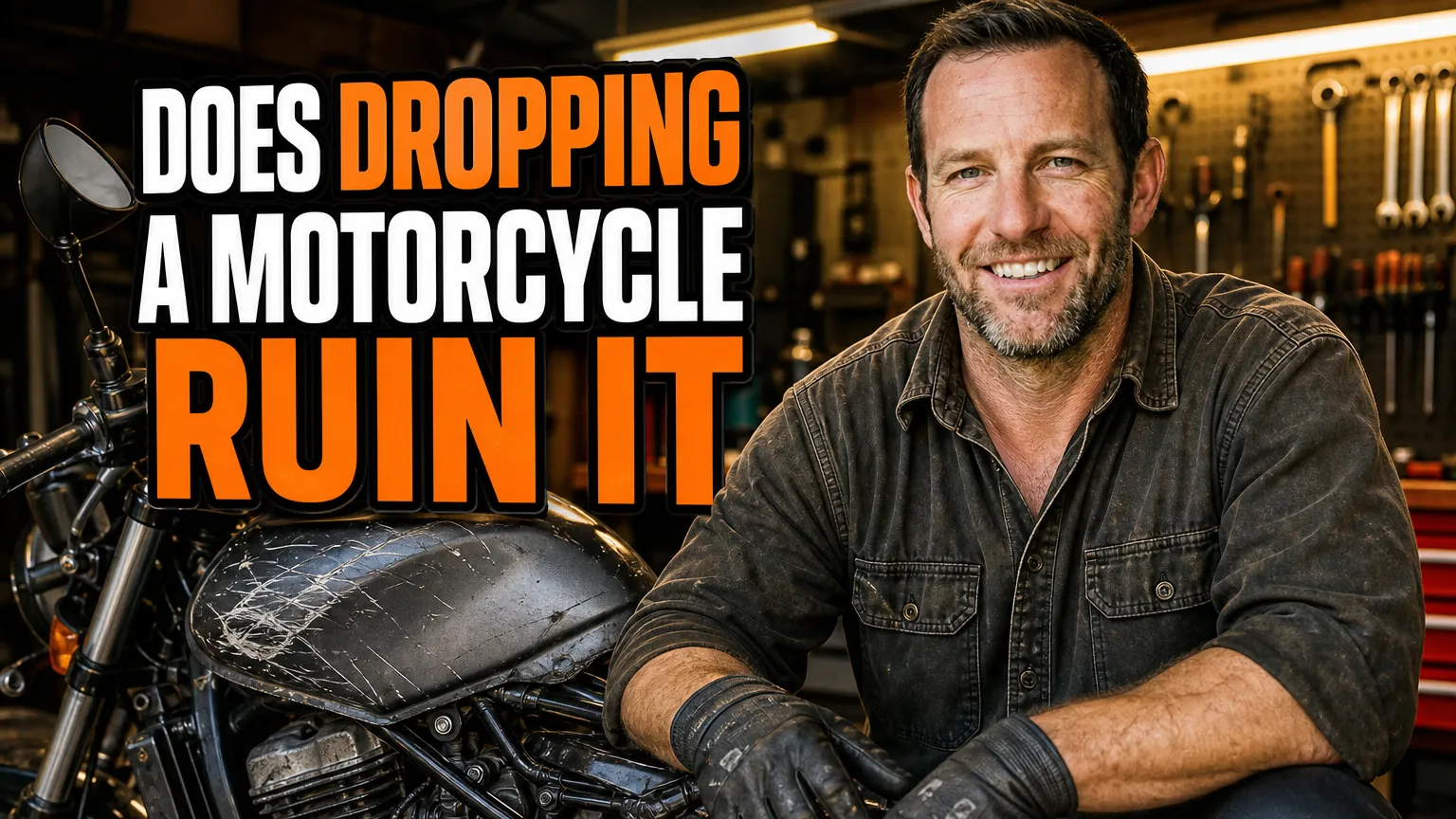
I’ve had that stomach-drop moment: my motorcycle is on its side, and I’m already imagining a cracked fairing, bent handlebar, or a repair bill that costs more than the ride. A fall can look dramatic, but a simple tip-over doesn’t automatically mean the bike is ruined.
When I ask, “does dropping a motorcycle ruin it,” my honest answer is: sometimes, but often not. The outcome depends on how fast the bike was moving, what it landed on, which parts hit first, and whether anything important was damaged out of sight.
- A stationary tip-over often causes cosmetic scuffs, but impact speed and landing surface matter.
- I check for leaks, bent controls, steering problems, and brake or tire damage before riding.
- If anything affects safe control, I don’t ride until I’ve had it inspected or repaired.
- Taking photos and documenting damage helps me make a clear repair or insurance decision.
How Much Damage a Fall Can Really Cause
In my experience, the difference between a harmless drop and a serious crash is usually the force of the impact. A motorcycle that tips over while parked may land on a bar end, mirror, footpeg, or engine guard, spreading the impact across sturdy parts. A bike sliding at speed can take much more force and damage several systems at once.
The surface matters, too. I’d expect a fall onto soft grass to be gentler than one onto rough asphalt, gravel, or a curb. Even so, soft ground doesn’t guarantee a clean outcome: a branch, rock, or uneven patch can press into a vulnerable component.
Many bikes are designed with some exposed parts that can take small knocks, but I never assume that visible protection covers everything. Fairings can crack, levers can bend, and mounts can shift. A motorcycle may start normally and still have a control or steering issue that I notice only once I try to maneuver it.
A parking-lot tip-over versus a moving fall
When my bike falls at a standstill or walking pace, I first look for scuffs, broken plastic, a damaged mirror, and a bent lever. Those are common places for contact, though the exact pattern depends on the model and which side hits the ground. If the bike was moving when it went down, I treat the inspection more seriously.
A moving fall can damage tires, wheels, suspension, bodywork, and parts that help the motorcycle steer or stop. I also consider whether the bike struck anything else or kept sliding after the initial impact. If I can’t confidently explain what happened, I’d rather get a qualified mechanic to inspect it than guess.
My First Checks Before I Try to Start It
After a drop, I resist the urge to pick the bike up and immediately fire it up. I first make sure I’m out of traffic and that the bike is stable enough to handle safely. If the motorcycle is heavy, awkwardly positioned, or damaged in a way that makes lifting risky, I ask for help instead of turning one problem into two.
Once it’s upright, I take a slow walk around it. I look for anything leaking, hanging loose, cracked, or obviously out of position, and I pay particular attention to the area that hit the ground. I don’t need to diagnose every mark on the spot; I just need to know whether there’s a reason not to ride.
Look for fuel, oil, and coolant leaks
I check the ground under the bike and inspect the tank, hoses, engine area, and radiator if my motorcycle has one. A wet patch or fresh drip is a reason to stop and investigate, not a problem I try to solve by riding around the block. Fuel in particular calls for extra caution around flames, sparks, and hot parts.
A motorcycle that has been lying on its side may also need a moment before I restart it, depending on its design and what happened. I follow the owner’s manual rather than relying on a universal trick I heard from another rider. If I smell fuel strongly or see an active leak, I don’t start the engine.
Check the controls and steering
I sit on the bike only when it’s stable, then check whether the handlebars turn smoothly from side to side. I look for a bar end, lever, handguard, or mirror that’s pushed out of place, and I make sure nothing catches or prevents full steering movement. A bent handlebar or damaged control can make a short ride unsafe, even if the motorcycle looks mostly fine.
I also test the throttle gently and confirm that it moves and returns as it should. I squeeze the brake levers and press the rear brake control to see whether they feel normal. If a lever is cracked, a pedal is bent, or the throttle sticks, I don’t treat the issue as cosmetic.
What I Inspect Before Deciding to Ride
Before I ride after a tip-over, I check the parts that affect control, braking, and visibility. My basic walk-around isn’t a substitute for a professional inspection when the impact was hard, but it helps me spot obvious reasons to leave the bike parked.
- Tires and wheels: I look for cuts, bulges, a visibly bent rim, or anything lodged in a tire.
- Brakes: I check that the controls move freely and feel consistent, with no visible fluid leak.
- Lights and signals: I confirm that lenses aren’t broken and that the lights still work.
- Foot controls: I look for a bent shift lever, brake pedal, or footpeg that could affect my position.
- Bodywork and mounts: I check that loose panels, guards, and accessories won’t contact moving parts.
- Stands: I make sure the side stand moves and holds the bike securely.
I’m especially careful with anything that feels different from before the fall. New vibration, scraping, a pull to one side, unusual brake feel, or trouble selecting gears is enough for me to stop and reassess. I don’t use “it still starts” as proof that the bike is safe.
When I won’t ride it
If I see a fuel or oil leak, damaged brake parts, a sticking throttle, a compromised tire, or a steering problem, I arrange a tow or ask a mechanic to inspect the bike. I do the same if the frame or fork appears damaged, or if I’m unsure whether a wheel or suspension part is straight. A cautious decision is cheaper than risking a loss of control.
If everything looks sound after a very minor stationary tip-over, I may choose to do a cautious check in a safe, quiet area before returning to normal riding. I keep it slow and pay attention to handling, braking, sounds, and warning lights. If anything feels off, I stop rather than trying to convince myself it will go away.
Small Repairs, Cosmetic Marks, and Bigger Problems
In my experience, scuffs on a bar end, mirror, lever, or replaceable plastic panel are often manageable. A scratched fairing can be frustrating, especially on a new bike, but appearance alone doesn’t tell me whether the motorcycle is mechanically unsafe. I separate cosmetic damage from anything that might affect control or reliability.
I also avoid judging damage by repair cost alone. A small-looking bend in a control or mount can matter more than a large scratch, while a cracked panel may be mostly cosmetic. If a part is bent, cracked, or loose, I compare it with the manufacturer’s guidance or ask a technician instead of trying to straighten safety-critical components by eye.
What crash protection can and can’t do
Engine guards, sliders, handguards, and frame protection can help limit damage in some falls. I see them as useful risk-reduction equipment, not a promise that a motorcycle will come through every impact untouched. The protection may take the first hit, but the force can still reach nearby brackets, controls, or bodywork.
After a fall, I inspect the protective part itself and the area around its mounting points. A slider that looks scraped may have done its job, but I still check whether it’s loose or whether the mount has shifted. I never assume that an accessory part can safely be reused after a hard impact without checking its condition.
How I Handle Photos, Repairs, and Insurance
Once the motorcycle is safe and stable, I photograph the damage before cleaning or moving anything unnecessarily. I take a few wide shots and close-ups from both sides, including any obvious leaks or broken parts. Those images help me remember what I saw and make it easier to explain the situation to a repair shop or insurer.
For a minor parking-lot drop, I compare a repair estimate with my policy deductible before making a claim. I also consider whether the damage could affect resale value or hide a more expensive problem. If another vehicle, person, or property was involved, I document the details and contact my insurer for specific guidance.
I keep receipts and notes for any parts or repairs, especially if the bike has been inspected professionally. If the motorcycle is financed, leased, or covered by a warranty, I check the applicable terms rather than assuming a drop automatically cancels coverage. Clear records make follow-up decisions much easier for me.
Why I Treat Road Crashes Differently from Simple Drops
A parked motorcycle tipping over is not the same situation as a collision with traffic. When a car or another road user is involved, I focus first on people’s safety, emergency help when needed, and documenting the incident. I don’t let concern about scratched paint distract me from injuries or hazards at the scene.
I’ve read the safety context behind what percentage of motorcycle accidents are caused by cars, and it’s a reminder to take interactions with other vehicles seriously. I also look at what percent of motorcycle accidents are caused by other drivers when thinking about how I can ride defensively around traffic.
Statistics about severe crashes put a routine tip-over in perspective, but I don’t treat them as a prediction of what will happen on any particular ride. I’ve found it useful to understand how many fatal motorcycle accidents per day and to read about what percent of motorcycle accidents result in death and what percent of motorcycle accidents are fatal. For me, the practical takeaway is to protect myself, ride attentively, and never take a questionable bike back onto the road.
How I Try to Prevent the Next Tip-Over
I can’t prevent every fall, but I can reduce the chances of dropping my bike during slow maneuvers. I take extra care on sloped or loose surfaces, choose a stable parking spot, and think about how I’ll get the motorcycle back out before I park. A few seconds of planning can spare me a lot of frustration.
I also practice low-speed control in a safe space. Smooth clutch work, steady throttle, and confident braking help me handle the awkward moments that happen in parking lots and at intersections. If a particular maneuver feels uncomfortable, I’d rather practice it deliberately than rush through it in traffic.
Finally, I keep my motorcycle maintained and make sure I understand its weight, stand, and controls. Familiarity won’t make a bike impossible to drop, but it helps me react more calmly. If I do drop it, a calm inspection is far more useful than panic or wishful thinking.
My Bottom Line After a Motorcycle Drop
Dropping a motorcycle doesn’t automatically ruin it. A low-speed tip-over may leave only scratches or a damaged mirror, while a harder impact can affect parts that are essential for safe riding. I judge the situation by the cause of the fall, the damage I can see, and whether the bike still behaves normally.
My rule is simple: I don’t ride until I’m satisfied that the tires, steering, controls, brakes, lights, and fluid systems are safe. When I’m uncertain, I get a professional inspection. A few careful checks can protect both my motorcycle and me, and that matters more than getting back on the road five minutes sooner.
Frequently Asked Questions
Does dropping a motorcycle always cause damage?
No. A slow tip-over may leave only minor scuffs, but I still inspect for leaks, bent controls, damaged mirrors, and other safety issues before riding.
Can I ride my motorcycle after dropping it?
I ride only after checking that the handlebars, controls, tires, brakes, lights, and fluid levels are sound. If anything looks or feels wrong, I arrange a closer inspection first.
What should I check first after a motorcycle falls over?
I first make sure the area is safe, then look for leaking fuel or oil, obvious damage, and parts that could affect steering, braking, or throttle control.
Should I report a dropped motorcycle to insurance?
I review my policy and estimate the repair cost before deciding. If another vehicle or person was involved, I document the incident and contact my insurer for guidance.

Related Articles

Motorcycle vs. Bicycle: Which Is More Difficult to Ride?
I compare motorcycle and bicycle riding, from balance and controls to traffic, weight, and safety, so I can help you…
 Jake Miller
10 min read
Jake Miller
10 min read

8 Smart Ways to Keep Your Motorcycle Steady When You Park on a Slope
Learn how I choose a safe spot, position my bike, use first gear and a sidestand pad, and secure it…
Jake Miller
12 min read

8 Beginner-Friendly Motorcycles to Try Before You Buy
Learn through rider training, school fleets, and legal rentals with these approachable motorcycles, plus practical safety tips for building skills…
Jake Miller
11 min read