
7 Best 500cc Motorcycles for Beginners with ABS (Rider-Picked for 2025)
 Jake Miller
9 min read
Jake Miller
9 min read
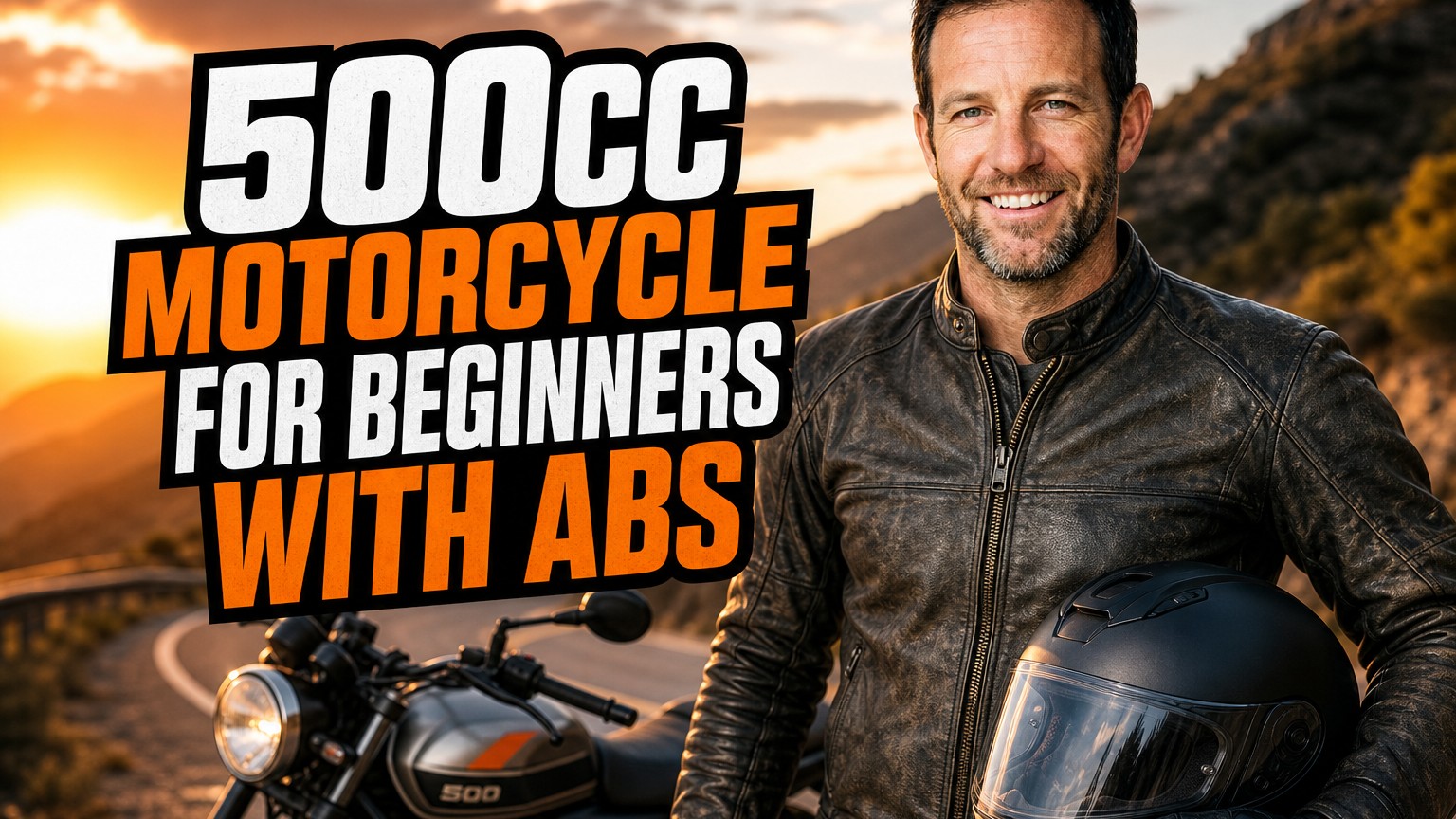
My first real motorcycle was a small-displacement bike with no ABS. I locked the front wheel on a damp road within a month. Nothing bad happened, but I never forgot how quickly it went wrong.
That is why I’m firm about this: if you’re a new rider, get ABS. The 500cc class is also the sweet spot. It’s powerful enough that you won’t outgrow it in six months, and it’s gentle enough that it won’t bully you.
Below are seven bikes I’d happily recommend to a friend who is learning to ride. I’ve included real specs, rough prices, and my honest take on each one’s strengths and quirks.
- The Honda NX500 (CB500X) is my best all-rounder: comfortable, forgiving, and cheap to own.
- Short riders should look at the Honda Rebel 500 or Kawasaki Eliminator, which both sit very low.
- For sporty looks without a punishing riding position, pick the Honda CBR500R or Kawasaki Ninja 500 SE.
- On a budget, the Kawasaki Z500 and Benelli TRK 502 deliver a lot for the money.
How I Picked These Bikes
I didn’t just copy spec sheets. I looked at what actually matters when you’re new: seat height, weight, throttle response, brake feel, and how much a bike forgives mistakes.
Every bike here is in the roughly 450-500cc class and offers ABS, either standard or on the trim I recommend. I also weighed running costs, since a first bike will likely get dropped, scratched, and over-oiled by an enthusiastic owner (me, once).
What ABS Actually Does for a New Rider
ABS stops your wheels from locking when you brake hard. On a motorcycle, a locked front wheel can put you on the ground in a heartbeat.
Studies from insurance and safety bodies consistently show that ABS-equipped motorcycles are involved in fewer serious crashes. In my experience, it gives you the confidence to brake properly instead of timidly. That confidence is worth more than a couple of extra horsepower.
1. Honda NX500 (CB500X) — Best Overall Beginner Bike
If someone asked me for one bike and no further discussion, I’d say the Honda NX500. In many markets it’s still sold as the CB500X, and the two share the same excellent 471cc parallel-twin engine.
Why I Love It
The engine makes around 47 hp and has a friendly, linear pull. The NX500 weighs about 430 pounds ready to ride, and the seat sits around 32 to 33 inches. The upright adventure-style riding position is easy on your wrists and back.
ABS is standard, and the brakes have a predictable bite that suits learning. The roughly 4.5-gallon tank gives genuine touring range, because the engine sips fuel at around 55 to 65 mpg.
Things to Consider
It’s not the lightest bike here, and taller bodywork can feel a bit imposing if you’re under 5’6″. Expect to pay roughly $7,000 to $7,500 new, with used CB500X models going for much less.
If you buy one, check out this guide to the best motorcycle oil for a cb500x abs before your first service. The right oil makes a noticeable difference to clutch feel.
2. Honda CBR500R — Best Sporty Look with Gentle Manners
The Honda CBR500R looks like a proper sportbike, but it doesn’t ride like one that wants to hurt you. It shares the same 471cc twin as the NX500, tuned for smooth midrange power.
Ride Impressions
The clip-on bars put you in a mild sport crouch, nothing like the wrist-crushing posture of a 600cc supersport. Seat height is about 31 inches, and wet weight is roughly 415 pounds. That’s a manageable package for most adult riders.
The CBR500R comes with ABS as standard and has a slipper-style, light-action clutch that makes stop-and-go traffic less tiring. The faired body also helps with wind protection on the highway.
Who It’s For
I’d pick this if you want a sporty look and an eventual track day or two. Budget about $7,000 for a new one. Honda’s reputation for reliability is a big part of why this bike keeps showing up on beginner lists.
3. Honda Rebel 500 — Best for Shorter Riders
I’ve watched nervous new riders sit on a Honda Rebel 500 and visibly relax. The seat is only about 27.2 inches high, so almost everyone can flat-foot at a stop.
Why It Works
Again, you get the proven 471cc parallel twin, but the cruiser setup trades some top-end rush for easy, low-down torque. At about 410 pounds, it feels lighter than it is because the weight sits so low.
ABS is standard on the Rebel 500, and the brakes are well matched to the bike’s character. The chassis is stable and confidence-inspiring in corners, so it never feels like a boat.
Trade-offs
Cruiser ergonomics mean you won’t have much wind protection or cargo capacity. The fuel tank is also smaller than the adventure bike’s, at about 3.4 gallons. Expect to spend roughly $6,500 to $7,000, and bear in mind that resale value tends to stay strong.
4. Kawasaki Ninja 500 SE ABS — Best Lightweight Sport Option
The Kawasaki Ninja 500 arrived as the successor to the beloved Ninja 400, with a slightly bigger 451cc parallel twin. I recommend the SE ABS trim because ABS is non-negotiable for me.
What Stands Out
At roughly 375 pounds, it’s one of the lightest bikes on this list, and that matters hugely in parking lots and slow turns. Power is around 45 hp, delivered in a smooth, revvy way that rewards you as your skills grow.
The seat is about 31 inches, so it suits average-height riders. Kawasaki’s assist-and-slipper clutch makes downshifts forgiving, which is a gift when you’re still learning to be smooth.
Downsides
The sporty crouch is more aggressive than on the NX500. The SE also costs a bit more than the base Ninja 500, so expect something in the $6,500 to $7,500 range depending on market. If you only ride occasionally in comfortable clothes, think about whether you’d prefer a more upright bike.
5. Kawasaki Z500 — Best Naked Bike for City Riding
Take the Ninja 500’s engine and chassis, strip away the fairings, and you get the Kawasaki Z500. I find naked bikes much easier to live with in town: more visibility, more leverage on the bars, and less to worry about when you drop one.
Everyday Strengths
The 451cc twin makes similar power to the Ninja, but the upright seating makes it feel friendlier at low speeds. Seat height is around 31 inches, and weight is close to 370 pounds.
ABS is standard on the Z500, and the aggressive “Sugomi” styling gives it presence that belies its beginner status. Pricing generally sits a little below the Ninja, which makes it a strong value pick.
Limitations
With no fairing, highway rides get windy after an hour or so. If you plan on frequent motorway commutes, I’d lean toward the NX500 or the CBR500R instead.
6. Kawasaki Eliminator — Best Low-Slung Cruiser Alternative
The Kawasaki Eliminator brings a famous name back with a modern 451cc twin. It’s the Rebel 500’s main rival, and I think it’s one of the best-looking bikes in the class.
Why Beginners Should Look Twice
The seat height is around 29 inches, and the bike weighs approximately 385 pounds. That is a very approachable combination, especially for newer riders who are nervous about reaching the ground.
ABS is standard, and the power delivery is relaxed and torquey, a clear departure from the revvy Ninja. The slim profile and low bars make it feel nimble in traffic.
Who Should Skip It
The low, stretched cruiser stance isn’t for everyone, and pillion comfort is average. It usually costs about $6,500 to $7,500 depending on trim, with the SE adding a small fairing and extras.
7. Benelli TRK 502 — Best Budget Adventure Tourer
The Benelli TRK 502 isn’t Japanese, but it’s a seriously capable machine. Its 500cc parallel twin makes about 47 hp, and ABS is standard in most markets.
Value and Versatility
The TRK 502 is physically larger than the Hondas, with a tall windscreen and a big fuel tank of around 20 liters. Seat height is about 31.5 inches, and wet weight is nearly 470 pounds, so it’s the heaviest bike on this list.
That said, it’s stable and comfortable, and it usually undercuts the Japanese competition on price. For riders who plan to commute and tour on a budget, I think it’s a fantastic choice.
What to Watch
Dealer networks are thinner than Honda’s or Kawasaki’s, so check service availability near you. Resale values also tend to be lower, so I’d treat it as a keeper rather than a quick flip.
How to Choose Between These Bikes
Start with Seat Height and Weight
Before anything else, sit on the bike. If you can’t comfortably get both feet or at least the balls of your feet down, keep looking. A lower, lighter bike will build confidence faster than a more powerful one.
Think About How You’ll Really Ride
Mostly city commuting? The Z500 or Rebel 500 will be a joy. Occasional highway trips and long weekends? The NX500 or TRK 502 will serve you better.
My Quick Matching Guide
- Short rider: Honda Rebel 500 or Kawasaki Eliminator
- Commuter: Kawasaki Z500 or Honda NX500
- Sport-minded: Honda CBR500R or Kawasaki Ninja 500 SE
- Budget touring: Benelli TRK 502
Take a Rider Course First
No bike can replace training. I took a beginner course before buying my first bike, and it was the best money I spent. ABS helps, but good habits help more.
Keeping Your First Bike Healthy: Oil Basics
All of these bikes use a four-stroke engine with a wet clutch. That means you need oil that is clutch-friendly, typically rated JASO MA or MA2, not car oil with friction modifiers.
If you’re comparing options, this breakdown of the best motor oil for 4 stroke motorcycle engines is a great starting point. I also like this overview of the top engine oil for 4 stroke motorcycle use cases.
Readers outside the US may enjoy this guide to the best engine oil for 4 stroke motorcycle in india, which covers locally available brands. And if you want yet another perspective, here’s what is the best engine oil for 4 stroke motorcycle riders ask most.
My Simple Maintenance Routine
Check your oil level weekly, and change it on schedule. Look at chain tension (if applicable), tire pressures, and brake pad thickness every month.
These small habits keep a 500cc twin running happily for well over 50,000 miles. They also help you spot problems before they become expensive.
Final Thoughts: My Honest Recommendation
If I had to start again today, I’d buy the Honda NX500 or, if I were shorter, the Honda Rebel 500. Both are forgiving, reliable, and come with ABS from the factory.
That said, every bike on this list is a smart first purchase. Sit on a few, ride what you can, and pick the one that makes you grin when you walk up to it. The best beginner bike is the one you’ll actually want to ride.
Stay safe, wear your gear, and enjoy the journey.
Frequently Asked Questions
Is a 500cc motorcycle too big for a beginner?
No. Most bikes in the 450-500cc class, like the Honda NX500 or Kawasaki Ninja 500, make about 45 to 50 hp with smooth, linear power. That is enough for highway riding but still manageable for new riders, especially with ABS and a sensible throttle hand.
Do all 500cc bikes come with ABS?
Not all of them. Many current models, such as the Honda CBR500R, Rebel 500, and Benelli TRK 502, include ABS as standard. Some Kawasaki models are sold in both ABS and non-ABS trims, so always confirm the exact variant before you buy.
What is the best 500cc beginner bike for short riders?
The Honda Rebel 500 is my top recommendation for shorter riders. Its seat height is only about 27 inches, and the Kawasaki Eliminator is another low-seat option at around 29 inches.
How often should I change the oil on a 500cc twin?
Check your owner’s manual, but most Honda and Kawasaki 500-class twins call for an oil change roughly every 6,000 miles or once a year. Use a quality oil that meets JASO MA or MA2 standards, because these bikes have wet clutches.

Related Articles
7 Best Batteries for Motorcycles I’ve Tested and Trust in 2026
I've tested dozens of motorcycle batteries to find the best performers. From AGM to lithium, here are my top picks…
Jake Miller
15 min read

The Perfect Battery for Your Harley Davidson Softail: A Rider’s Complete Guide
Discover the perfect battery for your Harley Davidson Softail. I've tested multiple options and share real-world performance data, maintenance tips,…
Jake Miller
14 min read

The Best Battery for Your Harley Davidson: My Complete Guide After Years of Testing
Discover which battery truly performs best for Harley Davidson motorcycles. Real rider experience with AGM, lithium, and OEM options to…
Jake Miller
12 min read