
6 Best Battery for Touring Motorcycle: What I Actually Run on My Long-Haul Bikes
 Jake Miller
7 min read
Jake Miller
7 min read
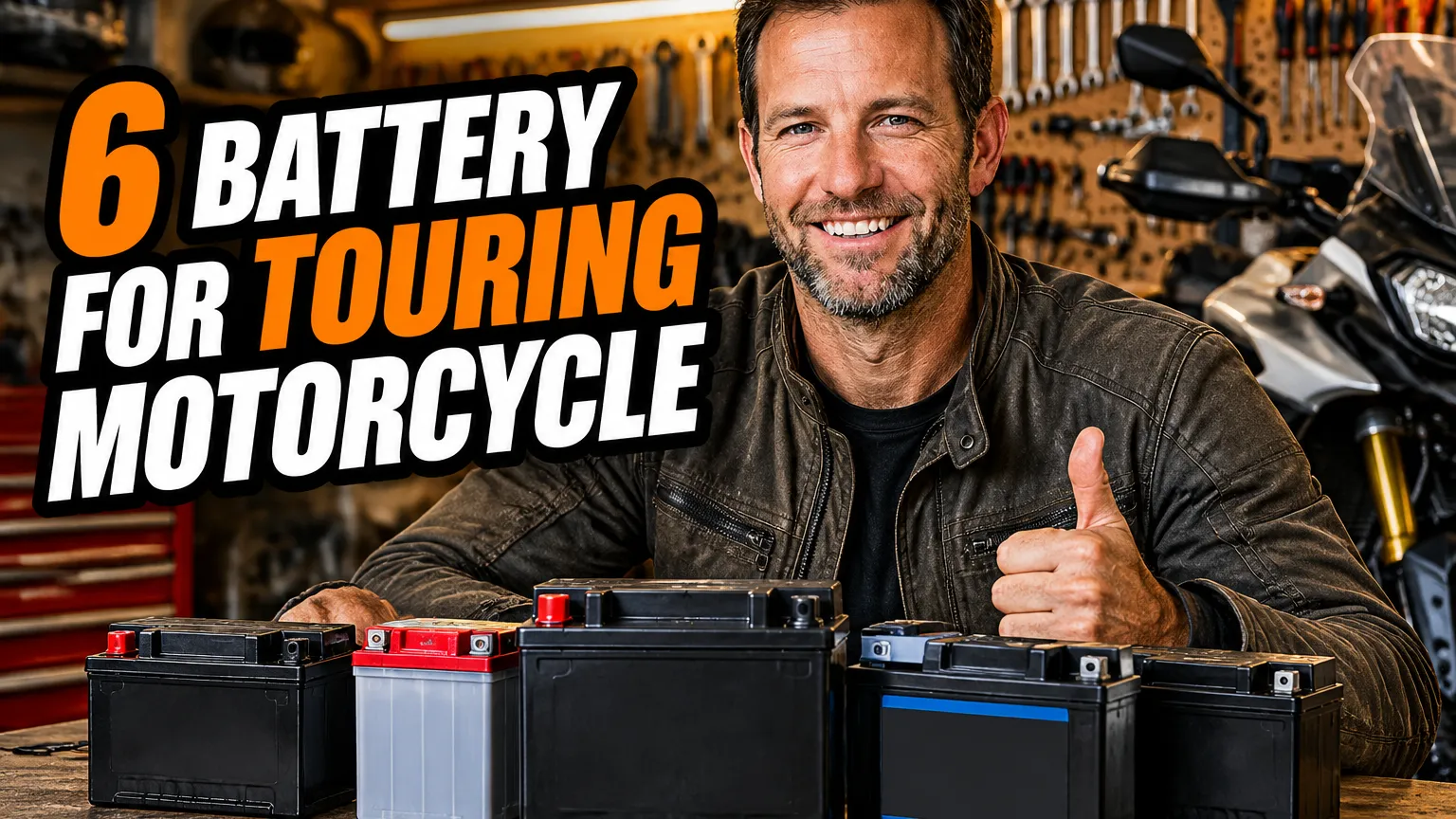
I’ve lost count of the times a dead battery has ruined the start of a tour. It always happens at the worst moment — a cold morning at a campsite, a gas station in the middle of nowhere, or right after you’ve loaded the bike to the gills. So I stopped treating batteries as an afterthought.
Over the years I’ve run everything from cheap flooded cells to premium lithium packs on my touring and sport-touring bikes. Some lasted years, some died in months, and a few genuinely changed how I ride. This list is the result of that experience.
If you’re still figuring out the basics, this guide on what is the best battery for a motorcycle covers the fundamentals before you spend a dime.
- Yuasa YTX20L-BS is my go-to AGM for reliability on big touring twins and fours.
- Odyssey PC680 is the rugged pick if you ride rough roads and want maximum cranking power.
- Antigravity ATX20-RS is my lithium upgrade for weight savings and long sits between rides.
- MotoBatt MBTX20U is a solid value AGM with extra terminals for accessories.
- Always match the battery to your bike’s charging system and buy a smart charger.
1. Yuasa YTX20L-BS — My Go-To AGM for Touring Reliability
When I want a battery that just works, I reach for the Yuasa YTX20L-BS. It’s a sealed AGM unit that fits a huge range of big touring bikes, from Gold Wings to heavy cruisers. Mine has survived two full riding seasons with zero drama.
The YTX20L-BS delivers around 270 cold cranking amps, which is more than enough to spin over a big V-twin or inline-four on a frosty morning. The sealed design means no water checks, no acid spills, and no corrosion on your terminals.
Yuasa has been the OEM supplier for most Japanese manufacturers for decades, and you can feel why. The plates are thick, the casing tolerates vibration, and it holds charge reasonably well during winter storage.
I pair mine with a smart trickle charger and get four to five years out of each one. That’s the key trick with any AGM — keep it topped up and it’ll reward you.
2. Odyssey PC680 — The Rugged Pick for Adventure Touring
If your touring takes you down gravel roads and washboard trails, the Odyssey PC680 deserves a hard look. I ran one on an adventure touring setup for three years and it never once let me down.
The PC680 is an absorbed glass mat battery built with pure lead plates, which gives it exceptional vibration resistance. It punches well above its size, delivering 220 CCA from a compact case.
What I love most is the deep-cycle tolerance. Touring bikes often run heated grips, GPS, and aux lights, which taxes the battery. The Odyssey handles that abuse better than most.
It’s a bit pricey, but if you ride places where a jump start isn’t an option, the peace of mind is worth it. Just make sure to use the correct terminal adapters, as the PC680 uses a slightly different post layout.
3. Antigravity ATX20-RS — My Lithium Upgrade for Weight and Long Sits
This is the battery that changed my mind about lithium. The Antigravity ATX20-RS is a lithium (LiFePO4) unit that weighs roughly 60 percent less than the AGM it replaced on my sport-tourer.
That weight savings isn’t just a spec sheet flex — it’s noticeable when you’re muscling a loaded bike in a parking lot. But the bigger win for touring is the low self-discharge rate. I’ve left the ATX20-RS sitting for two months and it still fired the bike first try.
The ATX20-RS has two key features touring riders will appreciate: an integrated battery management system that protects against over-discharge, and a Restart feature that holds a reserve charge to get you going if you leave the lights on.
It’s expensive, and you need a lithium-specific charger. But if you tour often and want modern performance, this is a fantastic choice.
4. MotoBatt MBTX20U — Best Value AGM With Extra Terminals
MotoBatt is the brand I recommend to friends who want solid performance without the premium price. The MBTX20U is an AGM battery that delivers dependable cranking power at a price that won’t sting.
What sets MotoBatt apart is the quad-terminal design. You get four posts instead of the usual two, which makes wiring up heated gear, a GPS, or a USB charger dramatically easier. That’s a real touring benefit.
I’ve run an MBTX20U on a budget build and it performed flawlessly for two seasons. Cold cranking was strong and it held charge well between weekend rides. For the money, it’s hard to beat.
5. Yuasa YTZ14S — The Compact High-Performance Pick
For sport-touring bikes that use a smaller case size, the Yuasa YTZ14S is my recommendation. It’s a high-performance AGM with a compact footprint that delivers a surprising 230 CCA.
I ran this on a middleweight sport-tourer and appreciated how quickly it fired the engine. The sealed construction and vibration resistance are what you’d expect from Yuasa, and it lasted three full seasons without issue.
The YTZ14S is commonly found as OEM fitment on several touring-oriented machines, so if your bike calls for it, you’re in good hands sticking with this one.
6. Interstate MTZ-20 — The Widely Available Backup Choice
Sometimes you need a battery right now, and that’s where Interstate’s MTZ-20 comes in. It’s available at countless auto parts stores across the country, which matters when you’re stranded mid-tour.
The MTZ-20 is a sealed AGM battery with solid cranking power and a durable case. I’ve used Interstate batteries as travel spares and never had one fail on me. The convenience factor alone earns it a spot here.
It’s not always the cheapest option, and you can often find better specs for less if you order ahead. But for sheer availability and dependable performance, the Interstate MTZ-20 earns a recommendation.
How I Choose a Touring Battery
After all these years, my checklist is simple. First, I match the case size and terminal layout to my bike — no exceptions. A battery that doesn’t fit securely is a vibration failure waiting to happen.
Second, I consider my charging system. Older touring bikes with weak rectifiers do better with AGM or traditional flooded batteries. Modern bikes with healthy charging systems can safely run lithium.
Third, I think about how often I actually ride. If the bike sits for weeks, lithium wins. If it’s a daily rider, a quality AGM is perfect.
Finally, I never skip the charger. A smart maintainer is the single best investment you can make alongside any battery on this list.
AGM vs Lithium — My Honest Take
AGM batteries are heavier, cheaper, and universally compatible. Lithium batteries are lighter, hold charge longer, and cost more. I run AGM on my heavy tourers and lithium on my sport-tourers.
For most riders, a good AGM is the smarter first choice. Only go lithium if you’ve confirmed your charging system supports it and you’re willing to buy a compatible charger.
Don’t Forget the Rest of the Bike
A great battery is only one piece of the touring puzzle. If you’re building a long-distance machine from scratch, check out the best cheap motorcycle for touring to see which platforms are worth your money.
And if you ride a German machine, this guide on the best battery for BMW sport touring motorcycles covers the specifics you’ll need.
My Final Picks
If I had to pin it down: the Yuasa YTX20L-BS is my overall pick for reliability, the Odyssey PC680 is my choice for rough-road adventure touring, and the Antigravity ATX20-RS is my pick if you want a modern lithium upgrade.
Buy the right size, keep it charged, and your touring battery will serve you for years. That’s the lesson every dead-battery morning has taught me.
Frequently Asked Questions
What type of battery is best for a touring motorcycle?
For most touring riders, a sealed AGM battery is the sweet spot. It handles vibration, needs no water top-ups, and holds charge well between rides. Lithium (LiFePO4) is a great upgrade if you want to shed weight and have a modern charging system, while traditional flooded lead-acid is now mostly a budget fallback.
How long should a touring motorcycle battery last?
A quality AGM or lithium battery typically lasts 4 to 6 years with proper care. Touring bikes that sit for months between trips kill batteries faster, so a smart trickle charger is basically mandatory if you’re not commuting on the bike regularly.
Is lithium worth it for a touring bike?
Yes, if your bike’s charging system is compatible and you ride often. Lithium batteries are 60 to 70 percent lighter, hold charge far longer between rides, and crank hard in the cold. The trade-offs are higher upfront cost and the need for a lithium-specific charger.
Which brand makes the best motorcycle battery overall?
Yuasa and Odyssey are the two names I trust most for reliability, which is why you’ll see them on tourers worldwide. If you want to dig deeper into brand comparisons, this breakdown of the best battery brand for motorcycle use is a solid starting point.

Related Articles

Scooters vs Motorcycles: My Honest, First-Hand Comparison After Riding Both for Years
After thousands of miles on both scooters and motorcycles, I break down cost, comfort, maintenance, and safety to help you…
Jake Miller
10 min read

7 Scooters That Look Like Motorcycles for Riders Who Want Style and Storage
Explore my top 7 scooters that look like motorcycles, from adventure crossovers like the Honda X-ADV to sporty maxis like…
Jake Miller
9 min read

How Long Do Honda Motorcycles Last? My 20-Year Owner’s Reality Check
Discover how long Honda motorcycles really last from an owner with 100k+ miles of experience. Learn maintenance secrets, high-mileage examples,…
Jake Miller
10 min read