
Are Motorcycle Batteries 12V Or 6V? What Riders Need To Know Before Buying
 Jake Miller
9 min read
Jake Miller
9 min read
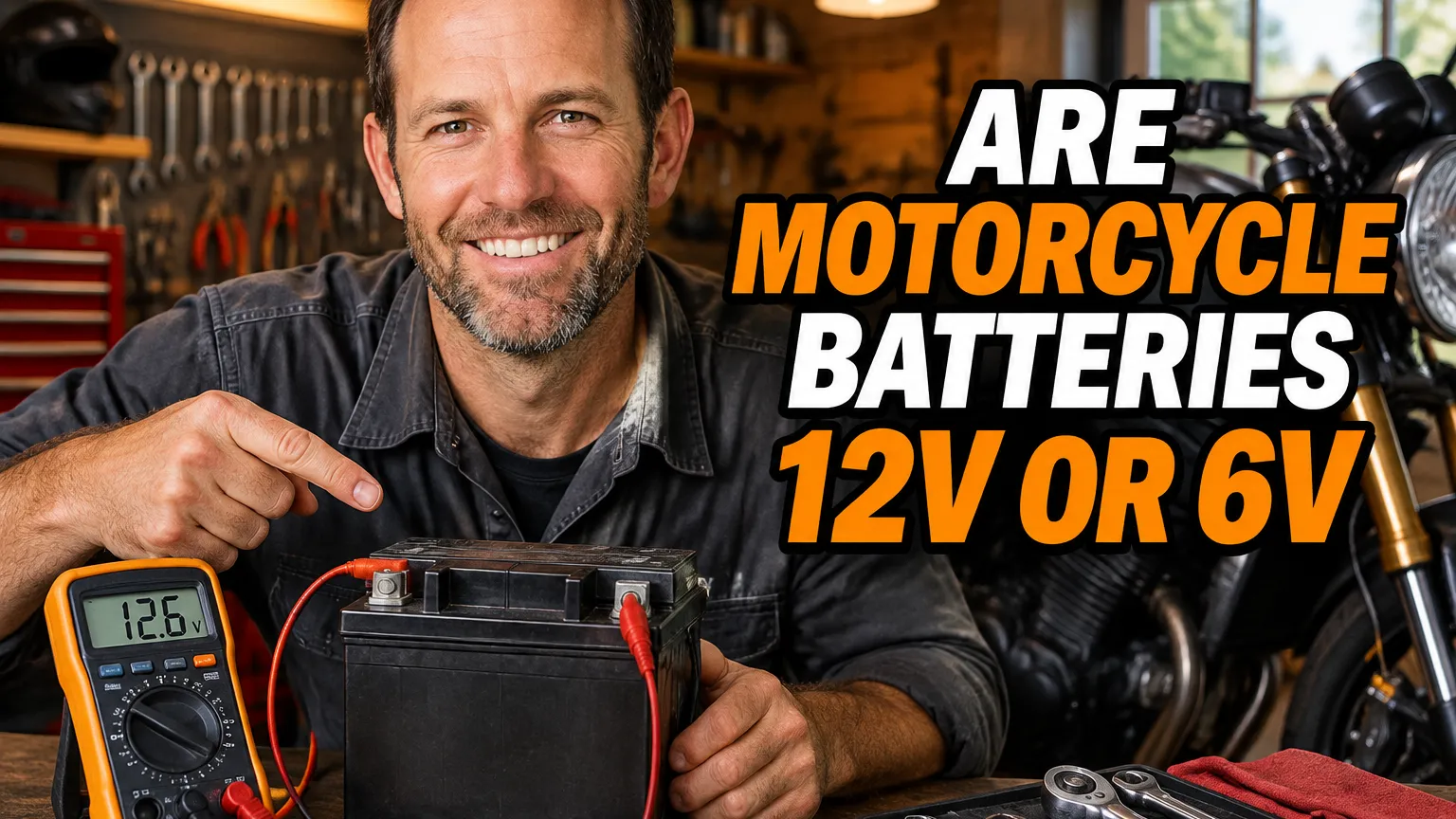
I still remember the first time I walked into a shop and asked for a battery for my old café racer. The guy behind the counter looked at me funny and asked, “12 volt or 6 volt?” I had no idea the question even existed. Every car I’d ever owned ran on 12V, so I assumed motorcycles did too. Turns out, I was wrong about my own bike.
That moment taught me a lesson I’ve never forgotten: voltage matters, and getting it wrong can cost you time, money, and a fried electrical system. Since then, I’ve owned everything from modern sportbikes to vintage scramblers, and I’ve had to deal with both voltages. Let me walk you through what I’ve learned so you don’t make the same mistake I did.
- Virtually all modern motorcycles use 12V batteries, so if your bike was built after the mid 1970s, it’s almost certainly 12V.
- You’ll only find 6V systems on vintage bikes, small mopeds, and some classic scooters that were never converted.
- Check the label on the battery casing or your owner’s manual to be certain, because mismatching the voltage can burn out bulbs and damage wiring.
- You can convert an old 6V bike to 12V, but it’s a real project involving the charging system, bulbs, and horn, not just a battery swap.
The Short Answer
If you’re riding anything built in the last five decades, your motorcycle battery is 12V. That’s the industry standard now, and it has been for a long time. When manufacturers want to squeeze more power out of the electrical system, they build around a 12V architecture because it’s simpler, lighter, and more efficient.
But here’s the catch: if you own a classic, a barn find, or a restoration project from the 1950s or 1960s, there’s a real chance it’s still on a 6V system. In my experience, this is exactly where riders get tripped up, because they assume old equals 6V without checking, or they assume new equals 12V without verifying. Neither assumption is safe.
Why 12V Became The Standard
Motorcycles didn’t always run 12V. Early bikes used 6V systems because the electrical demands were tiny. You had a headlight, a tail light, maybe a horn, and not much else. A 6V battery could handle that load just fine, and it was cheap to produce.
Then things started changing. Electric starters became common, and they need serious current to crank the engine. Riders also started adding heated grips, larger lights, and accessories that a 6V system simply couldn’t feed. As those demands grew, manufacturers realized they needed a beefier electrical platform.
Switching to 12V meant thinner wires could carry the same power, which saved weight and money. It also gave riders more headroom for upgrades. By the mid 1970s, essentially every major manufacturer had made the jump, and 6V bikes became a thing of the past. If you’re curious about just how much of a difference electrical and engine design can make to a bike, it’s a similar story to how why motorcycles are so loud really comes down to the way engineers shape the whole system.
Where You’ll Still Find 6V Bikes
So where do 6V systems actually survive today? In my experience, they live almost exclusively in three places. First, there are genuinely classic bikes from the 1950s and 1960s that were never modified. Second, there are small mopeds and scooters that prioritize simplicity and low cost over electrical capacity.
Third, and this is the sneaky one, there are older bikes that were “converted” halfway by a previous owner who didn’t finish the job. I’ve seen machines with a 12V battery jammed in that still had 6V bulbs, which is a recipe for nothing but burnt-out lights. That’s why I never trust what the last owner told me; I always verify.
If you’re restoring an old machine, this is one of the first things to check. If you’re keeping it original, a 6V battery is the correct choice. If you’re modernizing it for daily riding, a conversion is worth considering, and I’ll get to that in a moment.
How To Tell Which One You Have
The absolute fastest way to know your voltage is to look at the battery casing. Every battery I’ve ever handled has the voltage printed right on the label, usually in big letters. If the label is gone or worn off, you can check the owner’s manual, which will list the battery specifications clearly.
Some riders try to guess by counting the filler caps, reasoning that a 6V battery has three cells and a 12V battery has six. That logic is sound, but with sealed maintenance-free batteries becoming so common, you often can’t see the cells at all. In those cases, the manual or a multimeter is your friend.
If you have a multimeter handy, set it to DC volts and touch the probes to the terminals. A healthy 12V battery will read around 12.6 to 12.8 volts when fully charged. A healthy 6V battery will read around 6.3 to 6.4 volts. There’s no ambiguity once you test it, and it takes less than a minute.
What Happens If You Get It Wrong
I won’t sugarcoat this: getting the voltage wrong is one of the most common electrical mistakes I see, and it can be expensive. If you put a 12V battery into a 6V system, the extra voltage will overpower the bulbs and the coil, and they’ll burn out almost immediately. The wiring can overheat too, which is genuinely dangerous.
The reverse situation, putting a 6V battery into a 12V system, is less catastrophic but still bad. The bike will crank weakly, the lights will be dim, and it may not even start. The battery will also be grossly undersized for the demands placed on it, which shortens its life. Either way, you lose.
This is all part of why I tell newer riders to take electrical systems seriously. Even something as simple as swapping a battery without checking voltage can turn a fun day into a tow. And while I’m on the topic of safety, it’s worth remembering that a well-maintained machine is a safer machine; the same attention you give your battery should go to everything else, including questions like are most motorcycle accidents the bikers fault.
Can You Convert A 6V Bike To 12V?
Yes, you absolutely can, and I’ve done it more than once. It’s a rewarding project, but here’s the honest truth: it’s not just a battery swap. That’s the mistake a lot of people make, and it’s how you end up with fried components. Converting properly touches the whole electrical system.
At minimum, you need a 12V battery, a 12V charging system (usually a new regulator and rectifier), and you have to replace every bulb and the horn with 12V versions. On bikes with a generator, you may need to rewire the generator and fit a different regulator, which is where real experience comes in handy.
The payoff is worth it for many riders. A 12V system starts the bike more reliably, charges faster, and gives you far better headlight output at night. You also get access to the huge range of modern 12V accessories. But if you’re a purist keeping a bike original, staying on 6V preserves its character. There’s no wrong answer, only the answer that fits your goals.
My Advice On Batteries And Charging
Once you know your voltage, keeping the battery healthy is straightforward. I always keep a trickle charger on my bikes during the off-season, because a battery left sitting can drain and sulfate, which permanently reduces its capacity. A slow charge keeps it topped up and extends its life dramatically.
I also recommend checking your terminals and connections every few months. Corrosion builds up quietly and robs you of starting power even when the battery is fine. A quick wire-brush cleanup and some dielectric grease does wonders, and it costs almost nothing.
One more thing I’ve learned the hard way: buy a reputable brand. Cheap off-brand batteries often have lower actual capacity than their labels claim, and they die young. I’ve spent money twice fixing a problem that one good battery would have solved the first time. Don’t be me.
When You’re Working On Your Own Bike
If you’re the type who likes to work on your own machine, understanding the electrical system pays off in ways beyond the battery. Replacing worn parts, checking connections, and keeping the charging system happy are all part of reliable ownership. It’s the same kind of attention that, for example, makes a difference when you’re asking are motorcycle throttle locks dangerous or wondering are all motorcycle throttle cables the same. The more you understand how your bike’s systems connect, the better and safer you ride.
I’ve also found that a little knowledge about your particular model goes a long way. Not every bike is identical, and even two bikes of the same era can differ. Things like are motorcycle throttle tubes universal might be model-specific, and it’s the same with electrical parts. Always check your specific bike’s specs before buying anything.
The Bottom Line
In most cases, the answer is simple: modern motorcycles are 12V, and you’ll only deal with 6V on vintage bikes or tiny scooters. But “most cases” isn’t “all cases,” and the only way to be sure about your own machine is to check the battery label, your manual, or the battery with a multimeter.
Getting the voltage right is one of those small things that prevents big headaches. It protects your bulbs, your wiring, your charging system, and your wallet. Once you’ve confirmed your voltage, you can buy the right battery with total confidence and get back to the thing that matters most: riding.
So before you pull the trigger on that replacement battery, spend sixty seconds verifying. It’s the kind of habit that has saved me from a lot of roadside frustration over the years, and it’ll do the same for you. Trust me on this one.
Frequently Asked Questions
How do I know if my motorcycle battery is 12V or 6V?
Check the label on the battery casing, which nearly always states the voltage. You can also look at your owner’s manual or count the filler caps; a 12V battery typically has filler caps wired in a certain sequence, but the label is the fastest and most reliable way.
Can I convert my 6V motorcycle to 12V?
Yes, but it’s not a simple battery swap. You’ll need a 12V battery, a 12V charging system (regulator/rectifier and possibly a new stator), a 12V alternator or generator rebuild, and you must replace every bulb and your horn. Many riders find it worth it for easier starting and brighter lights, but it takes time and careful rewiring.
What happens if I put a 6V battery in a 12V motorcycle?
Putting a lower voltage battery into a higher voltage system usually won’t damage the wiring immediately, but it will struggle to start the bike and may not run the lights or ignition properly. The reverse, a 12V battery in a 6V system, will quickly burn out bulbs and overheat the wiring, so always match the exact voltage.
Are all modern motorcycle batteries 12V?
Essentially yes. Virtually every motorcycle built since the mid 1970s uses a 12V electrical system. The only real exceptions are small scooters or mopeds and some very cheap entry level bikes, plus any remaining vintage machines that were never converted, so check yours to be sure.

Related Articles

Scooters vs Motorcycles: My Honest, First-Hand Comparison After Riding Both for Years
After thousands of miles on both scooters and motorcycles, I break down cost, comfort, maintenance, and safety to help you…
Jake Miller
10 min read

7 Scooters That Look Like Motorcycles for Riders Who Want Style and Storage
Explore my top 7 scooters that look like motorcycles, from adventure crossovers like the Honda X-ADV to sporty maxis like…
Jake Miller
9 min read

How Long Do Honda Motorcycles Last? My 20-Year Owner’s Reality Check
Discover how long Honda motorcycles really last from an owner with 100k+ miles of experience. Learn maintenance secrets, high-mileage examples,…
Jake Miller
10 min read