
7 Best Dual Purpose Motorcycles for Short Riders: Low Seats, Big Confidence
 Jake Miller
9 min read
Jake Miller
9 min read
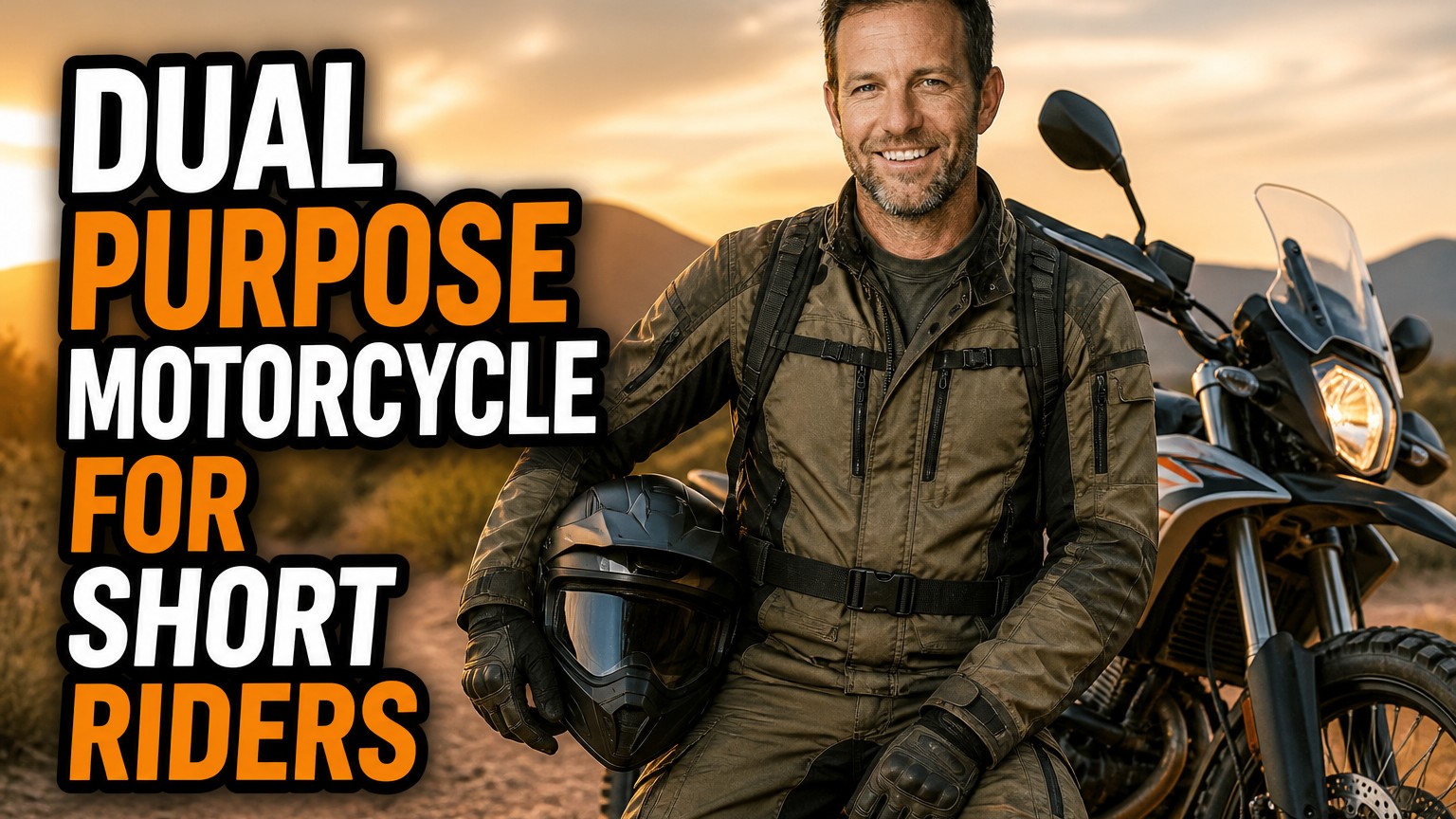
I’m 5’5″ with a 29-inch inseam, and I’ve spent years tiptoeing at stoplights on bikes that were never designed for me. Dual purpose bikes are the worst offenders because suspension travel and ground clearance usually mean tall seats. I’ve learned the hard way that a bike that looks perfect on paper can feel terrifying at the first red light.
So this list comes from my own time on, around, and (embarrassingly) sometimes under these machines. I focused on seat height, weight, and how confident each bike makes me feel when the pavement ends. If you’re short and want a bike that can handle both commuting and gravel, this is for you.
- The Yamaha XT250 and Kawasaki KLX230 S are my top picks for the lowest seats and easiest handling.
- Weight and seat narrowness matter as much as seat height, so don’t shop by the spec sheet alone.
- If you want highway comfort, the Honda NX500 and Royal Enfield Himalayan 450 are the best bigger options.
- Low seats, lowering links, and good riding boots can make taller bikes workable.
1. Yamaha XT250 — Best Overall for Short Riders
If I had to hand one bike to a short rider with no further questions, it would be the Yamaha XT250. The seat sits at roughly 31.9 inches, and it’s a skinny, forgiving perch that lets me plant both feet comfortably. The air-cooled 249cc single is smooth, simple, and about as unintimidating as engines get.
Why I Love It
At around 320 to 330 pounds wet, the XT250 doesn’t fight me in parking lots. Fuel injection means no cold-start drama, and the claimed 70-plus mpg range gets me through a long day. Expect to pay roughly $5,300 to $5,500 new.
If you’re brand new to riding, this is also a fantastic starter. I’d point friends toward it right alongside my guide to the best beginner motorcycle for short girls, since the same low-and-light logic applies.
What Holds It Back
Power is modest. The XT250 is happy at 60 mph, but I wouldn’t call it relaxed at 75 on a headwind. Its suspension is also soft for aggressive off-road use, but for fire roads and backroads, it’s perfect.
2. Kawasaki KLX230 S — Best Lightweight Trail Option
The Kawasaki KLX230 S is the version made for riders like me. Its seat height is only about 32.9 inches with lower suspension than the standard KLX230, and it weighs in around 295 pounds. It feels more like a big dirt bike than a street bike, in a good way.
My Experience
The 233cc fuel-injected single revs happily and feels livelier than the XT250. ABS is available on certain versions, which I appreciate on wet pavement. Pricing typically sits around $5,300 to $5,700.
On the trail, the KLX230 S is easy to flick around. When I dropped it in sand (it happens), I could pick it up without a struggle.
Things to Know
The seat is a bit firm on long highway runs. Wind protection is nonexistent. But for a mix of town and trail, it’s one of the most confidence-building bikes I’ve ridden.
3. Honda CRF300L — Best Proven Reliability (With a Small Fix)
The Honda CRF300L has a reputation for just working. Its stock seat height is about 34.7 inches, which is tall for me. However, Honda’s low-seat and lowering-link options, plus the bike’s light 300-pound frame, make it manageable for many short riders.
Why It Still Makes the List
The 286cc liquid-cooled engine is smooth, torquey for its size, and bulletproof. It cruises at 65 mph without drama. Expect around $5,300 to $5,500 for the standard model.
I’d recommend sitting on one first. With a lowering kit, I can almost flat-foot it, and the narrow midsection helps a lot. If you can’t, skip to one of the lower bikes here.
Quick Maintenance Tip
Like any dual sport, it deserves good oil. If you’re curious what I run, I wrote about the best engine oil for dual sport motorcycle models, and I always choose a JASO MA2 rated oil to keep the wet clutch happy.
4. Royal Enfield Himalayan 450 — Best Mini Adventure Bike for Longer Rides
I didn’t expect to like the Royal Enfield Himalayan 450 this much. Its seat height is around 32 inches in standard form, and a low seat option makes it even more welcoming. For an adventure bike with real long-distance ability, that’s remarkable.
What Stands Out
The liquid-cooled 452cc engine makes about 40 horsepower, which is enough to cruise comfortably at highway speeds. The TFT display with Google Maps navigation is a real bonus. It’s priced around $5,999, which is a bargain for what you get.
The bike is heavier than the others at roughly 430 pounds wet, but the weight sits low. I felt stable and planted at a standstill.
Downsides
It’s not a featherweight in technical off-road terrain. Royal Enfield’s long-term reliability record is also still developing on this new platform. Still, for adventure touring, it’s one of my favorites.
5. Honda NX500 — Best for Highway Comfort
The Honda NX500 is the one I’d pick if most of my miles were on pavement. Its seat height is about 32.7 inches, and the seat is narrow where it counts. The 471cc parallel twin is silky, and the upright riding position is comfortable for hours.
My Take
It weighs around 430 pounds, so it’s not light. But the low center of gravity makes it feel more manageable than the number suggests. Pricing generally lands around $7,000.
I’d call it a dual purpose bike that leans toward adventure touring. It’s great on gravel roads and mild trails, but I wouldn’t take it into technical terrain.
Who It’s For
If you want an easy, low-maintenance commuter that can also handle a weekend camping trip, this is a dream. It’s also a solid choice if you ride two-up occasionally.
6. KTM 390 Adventure — Best Performance Pick (With Low Seat Option)
The KTM 390 Adventure is more aggressive than anything else here. The standard seat is on the tall side at roughly 33.7 inches, but KTM offers a lower seat and adjustable rear suspension on some versions. With the lower setup, short riders can make it work.
Why I’d Consider It
The 373cc engine makes about 43 horsepower and loves to rev. Its suspension is long-travel and capable, and features like cornering ABS and a TFT display make it feel premium. Prices are typically in the $6,000 to $7,500 range depending on the version.
It’s also fairly light for a bike with this much capability, at around 340 to 370 pounds wet.
Caution
Sit on it before you buy. If you’re under 5’4″, it may be a stretch even with the low seat. And as with any KTM, I’d budget for diligent maintenance.
7. Triumph Scrambler 400 X — Best Stylish Pick for Street-Heavy Riders
The Triumph Scrambler 400 X is the most stylish bike here, and it’s friendlier than it looks. Its seat height is around 32.9 inches, and the bike feels balanced. It’s more street-focused than the others, but it handles gravel and light trails confidently.
Highlights
The 398cc liquid-cooled engine is punchy and smooth, with a torquey midrange I love around town. The 19-inch front wheel and long-travel suspension help with rough roads. Pricing typically sits around $5,700 to $6,000.
It weighs about 395 pounds wet, which is manageable, and the build quality feels excellent for the money.
Limitations
It’s not a true off-road bike. For serious trail riding, I’d pick the KLX230 S or XT250 instead. But if you want a good-looking bike for city and the occasional dirt road, this is a great option.
How I Choose a Bike When I’m Short
Look Beyond Seat Height
A number on a spec sheet only tells part of the story. A narrow seat lets my legs drop straight down, so a 33-inch bike can feel lower than a wide 32-inch one. Always sit on the bike in person.
Check Weight Distribution
A low center of gravity makes a heavy bike feel lighter. That’s why the Himalayan and NX500 feel more manageable than their weight suggests. I always do a “rock it side to side” test in the showroom.
Consider Modifications
Low seats, lowering links, and adjusted fork height can all drop a bike by 1 to 2 inches. Just remember that you’ll lose some ground clearance and suspension travel. I treat modifications as a last resort, not a first move.
Invest in the Right Boots
Thick-soled boots can add nearly an inch of effective height. I’ve found that a good pair of riding boots with a slightly stacked sole makes a real difference. It’s the cheapest “mod” there is.
Keeping Your Bike Running Well
Dual purpose bikes live hard lives, with dust, mud, and occasional water crossings. I change oil more often than the manual’s minimum, especially after dusty rides. If you’re confused about which oil to use, my write-up on what is the best engine oil for a dual sport motorcycle covers the basics.
Check chain tension and air filter condition regularly too. These small habits keep the bike reliable and save money in the long run.
A Note for My Taller (and Cruiser-Loving) Friends
Not everyone in my riding group is short. My taller buddies often look at cruisers, and I’ve even put together a guide to the best bobber motorcycle for tall riders for them. It’s a different world from dual sport riding, but fit matters just as much.
I also have a friend in California who rides a Harley and spent ages hunting for the right pipes. If you’re in that boat, check out this guide to the best harley motorcycle exhaust for california riders before buying anything noisy.
My Final Thoughts
For most short riders, I think the Yamaha XT250 or Kawasaki KLX230 S is the smartest choice. They’re light, low, and forgiving. If you want more highway ability, the Himalayan 450 and Honda NX500 are excellent.
Whatever you choose, sit on it first. Confidence at a standstill is what makes a bike fun, and no spec sheet can tell you that. Get out there, find the one that fits, and enjoy the ride.
Frequently Asked Questions
What seat height is best for a short rider on a dual purpose motorcycle?
For most riders under 5’6″, I recommend a seat height of 32 inches or lower for confident flat-footing. Taller bikes can still work if they are light, narrow at the seat, and can be lowered with a low seat or lowering link.
Can I lower a dual sport motorcycle safely?
Yes, within limits. Lowering links, shorter fork spring preload, and low seats are common fixes. Keep in mind that lowering reduces ground clearance and suspension travel, so adjust your expectations for rough trails.
Is a lightweight dual sport better than a big adventure bike for short riders?
For most short riders, yes. A bike around 300 to 350 pounds is far easier to hold up at a stop and to pick up after a tip-over than a 450-pound adventure bike, even if the seat heights are similar.
Do dual sport bikes need special engine oil?
Many air-cooled and liquid-cooled dual sports share oil with the clutch, so I use a JASO MA or MA2 rated motorcycle oil. Always check your owner’s manual for the correct viscosity.

Related Articles
7 Best Batteries for Motorcycles I’ve Tested and Trust in 2026
I've tested dozens of motorcycle batteries to find the best performers. From AGM to lithium, here are my top picks…
Jake Miller
15 min read

The Perfect Battery for Your Harley Davidson Softail: A Rider’s Complete Guide
Discover the perfect battery for your Harley Davidson Softail. I've tested multiple options and share real-world performance data, maintenance tips,…
Jake Miller
14 min read

The Best Battery for Your Harley Davidson: My Complete Guide After Years of Testing
Discover which battery truly performs best for Harley Davidson motorcycles. Real rider experience with AGM, lithium, and OEM options to…
Jake Miller
12 min read