
7 Best Adventure Motorcycles for Beginners Under $3,000 (Used Picks I Trust)
 Jake Miller
10 min read
Jake Miller
10 min read
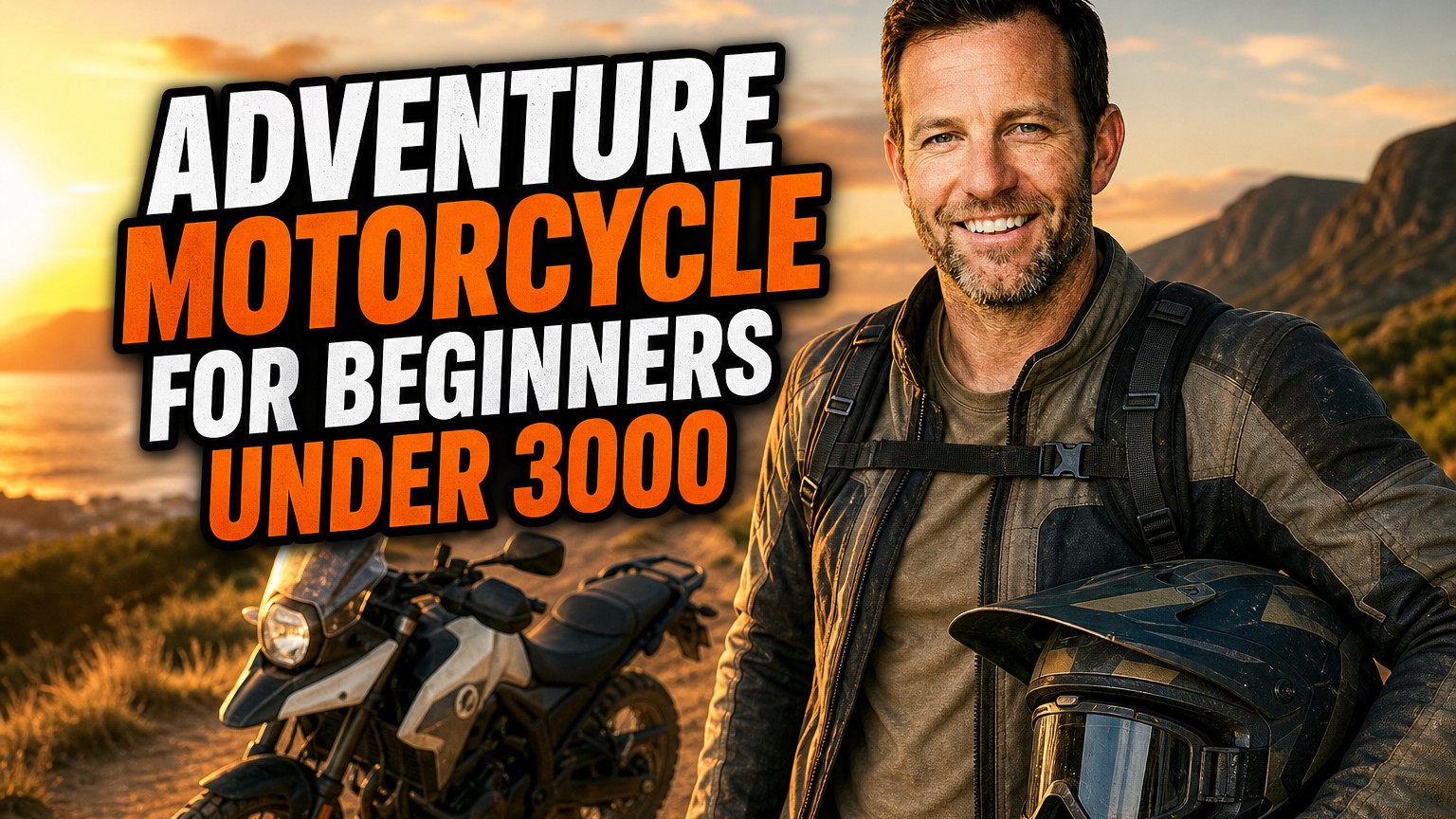
I’ll be honest: my first adventure bike cost less than a used laptop, and it taught me more about riding than anything else I’ve owned. A cheap, simple, slightly scruffy ADV bike lets you learn clutch control, gravel confidence, and basic wrenching without the fear of dropping a $15,000 machine.
Under $3,000 you’re shopping the used market, and that’s fine. Some of the most capable, bulletproof dual-sport and adventure bikes ever built have depreciated into beginner-friendly territory.
Below are seven bikes I’d genuinely recommend to a friend, along with what to watch for when you go looking. Prices are typical used ranges and vary by region, mileage, and condition.
- For most new riders, my top picks are the Yamaha XT250 and Honda CRF250L: light, simple, and forgiving.
- If you want to tour with highway comfort, the Kawasaki KLR650 and Suzuki V-Strom 650 are the best value.
- Budget an extra 10 to 20 percent for tires, chain, fluids, and a proper inspection.
- Skimping on oil and maintenance is the quickest way to ruin a cheap bike.
1. Yamaha XT250 — Best Overall for True Beginners
If someone asked me for one bike to learn on, I’d point them to the Yamaha XT250. It’s an air-cooled 249cc single with a seat height of about 32.7 inches and a wet weight around 290 pounds. That’s easy to handle in a parking lot and easy to pick up in the woods.
The power is gentle. You won’t be doing wheelies, but you also won’t be surprised by a sudden hit of throttle on a loose gravel road.
Why I like it
The XT250 is the definition of low-stress. It has a smooth, torque-friendly engine, an electric start, and a reputation for lasting a very long time with basic care. Parts are cheap and the maintenance is simple enough for a first-time home mechanic.
In my experience, this is the bike that makes new riders say, “Okay, I can actually do this.”
What to watch for
It’s not a highway machine. Cruising at 65 mph is possible, but the little engine works hard, and there’s very little reserve for passing. The fuel tank is also small, at roughly 2.6 gallons, so plan your rides around gas stops.
Expect used prices of roughly $2,500 to $3,500 depending on year and mileage. A clean older example under $3,000 is realistic.
2. Honda CRF250L — Best for Light Trails and Daily Commuting
The Honda CRF250L is the one I recommend when a beginner says, “I want to commute on weekdays and hit trails on weekends.” It has a liquid-cooled, fuel-injected 249cc engine, which means easy starts and dependable running at different altitudes and temperatures.
It weighs around 320 pounds wet and has a seat height of about 34.4 inches. It’s slightly taller than the XT250, but the narrow body makes it feel manageable.
Why I like it
Honda reliability is the headline here. The CRF250L also feels a bit sportier than the XT250, with a livelier engine and decent suspension travel. It cruises better on mixed roads, though it’s still best at 55 to 65 mph.
The aftermarket is huge, so bigger tanks, skid plates, and luggage racks are easy to find.
What to watch for
Earlier models (2013 onward) are the ones that dip near the $3,000 mark, and they sell fast. The stock seat is firm on long days, and the small fuel tank (about 2 gallons) limits range. I’d put a better seat on my shopping list.
3. Kawasaki KLR650 — Best Long-Haul Workhorse
The Kawasaki KLR650 is basically the unofficial mascot of budget adventure riding. Its 651cc liquid-cooled single makes easy, usable torque, and the bike is built to carry you and your gear a very long way. The tank holds roughly six gallons, so range is excellent.
I’ve seen KLRs with six-figure mileage still running and loaded with luggage. They’re simple, a bit agricultural, and that’s the point.
Why I like it
The KLR gives you highway ability and trail ability for very little money. The seat is relatively comfortable, the wind protection is decent, and you can fix most things in your garage with a basic toolkit.
For a beginner planning real distance, it’s one of the best value propositions on the planet.
What to watch for
It’s heavy at about 430 pounds wet, with a seat height of around 35 inches. That’s a lot for a short or nervous rider. It’s also a carbureted, old-school design, so expect some vibration and the occasional tinkering.
Do not ignore known issues on earlier models, like the doohickey (balancer chain tensioner). Ask whether it’s been upgraded. Used prices typically run $2,200 to $3,200.
4. Suzuki DR650SE — Best for Off-Road Capability
The Suzuki DR650SE is lighter and more off-road focused than the KLR650. It has a 644cc air- and oil-cooled single, a roughly 35-inch seat, and a dry, tough, no-nonsense personality. It’s a favorite among riders who want to go places pavement doesn’t.
It’s a stretch to call this a beginner bike for everyone. But for a confident new rider who’s taken a course and wants to grow into it, it’s a fantastic long-term machine.
Why I like it
The DR650SE is mechanically simple and nearly indestructible with basic care. Its suspension is better in the dirt than the KLR’s, and the bike weighs less than most 650s. Modifications are endless.
My advice is to treat it as a keeper. You won’t outgrow it quickly.
What to watch for
The seat height is tall, and the stock seat is firm. Fuel capacity is smaller than the KLR’s, at roughly 4.7 gallons. Clean examples often sit right at or slightly above $3,000, so you may need to hunt for a higher-mileage one and negotiate.
5. Suzuki V-Strom 650 (First Generation) — Best for Highway Comfort
If your “adventure” is mostly pavement, twisty backroads, and the occasional dirt road, the first-generation Suzuki V-Strom 650 (2004 to 2011) is a gem. The 645cc V-twin makes smooth, strong power, and the bike feels like a proper full-size tourer.
Used prices for the early years can dip close to $3,000, especially for high-mileage examples.
Why I like it
This is the most comfortable bike on my list for long highway slogs. It has a roomy ergonomic triangle, a reasonable windscreen, and a fuel tank around 5.8 gallons. The V-twin is famously durable and the bike is easy to live with.
It’s also lower than many ADV bikes, with a seat height around 32 inches, which helps shorter riders.
What to watch for
It’s heavy, around 460 to 480 pounds with fluids, so it’s not an off-road bike. Stick to gravel and easy dirt. Also check for worn chain and sprockets, tired fork seals, and neglected coolant.
A well-maintained example is a bargain. A neglected one is a headache.
6. Yamaha TW200 — Best for Short Riders and Easy Fun
The Yamaha TW200 is quirky, and I love it. It has a 196cc air-cooled engine, fat balloon tires, and a seat height of roughly 31 inches, making it one of the friendliest bikes you can buy. It weighs around 280 pounds and is nearly impossible to intimidate you.
Those chunky tires give you grip on sand, mud, and snow that bigger, pricier bikes can’t match.
Why I like it
This is a bike that makes you smile at 35 mph. It’s great for forest roads, farm tracks, small towns, and light camping trips. The tank is small, but the engine is so frugal you’ll rarely worry.
It’s also forgiving, which is a priceless trait when you’re learning.
What to watch for
Highway riding is not its thing. It’s happiest at 55 mph or lower. The TW200 also holds its value well, so sub-$3,000 examples are usually older, higher-mileage bikes. Inspect them carefully.
7. Kawasaki KLX250S — Best for Dirt-Focused Learning
The Kawasaki KLX250S is the sportier option. It has a liquid-cooled 249cc engine, long-travel suspension, and a seat height around 35 inches. It weighs roughly 300 pounds wet, so it’s light and agile when the trail gets technical.
It’s a better pick for riders who plan to spend more time off pavement than on it.
Why I like it
The KLX250S has a lively, revvy engine and excellent suspension for its class. It feels like a proper dirt bike with lights, so you can grow your off-road skills quickly. Used prices are often reasonable, around $2,500 to $3,500.
What to watch for
The seat is tall and the stock seat is hard. Highway comfort is average at best, and the tank is small. Carburetor jetting can also need attention if the bike’s been modified or stored poorly.
How I Judge a Used Beginner ADV Bike
A cheap price tag doesn’t mean a cheap bike. I’ve learned to walk away from a bad deal, and that habit has saved me thousands. Here’s my short checklist.
Check these before you pay
- Cold start: Ask the seller not to warm up the bike before you arrive.
- Chain and sprockets: Hooked teeth or tight and loose spots mean replacement soon.
- Fork seals and steering head: Look for oil residue and notchy steering.
- Tires and brakes: Cracked rubber or glazed pads add to your real cost.
- Title and records: A clean title and service history are worth paying extra for.
Match the bike to your body
Seat height and weight matter more than horsepower. If you can’t comfortably flat-foot or at least tiptoe the bike, you’ll be nervous in every slow turn. Sit on the bike before you buy.
I’d rather see a beginner on a lighter 250 than a “cooler” 650 that scares them.
Don’t Skimp on Oil: The Cheapest Insurance You Can Buy
Cheap bikes live or die by basic maintenance. The first thing I do after buying any used bike is change the oil and filter, no matter what the seller says. Fresh oil gives you a clean baseline and often reveals problems early.
If you’re not sure what to pour in, I found this guide to the best motor oil for 4 stroke motorcycle engines helpful for understanding viscosity and ratings. You can also compare options in this roundup of the top engine oil for 4 stroke motorcycle picks.
For a deeper dive, check out the breakdown of what is the best engine oil for 4 stroke motorcycle models like the ones above. Or see this list of the best engine oil for motorcycle use in general.
Riders outside the US may like this guide to the best engine oil for 4 stroke motorcycle in india, which covers locally available options.
My basic maintenance rhythm
Change the oil every 2,000 to 3,000 miles on these older air-cooled and carbureted engines. Check the chain tension and lube every ride or two. Inspect the air filter often, especially if you ride dusty trails.
That’s about it. Do these things and these bikes will reward you for years.
Don’t Forget Gear and Training
Your bike budget is only half the equation. I’d rather see you spend $2,500 on a bike and $500 on a good helmet, jacket, gloves, and boots than blow everything on the machine. Gear is what protects you when things go wrong.
Also take a beginner rider course. It’s the best money I ever spent, and it made every bike on this list easier to ride.
Final Thoughts: Which One Should You Buy?
If I had to pick one for a total beginner, I’d go with the Yamaha XT250 or the Honda CRF250L. They’re light, forgiving, and cheap to keep alive. For long-distance travel on a budget, the Kawasaki KLR650 and Suzuki V-Strom 650 make a lot of sense.
The TW200 is my pick for shorter riders, while the DR650SE and KLX250S suit those who want to push off-road. Whichever you choose, buy the cleanest example you can find, change the fluids, and go ride. The best adventure bike is the one that gets you out there.
Frequently Asked Questions
Can you really buy a good adventure motorcycle for under $3,000?
Yes, but almost always on the used market. Older models like the Kawasaki KLR650, Yamaha XT250, Honda CRF250L, and first-generation Suzuki V-Strom 650 regularly sell for around $3,000 or less if you are patient and check the bike carefully.
What is the best adventure bike for a total beginner on a tight budget?
For most new riders I recommend the Yamaha XT250 or Honda CRF250L. Both are light, forgiving, and cheap to maintain. If you are shorter or want something even gentler, the Yamaha TW200 is hard to beat.
Is a 650cc single too much for a beginner?
It can be manageable, but it is heavier and taller than a 250. The Kawasaki KLR650 has soft, predictable power, so it works for beginners who are comfortable with weight and seat height. Take a rider course first.
What should I budget for after buying a sub-$3,000 adventure bike?
Plan on 10 to 20 percent of the purchase price for fresh oil, a new chain and sprockets, tires, brake fluid, and a safety inspection. Quality riding gear is a separate cost and should not be skipped.

Related Articles
7 Best Batteries for Motorcycles I’ve Tested and Trust in 2026
I've tested dozens of motorcycle batteries to find the best performers. From AGM to lithium, here are my top picks…
Jake Miller
15 min read

The Perfect Battery for Your Harley Davidson Softail: A Rider’s Complete Guide
Discover the perfect battery for your Harley Davidson Softail. I've tested multiple options and share real-world performance data, maintenance tips,…
Jake Miller
14 min read

The Best Battery for Your Harley Davidson: My Complete Guide After Years of Testing
Discover which battery truly performs best for Harley Davidson motorcycles. Real rider experience with AGM, lithium, and OEM options to…
Jake Miller
12 min read