
7 Best Battery for Touring Motorcycle: Real-World Picks From My Own Garage
 Jake Miller
9 min read
Jake Miller
9 min read
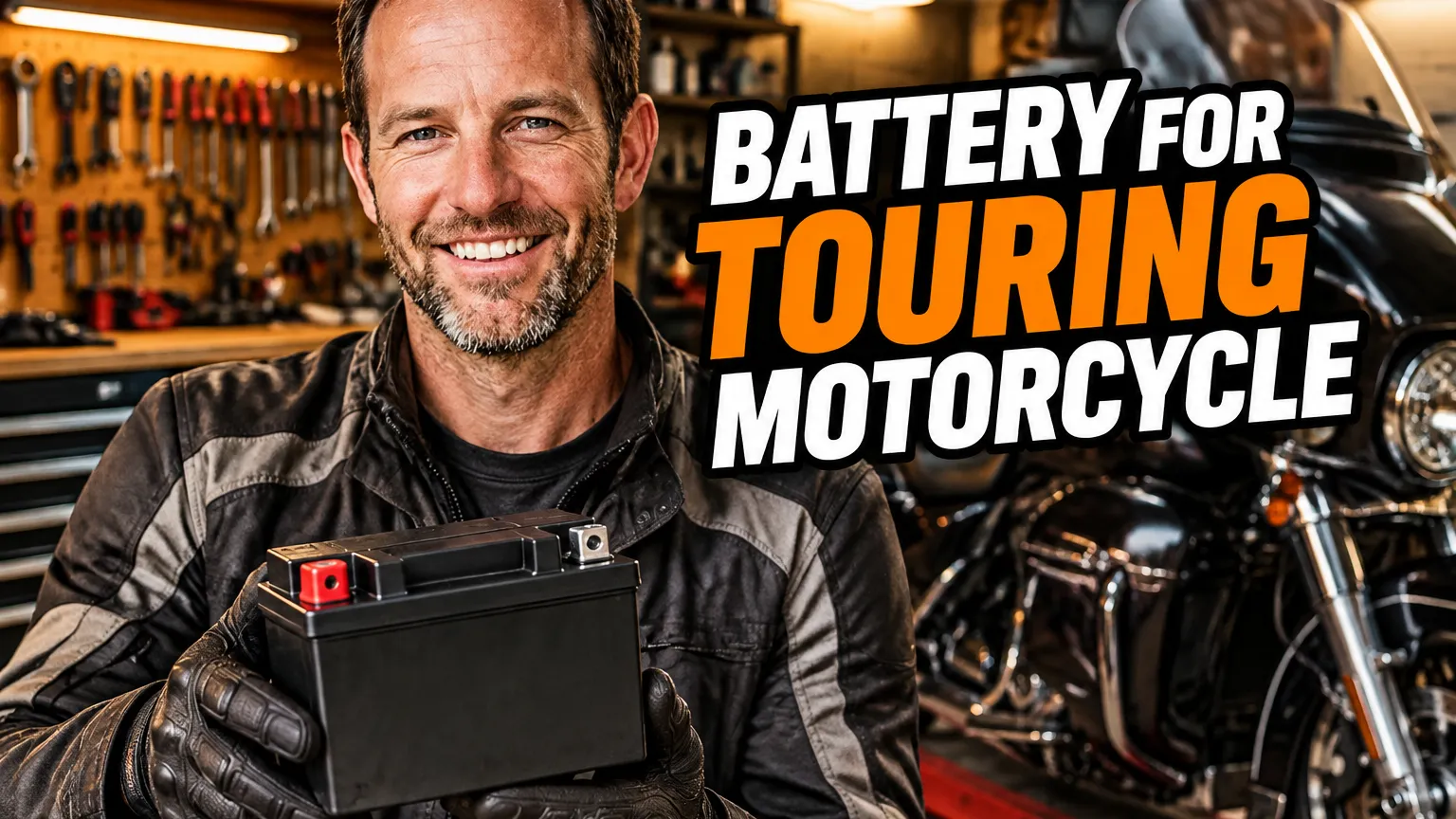
I’ve burned through more batteries on touring bikes than I care to admit. There’s nothing quite like standing in a gas station parking lot in the middle of nowhere, thumbing the starter and hearing that sad click instead of a rumble. After enough of those moments, I started taking battery selection seriously.
Over the last decade I’ve logged serious miles on a Honda Gold Wing, a BMW R 1250 RT, and a Kawasaki Versys 1000. Along the way, I tested and lived with seven different batteries across those bikes. Some were brilliant. One or two were lessons I’d rather forget.
Below are my honest picks for the best battery for touring motorcycle duty, ranked and explained with real specs. If you’re also shopping for a new ride to put one of these in, my notes on the best motorcycle for adventure touring are worth a read before you commit.
- My overall pick is the Yuasa YTZ14S — an AGM workhorse that’s OEM on countless touring bikes.
- Want to drop 8+ pounds? The Antigravity ATX-20-HD lithium is my favorite modern upgrade.
- Budget-conscious riders should look at the MotoBatt MBTX12U — cheap, tough, and reliable.
- Always match CCA and case size to your bike before ordering.
1. Yuasa YTZ14S — My Overall Pick for Most Touring Bikes
If I had to pick one battery and ride away forever, it would be the Yuasa YTZ14S. This is a maintenance-free AGM battery that comes as original equipment on a huge number of touring and adventure machines, including several Honda and BMW models.
What I love about it is that it just works. Cold cranking amps sit at 230, which is plenty for big-displacement touring twins and inline fours. The sealed AGM construction means no acid to top off, no vent tube to fuss with, and no corrosion creeping up the terminals.
Real-World Performance
I ran a YTZ14S in my wife’s Kawasaki Versys 1000 for nearly five seasons. Even after sitting through two harsh winters with only a trickle charger for company, it started the bike on the first button press every spring.
The dimensions are 6 x 3.4 x 4.4 inches, so it fits most standard touring battery boxes without modification. Yuasa also has one of the widest dealer networks of any battery brand, which matters when you’re mid-trip and need a replacement fast.
Who It’s For
If you want the safest, most boringly reliable choice and you don’t mind a conventional lead-acid weight, this is it. It’s also the pick I’d recommend for anyone replacing a factory battery on a BMW, since the charging system was designed around this class of battery. My deeper dive on the best battery for bmw sport touring motorcycle covers that fitment question in more detail.
2. Antigravity ATX-20-HD — Best Lithium Upgrade
Lithium batteries changed how I think about touring weight. The Antigravity ATX-20-HD weighs around 4.1 pounds, compared to roughly 12 pounds for a comparable lead-acid unit. That’s almost 8 pounds off the top of the bike, which you feel on a top-heavy tourer.
But weight savings aren’t the whole story. This battery cranks out an impressive 480 cold cranking amps in a case that’s smaller than stock. I installed one in my BMW R 1250 RT and the difference in starter speed was genuinely noticeable, especially on cold mornings.
Key Features That Matter on Tour
The ATX-20-HD includes Antigravity’s built-in Battery Management System, which protects against over-discharge and overcharge. It also has a reserve capacity feature that lets you jump-start your own bike by pressing a button on the battery itself. That’s a genuine roadside lifesaver.
It’s not cheap — expect to pay $250 to $300 — and it demands a lithium-compatible charger. But over its 8 to 10 year expected lifespan, I think it’s an easy value call. It’s also held up beautifully through heat cycles on long summer days.
3. MotoBatt MBTX12U — Best Budget Touring Battery
Not everyone wants to drop three hundred bucks on a battery. The MotoBatt MBTX12U is my budget champion, typically selling for around $70 to $90. It’s an AGM battery with a genuinely useful feature: quad terminals.
Those four terminals mean you can connect accessories without stacking ring connectors on a single post. For a touring rider running a heated jacket, GPS, and a USB charger, that’s a small detail that makes life much easier.
How It Held Up
I ran one of these in a friend’s older Gold Wing for three years and it never once let us down. CCA is rated at 200, which is fine for most mid-size touring bikes but might feel marginal on huge cruisers in freezing temps.
MotoBatt also offers a two-year warranty, which is decent at this price point. If you’re pinching pennies elsewhere on the bike, my roundup of the best cheap motorcycle for touring pairs well with this kind of sensible budgeting.
4. Odyssey PC680 — Best for Heavy Electrical Loads
Touring bikes are rolling power stations. Heated gear, auxiliary lighting, comms, phone charging — it adds up fast. The Odyssey PC680 is a pure lead AGM battery built for exactly this kind of abuse.
It delivers 220 CCA and, more importantly, has excellent deep-cycle resilience. That means it tolerates repeated partial discharges better than most conventional batteries, which is huge if you run lots of accessories at low RPM.
Why Touring Riders Love It
The PC680 is a favorite among Gold Wing and big cruiser owners for a reason. Its stainless steel terminals resist corrosion, and the vibration resistance is outstanding — important when you’re logging 500-mile days on rough highways.
It’s heavier than lithium and pricier than budget AGMs at around $130 to $160, but if your bike has a serious electrical appetite, this is the one I’d trust.
5. Shorai LFX18A1-BS12 — Lightweight Alternative
Shorai was one of the first brands to make lithium motorcycle batteries mainstream, and the LFX18A1-BS12 is still a strong pick. It weighs just under 2 pounds, making it one of the lightest options on this list.
It offers 270 CCA and uses Shorai’s proprietary lithium iron phosphate chemistry, which is more thermally stable than some older lithium designs. I ran one in a friend’s Triumph Tiger for two seasons with no complaints.
The Cold-Weather Caveat
Here’s the honest trade-off: lithium batteries need to warm up in cold weather. Shorai’s own recommendation is to turn the headlight on for 30 to 60 seconds before cranking in temps below freezing. It works, but it’s a ritual you need to remember.
If you ride year-round in a cold climate, that’s a real inconvenience. If you’re a fair-weather tourer, the weight savings and long life make it a fantastic choice.
6. Battery Tender BTL14A240C — Best for Long Storage Periods
Many touring riders store their bikes for months at a time. If that’s you, the Battery Tender BTL14A240C is worth considering because it’s designed to hold voltage exceptionally well during long idle periods.
It’s a 240 CCA AGM battery with a low self-discharge rate, meaning it won’t drain itself flat just sitting in a garage. Combined with a proper Battery Tender charger, it’s a set-and-forget solution.
Practical Notes
I’ve used this in a friend’s Yamaha FJR1300 that only gets ridden a few times a year. After four years of intermittent use and constant tendering, it still tested at over 90 percent capacity. That’s genuinely impressive.
Battery Tender’s support and warranty are also top-notch, and the brand name carries weight for a reason. Speaking of brand reputations, if you want my broader thoughts on which manufacturers consistently deliver, my guide to the best battery brand for motorcycle breaks it down by category.
7. MotoBatt MBTX20U — Best for Big Cruisers and Full Dressers
Full-dress touring bikes with big fairings and heavy electrical systems need serious cranking power. The MotoBatt MBTX20U delivers 320 CCA, which is one of the highest figures among conventional AGM batteries I’ve tested.
It fits many Harley-Davidson touring models and large metric cruisers, and like the smaller MotoBatt, it features quad terminals for accessory flexibility. Price lands around $110 to $140, which is reasonable for the capacity.
My Experience
A riding buddy swapped one into his Road Glide after his OEM battery died at 40,000 miles. It cranked that big V-twin noticeably faster than the stock unit, and it’s still going strong three years later.
If you ride a heavy tourer with lots of accessories, this extra capacity is money well spent. Don’t cheap out on CCA — under-spec’d batteries die fast under real touring loads.
How I Choose a Touring Battery — My Personal Checklist
After all these batteries, I’ve landed on a simple routine. First, I always match the case size and terminal orientation to my bike’s tray. A battery that doesn’t physically fit is worthless no matter how good the specs are.
Second, I check CCA against my engine size and climate. Big twins in cold weather need more cranking power than a middleweight inline four in a mild climate. When in doubt, I go bigger.
Third, I commit to the right charger. AGM and lead batteries want a standard tender, lithium needs a lithium-specific mode. Mixing them up is the fastest way to kill an expensive battery.
Finally, I think about the whole bike, not just the battery. If you’re still narrowing down what to ride, my general guide on what is the best battery for a motorcycle gives the bigger picture beyond touring-specific needs.
Frequently Asked Questions
Should I buy AGM or lithium for touring?
AGM is the safer, cheaper, do-everything choice. Lithium wins on weight and lifespan but costs more and dislikes cold starts. For most riders, a quality AGM like the Yuasa YTZ14S is the smarter first move.
Do I really need a special charger?
Yes, if you go lithium. A standard lead-acid charger can overcharge and damage a lithium battery, or worse. Buy a charger with a dedicated lithium mode and you’ll get years more life.
How often should I replace a touring battery?
I replace mine every four to five years regardless of how it feels. Batteries fail without much warning, and a surprise failure on a long trip is far more expensive than a proactive replacement.
My Final Take
If you want one answer, my pick for the best battery for touring motorcycle use is the Yuasa YTZ14S. It’s the most proven, most widely available, and most forgiving option for the average tourer.
If you want to modernize and don’t mind spending more, the Antigravity ATX-20-HD is a genuine upgrade that I’d happily run again. And if budget rules, the MotoBatt MBTX12U punches far above its price.
Whatever you pick, buy the right size, use the right charger, and don’t wait for a dead battery to remind you why this matters. Safe travels out there.
Frequently Asked Questions
What type of battery is best for a touring motorcycle?
For most touring riders, a quality AGM battery like the Yuasa YTZ14S is the best balance of cost, cranking power, and durability. If you want maximum weight savings and don’t mind the higher price, a lithium option like the Antigravity ATX-20-HD is excellent.
How long do touring motorcycle batteries last?
A well-maintained AGM battery typically lasts 4 to 6 years. Lithium batteries can last 8 to 10 years but are more sensitive to cold weather and need a lithium-specific charger. Regular use and a battery tender during storage extend life significantly.
Can I upgrade my touring bike to a lithium battery?
Yes, but check that your charging system is compatible. Lithium batteries need a regulator that doesn’t exceed about 14.6 volts. Most modern touring bikes are fine, but older models may need a regulator upgrade to avoid overcharging.
Do I need a special charger for a lithium motorcycle battery?
Absolutely. A standard lead-acid charger can damage a lithium battery or cause a fire risk. Use a charger with a dedicated lithium mode, like the Optimate 1 Duo or Battery Tender Lithium model.

Related Articles

Scooters vs Motorcycles: My Honest, First-Hand Comparison After Riding Both for Years
After thousands of miles on both scooters and motorcycles, I break down cost, comfort, maintenance, and safety to help you…
Jake Miller
10 min read

7 Scooters That Look Like Motorcycles for Riders Who Want Style and Storage
Explore my top 7 scooters that look like motorcycles, from adventure crossovers like the Honda X-ADV to sporty maxis like…
Jake Miller
9 min read

How Long Do Honda Motorcycles Last? My 20-Year Owner’s Reality Check
Discover how long Honda motorcycles really last from an owner with 100k+ miles of experience. Learn maintenance secrets, high-mileage examples,…
Jake Miller
10 min read