
7 Best Battery Isolators for Motorcycles That Actually Keep Your Battery Alive
 Jake Miller
10 min read
Jake Miller
10 min read
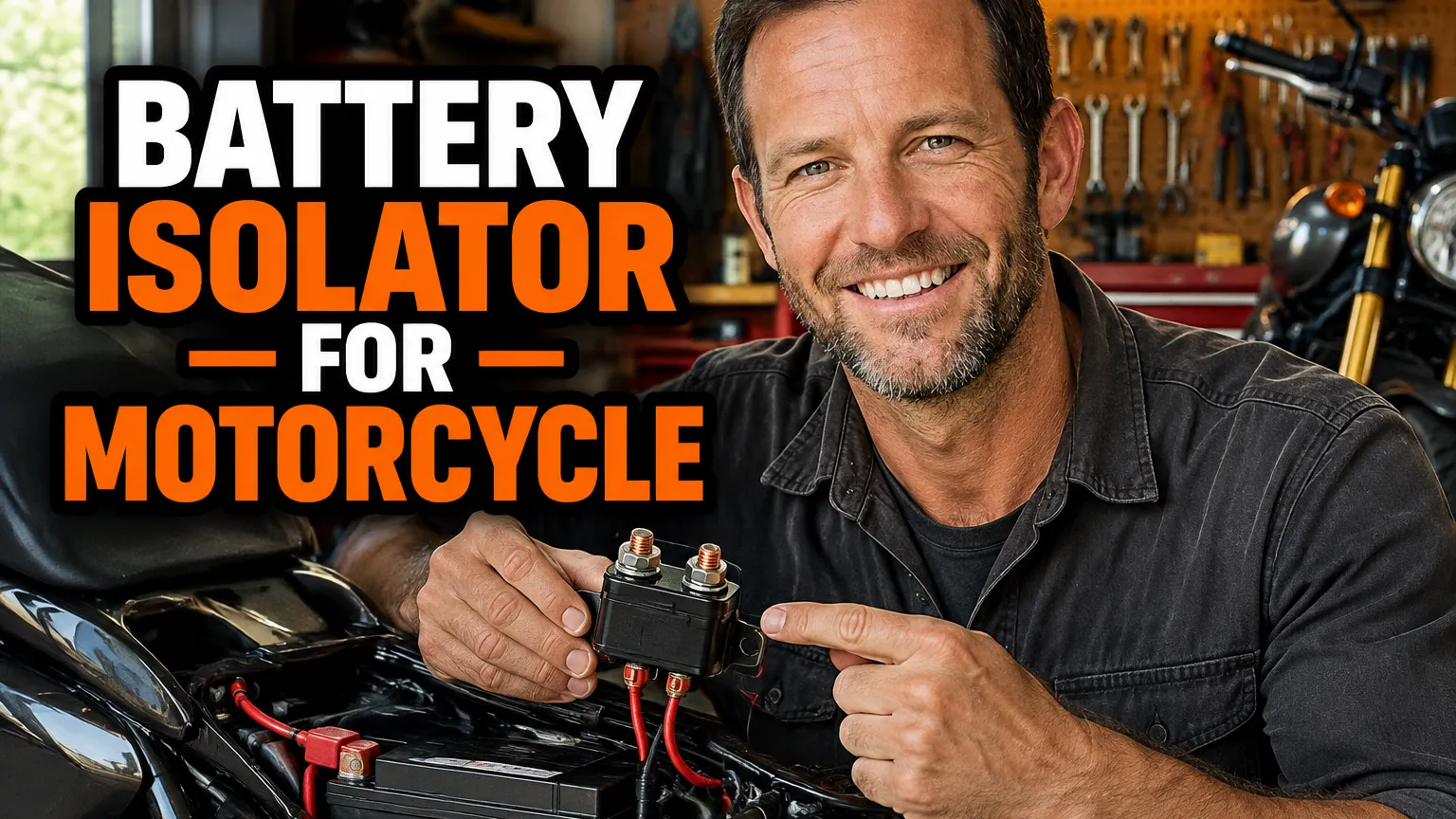
I have burned through more batteries than I care to admit. Between a Honda Magna that sat too long, a Sportster I wired with too much accessory gear, and a touring bike running a second battery for a fridge and lights, I learned the hard way that a good battery isolator is the difference between a bike that fires up every morning and one that leaves you stranded at a gas station.
A battery isolator is not glamorous. Nobody brags about theirs at a bike night. But when you are running dual batteries or a pile of accessories off your main battery, it quietly saves your starter battery from an early death. I have tested a bunch of these things across real bikes, and these are the ones I would actually put my money on.
If you are still sorting out what battery to pair with your isolator, it helps to know which battery brands hold up over time before you spend money on the electronics side. Matching the right battery to the right isolator is where most people go wrong.
- My top overall pick is the Blue Sea Systems 7622 ACR for most dual-battery motorcycle setups.
- Budget riders should look at the Stinger SGP32 or the Victron Cyrix-ct for reliable, cheap isolation.
- Match the isolator’s amp rating to your stator or alternator output, or it will overheat.
- Solid state units last longer; relay units have less voltage drop. Pick based on your priority.
1. Blue Sea Systems 7622 m-Series ACR — Best Overall Pick
The Blue Sea Systems 7622 is the isolator I recommend to almost everyone. It is technically an Automatic Charging Relay, but it does exactly what an isolator does and does it better than most dedicated isolators I have used.
What sold me is the dual sensing. It monitors both battery banks and combines them when either one is charging, then automatically separates them when the charge stops. That means no manual switching and no remembering to flip anything.
Why It Wins for Me
The 7622 is rated for 500 amps of momentary current and 60 amps continuous, which is more than enough headroom for any motorcycle stator I have seen. The sealed construction handles vibration and moisture, both of which are constant on a bike.
I ran one on a touring build with a second battery for a 12V fridge and auxiliary lights. It separated the banks cleanly every time the engine shut off, and my starting battery never dropped below 12.6 volts even after a full weekend of camping.
Where It Falls Short
It is not the cheapest option. You are paying for the Blue Sea reputation and the marine-grade build. If your budget is tight, there are cheaper units that work fine. But for a bike you actually depend on, this is where I would spend.
Pairing it with a solid AGM or lithium battery gives you the most reliable setup. Cheap batteries and good isolators still let you down.
2. Stinger SGP32 — Best Budget Pick
The Stinger SGP32 is a 200-amp relay-based isolator that costs a fraction of the Blue Sea unit. I keep one in my parts bin because it just works for smaller accessory loads.
It is a simple relay design, so there is very little voltage drop between the banks. That matters if your stator output is modest, because lithium batteries in particular want to see full charging voltage.
Real-World Behavior
I used the SGP32 on a Sportster running auxiliary LED lighting off a second small battery. It triggered reliably at around 13.3 volts and separated every time the bike shut down. No drama, no burned contacts after two seasons.
The 200-amp rating is overkill for most motorcycles, which is exactly why it is safe. You are not stressing the relay.
The Tradeoff
Relay isolators eventually wear out. The contact points pit over time with heavy cycling. On a bike used daily, expect a few years before you think about replacing it. For the price, that is acceptable.
If you are on a budget and ride a Sportster, this is worth pairing with the right battery for a Harley Sportster. The isolator protects the battery, but the battery itself still has to be decent.
3. Victron Energy Cyrix-ct 12/24V — Best Smart Isolator
Victron makes gear for marine and off-grid systems, and that durability translates beautifully to motorcycles. The Cyrix-ct is a microprocessor-controlled relay that handles battery combining intelligently.
It has a 120-amp continuous rating with 180-amp peak capability. The control logic watches voltage trends, not just a single threshold, which means it does not chatter on and off during fluctuations.
What Makes It Smart
The Cyrix-ct also has a start-assist feature. If your main battery is dead but the accessory battery is charged, it combines them temporarily so you can crank the engine. I have used that feature exactly once on a cold morning, and it saved my ride.
It handles both 12V and 24V systems, so it is flexible if you upgrade later. The unit is sealed and vibration resistant.
Downsides
The smart logic means you cannot easily override it manually. Some riders want a manual switch for total control. If that is you, a plain switch-style isolator might suit you better.
For everyone else, the Cyrix-ct is one of the most foolproof units on the market.
4. Blue Sea Systems 7610 SI-Series ACR — Best Compact Unit
The 7610 is the smaller sibling to the 7622, and it fits where space is tight. On a naked bike or a bike with a cramped battery box, that matters.
It is rated for 120 amps and uses the same automatic combining logic. You get the Blue Sea reliability in a package roughly two thirds the size.
When I Reach for It
I installed the 7610 on a Honda Magna restoration where the battery compartment was genuinely tight. The full-size 7622 would not fit cleanly. The 7610 slotted in without fabrication.
It handled a modest charging system without issue. If you are running the correct battery for a Honda Magna, the 7610 keeps it topped off while protecting it from accessory drain.
Limitations
The lower amp rating means it is not for high-output charging systems. If your stator pushes a lot of current, step up to the 7622. Match the unit to your system or you will overheat it.
5. Wirthco 20092 Battery Doctor Isolator — Best Simple Install
The Wirthco Battery Doctor is the isolator I hand to people who want something dead simple. It is a diode-based unit with clearly labeled terminals and a straightforward install.
Diode isolators have no moving parts, so there is nothing to wear out. You get decades of service in theory. The tradeoff is a small voltage drop across the diodes.
Where It Fits
This is a great choice for someone running a basic two-battery setup where they are not chasing every last tenth of a volt. I used it on a friend’s older cruiser with a lead-acid second battery, and it has been flawless for three seasons.
Lead-acid batteries tolerate the small voltage drop better than lithium. If you are running lead-acid, this is a solid, cheap, reliable pick.
The Voltage Drop Issue
Diode isolators lose roughly 0.5 to 0.7 volts. On lithium, that can mean the battery never quite reaches full charge. If you run lithium, go with a relay or ACR type instead. This is the one place I would not cheap out if you have a lithium battery.
6. HELLA 8EK 008 141-001 Battery Isolator — Best for Heavy Accessory Loads
HELLA makes serious electrical gear, and this isolator is built for higher current loads. It is rated at 120 amps continuous and handles the kind of accessory draw that would cook a cheap unit.
If you run heated gear, a sound system, auxiliary lighting, and a phone charger all at once, the current adds up fast. This unit shrugs it off.
Build Quality
The HELLA unit feels industrial. The terminals are beefy, the housing is solid, and the internal components are clearly built to a higher standard than budget relays.
I installed one on a touring bike with a genuinely heavy electrical load. It ran cool even after hours of riding with everything switched on. That is the sign of a properly sized isolator.
Worth the Cost?
It is priced above the budget options but below the premium smart units. If your accessory load is heavy and constant, the extra spend is justified. If you just run a single extra battery, you probably do not need this much isolator.
7. NOCO Genius GENPRO 10×1 — Best Isolator and Charger Combo
Technically this is a battery charger with isolation-style multi-bank management, but for riders who want to charge and isolate, the NOCO Genius GENPRO 10×1 is a smart all-in-one.
It manages a starting battery plus an accessory battery and keeps them both in shape during storage. For riders who park a bike for months at a time, this solves the “dead battery in spring” problem entirely.
Why I Like It for Storage
My Magna sat for four months one winter. I had a plain maintainer on it and still came back to a weak battery. The NOCO setup with independent bank management fixed that the next winter. Each battery got exactly what it needed.
If you ride a bike seasonally, or you own several, this is the tool that keeps every battery healthy. It is not a pure isolator, but it covers the same job and more.
The Honest Catch
It needs an outlet, so it is a storage tool, not a riding solution. You cannot run it while you ride. Think of it as the companion to a real isolator, not a replacement.
Riders with a bike that sits often, especially something like a Harley, should also read up on the best battery for Harley-Davidson to pair with their charging setup. The battery and the charging equipment have to work together.
How I Choose an Isolator for a Motorcycle
After testing this many units, my selection process comes down to a few questions. Answering them honestly saves money and frustration.
Match the Amp Rating to Your System
Look at your stator or alternator output. Your isolator’s continuous rating should comfortably exceed it. If your system produces 40 amps and you run a 200-amp isolator, you have plenty of headroom and the unit runs cool. Undersizing is how people cook these things.
Solid State Versus Relay
Solid state diode isolators have no moving parts and last longer, but they drop voltage. Relay and ACR units have minimal voltage drop but the relay wears over time. For lithium batteries, I always choose the relay or ACR type. For lead-acid, either works.
Manual Versus Automatic
Automatic combining is convenient and foolproof. Manual switches give you total control but require you to remember to use them. I prefer automatic for touring and manual only for specialized builds where I want direct control.
Environment Matters
Motorcycles vibrate, get wet, and see temperature swings. A sealed, marine-grade or industrial-grade unit survives. Cheap open-relay units fail faster in these conditions. This is not a place to pinch pennies if reliability matters to you.
Whatever isolator you choose, it works best alongside a genuinely good battery. Getting both right is what keeps your bike starting every single time you thumb the button.
Frequently Asked Questions
What does a battery isolator actually do on a motorcycle?
A battery isolator sits between your main starting battery and a second battery (or accessory bank) and lets current flow one direction only. That means your lights, GPS, and heated gear drain the accessory battery first while your starting battery stays fully charged for a reliable crank.
Do I need a battery isolator if I only run one battery?
No. A single battery setup works with a simple maintainer or tender. You only need an isolator when you are running two batteries, a dual-battery touring setup, or accessories that could flat your main starting battery.
Can a battery isolator damage my motorcycle’s charging system?
Not if it is sized correctly. Match the isolator’s continuous amp rating to your alternator or stator output. An undersized unit will overheat, while a properly rated diode or relay based isolator handles normal charging currents without issue.
Are solid state or relay battery isolators better for motorcycles?
Solid state diode isolators have no moving parts and last longer, but they drop voltage slightly. Relay based isolators have near zero voltage drop and are cheaper, but the relay can wear out over years of use. For most bikes I lean toward a quality solid state unit.

Related Articles

Scooters vs Motorcycles: My Honest, First-Hand Comparison After Riding Both for Years
After thousands of miles on both scooters and motorcycles, I break down cost, comfort, maintenance, and safety to help you…
Jake Miller
10 min read

7 Scooters That Look Like Motorcycles for Riders Who Want Style and Storage
Explore my top 7 scooters that look like motorcycles, from adventure crossovers like the Honda X-ADV to sporty maxis like…
Jake Miller
9 min read

How Long Do Honda Motorcycles Last? My 20-Year Owner’s Reality Check
Discover how long Honda motorcycles really last from an owner with 100k+ miles of experience. Learn maintenance secrets, high-mileage examples,…
Jake Miller
10 min read