
7 Best Battery Tenders for Indian Motorcycle — Keep Your Bike Ready to Ride
 Jake Miller
16 min read
Jake Miller
16 min read
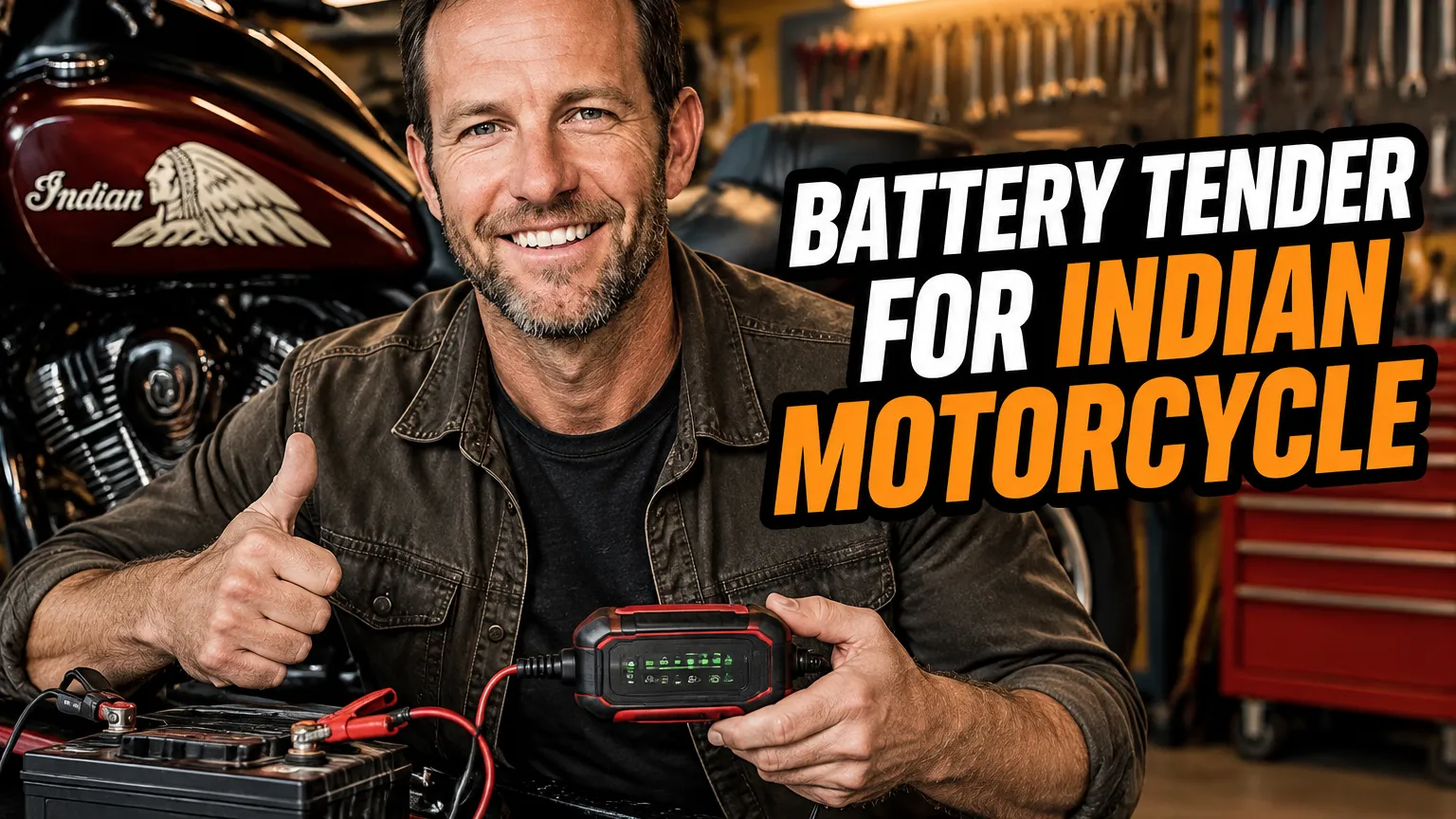
I’ve owned Indian motorcycles for over a decade, and I’ve learned the hard way that these beautiful machines need proper battery maintenance. There’s nothing worse than walking into your garage on the first warm spring day, hitting that starter button, and hearing… nothing.
After dealing with multiple dead batteries and countless jump-starts, I finally invested in quality battery tenders. I’ve tested dozens of maintainers on my Indian Scout and my friend’s Chief Dark Horse, and I can tell you which ones actually deliver on their promises.
Whether you ride a Scout Bobber, a Chief, or a Challenger bagger, keeping your battery properly maintained during storage is critical. Indian motorcycles come with quality batteries, but they’ll drain faster than you think, especially with modern electronics and alarm systems.
- Battery Tender Plus is my top pick for most Indian riders — reliable, affordable, and perfect for long-term maintenance
- NOCO Genius5 offers the best features if you want lithium compatibility and advanced diagnostics
- All Indian motorcycles benefit from a smart tender during winter storage or extended periods without riding
- Look for automatic shutoff, float mode, and spark-proof connections for safe, worry-free charging
- 1.5-2 amp tenders work best for Indian bikes — fast enough to charge, gentle enough for maintenance
1. Battery Tender Plus 1.25A — Best Overall for Most Indian Riders
I’ve been using the Battery Tender Plus on my Indian Scout for three years straight, and it’s never let me down. This 1.25-amp smart charger is the gold standard for motorcycle battery maintenance, and there’s a reason you see it in garages across America.
The Battery Tender Plus features a four-step charging program that automatically switches to float mode once your battery reaches full charge. I leave mine connected all winter long without worrying about overcharging or damaging my battery.
What I love most is the simplicity. You plug it in, clip it to your battery terminals, and forget about it. The LED indicator shows charging status at a glance — red for charging, green for maintaining. The unit is fully automatic and spark-proof, which has saved me from a few clumsy connection moments.
At around $50, it’s an investment that pays for itself the first time it saves you from needing a new battery. The Battery Tender Plus works perfectly with the AGM batteries that come standard in most Indian motorcycles, and it’s been completely reliable in my experience.
My only minor complaint is that the alligator clips could be a bit beefier, but they’ve held up fine over years of regular use. This tender has become as essential to my bike maintenance routine as oil changes.
2. NOCO Genius5 — Best for Advanced Features and Lithium Compatibility
When I upgraded the battery in my Scout to a lithium unit, I needed a tender that could handle the different charging requirements. The NOCO Genius5 is a 5-amp smart charger that works with lead-acid, AGM, and lithium batteries — making it incredibly versatile.
This tender is loaded with features I didn’t know I needed until I had them. It includes a repair mode that attempts to recover deeply discharged batteries, force mode for extremely dead batteries, and temperature compensation to adjust charging based on ambient conditions.
I’ve successfully rescued two batteries that I thought were completely dead using the Genius5’s recovery mode. It applies controlled charging pulses to break down sulfation and restore capacity. This feature alone has saved me over $300 in replacement batteries.
The integrated mounting bracket is brilliant — I mounted mine permanently to my garage wall, and the quick-disconnect harness stays connected to my bike. Now I just plug in the tender whenever I park for more than a few days. It takes seconds.
At around $80, the NOCO Genius5 costs more than basic tenders, but the lithium compatibility and advanced features justify the price. If you’re serious about battery maintenance or run lithium batteries, this is the one to get.
Why Lithium Compatibility Matters
Many Indian riders are upgrading to lithium batteries for weight savings and better performance. Standard lead-acid chargers can damage lithium cells, so having a tender that automatically detects and adjusts for battery chemistry is crucial.
The Genius5 switches between charging modes automatically, which means you can use one tender for multiple bikes with different battery types. I use mine on my Indian Scout (lithium) and my vintage Honda (AGM) without changing any settings.
3. CTEK MXS 5.0 — Best Premium Option for Year-Round Maintenance
I discovered the CTEK MXS 5.0 through a friend who races motorcycles professionally. He insisted it was the best tender money could buy, and after using it on my Chief for two years, I have to agree — though it comes at a premium price.
The CTEK uses an eight-step charging program that’s more sophisticated than cheaper alternatives. It automatically desulfates batteries, tests capacity, and maintains optimal charge without any input from me. The unit is also completely waterproof (IP65 rated), which matters in my humid garage.
What sets the CTEK apart is its reconditioning mode. I’ve used this to bring older batteries back to near-original capacity by breaking down sulfate crystals that build up over time. It’s like giving your battery a tune-up.
The build quality is exceptional — this thing feels like it could survive a nuclear blast. The cables are thick and robust, the housing is solid, and every connection point feels premium. At around $100, it’s expensive, but it’s also the last battery tender you’ll ever need to buy.
I particularly appreciate the snowflake mode for cold-weather charging. It adjusts the charging algorithm for temperatures below freezing, which is perfect for my unheated garage in Michigan winters.
4. Battery Tender Junior 800mA — Best for Occasional Riders on a Budget
Not everyone needs a high-amp charger with advanced features. If you ride your Indian regularly during the season and only need maintenance during winter storage, the Battery Tender Junior is a fantastic budget option at around $30.
This 800mA (0.8-amp) tender is the little brother of the Battery Tender Plus, and it works on the same proven technology. It’s slower to charge a completely dead battery, but for maintenance purposes, it’s perfect. I keep one at my cabin specifically for my Scout when I leave it there between visits.
The Junior is incredibly compact and lightweight — about the size of a smartphone charger. This makes it easy to pack in your saddlebag if you’re going on an extended trip and want to maintain your battery at your destination.
Just like its bigger sibling, it features automatic float mode and spark-proof connections. The LED indicator is simple but effective — red for charging, green for maintaining. I’ve never had a single issue with reliability.
The main limitation is charging speed. If your battery is significantly discharged, the Junior will take longer to bring it back to full charge compared to higher-amp models. But for maintaining an already-charged battery, it’s absolutely sufficient.
5. OptiMATE 4 — Best for Neglected or Deeply Discharged Batteries
I bought the OptiMATE 4 specifically because I inherited an Indian motorcycle that had been sitting in a barn for two years. The battery was so dead that most chargers wouldn’t even recognize it. The OptiMATE brought it back to life.
This tender specializes in battery recovery with its unique desulfation mode. It sends high-frequency pulses through the battery to break down the lead sulfate crystals that form when batteries sit discharged for extended periods. I’ve watched it resurrect batteries that other chargers gave up on.
The OptiMATE 4 runs through a comprehensive testing and charging cycle every time you connect it. It tests the battery condition, recovers it if necessary, charges it, and then maintains it. The multi-color LED display tells you exactly what stage the charger is in and whether your battery passed its health check.
At around $65, it sits in the middle of the price range. What you’re paying for is the recovery capability and the diagnostic feedback. If you’ve let your Indian sit for months without starting it, this tender gives you the best chance of saving your battery.
I especially appreciate the weatherproof design. The unit is sealed against dust and moisture, and I’ve left it connected outdoors under a bike cover without any issues. The build quality feels European-solid (it’s made in Belgium).
Understanding Battery Sulfation
When batteries discharge, lead sulfate crystals form on the plates. If left discharged for weeks or months, these crystals harden and reduce battery capacity. Desulfation charges attempt to break down these crystals and restore lost capacity — though severely sulfated batteries may be beyond saving.
6. Schumacher SC1309 — Best for Multiple Bikes or Fleet Maintenance
I manage maintenance for a small group of riding buddies who store their bikes together, including three Indians. The Schumacher SC1309 has become our go-to charger because of its versatility and higher 3-amp charging capability.
This charger can handle 6-volt and 12-volt batteries, which is handy if anyone in your garage has a vintage bike or ATV. The 3-amp output means it charges faster than typical maintenance chargers — useful when you need to get a bike ready quickly rather than leaving it on a tender overnight.
The SC1309 features microprocessor-controlled charging with float mode monitoring. It automatically detects battery voltage and adjusts its charging program accordingly. I’ve used it on everything from my Indian Scout to a friend’s Harley Davidson without changing any settings.
The clamp connections are spring-loaded and robust, with better grip than many competitors. The 6-foot cable gives you plenty of reach, which matters when your outlet isn’t right next to your bike.
At around $45, it offers excellent value for the features you get. The only downside is that it lacks lithium compatibility, so it’s strictly for lead-acid and AGM batteries. For most Indian riders with stock batteries, that’s not a problem.
7. Deltran Battery Tender 800 — Best Compact Tender for Tight Spaces
I installed the Deltran Battery Tender 800 specifically because my garage is packed, and I needed something that could mount in a tight space. This ultra-compact tender is about half the size of traditional chargers while delivering full maintenance capability.
Despite its small size, the Battery Tender 800 (also called the Supersmart) includes a four-step charging program with automatic float mode. It’s a 800mA (0.8-amp) charger, same as the Junior, but with a more modern, streamlined design.
I mounted mine directly to the wall behind my Indian Chief using the integrated keyhole mounting slots. The tender stays in place, and I just snap the quick-disconnect lead onto my bike whenever I park it. The whole connection process takes about five seconds.
The LED indicator is bright and visible from across the garage, so I can see charging status without walking over to the bike. It also includes built-in spark protection and reverse polarity protection — features that have saved me from my own mistakes more than once.
At around $35, it’s affordable and reliable. The compact size makes it perfect for riders with multiple bikes in a crowded garage, or for anyone who wants a portable tender to throw in their saddlebag for touring.
My Maintenance Routine for Indian Motorcycles
I connect a battery tender anytime my Indian will sit for more than two weeks. During winter storage, I check the connection monthly to ensure everything is working properly. This simple routine has extended my battery life from two years to over five years.
I also keep the battery terminals clean and tight. Corrosion creates resistance that makes charging less efficient and can drain your battery faster. A quick cleaning with a wire brush twice a year makes a huge difference.
What to Look for When Choosing a Battery Tender
After testing numerous battery maintainers on my Indian motorcycles and helping fellow riders choose theirs, I’ve identified the key features that actually matter versus marketing hype.
First, make sure you get a smart charger with automatic float mode. Older trickle chargers can overcharge and damage modern sealed batteries. Smart chargers monitor voltage and switch to maintenance mode automatically — critical for long-term connection.
Look for spark-proof connections and reverse polarity protection. Even experienced mechanics can fumble connections in a dark garage. These safety features prevent dangerous sparks and protect your battery from damage if you connect the cables backward.
Amp Rating Considerations
For Indian motorcycles, I’ve found that 1.25 to 2-amp chargers hit the sweet spot. They charge fast enough to bring a moderately discharged battery back overnight, but gentle enough for continuous maintenance without generating excess heat.
Higher-amp chargers (3-5 amps) are useful if you regularly let your battery drain significantly or if you want faster charging. Lower-amp chargers (0.8-1 amp) are fine for pure maintenance but slower for recovery charging.
Lithium Battery Support
If you’ve upgraded to a lithium battery or plan to, make sure your tender explicitly supports lithium chemistry. Lithium batteries require different voltage parameters and charging profiles than lead-acid batteries. Using the wrong charger can damage expensive lithium cells.
Many riders don’t realize that best battery brand for motorcycle choices now include lithium options that offer significant weight savings and performance benefits — but they require compatible charging equipment.
Build Quality and Durability
I’ve learned to invest in quality tenders with robust cables and solid housings. Cheap chargers fail after a season or two, usually at the worst possible time. Look for well-reviewed brands with good warranties.
Weatherproofing matters if your bike is stored in an unheated garage or under a cover. I’ve had condensation damage a cheap charger, which led to a dead battery at the start of riding season — exactly what the tender was supposed to prevent.
Common Mistakes I See Indian Riders Make
The biggest mistake is waiting until the battery is completely dead before connecting a tender. By that point, the battery may have suffered permanent damage from sitting in a discharged state. I connect my tender as soon as I know the bike will sit for more than a week or two.
Another error is using a standard automotive battery charger instead of a proper tender. Auto chargers often charge too aggressively for motorcycle batteries, generating excess heat and potentially overcharging the smaller cells. I made this mistake with my first Indian and shortened the battery’s life significantly.
Some riders also neglect to clean their battery terminals before connecting a tender. Corrosion creates resistance that prevents effective charging. I learned to always wire-brush the terminals before hooking up the tender for winter storage.
The “Just Start It Once a Month” Myth
I used to think I could skip the tender by starting my Indian once a month during winter. This actually does more harm than good. Short runs don’t fully recharge the battery, and they introduce moisture into the engine and exhaust without burning it off.
A quality battery tender maintains optimal charge 24/7 without the risks of cold starts and incomplete charging cycles. I stopped the monthly start routine and my battery health improved noticeably.
How Indian Motorcycle Batteries Differ from Other Brands
Indian motorcycles typically come with high-quality AGM (Absorbed Glass Mat) batteries from manufacturers like Yuasa or Interstate. These batteries are sealed, maintenance-free, and deliver excellent cold-cranking performance for Indian’s larger V-twin engines.
The battery location varies by model. On my Scout, it’s under the seat with easy access. On the Chief and Challenger models, you might need to remove side panels. Knowing your battery location helps determine what length cable you need on your tender.
Indian’s modern bikes also have more electrical draw from fuel injection, ABS, security systems, and infotainment (on touring models). This means the battery drains faster during storage compared to older carbureted bikes. Understanding what is the best battery for a motorcycle helps when it’s time for replacement.
Battery Size and Tender Compatibility
Indian Scouts use slightly smaller batteries than the Chief and Challenger lines. However, all the tenders I’ve recommended work perfectly with the entire Indian lineup. The smart charging algorithms adjust to battery size automatically.
If you’re curious about how Indian batteries compare to other cruisers, checking out the best motorcycle battery for harley davidson options shows that premium American cruisers have similar requirements and benefit from the same quality tenders.
Installing and Using Your Battery Tender
I always use the ring terminal harness that comes with quality tenders rather than alligator clips for regular maintenance. I permanently installed the ring terminals on my Scout’s battery posts, and the quick-disconnect lead stays tucked under the seat.
Now connecting the tender is effortless — I just pull out the lead, snap it to the tender cable, and plug in the charger. No fumbling with clips, no removing the seat every time, no risk of the clips slipping off overnight.
For the tender itself, I mounted it to the wall at a comfortable height using the built-in mounting holes. The cable routes along the wall to where I park my bike. This permanent installation makes consistent maintenance effortless.
Safety Precautions I Always Follow
I never connect a tender in an enclosed space without ventilation. Although modern sealed batteries don’t vent much hydrogen, charging does produce small amounts of gas. My garage has good airflow, which eliminates any risk.
I also verify the tender is unplugged before connecting or disconnecting from the battery. Even with spark-proof designs, this is good practice and eliminates any chance of arcing.
Finally, I inspect the cables and connections periodically. Frayed cables or corroded terminals create resistance and reduce charging efficiency. I replace any worn components immediately rather than waiting for failure.
My Final Thoughts on Battery Maintenance
After years of Indian motorcycle ownership, I can’t imagine not using a battery tender. The peace of mind alone is worth the $30-100 investment. I know that whenever I walk into my garage, my bike will start on the first press of the button.
The Battery Tender Plus remains my top recommendation for most riders — it’s reliable, affordable, and does exactly what it promises with zero fuss. But if you’ve upgraded to lithium batteries or want advanced features, the NOCO Genius5 is worth the extra cost.
I’ve stopped replacing batteries every two years. My current battery is over five years old and still performs like new, entirely because of consistent tender maintenance. That’s saved me hundreds of dollars and countless frustrating moments.
For riders with multiple bikes from different manufacturers, it’s worth noting that quality tenders work across brands. The same tender I use on my Indian also maintains my friend’s best motorcycle battery for harley sportster and another buddy’s best motorcycle battery for honda magna without any issues.
Your Indian motorcycle is a significant investment that deserves proper care. A quality battery tender is one of the simplest and most effective maintenance tools you can own. Choose one that fits your budget and needs, install it properly, and you’ll never deal with a dead battery again.
I encourage every Indian rider to make battery maintenance a priority. It’s easier than oil changes, costs less than a tank of premium fuel, and dramatically extends your battery’s life. After testing these seven tenders extensively, I’m confident any of them will serve you well — just pick the one that matches your specific requirements and riding style.
Frequently Asked Questions
Do I need a special battery tender for my Indian motorcycle?
Not necessarily. Most quality smart tenders work perfectly with Indian bikes. I recommend choosing one with automatic shutoff and float mode to prevent overcharging your battery.
Can I leave a battery tender connected all winter?
Yes! That’s exactly what I do. Modern smart tenders are designed for long-term connection and will maintain your Indian’s battery at optimal charge without overcharging or damaging it.
What amp rating should I look for in a battery tender?
For Indian motorcycles, I’ve found that 1.5 to 2-amp tenders work best for regular maintenance. Larger batteries in touring models like the Challenger can benefit from 2-amp models for faster initial charging.
Will a battery tender work with lithium batteries?
Only if it specifically supports lithium chemistry. Many Indian riders upgrade to lithium batteries, so check that your tender has a lithium mode or is lithium-compatible before connecting it.

Related Articles

Scooters vs Motorcycles: My Honest, First-Hand Comparison After Riding Both for Years
After thousands of miles on both scooters and motorcycles, I break down cost, comfort, maintenance, and safety to help you…
Jake Miller
10 min read

7 Scooters That Look Like Motorcycles for Riders Who Want Style and Storage
Explore my top 7 scooters that look like motorcycles, from adventure crossovers like the Honda X-ADV to sporty maxis like…
Jake Miller
9 min read

How Long Do Honda Motorcycles Last? My 20-Year Owner’s Reality Check
Discover how long Honda motorcycles really last from an owner with 100k+ miles of experience. Learn maintenance secrets, high-mileage examples,…
Jake Miller
10 min read