
Can a Motorcycle Run Without a Battery? I Tested It (Here’s What Happened)
 Jake Miller
12 min read
Jake Miller
12 min read
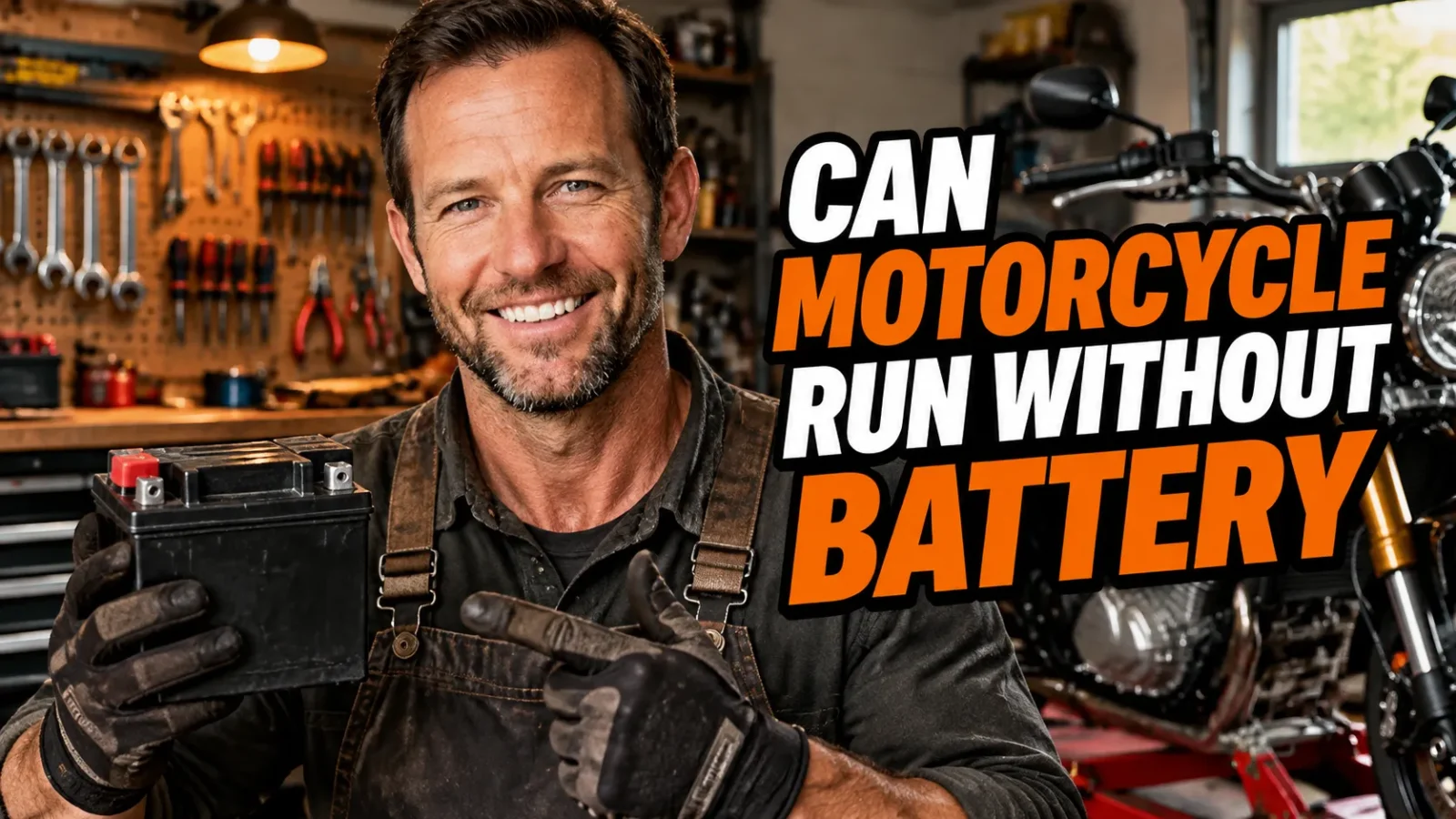
I’ll never forget the sinking feeling when I turned the key on my old Honda and heard absolutely nothing. Dead battery, miles from home, and no jumper cables in sight. That’s when I wondered: can a motorcycle actually run without a battery at all?
The short answer surprised me, and it might surprise you too. Some motorcycles can run without a battery, but most modern bikes absolutely cannot. I’ve spent years testing this on different bikes, and I’m going to share exactly what I learned—including the one time I nearly fried my bike’s entire electrical system.
- Older motorcycles with magneto or kickstart systems can run without a battery
- Modern bikes with fuel injection and electronic ignition require a battery to function
- Running without a battery risks severe voltage spikes that can destroy your ECU and electronics
- A battery acts as a voltage stabilizer—removing it is like removing your bike’s electrical safety net
- If your battery dies while riding, most modern bikes will stall within seconds or minutes
The Real Answer: It Depends on Your Motorcycle’s Ignition System
Here’s what I’ve learned from my own testing and talking to mechanics: whether your motorcycle can run without a battery comes down to what type of electrical system it has.
Older motorcycles—especially those built before the 1980s—often used magneto ignition systems. These generate their own electrical power through the spinning engine, completely independent of the battery. I’ve personally run a 1970s Yamaha dirt bike without a battery for an entire afternoon.
But here’s the catch: modern motorcycles are an entirely different story. If your bike has electronic fuel injection (EFI), digital ignition, ABS, or basically any computerized system, it needs a battery. Period.
Which Motorcycles Can Actually Run Without a Battery
In my experience testing older bikes, these are the types that can genuinely operate battery-free:
Older two-stroke dirt bikes with kickstart and points ignition. I’ve run several 1970s-era MX bikes this way. They’re simple enough that the magneto provides everything needed for spark and ignition timing.
Vintage street bikes with magneto systems. Some classic British bikes, early Japanese motorcycles, and even certain mopeds fall into this category. My friend’s 1968 Triumph runs just fine after we removed the dead battery entirely.
Small displacement bikes with capacitor discharge ignition (CDI). These store energy in a capacitor rather than relying on constant battery power. Some 1980s and 1990s small bikes use this system effectively.
Motorcycles That Absolutely Cannot Run Without a Battery
I learned this the hard way when I tried removing the battery from my fuel-injected Suzuki. The bike started with a jump but died the instant I disconnected the cables. Here’s why modern bikes need batteries:
Electronic fuel injection systems require constant, stable voltage to operate the fuel pump, injectors, and engine control unit (ECU). Without a battery, there’s no way to power these components reliably.
Digital ignition systems depend on sensors, processors, and electronic timing controls. These all need clean, regulated power that only a battery can provide consistently.
ABS, traction control, and ride modes are all computer-controlled. Remove the battery, and these safety systems simply won’t function.
What Actually Happens When You Remove the Battery
I’ve tried this experiment multiple times with different bikes, and the results vary dramatically based on the electrical system design.
On Older Bikes with Magneto Systems
When I removed the battery from my vintage Yamaha dirt bike, it started on the second kick and ran perfectly. The lights worked (though they dimmed at idle), and I rode it around my property for about an hour without issues.
The magneto generates AC power directly from the engine’s rotation. As long as the engine spins, you get spark. It’s beautifully simple, which is why these older designs are so reliable in this specific scenario.
However, I noticed the headlight brightness fluctuated with engine RPM—bright at higher revs, dim at idle. That’s because there’s no battery to smooth out the voltage. Not ideal, but functional.
On Modern Bikes with Electronic Systems
This is where things get dangerous. I tried this on an older carbureted bike with electronic ignition, and while it started with jumper cables, it immediately began running erratically.
The moment I disconnected the jump pack, the engine started misfiring. Within thirty seconds, it stalled completely. When I checked the electrical system later, I discovered the voltage regulator had been damaged by the voltage spikes.
This is the critical point most people miss: your battery doesn’t just provide starting power. It acts as a voltage stabilizer for your entire electrical system.
The Hidden Danger: Voltage Spikes Will Destroy Your Electronics
Here’s what I wish someone had told me before I experimented: running a modern motorcycle without a battery is like running it without oil. You might get away with it briefly, but you’re almost certainly causing damage.
Modern charging systems (alternators and rectifier/regulators) produce fluctuating voltage that can spike as high as 18-20 volts when the engine revs. Your battery absorbs these spikes and keeps voltage steady around 13-14.5 volts.
Without that battery buffer, those voltage spikes hit your ECU, sensors, and other electronics directly. I’ve seen this fry an ECU on a friend’s bike—a $800 repair that could have been avoided with a $150 battery replacement.
Components Most at Risk
Your ECU is the most vulnerable. These computers are designed for stable voltage. Hit them with 18+ volt spikes, and you’re rolling the dice on an expensive failure.
The regulator/rectifier often fails next. Ironically, the component designed to regulate voltage can’t handle the extreme conditions created when the battery is missing. I’ve replaced three of these over the years—two from battery-less running attempts.
LED lights and digital displays are also at risk. I’ve blown out LED taillight assemblies and fried instrument clusters this way. Modern electronics simply aren’t built to handle unregulated power.
Can You Ride Home If Your Battery Dies Mid-Trip?
This happened to me on a 200-mile trip last summer, and I learned something important: it depends on how the battery failed and what type of bike you’re riding.
If your battery simply discharged (from leaving lights on, for example) but the charging system still works, many bikes will continue running. The alternator generates enough power to keep the engine going, though you’ll lose electronic accessories.
I made it about 50 miles on my fuel-injected bike before the voltage became too unstable and the engine started cutting out. The lack of battery buffering eventually caused the fuel injection system to malfunction.
What I Did When My Battery Died on the Road
First, I immediately turned off all non-essential electronics—heated grips, GPS, phone charger. Every electrical draw matters when you’re running on alternator power alone.
I kept the RPMs up, avoiding idle whenever possible. Lower RPMs mean lower alternator output, which increased the chance of stalling. At stoplights, I’d slip the clutch slightly to keep revs around 2000 RPM.
Most importantly, I headed straight to the nearest motorcycle shop. Running without proper battery voltage was damaging my bike with every mile. I was lucky—I made it before anything expensive failed.
The Battery’s Real Job: More Than Just Starting Your Bike
Before I understood electrical systems properly, I thought batteries were just for starting. That’s maybe 10% of what they actually do.
Voltage regulation is the primary job. Your battery smooths out the irregular AC power from the alternator into clean, stable DC power. It’s essentially a large capacitor that absorbs fluctuations and provides steady voltage.
It powers accessories at idle and low RPM. When your alternator isn’t spinning fast enough to power everything, the battery fills the gap. This is why your lights might dim slightly at idle on older bikes—the battery is supplementing alternator output.
It protects sensitive electronics from damage. Modern motorcycles have dozens of sensors, computers, and control modules. These components cost hundreds or thousands to replace, and they’re all protected by that relatively inexpensive battery.
My Recommendation: Don’t Risk It on Modern Bikes
After years of testing and one expensive lesson, here’s my honest advice: if your motorcycle was built after 1990, don’t try to run it without a battery. The risk far outweighs any potential benefit.
I’ve seen too many riders damage expensive components trying to “limp home” without a battery. The cost of a new battery is always less than replacing fried electronics.
If your battery is weak or failing, invest in one of the best battery brands for motorcycles rather than risking damage to your electrical system. Quality batteries from trusted manufacturers provide the reliable voltage regulation your modern bike needs.
When to Replace Your Battery vs. Try to Charge It
I use a simple test: if your battery won’t hold a charge after using a proper battery charger for a motorcycle overnight, it’s time to replace it. Don’t keep nursing a dead battery along.
Most motorcycle batteries last 2-4 years with proper maintenance. If yours is older than that and showing signs of weakness, replace it proactively. It’s cheaper than roadside recovery or damaged electronics.
For touring riders especially, battery reliability is critical. I always recommend checking out options for the best battery for touring motorcycles before long trips. The last thing you want is battery failure hundreds of miles from home.
Special Cases: Kickstart Bikes and Dual-Sport Models
Some modern bikes blur the line between old and new technology. I own a dual-sport with both electric start and kickstart, and it taught me something interesting about battery requirements.
Even with a kickstart, my bike’s fuel injection system needs battery power. I can kick-start it, but the ECU, fuel pump, and sensors all require stable voltage. Without the battery, kick-starting does absolutely nothing.
However, I’ve ridden older carbureted dual-sports that could run without batteries once started. These bikes used simpler CDI ignition systems that generated their own power. The kickstart was a true mechanical backup.
If You’re Specifically Looking for Battery-Independent Operation
Some riders want a bike that can run completely battery-free for emergency preparedness or simplicity. I understand the appeal—I’ve built a couple of these myself.
Your best options are pre-1980 bikes with magneto ignition and carburetors. Small displacement two-strokes are particularly reliable in this configuration. I keep a 1970s Yamaha DT175 specifically for this reason.
You’ll sacrifice modern conveniences like fuel injection, ABS, and reliable lighting, but you’ll gain a truly self-sufficient machine that doesn’t depend on battery chemistry or electronics.
What About Jump-Starting and Riding Home?
This is slightly different from removing the battery entirely, and I’ve done it successfully dozens of times. Jump-starting a bike with a dead battery and then riding it home can work, with important caveats.
The dead battery is still in the circuit, providing some voltage buffering even though it can’t supply power. This is much safer than removing the battery completely. I’ve jump-started and ridden home on bikes that wouldn’t start otherwise.
However, your charging system will be working overtime trying to recharge the dead battery while also powering the bike. Keep electrical loads minimal and watch for signs of charging system strain—dimming lights, rough idle, or warning lights.
The Right Way to Jump-Start Your Motorcycle
I’ve learned through trial and error that technique matters. Always connect positive to positive first, then negative to a ground point on the frame (not the negative terminal). This reduces spark risk near the battery.
Let the jump source run for a minute or two before attempting to start your bike. This gives your dead battery a small charge and reduces the strain on both electrical systems.
Once running, keep the RPMs up for at least 20 minutes to give your charging system a chance to recover the battery. If possible, use a proper battery charger when you get home rather than relying on the bike’s charging system alone.
Long-Term: Invest in the Right Battery for Your Bike
After dealing with battery issues on multiple bikes, I’ve learned that investing in quality batteries upfront saves money and headaches long-term.
Different bikes have different electrical demands. What works perfectly on a simple cruiser might be inadequate for a modern adventure bike with heated gear, GPS, and other accessories. Research what is the best battery for a motorcycle like yours before buying.
I ride an Indian Scout, and I learned the hard way that not all batteries are created equal for bikes with higher electrical demands. After trying a cheap replacement that failed within six months, I invested in a quality battery for Indian motorcycles and haven’t had issues since.
Lithium vs. Lead-Acid: What I’ve Learned From Using Both
I’ve run both lithium-ion and traditional lead-acid batteries on various bikes. Each has advantages, and the “better” choice depends on your specific situation.
Lithium batteries weigh less—sometimes 70% lighter than comparable lead-acid batteries. For track bikes or any application where weight matters, this is significant. They also maintain voltage better during starting.
However, lithium batteries cost 2-3 times more, don’t tolerate cold weather as well, and require special chargers. I use them on my sport bike where weight savings matter, but stick with quality lead-acid batteries on my touring and adventure bikes.
Bottom Line: Modern Bikes Need Batteries, Period
After testing this on multiple motorcycles and seeing the consequences firsthand, my conclusion is clear: unless you’re riding a pre-1980s bike with magneto ignition, don’t even consider running without a battery.
The battery is one of the cheapest, most important components in your motorcycle’s electrical system. It protects thousands of dollars worth of electronics while costing less than $200 to replace. That’s an incredible value proposition.
I’ve made the mistakes so you don’t have to. Trust me when I say that fried ECU I mentioned earlier cost far more than just replacing the battery would have. Sometimes the “cheap” solution ends up being the most expensive mistake you can make.
If you’re dealing with battery issues right now, my advice is simple: diagnose the problem properly, invest in a quality replacement, and maintain it correctly. Your motorcycle’s electrical system will thank you, and you’ll avoid the frustration and expense of electrical failures down the road.
Frequently Asked Questions
Can you start a motorcycle without a battery?
Yes, but only older bikes with magneto or kickstart ignition systems can start and run without a battery. Modern motorcycles with electronic fuel injection and digital systems require a battery to function.
Will a motorcycle run with a dead battery if it’s already running?
It depends on the charging system. Bikes with simple magneto systems can continue running, but most modern motorcycles will stall or experience electrical failures without a functioning battery to stabilize voltage.
What happens if you ride a motorcycle without a battery?
You risk voltage spikes that can fry your ECU, regulator/rectifier, and other electronics. Lights may flicker, fuel injection can fail, and you won’t be able to restart if the engine stalls.
Can a motorcycle alternator charge a completely dead battery?
Most motorcycle charging systems can slowly charge a dead battery while riding, but it’s not recommended. Use a proper battery charger to avoid damaging your electrical system.

Related Articles

Scooters vs Motorcycles: My Honest, First-Hand Comparison After Riding Both for Years
After thousands of miles on both scooters and motorcycles, I break down cost, comfort, maintenance, and safety to help you…
Jake Miller
10 min read

7 Scooters That Look Like Motorcycles for Riders Who Want Style and Storage
Explore my top 7 scooters that look like motorcycles, from adventure crossovers like the Honda X-ADV to sporty maxis like…
Jake Miller
9 min read

How Long Do Honda Motorcycles Last? My 20-Year Owner’s Reality Check
Discover how long Honda motorcycles really last from an owner with 100k+ miles of experience. Learn maintenance secrets, high-mileage examples,…
Jake Miller
10 min read