
7 Best Conventional Oils for Old Motorcycles with Wet Clutches (Tested Picks)
 Jake Miller
9 min read
Jake Miller
9 min read
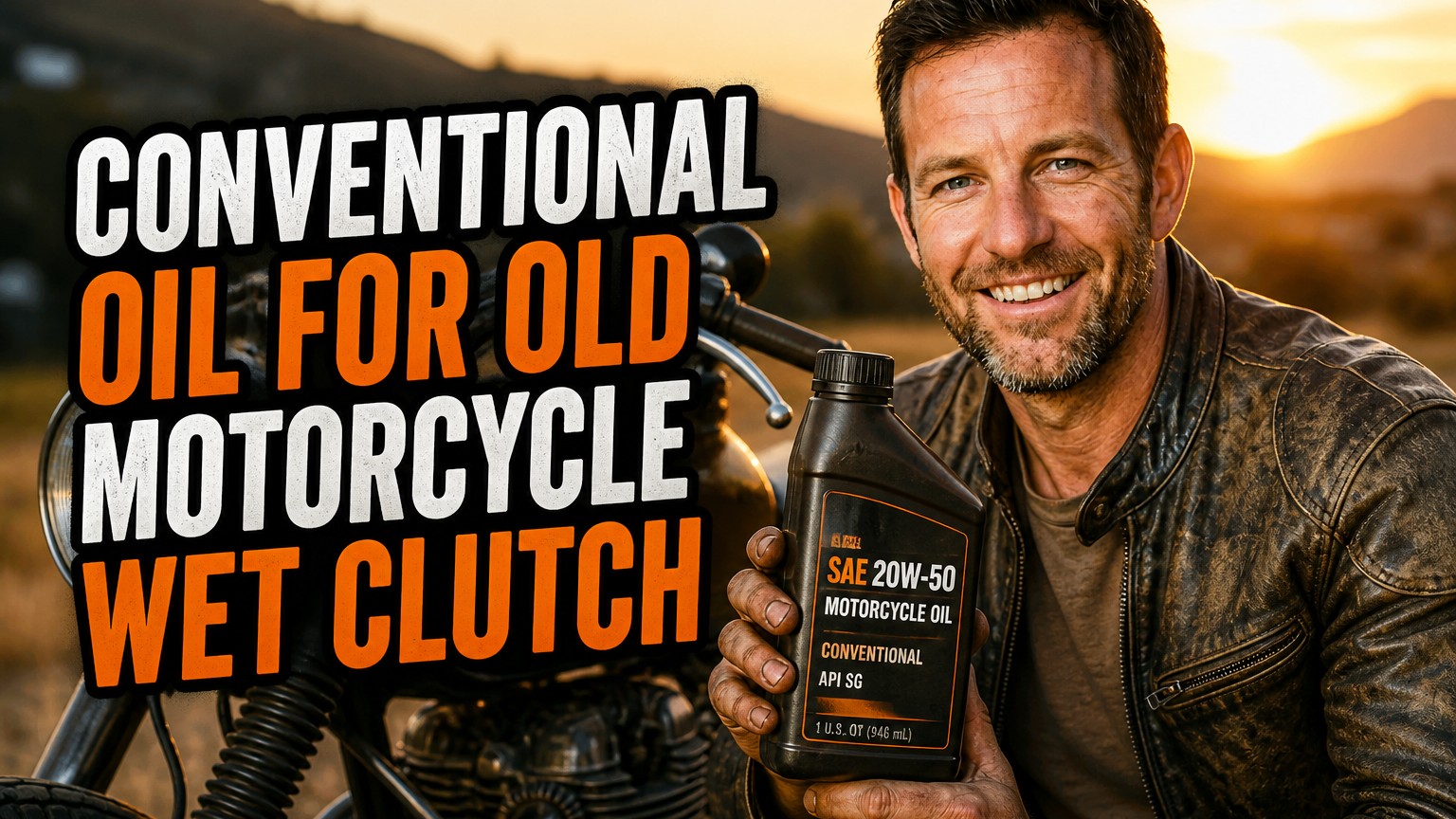
I’ve been wrenching on and riding old bikes for years, and one question lands in my inbox more than any other: “What oil won’t cook my clutch?” If your vintage machine shares oil between the engine, gearbox, and clutch, the answer matters a lot.
The good news is that you don’t need boutique synthetic oil to keep an old bike happy. In my experience, a quality conventional (mineral) oil with the right JASO rating is often the best match for tired seals, looser tolerances, and a modest budget.
Below are the seven conventional oils I trust most, along with how I use each one and who I think it suits best.
- Always look for a JASO MA or MA2 label. It tells you the oil is safe for wet clutches.
- My top overall pick is Honda GN4, with Motul 3000 4T and Valvoline 4-Stroke close behind.
- Use 20W-50 for hot weather and worn air-cooled engines, and 10W-40 or 15W-40 for milder conditions.
- Change conventional oil every 2,000 to 3,000 miles, since it ages faster than synthetic.
Why Conventional Oil Still Makes Sense for Old Bikes
There’s a persistent myth that old engines need synthetic to survive. I don’t buy it. Most vintage bikes were designed around mineral oil, and their seals, gaskets, and clearances were built for it.
Conventional oil is also cheap enough that I can change it often. For a bike I ride on weekends, fresh oil every season beats expensive oil left in for two years.
What a Wet Clutch Actually Needs
A wet clutch sits in the same oil that lubricates your engine. If the oil is too slippery, the plates can’t grip, and you get that dreaded rev-flare without acceleration.
That’s why I only buy oils with the JASO MA or MA2 rating. Car oils labeled “Energy Conserving” often carry friction modifiers that spell trouble for clutch plates.
How I Chose These Oils
My criteria were simple: a mineral base, a JASO MA/MA2 rating, easy availability, and a track record I’ve seen on real bikes. I also weighed price per quart and how well each oil holds up in warm-running air-cooled engines.
If you’d like a broader look beyond mineral oils, my guide to the best motorcycle oil for wet clutch covers every base type.
1. Honda GN4 4-Stroke Oil 10W-40 — Best Overall Conventional Oil
I keep coming back to Honda GN4. It’s a straightforward mineral-based oil designed for Honda’s air-cooled and liquid-cooled four-strokes, and it carries a JASO MA rating. I’ve used it in a CB-series twin and never had a hint of clutch slip.
Why I Like It
GN4 is predictable. Shifts stay clean, the clutch engages smoothly, and the oil holds its color and body for a full interval. It’s also widely stocked at Honda dealers and online, usually for a very reasonable price per quart.
It comes in several grades, including 10W-30, 10W-40, and 20W-50, so you can tailor viscosity to your climate.
Things to Consider
It isn’t flashy, and you won’t get fancy additive marketing. But for an older Honda, or really any Japanese vintage bike, it’s the one I’d put in first.
2. Motul 3000 4T 10W-40 — Best for Value and Availability
If I had to name the oil I see in more garages than any other, it’s Motul 3000 4T. It’s a mineral-based oil built to JASO MA2 standards, and it’s backed by a brand with serious racing roots.
I ran it in an old Kawasaki four for a full summer. Shifting was crisp and the clutch stayed grabby, even in stop-and-go heat.
Why I Like It
Motul 3000 4T is easy to find, comes in multiple grades (including 20W-50 and 15W-50), and stays affordable. The MA2 rating gives me extra confidence about clutch feel.
Things to Consider
Mineral oil is still mineral oil, so I stick to a shorter change interval. If you’re curious about viscosity choices, take a look at my breakdown of the best 10×40 motorcycle oil for wet clutch.
3. Valvoline 4-Stroke Motorcycle Oil SAE 20W-50 — Best for Hot Climates
When the weather gets hot and my air-cooled engine starts running warm, I reach for Valvoline 4-Stroke Motorcycle Oil in 20W-50. It’s a conventional formulation made for motorcycles, with a JASO MA2 certification.
Why I Like It
The heavier 20W-50 grade keeps oil pressure healthy in older engines with a bit of wear. I noticed steadier oil pressure and quieter valvetrain noise on hot afternoons.
It’s also priced well, so I don’t mind changing it frequently.
Things to Consider
In cold weather, 20W-50 flows slowly on startup. If you ride in chilly mornings, the 10W-40 version of this oil may serve you better.
4. Yamalube 4 20W-40 — Best for Older Yamahas
Yamalube 4 is Yamaha’s own mineral-based four-stroke oil, and it’s a natural fit for classic XS, SR, and similar models. It’s JASO MA rated, so the clutch plates are in good hands.
Why I Like It
I put Yamalube 4 20W-40 in an old single-cylinder thumper, and the clutch lever feel was consistent from start to finish. The 20W-40 grade is a nice middle ground between thin and thick.
Things to Consider
It’s more commonly found at Yamaha dealers and some online shops than at big-box stores. Availability can vary, so I stock up when I find it.
5. Shell Advance 4T AX3 15W-40 — Best for Daily-Riding Old Bikes
I picked up Shell Advance 4T AX3 for a commuter-style old bike, and it impressed me. It’s a mineral-based oil that meets JASO MA2, and the 15W-40 grade handles day-to-day use without fuss.
Why I Like It
This oil offers a stable viscosity across temperatures and gives a smooth, quiet engine feel. It’s budget friendly, especially in larger containers.
Things to Consider
Availability depends on your region, since Shell Advance is more common outside North America. If you can find it, it’s a great workhorse.
For more picks that apply to modern and vintage engines alike, my list of the best motor oil for 4 stroke motorcycle goes deeper.
6. Castrol Actevo 4T 20W-50 — Best Classic Brand Pick
Castrol has been in the motorcycle game for generations, and Castrol Actevo 4T is a dependable mineral-based option built for JASO MA2 clutch compatibility. I’ve run it in a couple of older air-cooled bikes.
Why I Like It
The 20W-50 grade gives me good protection in hot-running engines, and the oil resists shearing so it doesn’t thin out too fast. Gear changes remained positive and clutch engagement was smooth.
Things to Consider
Formulations vary by region, so I always check the label for the JASO rating before buying. If the bottle doesn’t say MA or MA2, I put it back on the shelf.
7. Liqui Moly Motorbike 4T 20W-50 Basic Street — Best for European Classics
I use Liqui Moly Motorbike 4T 20W-50 Basic Street in older European machines. It’s a mineral-based oil designed for air-cooled and older engines, and it carries a JASO MA2 rating.
Why I Like It
This oil has a good reputation for protecting worn engines, and it handles heat well. I noticed the clutch stayed consistent on long rides with a vintage twin.
Things to Consider
It’s typically a bit pricier than the big-box options. For a classic I really care about, though, I consider it money well spent.
How to Choose the Right Viscosity for Your Old Bike
Viscosity is the second half of the equation after JASO rating. I always start with the owner’s manual, then adjust slightly for climate and engine condition.
My Simple Rules of Thumb
- 20W-50: hot climates, air-cooled engines, higher mileage.
- 15W-40: a solid all-rounder for moderate weather.
- 10W-40: cooler climates, easier cold starts.
A Quick Word on Worn Engines
If your old bike drinks a little oil or has some valve noise, a slightly thicker grade often calms things down. I wouldn’t jump more than one step above spec, though.
Conventional vs. Synthetic: My Honest Take
I’m not anti-synthetic. For high-revving or heavily loaded engines, a synthetic can be a smart upgrade, and I’ve covered the best synthetic motorcycle oil for wet clutch in a separate guide.
But for a typical old bike that sees weekend rides, conventional oil changed on schedule does the job beautifully. Fresh oil matters more than fancy oil.
When I’d Consider Switching
- If you ride in extreme heat or long, hard stretches.
- If you can’t change oil often.
- If your engine is healthy and has no leaky seals.
Oil Change Tips I Swear By
Warm It Up First
I always run the engine for a few minutes before draining. Warm oil flows out faster and carries more contaminants with it.
Replace the Filter Every Time
A fresh filter costs very little and keeps new oil clean. I never skip it, especially on an older engine that may shed more debris.
Watch for Clutch Slip After a Change
If your clutch starts to slip after switching oils, don’t ignore it. Drain it and go back to a proven JASO MA/MA2 oil before the plates glaze.
Stick to a Realistic Interval
I change conventional oil every 2,000 to 3,000 miles, or yearly. Stop-and-go riding and hot weather push me toward the shorter end.
Final Thoughts
For most old bikes, my first choice remains Honda GN4, with Motul 3000 4T and Valvoline 4-Stroke as excellent alternatives. All seven oils above have earned a spot because they protect the engine without making the clutch misbehave.
If you want to dig deeper into the wider oil landscape, my roundup of the top engine oil for 4 stroke motorcycle is a handy next read.
Pick the right viscosity, confirm the JASO rating, and change it on schedule. Do that, and your old bike will reward you with smooth shifts and many more miles.
Frequently Asked Questions
Is conventional oil better than synthetic for an old motorcycle with a wet clutch?
Not necessarily better, but it is often a great fit. Conventional oil is affordable, suits older seals and loose tolerances, and is easy to change frequently. What matters most for the clutch is a JASO MA or MA2 rating, not whether the oil is mineral or synthetic.
Can I use regular car oil in a motorcycle with a wet clutch?
I wouldn’t. Many car oils contain friction modifiers that can make a wet clutch slip, and they usually lack the shear stability a shared engine, gearbox and clutch demands. Stick with oil labeled JASO MA or MA2.
What viscosity is best for an old air-cooled motorcycle?
20W-50 is a classic choice for hot climates and older air-cooled engines with looser tolerances. 10W-40 or 15W-40 works well in moderate climates. Always check your owner’s manual first.
How often should I change conventional oil in a vintage bike?
I change mine every 2,000 to 3,000 miles, or at least once a year, whichever comes first. Conventional oil breaks down faster than synthetic, and short trips and heat shorten the interval even more.

Related Articles
7 Best Batteries for Motorcycles I’ve Tested and Trust in 2026
I've tested dozens of motorcycle batteries to find the best performers. From AGM to lithium, here are my top picks…
Jake Miller
15 min read

The Perfect Battery for Your Harley Davidson Softail: A Rider’s Complete Guide
Discover the perfect battery for your Harley Davidson Softail. I've tested multiple options and share real-world performance data, maintenance tips,…
Jake Miller
14 min read

The Best Battery for Your Harley Davidson: My Complete Guide After Years of Testing
Discover which battery truly performs best for Harley Davidson motorcycles. Real rider experience with AGM, lithium, and OEM options to…
Jake Miller
12 min read