
8 Best Engine Oils for Automatic Scooters in the Philippines (Rider-Tested Picks)
 Jake Miller
10 min read
Jake Miller
10 min read
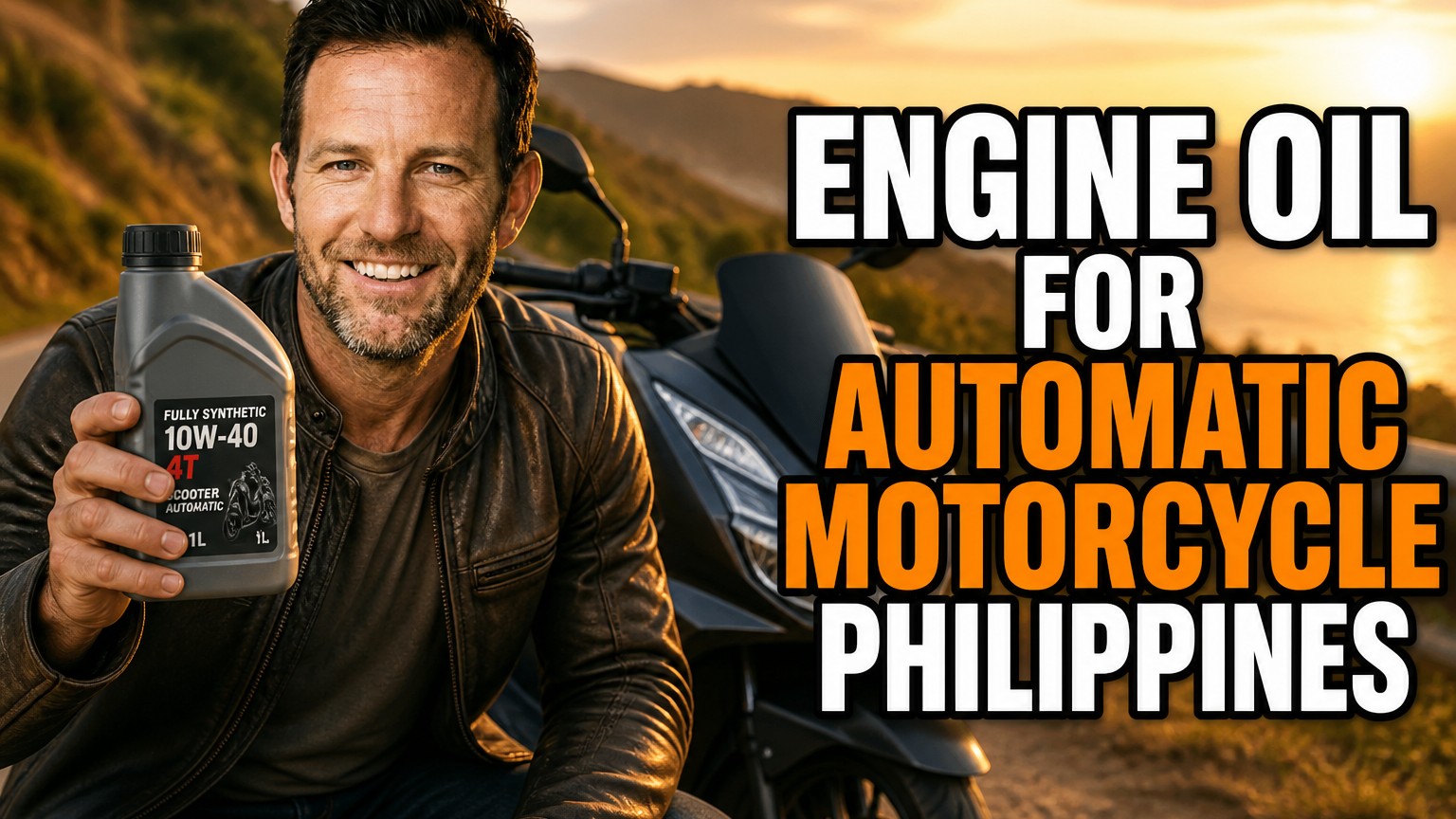
I’ve been riding automatic scooters around Metro Manila for years, and I can tell you the oil you pour in matters more than most people think. Between the EDSA crawl, the summer heat, and the short trips to the market, a scooter engine works harder than it looks.
Over time I’ve tried a lot of bottles, from cheap sari-sari store oil to premium synthetics. In this guide I’m sharing the eight oils I’d actually trust in a Honda Click, Yamaha Mio, NMAX, or Suzuki Burgman. I’ll explain what makes each one good and who it suits.
- Always choose an oil rated JASO MB. It’s made for the wet-less CVT and centrifugal clutch setup on scooters.
- My overall pick is Motul Scooter Power LE 5W-40. For budget riders, Honda Genuine Oil MB 10W-30 is hard to beat.
- Use 10W-30 or 10W-40 for daily commuting. Step up to 5W-40 full synthetic for hot, heavy-traffic riding.
- Change oil every 1,500 to 2,000 km (semi-synthetic) or 3,000 to 4,000 km (full synthetic).
Why Scooters Need Their Own Kind of Oil
Many riders assume oil is oil. I made that mistake early on, and my old Mio started feeling sluggish when pulling away from stoplights.
The JASO MB Rule
Most manual motorcycles share oil between the engine, gearbox, and wet clutch. That’s why their oils are rated JASO MA or MA2, which gives a bit of “grip” to keep the clutch from slipping.
Scooters work differently. They use a dry centrifugal clutch and a CVT belt, so the oil doesn’t need that grip. In fact, MA-rated oils can contain additives that hurt fuel economy and engine smoothness. That’s why JASO MB is the rating to look for.
Viscosity in Philippine Conditions
Our climate is hot all year, and scooters often sit in traffic with limited airflow. Most manufacturers recommend 10W-30 or 10W-40, and that’s a safe bet.
If you ride hard or do long commutes, a good 5W-40 synthetic gives better protection against heat. If you want a broader look at the category, my guide on the best engine oil for motorcycle riders covers manual bikes too.
1. Motul Scooter Power LE 5W-40 — Best Overall
This is the oil I keep coming back to. Motul Scooter Power LE 5W-40 is a 100% synthetic, JASO MB-rated oil designed specifically for modern scooters.
What I Like
The first thing I noticed with Motul Scooter Power LE was how smooth the engine felt at idle. Throttle response was crisper, and the engine sounded quieter during long rides.
It’s formulated for the heat and stop-and-go riding that scooters face. That makes it a great match for the NMAX, PCX, and Aerox crowd.
Things to Consider
It costs more than typical scooter oils, usually around ₱450 to ₱650 per bottle depending on the size and shop. You’ll find it at Motul dealers and on Shopee or Lazada, but watch out for fakes by buying from official stores.
If you can afford it, I think it’s the best protection money can buy for a scooter you ride daily.
2. Motul Scooter Expert LE 10W-40 — Best Semi-Synthetic Upgrade
Not everyone needs a full synthetic. Motul Scooter Expert LE 10W-40 is a semi-synthetic that sits in the sweet spot between price and performance.
I used it on a Honda Click 125 for several thousand kilometers, and it kept the engine feeling consistent between changes. The 10W-40 viscosity matches what most Philippine scooter manuals recommend.
It’s also JASO MB-rated, so you won’t have to worry about clutch or CVT issues. It’s usually a few hundred pesos per bottle, making it a nice step up from entry-level oils without the full synthetic price.
If you’re deciding between Motul’s two scooter oils, I’d go with Scooter Expert for regular commuting and Scooter Power for hard or hot riding.
3. Honda Genuine Oil MB 10W-30 — Best for Honda Scooters
I’ll never talk anyone out of using what the manufacturer recommends. Honda Genuine Oil MB 10W-30 is the oil Honda dealers use for scooters like the Click, Beat, and PCX.
Why It Works
It’s JASO MB-rated and engineered with the Honda’s tolerances in mind. At roughly ₱250 to ₱350 for a standard bottle, it’s one of the cheapest ways to keep a Honda healthy.
If your scooter is still under warranty, using this oil also avoids any arguments at the casa. I’ve personally relied on it during the early months of ownership.
The Trade-Off
It’s a mineral-based or semi-synthetic blend, depending on the product line. That means shorter change intervals than full synthetics, so stick to about 1,500 to 2,000 km.
4. Yamalube Automatic 10W-40 — Best for Yamaha Scooters
If you ride a Mio, Fino, or Aerox, Yamalube Automatic 10W-40 is worth a look. It’s Yamaha’s own scooter-formulated oil and is widely available in dealerships and parts shops across the country.
I’ve used it on a Mio and found it kept things quiet and consistent. It’s JASO MB-rated and priced similarly to Honda’s oil, usually well under ₱400.
The biggest advantage is availability. You can find it almost anywhere Yamaha has a presence, which is handy during provincial rides when you need an emergency top-up.
Like other semi-synthetics, I don’t push the interval past 2,000 km, especially if I’m riding in Manila traffic daily.
5. Shell Advance AX7 Scooter 10W-40 — Best Widely Available Option
Shell is everywhere in the Philippines, and Shell Advance AX7 Scooter 10W-40 is one of the easiest scooter oils to find at gas stations, hardware stores, and motorcycle shops.
My Experience
It’s a semi-synthetic with JASO MB certification. Shell’s formulation focuses on engine cleanliness and smooth clutch engagement, which I noticed in my scooter’s steady idle.
It’s priced mid-range, typically a little above Honda and Yamaha’s own oils. For riders who like to buy oil from trusted gas station brands, this is a reliable pick.
Who It’s For
I’d recommend it for riders with non-Honda, non-Yamaha scooters like Suzuki or SYM. It’s also great if you want a recognizable brand without hunting for specialty shops.
6. Castrol Power1 Scooter 4T 5W-40 — Best for Spirited Riding
Castrol Power1 Scooter 4T 5W-40 is a synthetic-based oil built around Castrol’s “Power Release” thinking. It’s designed to keep throttle response lively in the kind of riding scooters actually do.
I found it particularly good in hot weather. The 5W-40 viscosity flows quickly on cold starts but still holds up when the engine is baking in traffic.
It’s JASO MB-rated and generally priced in the mid-to-premium range. If you want a respected international brand with a sporty feel, this is a solid alternative to Motul.
Just be careful to buy from authorized sellers, because Castrol is another brand that gets counterfeited online.
7. Petron Sprint 4T Scooter — Best Local Budget Pick
Petron is a name every Filipino rider knows, and Petron Sprint 4T Scooter is the company’s oil built for automatics. It’s one of the most affordable options on this list.
Value for Money
For daily commuting on a lightly modified scooter, it does the job. It’s meant for 10W-30 or 10W-40 applications and meets scooter-specific requirements, so you’re not putting the wrong oil in your CVT.
I used it during a stretch when money was tight, and the scooter ran fine as long as I kept changes on time. I’d say 1,500 km is a good limit.
Where It Falls Short
It won’t match a full synthetic for heat resistance or long-term protection. But if your budget is limited, it beats using the wrong oil or stretching an old change.
8. Liqui Moly Scooter Motoroil 10W-40 — Best Premium Alternative
For riders who like German engineering, Liqui Moly Scooter Motoroil 10W-40 is a quality option. It’s a synthetic-technology oil formulated specifically for four-stroke scooters.
I like its clean-running reputation and the way it handles stop-and-go riding. It’s JASO MB-rated and stays stable in hot conditions, which suits our weather.
It’s a premium-priced bottle, usually sold through specialty shops and online stores. If you want something a bit different from the usual Japanese and local brands, it’s a worthy choice.
How I Choose the Right Oil for My Scooter
After trying all of these, I’ve settled on a simple process. It saves me from overthinking at the shop.
Step 1: Check the Manual
Your owner’s manual will tell you the recommended viscosity and JASO rating. Start there before reading any reviews or ads.
Step 2: Match the Oil to Your Riding
If you commute short distances in light traffic, a semi-synthetic 10W-30 or 10W-40 is plenty. If you ride long distances, carry a passenger, or sit in heavy traffic daily, I’d go with a full synthetic.
Step 3: Look at the Brand and the Seller
Fake oil is a real problem in the Philippines. I stick to authorized dealers or official brand stores online. For a deeper look at reliable names, I put together a rundown of the best motorcycle engine oil brand options worth trusting.
Common Oil Mistakes I See Scooter Riders Make
I’ve made a few of these myself, so no judgment. Avoiding them can save you a lot of money.
Using Manual-Bike Oil
It’s tempting to grab a cheaper oil meant for underbones or sport bikes. But if it’s JASO MA or MA2 only, it can cause clutch and belt issues on a scooter. Stick with MB.
Stretching Change Intervals
Philippine traffic is brutal on oil. Short trips and heat break it down faster than the odometer suggests, so don’t wait until the oil is black and thin.
Overfilling the Engine
Scooters often need only 0.8 to 1 liter. Overfilling can cause foaming and power loss, so always follow the dipstick or the manual’s exact capacity.
Ignoring Older Two-Stroke Scooters
If you still ride an older two-stroke scooter, none of the oils above are right for you. You’ll need a dedicated 2T oil, and I explain the details in my piece on the best engine oil for 2 stroke motorcycle models.
Synthetic vs. Semi-Synthetic: Is It Worth Paying More?
This is the question I get most from fellow riders. My honest answer is that it depends on how you ride.
A full synthetic like Motul Scooter Power LE gives better heat resistance and longer drain intervals. Over a year, the cost difference often shrinks because you change oil less often.
A semi-synthetic like Honda MB or Yamalube Automatic is still excellent for normal commuting. Just be strict about changing it on time.
If you’re curious about how these choices compare with bikes that have manual gearboxes, my article on the top engine oil for 4 stroke motorcycle riders is a helpful companion read.
Final Thoughts: My Pick for Your Scooter
If I had to choose one oil for everyday use, I’d go with Motul Scooter Power LE 5W-40. It’s smooth, protective, and handles Philippine heat well.
For budget-conscious Honda or Yamaha riders, Honda Genuine Oil MB 10W-30 and Yamalube Automatic 10W-40 are honest, dependable choices. Everything else on this list fills a specific niche, from local value to premium imports.
Whatever you choose, always check for JASO MB, buy from legitimate sellers, and change your oil on schedule. If you’re still unsure, my guide on which engine oil is best for motorcycle setups can help you narrow it down. Ride safe, and keep that engine happy.
Frequently Asked Questions
What is the best engine oil for an automatic motorcycle in the Philippines?
For most riders, Motul Scooter Power LE 5W-40 is the best all-round choice, while Honda Genuine Oil MB 10W-30 is the best value for Honda scooters. Whatever you pick, make sure it is rated JASO MB.
Can I use regular 4T motorcycle oil in my scooter?
It is not recommended. Many manual-bike oils are rated JASO MA2 and contain friction modifiers that can cause the scooter’s centrifugal clutch and CVT to slip. Always look for JASO MB on the label.
How often should I change the engine oil in my scooter in the Philippines?
For semi-synthetic and mineral oils, change every 1,500 to 2,000 km. For fully synthetic oils, 3,000 to 4,000 km is typical. Heavy traffic, short trips, and hot weather mean you should lean toward the shorter interval.
Is 10W-40 or 5W-40 better for Philippine weather?
Both work well in our tropical heat. 10W-40 is the safe, manufacturer-friendly choice for most scooters, while 5W-40 synthetics flow better at startup and resist heat breakdown in stop-and-go traffic.

Related Articles
7 Best Batteries for Motorcycles I’ve Tested and Trust in 2026
I've tested dozens of motorcycle batteries to find the best performers. From AGM to lithium, here are my top picks…
Jake Miller
15 min read

The Perfect Battery for Your Harley Davidson Softail: A Rider’s Complete Guide
Discover the perfect battery for your Harley Davidson Softail. I've tested multiple options and share real-world performance data, maintenance tips,…
Jake Miller
14 min read

The Best Battery for Your Harley Davidson: My Complete Guide After Years of Testing
Discover which battery truly performs best for Harley Davidson motorcycles. Real rider experience with AGM, lithium, and OEM options to…
Jake Miller
12 min read