
Best Engine Oil for a Dual Sport Motorcycle: My Real-World Picks and Buying Guide
 Jake Miller
10 min read
Jake Miller
10 min read
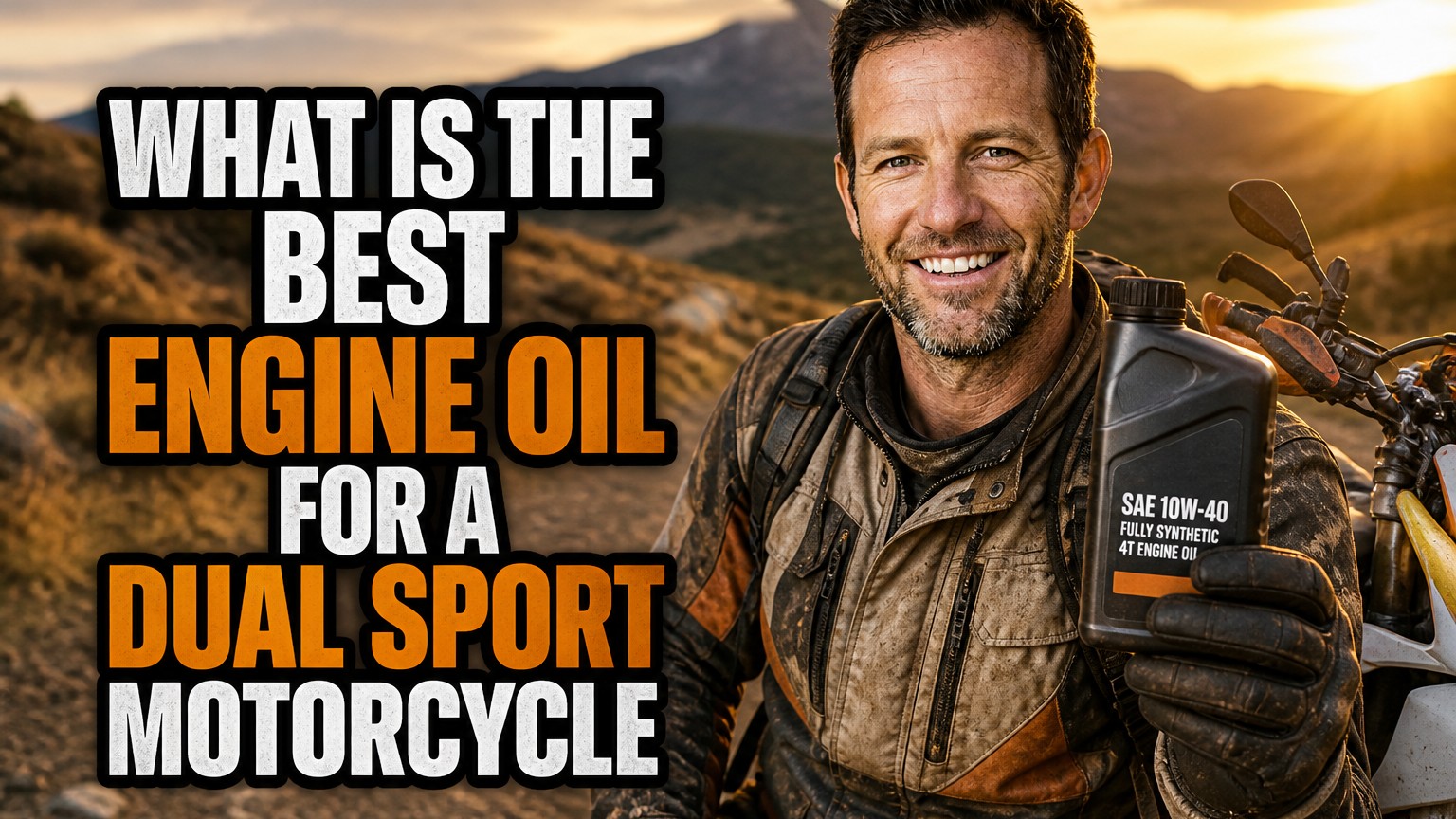
I’ve spent more weekends than I can count covering my boots in mud, dust, and highway grime on a dual sport. If there’s one maintenance question I get asked at every trailhead and gas station, it’s what oil should go in the engine. It sounds simple, but a dual sport is a strange beast.
These bikes live a double life. One day they’re cruising at 70 mph on the interstate, and the next they’re crawling up a rocky singletrack in first gear with the engine baking in the sun. Your oil has to handle both, and I’ve learned a lot (sometimes the hard way) about what works.
In this guide, I’ll walk you through what I look for on the label, which oils I trust, and the mistakes I see riders make again and again.
- Look for a JASO MA2 rated motorcycle oil, since most dual sports share oil with a wet clutch.
- 10W-40 is my default viscosity, but always confirm what your owner’s manual says.
- Full or semi-synthetic oil handles the heat and abuse of mixed riding better than basic mineral oil.
- Change your oil more often than the manual’s minimum if you ride in dust, water, or heavy off-road conditions.
Why Dual Sport Engines Are Picky About Oil
Before I get to brands, it helps to understand why a dual sport isn’t the same as a cruiser or a sportbike when it comes to lubrication. The conditions are just tougher and more varied.
Shared Sumps, Wet Clutches, and Gearboxes
On most dual sports, one oil does three jobs. It lubricates the engine, the transmission gears, and the wet clutch plates.
That’s a lot to ask. Oil that’s too slippery can make the clutch slide, and oil that breaks down under gear shear loses its protective film fast. This is why motorcycle-specific oil matters.
Heat, Dust, and Heavy Abuse
Off-road riding means low speeds, high revs, and very little airflow. Air-cooled thumpers like the XR650L and DR650 can run hot, and even liquid-cooled bikes get stressed on a slow technical climb.
Add fine dust that sneaks past the air filter and the occasional water crossing, and your oil works harder than it ever would on a commuter. I treat oil as the cheapest insurance policy I can buy for my engine.
What I Look For on the Label
When I’m standing in the oil aisle, I ignore most of the marketing and check three things. These are viscosity, the JASO rating, and the base oil type.
Viscosity: 10W-40 vs. 10W-30 vs. 20W-50
Viscosity is how thick the oil is at different temperatures. The first number (with the W) is how it flows when cold, and the second is how it holds up when hot.
For most of my dual sport riding, 10W-40 is the sweet spot. It flows well on cold mornings and still protects when things heat up.
Here’s how I think about the common options:
- 10W-30: Good for newer, tighter-tolerance engines and cooler climates, if your manual allows it.
- 10W-40: My all-around default for mixed on- and off-road use.
- 15W-50 or 20W-50: Useful for older air-cooled engines in hot weather or desert riding.
- 5W-30 or 0W-30: Only if the manufacturer specifically calls for it.
Your owner’s manual always wins. I treat it as the starting point, then adjust only slightly for climate.
The JASO MA and MA2 Rating
This is the single most important detail for me. JASO MA and MA2 ratings mean the oil has been tested for use with wet clutches.
MA2 is the higher-friction standard and is generally what I look for in modern bikes. If the bottle says JASO MA2, I know the clutch should grip properly.
If you see “Energy Conserving” on a car oil bottle, I’d put it back on the shelf. Those friction modifiers can cause clutch slip, and I’ve seen it ruin clutch plates.
Synthetic, Semi-Synthetic, or Mineral?
The base oil type affects how well the oil resists heat and breakdown. Each has a place, depending on your bike and budget.
When I Choose Full Synthetic
I go with full synthetic when I’m riding in hot weather, doing long highway slogs to reach the trailhead, or pushing a bike hard on technical terrain. It holds its viscosity longer and resists thermal breakdown better.
It costs more per quart, but I find the extra protection worth it, especially on higher-performance engines.
When Mineral Still Works
On an older, low-stress thumper that I ride gently, conventional oil can still do a perfectly good job. The catch is that you need to change it more often.
For many riders, semi-synthetic is the best balance. It’s affordable, offers better protection than mineral, and is easy to find.
My Top Oil Picks for Dual Sport Riding
I’ve tried a lot of oils over the years, and I’m not loyal to any one brand. Still, a handful keep showing up in my garage. If you want a broader comparison, I also put together a guide to the best motorcycle engine oil brand options across different bike types.
Motul 7100 4T (Full Synthetic)
This is my go-to when I want maximum protection. It’s an ester-based synthetic with a JASO MA2 rating, and it tends to shift smoothly and run cool.
I like it for adventure bikes and higher-revving singles. It’s pricier, but for hard riding I’m happy to pay for it.
Castrol Power1 4T
Castrol Power1 is a dependable, widely available option. I often grab it when I’m on a road trip and need to top off or change oil somewhere unexpected.
It’s a solid choice if you want good protection without hunting for specialty products.
Shell Advance 4T Ultra
Shell’s Advance line is another one I trust, especially in the semi- and full synthetic versions. It performs well in mixed use and generally offers good value.
Bel-Ray EXS and Liqui Moly Street
Both are excellent choices that I’ve seen riders run in everything from small trail bikes to large twins. They’re formulated for motorcycle clutches and handle off-road heat well.
A Note on Diesel Truck Oils
Some riders swear by heavy-duty diesel oils like Rotella T4 for air-cooled thumpers. They’re affordable and many are JASO MA2 certified.
I’d say check the bottle carefully and make sure it carries the right certification for your bike. If you’re unsure, stick with a dedicated motorcycle oil.
If you want a deeper dive on this topic in general, my overview of the best engine oil for motorcycle riding covers more categories beyond dual sports.
Matching Oil to Your Type of Dual Sport
Not every dual sport is the same, so the “best” oil changes a bit depending on what you ride. Here’s how I break it down.
Air-Cooled Thumpers (XR650L, DR650, KLR650)
These big singles are tough, but they run hot, especially at low speeds. I prefer a quality 10W-40 or 15W-50 synthetic or semi-synthetic here.
Oil capacity is often small relative to engine size, so it works hard and breaks down faster. Frequent changes pay off big on these bikes.
Liquid-Cooled Lightweights (CRF300L, WR250R, KLX300)
Smaller, higher-revving engines usually want a thinner, high-quality oil. Many call for 10W-30 or 10W-40 with a JASO MA2 rating.
I stick closely to the manual here because tolerances are tighter, and these engines spin fast on technical trails.
Adventure Twins (Tenere 700, Africa Twin, Versys-X)
These bikes see a lot of highway miles on the way to the dirt. A full synthetic 10W-40 that meets the manufacturer’s spec is my pick for peace of mind on long trips.
What About Two-Stroke Dual Sports?
Two-stroke dual sports are rarer, but they’re out there, and they have entirely different needs. They burn oil along with fuel, so you need the right formula and ratio.
If that’s your setup, check out my guide on what is the best 2 cycle oil for a motorcycle engine before you fill the oil tank or mix your fuel.
How Often I Change Oil on My Dual Sport
The manual’s interval is a ceiling, not a target. Dual sport riding is the “severe use” the manual warns you about.
Here’s what I follow in practice:
- Mostly pavement: Every 2,000 to 3,000 miles.
- Mixed riding: Every 1,500 to 2,000 miles.
- Heavy off-road, dust, or water: Every 1,000 miles, or roughly every 20 to 30 hours.
I also change it right after a deep water crossing if I see milky oil in the sight glass. Milky oil means water contamination, and you don’t want to ride on it.
Don’t Forget the Filter
I swap the oil filter at every change or at least every other one. A fresh filter costs a few dollars, and it keeps grit from circulating through the engine.
On dusty trails, I also check and clean my air filter often. A clogged or leaky air filter sends dirt straight into the oil.
Common Oil Mistakes I See Riders Make
I’ve made a few of these myself, so no judgment here. Avoiding them can save you serious money.
Using Car Oil Without Checking the Rating
Some car oils are fine for certain bikes, but many contain friction modifiers that don’t play well with wet clutches. If it doesn’t have a JASO MA or MA2 rating, I skip it.
Ignoring the Oil Level
Overfilling and underfilling are both bad. I check the level on level ground, with the engine warmed up and settled, and I follow the manual’s specific procedure for my bike.
Many thumpers burn a little oil, so I keep a spare quart handy on longer trips.
Mixing Oils Randomly
A one-time top-off with a different brand won’t kill your engine. Still, I try to stay consistent with the same type and viscosity to keep things predictable.
Stretching Intervals Too Far
Oil is cheap compared with an engine rebuild. When in doubt, I change it early.
Where This Fits Into the Bigger Picture
If you ride a dual sport, you’re really a four-stroke rider most of the time. That means the principles in my guide to the top engine oil for 4 stroke motorcycle engines apply to you too, with the added considerations of dirt, dust, and heat.
And if you’re still comparing options and wondering which engine oil is best for motorcycle use across different riding styles, that article is a good companion to this one.
My Final Take
If you want a simple answer, here it is. Choose a JASO MA2-rated, synthetic or semi-synthetic 10W-40 (unless your manual says otherwise) from a reputable motorcycle oil maker, and change it often.
That formula has kept my bikes running strong through deserts, mountain passes, and plenty of muddy creek crossings. Brand matters less than getting the specs right and staying on top of maintenance.
Pick an oil that fits your bike and your budget, write down your change dates, and get out there and ride. Your engine will thank you with many more miles of adventure.
Frequently Asked Questions
What viscosity oil should I use in my dual sport motorcycle?
Most dual sports run happily on 10W-40, which covers a wide temperature range. Some air-cooled thumpers prefer 20W-50 in very hot climates, and some newer bikes call for 10W-30 or 5W-30. Always check your owner’s manual first.
Do I need JASO MA2 oil in a dual sport?
Yes, in almost every case. Most dual sports share oil between the engine, gearbox, and wet clutch. JASO MA or MA2 oil is designed to prevent clutch slip, while many car oils are not.
Is synthetic oil worth it for off-road riding?
In my experience, yes. Synthetic oil resists heat breakdown and shear better, which matters when you are lugging a engine up a trail or sitting in traffic. Semi-synthetic is a solid budget compromise.
How often should I change the oil in a dual sport motorcycle?
Many riders change oil every 2,000 to 3,000 miles on pavement. If you ride in dust, water, or hard off-road conditions, I suggest changing it sooner, sometimes every 1,000 miles or 20 to 30 hours of riding. Follow the shorter of your manual’s interval or your riding conditions.

Related Articles
7 Best Batteries for Motorcycles I’ve Tested and Trust in 2026
I've tested dozens of motorcycle batteries to find the best performers. From AGM to lithium, here are my top picks…
Jake Miller
15 min read

The Perfect Battery for Your Harley Davidson Softail: A Rider’s Complete Guide
Discover the perfect battery for your Harley Davidson Softail. I've tested multiple options and share real-world performance data, maintenance tips,…
Jake Miller
14 min read

The Best Battery for Your Harley Davidson: My Complete Guide After Years of Testing
Discover which battery truly performs best for Harley Davidson motorcycles. Real rider experience with AGM, lithium, and OEM options to…
Jake Miller
12 min read