
8 Best Engine Oils for Dual Sport Bikes That Handle Dirt, Heat, and Highway
 Jake Miller
10 min read
Jake Miller
10 min read
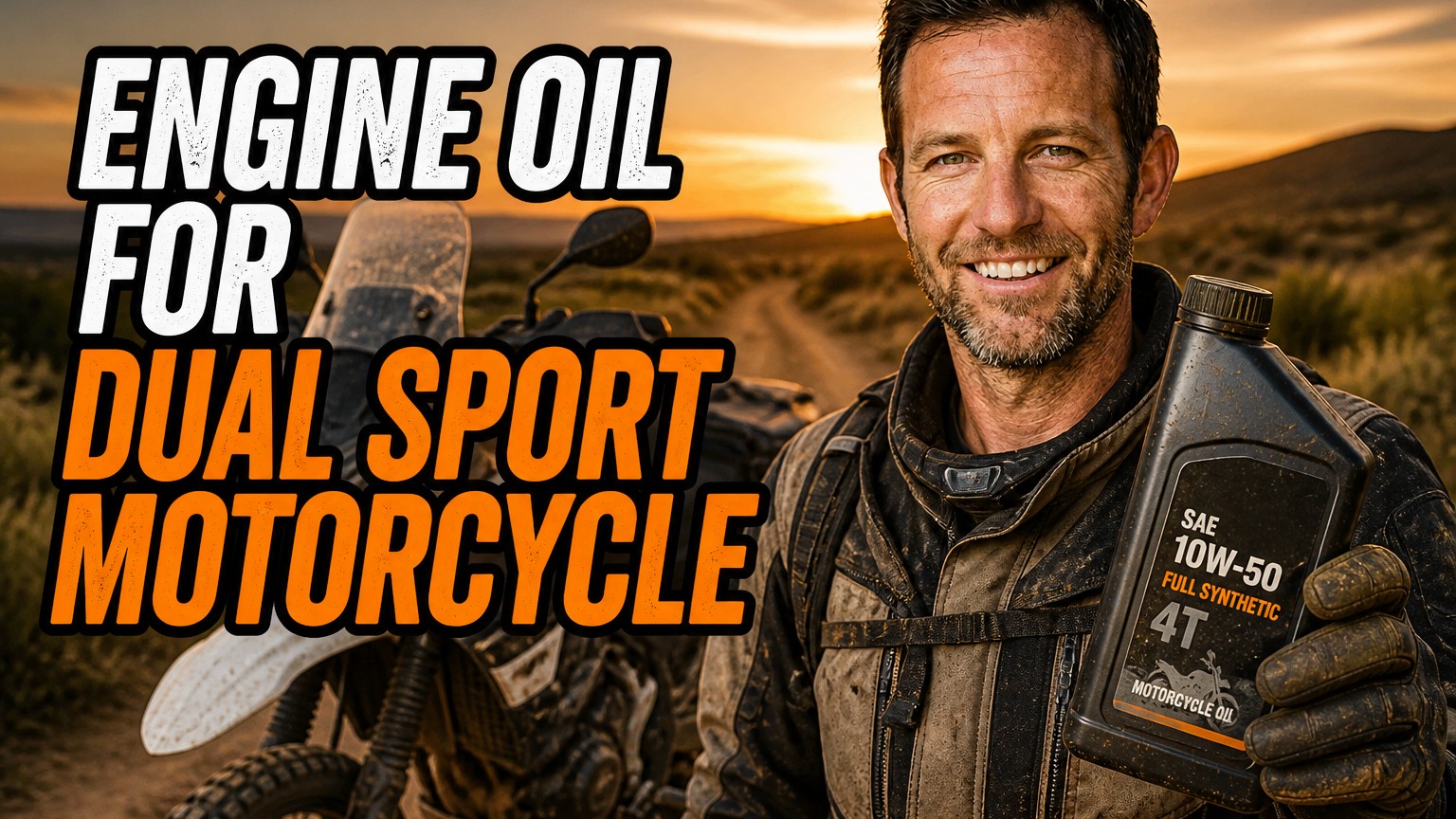
I’ve spent years riding dual sports on everything from fire roads and rutted forest trails to 70-mph highway slogs. If there’s one maintenance habit that has saved my engines more than any other, it’s using the right oil and changing it on time. Dual sport engines live a harder life than most street bike engines.
One minute I’m lugging up a rocky climb at low RPM with no airflow. The next I’m cruising on the interstate at full chat. That combination of heat, dust, shock loading, and clutch abuse is what makes oil choice so important.
In this guide I’m sharing the oils I trust, or that riders I know trust, for dual sport duty. I’ll tell you what each one is good at, where it falls short, and who I think should buy it. If you want a broader look first, my guide to the best engine oil for motorcycle riders covers the street side of things.
- My top pick is Motul 7100 10W-40, a full synthetic ester oil that handles heat and clutch demands well.
- Always choose an oil with JASO MA2 if your bike shares oil between the engine, gearbox, and wet clutch.
- Budget riders can run Castrol Power1 4T or Shell Advance AX7 with shorter change intervals.
- Dirt, dust, and heavy off-road use mean changing oil more often than the manual’s street schedule.
What I Look for in a Dual Sport Oil
Before the list, let me explain how I judge these oils. I don’t care about marketing claims nearly as much as I care about how an oil behaves on the trail and in the clutch lever.
Wet Clutch Compatibility
Most dual sports, like the Honda CRF300L, Kawasaki KLR650, Suzuki DR-Z400S, and Yamaha WR250R, use one sump for everything. That means the oil lubricates the engine, gearbox, and wet clutch all at once.
That’s why I look for JASO MA or MA2 on the label. Automotive “energy conserving” oils contain friction modifiers that can make a clutch slip, and nothing ruins a steep hill climb faster than a slipping clutch.
Viscosity and Heat Resistance
For most of my bikes, 10W-40 is the sweet spot. It flows well on cold mornings and still protects when I’m crawling through a technical section in 90-degree heat.
Always check your owner’s manual first. Some bikes, like the KLR650, are known to run well on 15W-40 or 10W-40 depending on climate, while others call for 10W-30.
Synthetic vs. Semi-Synthetic
Synthetic oils generally resist shearing and thermal breakdown better. Semi-synthetics are cheaper and fine if you change them often.
If you want a deeper look at the brands themselves, I’ve also written about the best motorcycle engine oil brand options across different bike types.
1. Motul 7100 10W-40 — Best Overall for Dual Sport Riding
When someone asks me what to put in a dual sport, Motul 7100 10W-40 is usually my first answer. It’s a 100% synthetic ester-based oil that carries JASO MA2 and API SN ratings. It’s designed for high-revving four-strokes, which makes it a great match for sporty dual sports.
Why I Like It
Ester technology gives Motul 7100 excellent film strength and heat stability. After a long day of mixed riding, I’ve always found the oil still looks and feels healthy when I drain it.
Shifting stays crisp and the clutch engagement feels consistent. That matters when you’re feathering the lever on loose terrain.
Downsides
It’s pricey, usually around $13 to $20 per liter depending on where you buy. If you’re changing oil every 1,000 miles in dusty conditions, the cost adds up.
Still, for bikes I plan to keep and ride hard, Motul 7100 is the oil I reach for first.
2. Castrol Power1 4T 10W-40 — Best Value Pick
If I’m on a budget, Castrol Power1 4T 10W-40 is a smart choice. It’s widely available, usually runs about $9 to $14 per liter, and carries JASO MA2 approval. It’s a partly synthetic formula, so I treat it as a quality mid-range oil rather than a premium one.
Real-World Performance
I’ve seen this oil used in everything from small trail bikes to mid-sized adventure machines. It handles normal dual sport duty very well, and clutch feel is predictable.
Castrol markets its “Power Release” formulation for quick throttle response, and I do find bikes feel willing with it in the sump.
Who Should Buy It
This is perfect for riders who change oil frequently and don’t want to spend a fortune. For anyone who rides in sand, mud, or heavy dust, cheap, fresh oil beats expensive, old oil every time.
3. Shell Advance 4T AX7 10W-40 — Best for Everyday Commuter-Trail Riders
Shell Advance 4T AX7 10W-40 is a semi-synthetic oil that meets JASO MA2 and API SL standards. It’s a staple in many parts of Asia, and it’s a great option if you’re searching for the best engine oil for 4 stroke motorcycle in india and need something easy to find.
What It Does Well
Shell’s AX7 uses what the company calls Active Cleansing Technology, which is aimed at keeping engine internals clean. For bikes that commute during the week and hit trails on weekends, that’s a nice bonus.
It usually costs roughly $8 to $12 per liter, depending on the market.
Where It Falls Short
It isn’t what I’d choose for sustained, extreme-heat off-road work. A full synthetic gives me more peace of mind there.
For light trail use, small displacement dual sports, and daily riding, though, Shell Advance AX7 is a dependable and affordable choice.
4. Shell Rotella T6 5W-40 — Best Diesel-Rated Oil Many Riders Swear By
This one is a bit controversial, so let me be careful. Shell Rotella T6 5W-40 is a full synthetic heavy-duty diesel engine oil, and plenty of dual sport and adventure riders run it in their bikes.
Why Riders Use It
It’s inexpensive for a full synthetic, often $25 to $35 per gallon jug. It has strong anti-wear additives and good shear stability, which suits hard-working engines like the KLR650 or the XR650L.
The Important Caveat
Rotella T6 does not carry a JASO MA2 certification. Many riders report no clutch issues, but that’s not a guarantee. Some bikes, especially those with sensitive clutches or manufacturer warranty requirements, are better off with a motorcycle-specific oil.
I’d use it only on an older, air-cooled single where I know the community has had good results. Check your manual and your warranty before deciding.
5. Liqui Moly Motorbike 4T Synth 10W-40 Street Race — Best for Hot, High-RPM Use
Liqui Moly Motorbike 4T Synth 10W-40 Street Race is a fully synthetic, ester-enhanced oil with JASO MA2 certification. It’s a strong match for liquid-cooled, higher-revving dual sports like the KTM 690 Enduro R or Husqvarna 701.
My Take
I like how this oil holds up when temperatures climb. It’s designed with a strong focus on clean running and low evaporation loss, which helps when the engine is working hard in slow trail conditions.
Expect to pay roughly $15 to $22 per liter. It’s not cheap, but it’s a solid performer.
Best Use Case
If your bike has a high-output single or twin and you ride hard, this is a great option. European bikes often pair nicely with it, though you should still verify the spec your manufacturer asks for.
6. Bel-Ray EXP Synthetic Ester Blend 4T 10W-40 — Best for Off-Road Heavy Hitters
Bel-Ray has a long history in off-road racing, and Bel-Ray EXP Synthetic Ester Blend 4T 10W-40 reflects that. It’s JASO MA2 rated and blends synthetic base oils with ester technology for a good balance of price and performance.
Why It Works for Dual Sports
This oil is formulated for the sort of abuse dirt bikes dish out: high heat, frequent clutch use, and shock loads. That translates well to dual sports used on rugged trails.
Pricing generally sits around $11 to $16 per liter. I see it as a great middle ground between budget and top-shelf.
Who Should Choose It
If your riding leans more dirt than pavement, especially on bikes like the Yamaha XT250 or Kawasaki KLX300, this is a smart pick. It’s also a good choice if you want an oil with a clear off-road pedigree.
7. Honda GN4 10W-40 — Best OEM Choice for Honda Dual Sports
If you own a Honda like the CRF300L, XR650L, or CRF450RL, Honda GN4 4-Stroke Motorcycle Oil 10W-40 is a no-brainer to consider. It’s formulated specifically for Honda engines and meets JASO MA standards.
The Appeal of OEM
GN4 is a straightforward, reliable oil. It’s not flashy or fully synthetic, but it’s built to work with Honda’s clutch materials and gearbox design.
It’s typically priced around $8 to $12 per quart or liter. It’s also a good way to avoid any warranty arguments at a dealership.
Limitations
I wouldn’t call it the best choice for extreme heat or racing-style riding. Still, for stock Honda dual sports used in normal conditions, it’s very hard to fault. If you want help deciding for your specific bike, my breakdown of which engine oil is best for motorcycle riders can narrow it down.
8. Amsoil Synthetic Motorcycle Oil 10W-40 — Best for Long-Distance Adventure Riding
For riders who cover big miles on adventure routes, Amsoil Synthetic Motorcycle Oil 10W-40 is a top contender. It’s a fully synthetic oil that meets JASO MA2 and is designed for shared-sump engines.
Why I Recommend It for Long Trips
Amsoil focuses on extended drain performance and wear protection. On long tours, where I can’t stop for an oil change every 1,500 miles, that durability gives me confidence.
It usually costs about $14 to $20 per quart, which is premium pricing. You’re paying for strong anti-wear performance and shear stability.
A Practical Warning
Even with a premium synthetic, I don’t stretch intervals when I’m riding in dust or water. Filter condition and contamination matter as much as the oil itself.
How Often Should You Change Dual Sport Oil?
This is where many riders go wrong. A factory interval designed for street riding doesn’t account for river crossings, dust storms, or hours at low speed in high heat.
Here’s my rough approach:
- Mostly pavement: follow the manual, usually 3,000 to 6,000 miles.
- Mixed riding: every 2,000 to 3,000 miles.
- Heavy off-road use: every 1,000 to 2,000 miles, or every 25 to 50 hours.
I also change the filter every time. Oil is cheap compared with a rebuilt top end.
Common Mistakes I See with Dual Sport Oil
Using Car Oil Without Checking the Label
Some car oils are fine, but many contain friction modifiers that hurt clutch performance. If it doesn’t say JASO MA or MA2, I’m cautious.
Ignoring the Climate
An oil that works great in cool mountains might not be ideal for desert riding. Match viscosity to your conditions, within what your manufacturer allows.
Overfilling or Underfilling
Dry-sump and wet-sump bikes differ in how you check oil level. Dual sports like the KLR650 and DR-Z400S have specific procedures, so follow them closely.
If your bike is a traditional 4-stroke single, you may also like my notes on the top engine oil for 4 stroke motorcycle engines.
My Final Recommendation
If I had to pick one oil for most dual sport riders, it would be Motul 7100 10W-40. It combines excellent protection, clutch compatibility, and wide availability.
On a tighter budget, I’d go with Castrol Power1 4T or Shell Advance AX7 and change it more often. For Honda owners, Honda GN4 is a simple and sensible option.
In the end, the best oil is the one that meets your manual’s specs, is JASO MA2 rated for your clutch, and gets changed on time. Pick one from this list, keep your maintenance consistent, and your dual sport will reward you with many more miles of trail and tarmac.
Frequently Asked Questions
What viscosity oil is best for a dual sport motorcycle?
Most air-cooled and liquid-cooled dual sports run happily on 10W-40, but you should always follow your owner’s manual. Riders in very hot climates sometimes step up to 20W-50 if the manual allows it, and riders in cold climates may prefer 5W-40 or 10W-30.
Do I need JASO MA2 oil in a dual sport bike?
If your engine shares oil between the engine, gearbox, and wet clutch, which most dual sports do, JASO MA or MA2 is the safest choice. It is designed to prevent clutch slip.
How often should I change oil on a dual sport motorcycle?
Many manuals suggest 3,000 to 6,000 miles on pavement. If you ride in dust, mud, water crossings, or hard off-road conditions, I change it much sooner, often every 1,000 to 2,000 miles or 25 to 50 hours.
Is synthetic oil worth it for off-road riding?
In most cases, yes. Synthetic and ester-based oils resist heat breakdown and shearing better than conventional oil, which matters during slow technical riding, long climbs, and highway stretches in the same ride.

Related Articles
7 Best Batteries for Motorcycles I’ve Tested and Trust in 2026
I've tested dozens of motorcycle batteries to find the best performers. From AGM to lithium, here are my top picks…
Jake Miller
15 min read

The Perfect Battery for Your Harley Davidson Softail: A Rider’s Complete Guide
Discover the perfect battery for your Harley Davidson Softail. I've tested multiple options and share real-world performance data, maintenance tips,…
Jake Miller
14 min read

The Best Battery for Your Harley Davidson: My Complete Guide After Years of Testing
Discover which battery truly performs best for Harley Davidson motorcycles. Real rider experience with AGM, lithium, and OEM options to…
Jake Miller
12 min read