
8 Best 2-Stroke Motorcycle Oils I Trust for Smoother, Cleaner Rides
 Jake Miller
10 min read
Jake Miller
10 min read
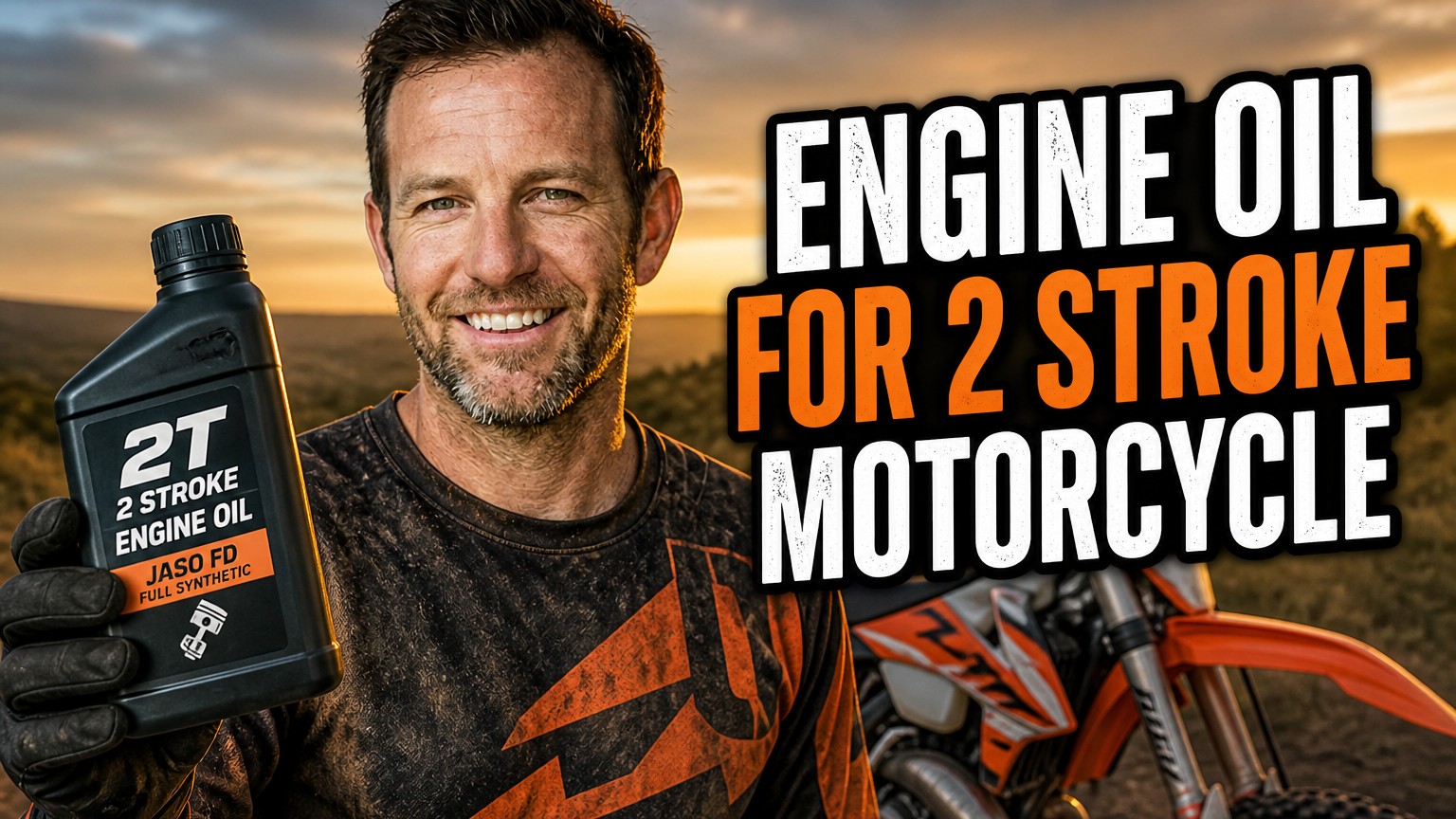
I’ve been mixing premix in a jerry can for longer than I’d like to admit. Over the years I’ve fouled plugs, smoked out my riding buddies and, once, partially seized a piston by getting lazy about oil. That experience taught me that the best engine oil for 2 stroke motorcycle use isn’t just a bottle off the shelf. It’s a choice that decides how cleanly and reliably your bike runs.
In this guide I’m sharing the eight 2-stroke oils I actually trust, and why. Some are race-grade esters, and some are budget-friendly everyday options. I’ll also walk you through ratios, ratings and the mistakes I see riders make most often.
- My top all-round pick is Motul 710 2T, an ester-based oil that works for both premix and injection bikes.
- For racing and hard off-road riding, I go with Motul 800 2T Factory Line Off Road or Amsoil Dominator.
- On a budget, Castrol Power1 Racing 2T and Lucas Semi-Synthetic 2-Cycle Oil give great value.
- Always match your oil to the JASO FD or ISO-L-EGD rating your bike calls for, and never use 4-stroke oil.
How I Chose These 2-Stroke Oils
I didn’t pick these oils from spec sheets alone. I’ve run most of them in my own bikes, from an air-cooled trail machine to a water-cooled motocross two-stroke. The rest I’ve tried in friends’ bikes or leaned on trusted mechanics for feedback.
What I Look For
First, I check the JASO rating. JASO FD is the highest standard for detergency and low smoke, while FC and FB are older, lower grades. Next, I look at the base oil: mineral, semi-synthetic, full synthetic or ester-based.
Then I consider real-world factors: smell, smoke, spark plug condition after a long ride, and how easily the oil mixes with fuel. Price matters too, because you burn through 2-stroke oil constantly.
A Quick Word on Premix vs Injection
Some bikes have an oil injection system, usually called autolube or similar. Others need you to mix oil into the fuel by hand. Check which one you have before you buy. Some oils are formulated for premix only, and others work in both.
1. Motul 710 2T — Best Overall 2-Stroke Oil
If I could only keep one bottle on my garage shelf, it would be Motul 710 2T. It’s a fully synthetic, ester-based oil that works in both premix and injection systems. That flexibility is rare and very handy if you own more than one two-stroke.
Motul 710 2T is rated JASO FD and API TC, and it’s designed for high-performance air- and water-cooled engines. In my experience it leaves the piston crown and exhaust port impressively clean. It also has a pleasant, slightly sweet smell, which I’m grateful for after a long day on the trail.
Why I Recommend It
- Versatile: works for premix and injection systems.
- Clean burning: very low smoke and minimal carbon deposits.
- Strong protection: handles high RPM and heat without breaking down.
It’s pricey, usually around $20–$30 per liter depending on where you shop. But Motul 710 2T mixes well at 50:1, so a bottle goes further than you’d expect. It’s my first recommendation to anyone who asks.
2. Motul 800 2T Factory Line Off Road — Best for Racing and Hard Off-Road Use
When I’m riding hard in sand, mud or on a motocross track, I switch to Motul 800 2T Factory Line Off Road. This is a 100% synthetic ester oil built for premix use in competition engines. It’s formulated specifically for the heavy loads and long wide-open-throttle stretches off-road riders put on their engines.
What I notice is the throttle response. The engine feels crisp and the power delivery is smooth, even deep into a long moto. The oil also has excellent film strength, which gives me confidence when the engine is working hard in the heat.
Things to Keep in Mind
It’s a premix-only oil, so don’t put it in an injection tank. It’s also on the premium end of the price scale, roughly $25–$35 per liter. For a weekend trail rider that may be overkill, but for racers it’s money well spent.
3. Amsoil Dominator Synthetic 2-Stroke Racing Oil — Best for Extreme Performance
I first tried Amsoil Dominator on the advice of a friend who builds race engines. It’s a fully synthetic oil that meets JASO FD and ISO-L-EGD, and it’s formulated for high-performance engines in everything from motocross bikes to snowmobiles.
The standout feature is how lean you can run it. Amsoil’s recommendations allow ratios as lean as 80:1 or 100:1 in suitable racing engines, which means less smoke and fewer deposits. I still stick to 50:1 on my own bikes, because I like the extra safety margin.
My Experience
The plug stays clean, the exhaust stays lighter in color, and the engine feels free-revving. It’s one of the most detergent oils I’ve used. The main drawback is availability: you’ll usually order it online or from an Amsoil dealer rather than walk into a local shop.
4. Castrol Power1 Racing 2T — Best Value Full Synthetic
For years Castrol Power1 Racing 2T has been my go-to when I want synthetic performance without the premium price. It’s a fully synthetic oil that meets JASO FD, and it’s easy to find in most motorcycle shops and online stores.
It mixes quickly with fuel and burns clean. On my street-legal two-stroke commuter, I saw noticeably less smoke at start-up compared to the cheap mineral oil I used before. That’s a big deal if you park in a shared garage.
Who It’s For
I suggest Castrol Power1 Racing 2T to riders who want a real upgrade without paying ester prices. It’s great for street bikes, scooters and trail bikes. It typically costs around $12–$20 per liter, which makes it one of the best bargains here.
5. Yamalube 2-R — Best OEM Choice for Yamaha Riders
If you ride a Yamaha two-stroke, Yamalube 2-R is hard to beat for peace of mind. It’s a synthetic-based premix oil designed by the manufacturer for its own high-performance two-stroke engines. That includes the YZ and YZ-F-era range of motocross bikes, along with other Yamaha 2-strokes.
I like it because it takes the guesswork out. It’s built to match Yamaha’s tolerances, and it keeps warranty-conscious riders on the safe side. The oil is clean burning, mixes well and gives consistent results.
It’s not necessarily better than Motul or Amsoil, but it’s a very solid pick. Expect to pay around $15–$25 per liter. For a Yamaha owner who wants a simple, trustworthy choice, it’s an easy decision.
6. Maxima Castor 927 — Best for Classic Race Feel
I’ll admit I have a soft spot for Maxima Castor 927. It’s a blend of castor oil and synthetic ester, and the smell is unmistakable, as nostalgic as it gets for two-stroke riders. If you’ve ever stood near a vintage race paddock, you know exactly what I mean.
Castor is famous for its film strength and lubricity under extreme heat. Maxima’s blend adds modern synthetic components to reduce the gumming and varnish that pure castor can leave behind. I typically run it at 32:1 to 40:1 in older, hard-worked engines.
The Trade-Offs
It does produce more smoke than the pure synthetics, and you’ll want to clean your exhaust and powervalve more often. But for vintage motocross bikes and riders who love that classic character, it’s wonderful. I’d skip it for a daily commuter.
7. Bel-Ray EXP Synthetic Blend 2-Stroke — Best Mid-Range Pick
Bel-Ray has been in the two-stroke game for decades, and Bel-Ray EXP Synthetic Blend 2-Stroke shows that experience. It’s a synthetic blend designed for both air- and water-cooled engines. It’s made for riders who want a little more protection than a basic mineral oil without a full synthetic price tag.
In my trail bike, it kept the plug clean and left minimal exhaust residue. The oil mixes easily, even in cooler weather, and has a mild smell. It’s a good all-purpose option when you ride a mix of trail, dirt road and light track.
Pricing sits in the middle, around $14–$22 per liter. If you want a dependable mid-tier choice, Bel-Ray EXP is exactly that.
8. Lucas Oil Semi-Synthetic 2-Cycle Oil — Best Budget Option
Not every two-stroke needs a race-grade oil. For older trail bikes, mopeds and casual weekend machines, I often recommend Lucas Oil Semi-Synthetic 2-Cycle Oil. It’s affordable, widely available and a clear step up from generic mineral oils.
It’s marketed as a low-smoke, clean-burning formula suitable for most air-cooled and water-cooled engines at 50:1. In my experience it keeps things tidy for casual riding, and it’s gentle on your wallet. Expect to pay roughly $10–$18 per liter.
Where It Falls Short
I wouldn’t use it in a race engine that’s spinning at high RPM for long stretches. Ester-based oils simply offer more protection in those conditions. But for the average rider, it’s an excellent budget pick.
How to Choose the Right Oil for Your Bike
Check Your Manual First
Your owner’s manual is the final authority. It will list the required JASO or ISO rating and the recommended mix ratio. If the manual says 50:1 and an oil suggests 100:1, trust the manual unless you’ve got a professional tune.
Match the Oil to the Way You Ride
For commuting and casual riding, a semi-synthetic like the Lucas or Bel-Ray is fine. For regular trail riding, I’d step up to Castrol Power1 Racing 2T or Motul 710 2T. For racing, go with the ester-based heavy hitters.
Consider Your Climate
Heat is the enemy of any two-stroke. If you ride in hot, humid places, a synthetic with strong film strength matters even more. I’ve written about this for four-strokes too, such as my guide to the best motorcycle motor oil for florida, and the same heat principles apply.
Common Mistakes I See Riders Make
Using 4-Stroke Oil in a 2-Stroke
This is the big one. 4-stroke oil is built to stay in the engine and lubricate for thousands of miles. In a two-stroke it doesn’t burn cleanly, so you’ll get heavy carbon deposits and fouled plugs.
If you also ride a four-stroke, don’t mix up your products. I keep separate guides for that side of things, including my picks for the top engine oil for 4 stroke motorcycle and the best motor oil for 4 stroke motorcycle.
Guessing the Mix Ratio
I’ve watched riders eyeball oil into a jerry can and hope for the best. Too little oil risks seizure, and too much causes smoke and fouling. Use a proper mixing bottle or measuring cup every single time.
Letting Premix Sit Too Long
Fuel goes stale, and the oil can separate or degrade. I try to use my premix within a month. If you’re unsure, shake the can thoroughly before filling up.
Riding Abroad or Owning Multiple Bikes
If you ride in markets like South Asia, where two-strokes are still popular, availability of specific brands varies. I’ve helped friends compare options, and my guide to the best engine oil for 4 stroke motorcycle in india covers the local brands you’ll find there.
If you’re ever confused about the bigger picture, my breakdown of which engine oil is best for motorcycle use across engine types is a good starting point.
Final Thoughts
After years of mixing, riding and cleaning pistons, my conclusion is simple. Motul 710 2T is the best all-rounder, and Motul 800 2T Factory Line Off Road or Amsoil Dominator take the crown for racing. Castrol Power1 Racing 2T and Lucas Semi-Synthetic 2-Cycle Oil prove you don’t need to overspend.
Pick an oil that matches your bike’s rating, measure your ratio carefully and keep your premix fresh. Do that, and your two-stroke will reward you with crisp power and a long engine life. Happy riding!
Frequently Asked Questions
What is the best engine oil for a 2 stroke motorcycle?
It depends on your bike and how you ride. For most riders I recommend Motul 710 2T for street and trail bikes, and Motul 800 2T Factory Line Off Road or Amsoil Dominator for racing and hard riding. Always match the oil to your manufacturer’s JASO or ISO rating.
Can I use 4-stroke engine oil in a 2 stroke motorcycle?
No. 4-stroke oil is designed to stay in the crankcase and lubricate for thousands of miles, while 2-stroke oil must burn cleanly with the fuel. Using the wrong oil causes heavy carbon buildup, fouled plugs and possible seizure.
What is the most common premix ratio for 2 stroke motorcycles?
Many modern bikes run 50:1, which is about 2.6 ounces of oil per US gallon of fuel. Older bikes can call for 32:1 or even 24:1, so check your owner’s manual and the oil’s own recommendations.
Is synthetic 2 stroke oil worth the extra money?
In my experience, yes. Synthetic and ester-based oils burn cleaner, leave less carbon on the piston and exhaust port, and protect better at high RPM. For a lightly used bike, a quality semi-synthetic can still do the job.

Related Articles
7 Best Batteries for Motorcycles I’ve Tested and Trust in 2026
I've tested dozens of motorcycle batteries to find the best performers. From AGM to lithium, here are my top picks…
Jake Miller
15 min read

The Perfect Battery for Your Harley Davidson Softail: A Rider’s Complete Guide
Discover the perfect battery for your Harley Davidson Softail. I've tested multiple options and share real-world performance data, maintenance tips,…
Jake Miller
14 min read

The Best Battery for Your Harley Davidson: My Complete Guide After Years of Testing
Discover which battery truly performs best for Harley Davidson motorcycles. Real rider experience with AGM, lithium, and OEM options to…
Jake Miller
12 min read