
7 Best Oils for Air-Cooled Motorcycle Engines I Trust in 2026
 Jake Miller
10 min read
Jake Miller
10 min read
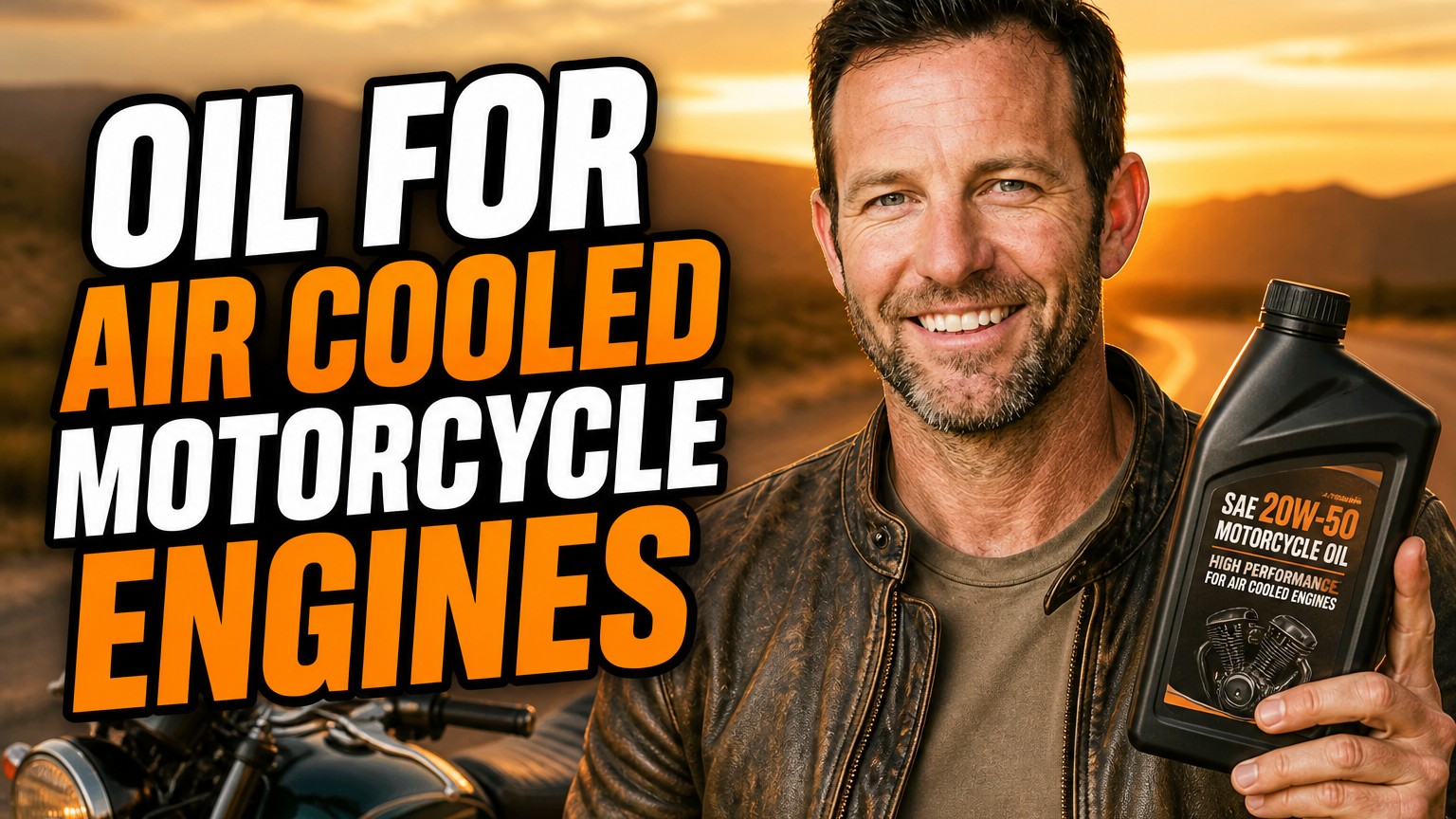
I’ve been riding air-cooled bikes for years, and if there’s one thing I’ve learned, it’s that oil is the lifeblood of these engines in a way it simply isn’t on a liquid-cooled machine. There’s no radiator to bail you out when the temperature climbs. The oil is doing double duty as lubricant and coolant.
That’s why I get a little obsessive about what goes in my crankcase. Over the years I’ve run everything from budget-friendly mineral oils to full ester synthetics in V-twins, big singles, and small commuters. Some impressed me, and a few made me wince at the drain-plug sludge.
In this guide I’m sharing the seven oils I’d confidently pour into an air-cooled engine today, along with who each one suits best. I’ll also cover viscosity, JASO ratings, and the mistakes I’ve made so you don’t have to.
- Air-cooled engines run hotter, so a high-quality synthetic or ester-based oil with strong shear stability is worth the money.
- My overall pick is Motul 7100 4T 20W-50, and my top V-twin pick is Mobil 1 V-Twin 20W-50.
- Always look for JASO MA or MA2 if your engine shares oil with a wet clutch.
- Budget riders and commuter owners have great options like Castrol ACTIV 4T 20W-40.
Why Air-Cooled Engines Are So Demanding on Oil
An air-cooled engine depends on airflow over its fins, and on oil circulating through hot spots like the cylinder head and piston undersides. When you’re stuck at a red light in July, airflow drops to nearly nothing. Oil temperatures can then climb well past 250°F.
At those temperatures, cheap oil thins out, oxidizes, and loses its film strength. That’s when you start hearing valvetrain clatter and feeling gear shifts get notchy.
What I Look For in an Oil
When I’m choosing, I focus on four things. They’ve never steered me wrong.
- Heat resistance: Synthetic or ester-based formulas hold their viscosity at high temperatures.
- Shear stability: Many bikes share oil between the engine, primary, and gearbox, which chews through weak oils.
- JASO MA/MA2 rating: This keeps wet clutches from slipping.
- The right viscosity: Typically 20W-50 for hot-running V-twins, 10W-40 or 20W-40 for lighter bikes.
If you want a broader overview before diving in, I’ve found this guide on the best motor oil for 4 stroke motorcycle engines a useful companion read.
1. Motul 7100 4T 20W-50 — Best Overall Pick
If I could only use one oil for the rest of my riding life, Motul 7100 4T 20W-50 would be a serious contender. It’s a 100% synthetic, ester-based oil, and you can feel the difference in how smoothly the engine runs when it’s hot.
The ester technology helps the oil cling to metal surfaces, even after the engine’s been shut off. That’s a real advantage for air-cooled engines that see lots of heat cycles.
Why I Like It
Motul 7100 is JASO MA2 certified, so my wet clutch has never slipped on it. It also comes in several grades, including 10W-40, 15W-50, and 20W-50, so you can match your climate.
Expect to pay roughly $15 to $20 per liter. It isn’t the cheapest, but I’ve seen noticeably cleaner internals at teardown compared with mineral oils.
Best For
Riders of air-cooled Ducati Scramblers, Triumph Bonnevilles, Royal Enfield twins, and similar machines. I’d also recommend it for anyone who rides spiritedly in warm weather.
2. Mobil 1 V-Twin 20W-50 — Best for V-Twin Cruisers
Mobil 1 V-Twin 20W-50 is my go-to when I’m riding a big American-style twin. It’s a full synthetic built specifically for air-cooled V-twin engines, which tend to run brutally hot in traffic.
I’ve used Mobil 1 V-Twin through long summer rides, and oil temperatures felt more controlled. The shifting stayed crisp, too, which is something I notice on cruisers with a shared sump.
Key Features
- Full synthetic formula engineered for high-heat V-twin use
- Strong shear resistance for engine, primary, and transmission systems
- Typically priced around $12 to $16 per quart
It’s widely available at big-box stores, which makes it easy to grab on a road trip. If you’re in a hot, humid region, you’ll want to read my notes on the best motorcycle motor oil for florida conditions too.
3. AMSOIL Synthetic V-Twin Motorcycle Oil 20W-50 — Best for Long Drain Intervals
When I want an oil that I can leave in a bit longer without worrying, I reach for AMSOIL Synthetic V-Twin Motorcycle Oil 20W-50. AMSOIL has a reputation for robust additive packages, and this oil lives up to it.
It’s designed for the shared-sump systems you’ll find in many Harley-Davidson and Indian air-cooled twins. It resists shear well, so it keeps its viscosity long after cheaper oils have thinned out.
My Experience
I ran it through a full riding season on a vintage-style twin, and the oil still looked healthy at changeout. It’s also formulated to be wet-clutch friendly.
The downside is price and availability. You’ll typically pay $15 to $18 per quart and often order direct from a dealer or online.
4. Red Line 20W-50 Motorcycle Oil — Best for Spirited Riding
Red Line 20W-50 Motorcycle Oil is a favorite among riders who push their bikes hard. It’s a synthetic formulation with high film strength, and it’s popular with track-day and canyon-carving crowds.
I’ve used it in an air-cooled twin that sees plenty of aggressive riding. Oil pressure stayed steady, and the engine felt tight and responsive even after long, hot runs.
Things to Keep in Mind
Red Line oils are rich in additives, and some riders say the oil feels slightly thicker than other 20W-50s. I actually like that on a hot day.
It usually runs $13 to $17 per quart. If your owner’s manual calls for a lighter grade, stay with what the manufacturer specifies.
5. Harley-Davidson Screamin’ Eagle SYN3 20W-50 — Best Factory-Matched Choice
Sometimes the simplest answer is the best one. Harley-Davidson Screamin’ Eagle SYN3 20W-50 is a full synthetic engineered for Harley’s air-cooled Twin Cam and Evolution engines.
I like it because there’s no guesswork. It’s formulated for the exact thermal and mechanical demands of those engines, including the shared engine, primary, and transmission setup on certain models.
Who Should Buy It
If you own an older air-cooled Harley and want to stay within factory specs, this is a straightforward pick. It’s typically around $12 to $15 per quart at dealerships and online.
That said, I’ve found aftermarket synthetics like Mobil 1 V-Twin to be equally good, so this is more about peace of mind than a major performance gap.
6. Castrol ACTIV 4T 20W-40 — Best for Commuter Bikes and Budget Riders
Not everyone rides a big twin. If you commute on a 100 to 200cc air-cooled bike, Castrol ACTIV 4T 20W-40 is one of the most common and trusted choices. It’s widely sold across Asia and meets JASO MA2 standards.
I’ve used it in a small-displacement air-cooled commuter and it did exactly what it should: smooth shifts, quiet running, and no clutch drama. It’s also inexpensive, so frequent changes won’t hurt your wallet.
India-Specific Notes
In hot Indian conditions with heavy traffic, a 20W-40 grade like this is a sensible match for many popular commuter bikes. For a deeper dive, I’d point you to this guide on the best engine oil for 4 stroke motorcycle in india.
Just remember to change it on schedule. Budget oils need shorter intervals, usually every 2,000 to 3,000 miles.
7. Liqui Moly Motorbike 4T Synth 10W-40 Street Race — Best for Lighter Air-Cooled Bikes
For air-cooled bikes that call for a 10W-40, like many small to mid-size standards and naked bikes, I really like Liqui Moly Motorbike 4T Synth 10W-40 Street Race. It’s a fully synthetic oil that’s built for high-rev engines.
I used it in a smaller air-cooled twin, and it made cold starts noticeably smoother. The oil flows quickly at startup, which reduces wear during those first critical seconds.
Why It Works
It carries a JASO MA2 rating and a strong additive package aimed at keeping clutches happy and engines clean. It typically costs about $14 to $18 per liter.
It’s not the right choice for a bike that specifically calls for 20W-50, but for lighter machines, it’s a gem.
How to Choose the Right Viscosity
This is where I see most riders get tripped up. A thicker oil isn’t automatically better. Using something too heavy can hurt cold-start lubrication and cause sluggish oil flow.
My Simple Rules of Thumb
- Hot climates and big V-twins: 20W-50 is usually the sweet spot.
- Moderate climates and mid-size bikes: 10W-40 is often ideal.
- Small commuters: 20W-40 or 10W-30 may be specified.
Always start with your owner’s manual, then adjust slightly based on your climate and riding style. If you’re still unsure which oil to start with, this breakdown of which engine oil is best for motorcycle riding may help narrow it down.
Synthetic vs. Conventional: What I’ve Learned
I used to think synthetic oil was just marketing. Then I started comparing oil condition after a summer of riding.
Conventional oil looked darker and thinner by the end of its interval, while synthetic oil held up much better. For an air-cooled engine, that extra thermal stability is worth the extra cost.
When Conventional Still Makes Sense
If you ride an older bike with a break-in engine or one that’s specifically designed for mineral oil, conventional can be perfectly fine. Just change it more often.
I’d also suggest checking out this roundup of the top engine oil for 4 stroke motorcycle models if you want to compare more options.
Oil Change Tips From My Own Garage
The best oil in the world won’t help if you neglect the basics. These are habits I’ve built over the years that keep my air-cooled engines happy.
My Go-To Habits
- Warm up the engine first: Warm oil drains more completely and carries more contaminants out.
- Replace the filter every time: A fresh filter keeps new oil clean.
- Check oil level regularly: Air-cooled engines can burn a bit of oil, especially in the heat.
- Watch the temperature: If you ride in extreme heat, consider an oil cooler for the best protection.
I also keep a small log of mileage and oil brand for every bike. It’s a simple way to spot patterns, like rising oil consumption or changes in shifting feel.
Final Thoughts
After years of riding and wrenching, I’m convinced that choosing the right oil is one of the cheapest ways to extend the life of an air-cooled engine. These bikes are charming, but they’re also unforgiving when it comes to heat.
If I had to give a quick summary, I’d say Motul 7100 4T 20W-50 for most riders, Mobil 1 V-Twin 20W-50 for cruisers, and Castrol ACTIV 4T 20W-40 for budget commuters. Pick the one that fits your bike and climate, stay on top of your change intervals, and your engine will thank you for years.
Frequently Asked Questions
What viscosity is best for an air-cooled motorcycle engine?
Most air-cooled V-twins and big singles run well on 20W-50 in warm climates, while smaller commuter bikes often prefer 10W-40 or 20W-40. Always check your owner’s manual first, then adjust slightly for ambient temperature.
Is synthetic oil better for air-cooled motorcycles?
In my experience, yes. Synthetic oil resists thermal breakdown far better than conventional oil, which matters because an air-cooled engine relies on its oil to carry away a lot of heat. Just make sure it is JASO MA or MA2 rated if your bike has a wet clutch.
How often should I change oil in an air-cooled motorcycle?
I change mine every 3,000 to 5,000 miles with synthetic oil, or sooner if I ride in stop-and-go traffic or extreme heat. Conventional oils usually call for shorter intervals, around 2,000 to 3,000 miles.
Can I use car oil in my air-cooled motorcycle?
I would not. Many modern car oils contain friction modifiers that can make a wet clutch slip, and they lack the shear stability a shared engine, gearbox, and clutch system needs. Stick with a motorcycle-specific, JASO-rated oil.

Related Articles
7 Best Batteries for Motorcycles I’ve Tested and Trust in 2026
I've tested dozens of motorcycle batteries to find the best performers. From AGM to lithium, here are my top picks…
Jake Miller
15 min read

The Perfect Battery for Your Harley Davidson Softail: A Rider’s Complete Guide
Discover the perfect battery for your Harley Davidson Softail. I've tested multiple options and share real-world performance data, maintenance tips,…
Jake Miller
14 min read

The Best Battery for Your Harley Davidson: My Complete Guide After Years of Testing
Discover which battery truly performs best for Harley Davidson motorcycles. Real rider experience with AGM, lithium, and OEM options to…
Jake Miller
12 min read