
6 Best Motorcycle Fuel Bottles and Cans for Emergencies and Long Rides
 Jake Miller
9 min read
Jake Miller
9 min read
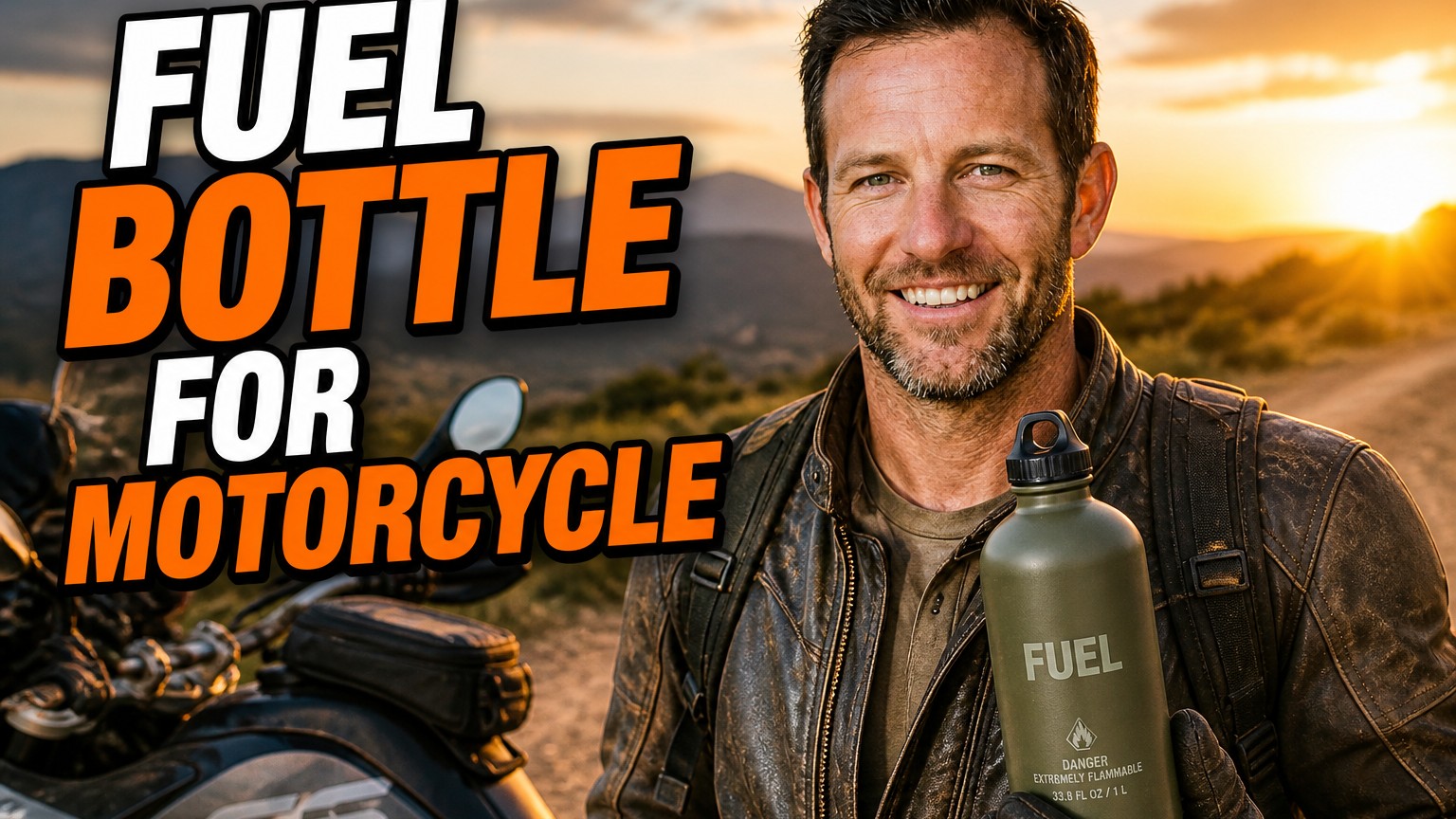
I still remember the first time I coasted to a stop on a quiet back road with a bone-dry tank. The nearest station was eight miles away, my phone had one bar, and I had nothing to carry fuel in. Ever since, a dedicated fuel bottle has lived on every bike I own.
Over the years I’ve carried, dented, dropped, and refilled a lot of containers. Some were brilliant, and some leaked into my panniers. This is my honest rundown of the six I’d actually trust, plus what to look for before you buy.
- My top all-round pick is the MSR 30 oz Fuel Bottle: compact, tough, and truly leak-resistant.
- For adventure and off-road trips, the Rotopax 1-Gallon Pack gives the biggest range boost with a proper mount.
- Always buy a container rated for gasoline, and strap it upright and away from the exhaust.
- Match the size to your bike: small bikes need less, big tourers and ADV bikes benefit from more.
Why I Never Ride Far Without a Spare Fuel Bottle
Fuel gauges lie, stations close, and remote roads do not care about your plans. A spare bottle is cheap insurance that takes up almost no room. Even half a liter can carry a small bike several miles to safety.
It also helps when you’re helping others. I’ve topped up a friend’s stranded bike twice, and both times that little bottle saved us an hour of waiting for a lift.
Know Your Bike’s Real Range
Before choosing a size, work out how far your bike actually goes per liter. A small commuter will behave very differently from a loaded tourer. If you ride a small machine, my guide on 125cc motorcycle fuel consumption per km gives you realistic numbers to plan around.
If your range seems worse than it should be, check the causes of high fuel consumption in motorcycle engines. Dirty air filters, low tire pressure, and worn plugs are common culprits I’ve fixed myself.
1. MSR 30 oz Fuel Bottle — Best Overall
The MSR 30 oz Fuel Bottle is the one I reach for most. It’s made of aluminum with a bright red body, holds about 887 ml, and costs roughly $25 to $30. It was built for camp stoves, but it’s brilliant for motorcycles.
What I Like
The MSR has a leak-resistant cap with an integrated gasket, and I’ve yet to see it weep in a pannier, even after bouncing down gravel for hours. The wide, red body is easy to identify, and the bottle is available in 11, 20, and 30 oz sizes.
The 30 oz version gives me enough to go roughly 15 to 25 miles on most road bikes. That’s usually plenty to reach the next pump.
What Could Be Better
The opening is a bit narrow without a funnel, so I carry a small collapsible one. It’s also not the cheapest option. Still, the build quality is why I call the MSR 30 oz Fuel Bottle my overall winner.
2. Rotopax 1-Gallon Gasoline Pack — Best for Adventure Riding
When I’m heading into remote country, I want serious range. The Rotopax 1-Gallon Gasoline Pack is a rugged, flat-sided polyethylene container that mounts securely to racks and panniers. Expect to pay about $40 to $55 plus the mount.
Why It Works on a Bike
The flat, rectangular shape sits tight against a luggage rack, and the Rotopax locking mount keeps it from shifting on rough trails. It has an integrated spout, a rubber gasket seal, and a vented cap that makes pouring easy.
One gallon is a real range extension. On my adventure bike, it adds well over 50 miles. I’ve used it on desert tracks where stations were over 150 miles apart.
Things to Watch
It’s bulky for small bikes, and a full gallon adds about 7 pounds of weight high and behind you. Make sure your subframe and rack can handle it. I also recommend replacing the gasket if it starts to look worn.
3. SIGG 1.0L Aluminum Fuel Bottle — Best for Style and Durability
SIGG is a Swiss brand famous for its aluminum bottles, and the SIGG 1.0L Aluminum Fuel Bottle is its fuel-specific option. It typically runs about $25 to $35 and comes in a distinctive red finish with a screw-top safety cap.
My Experience
The seamless aluminum body feels impressive. It resists dents better than I expected, and the cap seals securely. I’ve used a SIGG on long European trips, and it kept looking good despite plenty of abuse.
One liter is a sweet spot for me. It’s enough for a meaningful range boost, yet small enough to fit on a pannier strap or in a side case, as long as it’s secured upright.
The Trade-Offs
It’s slightly pricier than basic options, and the neck is narrow, so pouring into a tank takes a steady hand. A small funnel solves this. I’d still choose it for riders who care about quality and finish.
4. Primus 1.0L Fuel Bottle — Best Value Aluminum Option
If the MSR and SIGG feel a bit pricey, the Primus 1.0L Fuel Bottle is my budget-friendly alternative. It’s an aluminum bottle with a secure screw cap and a color-coded red body, generally priced at around $15 to $25.
Why I Recommend It
The Primus is simple and reliable. It’s lightweight, easy to clean, and the cap is designed for petrol and stove fuels. I keep one as a backup in my garage kit and another in a touring tail bag compartment, outside of my clothing.
For commuters on a budget, this is the bottle I suggest most. It does the job without fuss, and you can swap in a new cap if the gasket wears out.
Limitations
The finish scratches more easily than the SIGG, and the cap isn’t quite as confidence-inspiring as the MSR. It’s still a very solid pick, especially at this price.
5. Eagle 1-Gallon Type I Metal Safety Can — Best for Home and Garage Use
Not every fuel bottle needs to ride with you. The Eagle 1-Gallon Type I Metal Safety Can is a galvanized steel can with a spring-loaded spout, flame arrestor, and a self-venting design. It’s usually about $30 to $45.
How I Use It
I use mine for refilling bikes at home or at a track day paddock. The spring-loaded lid closes automatically, which prevents spills if the can tips. The flame arrestor screen is a genuine safety feature I appreciate.
Could you strap it to a bike? Technically yes, but it’s heavy and rigid for the job. I treat it as my base camp can and use a smaller bottle on the road.
Why It Earned a Spot
If you ride at events or keep a couple of bikes, this can is a smart purchase. It’s durable, certified, and refills smaller bottles cleanly through the spout.
6. Wavian 5L Steel Fuel Can — Best for Group Tours and Base Camps
For serious expeditions and group rides, the Wavian 5L Steel Fuel Can is a classic. It’s a classic jerry-can design made of heavy-gauge steel with a leak-proof locking cap. Prices tend to run about $60 to $100, depending on the retailer.
When It Makes Sense
I wouldn’t carry this on a lightweight road bike. But on a group tour in remote terrain, one rider with a pannier rack can carry the Wavian and share the load. A 5-liter can refills several bikes at once.
It’s rugged, trusted, and proven by overland travelers worldwide. The extra weight is the price you pay for that durability, so I keep it for trips where a fuel shortage is a real risk.
How I Choose the Right Fuel Bottle
After years of trial and error, these are the factors I weigh before picking a bottle for any ride.
Size and Weight
For city and commuting, 0.6 to 1 liter is plenty. For adventure riding, I go for a gallon. Remember that fuel is heavy, so consider where the weight sits on your bike.
Material
Aluminum bottles are tough and heat-friendly. Polyethylene containers like Rotopax are lighter and won’t dent. Steel cans are the strongest but heaviest. Pick what fits your riding.
Seal Quality
This matters most. A bad seal turns a helpful bottle into a hazard. Look for a gasketed cap, a proper fuel rating, and clear labelling. If a bottle isn’t built for gasoline, don’t use it.
Mounting Options
Think about where it will ride. Rotopax has mount systems, while aluminum bottles work with bottle holders or straps. A bottle that rattles around will wear out and could leak.
Safety Tips I Follow Every Time
Keep It Upright and Away From Heat
I always mount bottles upright and away from the exhaust. Heat expands fuel and builds pressure, so I never fill to the brim. Leave about 10 percent air space for expansion.
Never Carry It Inside Your Gear
Don’t stuff a fuel bottle into a backpack or inside a tank bag. Fumes and spills can ruin gear and create a fire risk. External mounting is always my rule.
Pour Carefully and Clean Up
Use a funnel, turn off the engine, and let the engine cool. Wipe spills right away. Static can be a hazard, so I place the container on the ground while filling it at a station, where allowed.
Know How Your Fuel Tap Works
Sometimes you don’t need the bottle at all. Many bikes have a reserve setting that gets you to a pump. It’s worth reading up on how a motorcycle fuel switch on off reserve position works before you rely on it.
Fuel Is Only Half the Story: Don’t Forget Engine Care
A spare bottle gets you home, but healthy engines give you better range in the first place. Fresh oil keeps friction low and efficiency high. I always check my oil before a long trip.
If you’re unsure what to use, I’ve found it helpful to read about the best motor oil for 4 stroke motorcycle engines. You can also compare options in this guide to the top engine oil for 4 stroke motorcycle models.
My Final Recommendations
If you only buy one, make it the MSR 30 oz Fuel Bottle. It’s small, trustworthy, and works on nearly any bike. For adventure trips, add the Rotopax 1-Gallon Pack for real range.
On a tight budget, the Primus 1.0L is a great choice. For garage refills, the Eagle safety can is hard to beat. And for group expeditions, the Wavian 5L earns its weight.
Whichever you pick, test it at home first. Fill it with a little fuel, ride around the block, and check for leaks. That five-minute check has saved me from messy surprises more than once. Ride safe, and keep your tank topped up.
Frequently Asked Questions
How much fuel should a motorcycle fuel bottle hold?
For most road bikes, 0.6 to 1.0 liter is enough to reach the next station. For adventure or off-road riding, a 1 to 2 gallon container like a Rotopax gives you a much bigger safety margin.
Can I carry a fuel bottle in my tank bag or backpack?
It is not a good idea. Fumes and leaks can damage gear and become a fire hazard. Strap the bottle externally on a rack or pannier, keep it upright, and away from the exhaust.
Are aluminum fuel bottles safe for gasoline?
Yes, as long as the bottle is designed for fuel. Bottles from MSR, SIGG, and Primus use a lined or treated aluminum body and a sealing cap made for petrol. Never use a regular water bottle.
Should I use a metal or plastic fuel container?
Metal bottles are tougher and handle heat better. Plastic containers like Rotopax are lighter, do not dent, and are approved for gasoline when they carry the correct fuel rating. Pick based on how and where you ride.

Related Articles
7 Best Batteries for Motorcycles I’ve Tested and Trust in 2026
I've tested dozens of motorcycle batteries to find the best performers. From AGM to lithium, here are my top picks…
Jake Miller
15 min read

The Perfect Battery for Your Harley Davidson Softail: A Rider’s Complete Guide
Discover the perfect battery for your Harley Davidson Softail. I've tested multiple options and share real-world performance data, maintenance tips,…
Jake Miller
14 min read

The Best Battery for Your Harley Davidson: My Complete Guide After Years of Testing
Discover which battery truly performs best for Harley Davidson motorcycles. Real rider experience with AGM, lithium, and OEM options to…
Jake Miller
12 min read