
7 Best Rust Removers and Tank Cleaners to Revive a Rusty Motorcycle Gas Tank
 Jake Miller
10 min read
Jake Miller
10 min read
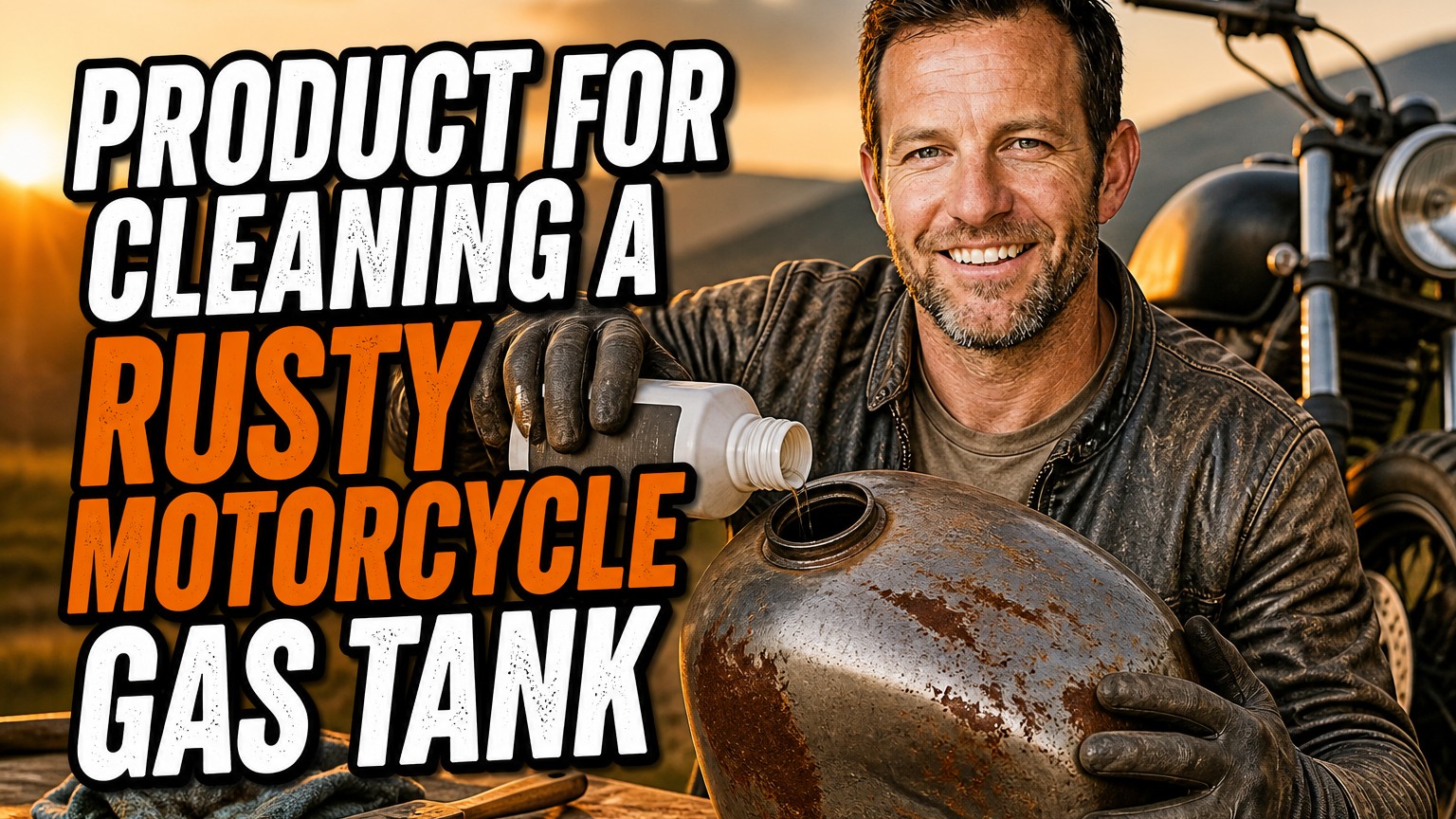
The first time I pulled a fuel cap off an old project bike and saw orange flakes floating in the tank, my stomach dropped. I assumed the tank was scrap. It wasn’t, and neither is yours, most likely.
Over the years I’ve cleaned out tanks on everything from a barn-find CB to a neglected cruiser that sat through three winters. I’ve tried soaks, acids, kits, kitchen cupboard hacks and sealers. Some were brilliant, and some made a bigger mess than the rust did.
Here are the seven products I’d actually trust, what each is best at, and how to match one to the state of your tank.
- My overall pick is Evapo-Rust: safe, reusable and very effective on light to moderate rust.
- For heavy rust or pitting, I go with a full clean-and-seal kit such as POR-15 or Red-Kote.
- Vinegar is the cheapest option, but it needs careful rinsing and drying to avoid flash rust.
- Whatever you use, dry the tank fast and fill it with fresh fuel to keep the rust from coming back.
How I Judged These Rust-Fighting Products
I didn’t pick these on marketing alone. I looked at how well each one removes rust, how safe it is for you and your tank, and how much work the whole process takes.
I also weighed price, availability and how well the result lasts. A tank that’s clean today but rusty again next month isn’t a win.
The Questions I Ask Before Choosing
First, how bad is the rust? Light orange dusting is a very different job from thick scale and pitting.
Second, do I want to seal the tank afterward? And third, how much hassle am I willing to take on? Those three answers narrow the field quickly.
1. Evapo-Rust Original Super Safe Rust Remover — Best Overall
Evapo-Rust is the product I reach for first, and it’s the one I recommend to most riders. It’s a water-based, non-toxic, biodegradable formula that uses chelation to pull iron oxide off steel without attacking the good metal underneath.
That matters on a tank. It won’t eat paint on the outside as aggressively as acids, and it won’t harm rubber seals, petcock gaskets or most plastics. Still, I plug the fuel outlet and keep spills off the paint.
How I Use It
I remove the petcock, plug the openings and fill the tank with Evapo-Rust. For light rust I leave it 6 to 12 hours, and for moderate rust a full 24. I give it a gentle sloshing now and then.
The liquid can be strained and reused until it stops working. A gallon usually runs about $25 to $35, and you may need two for a large tank. If you want the full walkthrough, my guide on how to clean a rusty gas tank on a motorcycle step by step guide covers the whole process.
Downsides
It’s not instant, and it struggles with very thick scale. Bare steel also flash rusts quickly once the liquid is drained, so rinse, dry and treat the tank right away.
2. POR-15 Motorcycle Tank Repair Kit — Best Complete Kit for Heavy Rust
When a tank is truly rough, I stop thinking about “cleaning” and start thinking about “restoring.” The POR-15 Motorcycle Tank Repair Kit is built for exactly that.
The kit bundles a degreaser, a metal prep (a mild phosphoric-based solution) and POR-15’s moisture-cured tank sealer. You clean, etch and coat in a defined sequence, so you aren’t guessing which products play nicely together.
What I Like
The sealer cures into a hard, fuel-resistant barrier that locks in any remaining pitting. On an old tank with weeping pinholes or rough interior walls, this is a serious fix.
Expect to pay roughly $60 to $90 depending on the retailer. That’s more than a soak, but it replaces several separate purchases.
What to Watch Out For
The prep is strict. If the tank isn’t completely clean and dry, the sealer can fail and peel, and a peeling liner clogs carburetors and injectors. Take your time and follow the directions to the letter.
3. Red-Kote Fuel Tank Sealer — Best Sealer for Pitted Tanks
Red-Kote has been a go-to among restorers for years. It’s a two-part epoxy-based liner that’s formulated to resist modern ethanol-blended fuels, which is a big deal if you ride on pump gas.
I use Red-Kote when I’ve already removed the rust with a soak or acid wash and want a permanent barrier. It’s especially good on vintage tanks where the steel is solid but the interior is uneven.
My Take
Application is simple: mix, pour, rotate the tank so the coating covers every surface, drain the excess and let it cure. The rotating step takes patience, and you can’t skip it.
The downside is commitment. Once it’s in, it’s in. If the tank is salvageable with a plain clean and a fresh fill, a sealer might be overkill.
4. Eastwood Gas Tank Cleaner and Sealer Kit — Best Mid-Priced All-in-One
If the POR-15 kit feels a bit steep, the Eastwood Gas Tank Cleaner and Sealer Kit is a solid alternative. Eastwood is a respected name in restoration supplies, and this kit follows the same clean, etch, seal logic.
The kit typically includes a degreasing cleaner, a metal prep to remove rust and etch the surface, and a sealer. It’s sized for typical automotive and motorcycle tanks.
Why I Recommend It
It’s a straightforward kit for anyone who wants a one-box answer. Price usually lands in the same ballpark as other kits, around $60 to $90.
Like every sealer system, success depends on prep. I flush the tank repeatedly and dry it with warm air before the sealer goes anywhere near it.
5. Metal Rescue Rust Remover Bath — Best Reusable Soak Alternative
Metal Rescue Rust Remover Bath is a close cousin to Evapo-Rust. It’s also water-based, non-toxic and designed to dissolve rust without harming bare metal. I’ve used it when I wanted a second option on a really stubborn tank.
In my experience, results are similar. It works well on light to moderate rust and is easy to pour, strain and store for another job.
When I Choose It
Sometimes it’s simply cheaper or easier to find at a local store. It’s also great for cleaning small parts, like petcocks and fuel caps, in the same session.
It shares the same limits as other soaks: slow on heavy scale and not a sealer. You’ll still want to dry the tank immediately and protect the bare steel afterward.
6. Heinz Cleaning Vinegar — Best Budget DIY Option
Not everybody wants to spend $30 on a soak, and I get it. Heinz Cleaning Vinegar is stronger than the usual 5% kitchen vinegar (about 6% acidity) and costs just a few dollars a gallon.
It dissolves light surface rust through mild acid action. I’ve used it on a small scooter tank with decent results, though it took several days and a few refills.
The Catch
Vinegar can attack the paint, and if you leave it too long it can start to etch the bare steel. It also leaves the metal very vulnerable to flash rust.
If you go this route, read my guide on how to clean a motorcycle gas tank with vinegar. Neutralizing with a baking soda rinse, then drying completely, is not optional.
7. Sea Foam Motor Treatment — Best for Light Residue and Maintenance
Sea Foam Motor Treatment isn’t a rust remover, and I want to be honest about that. It won’t dissolve rust scale, but it’s excellent for cleaning varnish and gunk, and for keeping a healthy tank healthy.
I add it to the fuel on bikes that sit for a few weeks at a time. It stabilizes fuel and helps keep deposits from building up. A 16 oz can costs roughly $10 to $15.
Is It Safe in a Tank?
Yes, when used as directed, it’s a petroleum-based product that’s safe for gas tanks. I’ve covered this in detail in my post on can i put seafoam in my motorcycle gas tank.
Think of it as maintenance after you’ve already dealt with the rust, not as the fix itself.
How to Choose the Right Product for Your Tank
Here’s the simple rule I follow. Match the product to how bad the rust is, and don’t over-treat a tank that doesn’t need it.
Light Surface Rust
Go with Evapo-Rust or Metal Rescue. A soak, a rinse, a thorough dry and a fresh fill of fuel is often all you need.
Moderate Rust With Some Scale
Use a soak first, then consider a kit if the surface is rough. Cleaning is easier when you can mechanically agitate the rust with something like chain links or screws, but only if you rinse every last piece out.
Heavy Rust or Pitting
This is where I use POR-15, Eastwood or Red-Kote. Clean first, then seal. And if the steel is thin or leaking badly, replacement may be the smarter move.
Tight Budget
Use vinegar, but be disciplined with rinsing and drying. Cheap only works if you finish the job properly.
My Basic Process for Any Rusty Tank
Every product is different, but the workflow barely changes. For the broader basics, check out my post on how to clean a motorcycle gas tank.
- Drain and remove. Take off the tank, empty all old fuel and pull the petcock and fuel gauge sender.
- Degrease. Flush with a degreaser so the rust remover can reach the metal.
- Treat. Soak or apply your chosen product according to its directions.
- Rinse thoroughly. Use clean water, and neutralize if you used an acid.
- Dry fast. Use compressed air or a warm hair dryer, then protect the bare metal right away.
Safety Reminders
Fuel vapors are dangerous. Work outdoors, keep sparks and flames far away, and wear gloves and eye protection. Never use a flame or welding near a tank that has held fuel.
Keeping the Rust From Coming Back
This is where many riders slip up. A freshly cleaned tank is bare steel, and moisture will turn it orange again surprisingly fast.
I fill the tank with fresh fuel as soon as it’s dry, and I add a stabilizer if the bike will sit. My article on how to prevent flash rust in a motorcycle gas tank goes deeper on this.
Habits That Help
- Store the bike with a full tank to leave less room for condensation.
- Use fresh fuel and a quality stabilizer for winter storage.
- Keep the fuel cap seal in good shape.
- Check the inside of the tank with a flashlight once or twice a year.
Final Thoughts From My Garage
If you only want one answer, I’d start with Evapo-Rust. It’s forgiving, effective and gentle on your bike, and it solves most rusty tank problems I run into.
When the rust is severe, step up to POR-15, Eastwood or Red-Kote and commit to the prep work. And whichever route you take, remember that drying and protecting the tank afterward matters just as much as the cleaning itself.
A rusty tank looks scary, but with the right product and a little patience, you can have it shining inside again and be back on the road.
Frequently Asked Questions
What is the best product for cleaning a rusty motorcycle gas tank?
For most riders, Evapo-Rust is the best all-around choice. It is non-toxic, safe on bare metal and effective on light to moderate rust. For heavy rust or pitting, a full kit like the POR-15 Motorcycle Tank Repair Kit that cleans, preps and seals is the better option.
Can I use vinegar to remove rust from my motorcycle tank?
Yes, white vinegar works on light surface rust, but it is slow and can leave the bare steel prone to flash rust if you do not neutralize, rinse and dry the tank thoroughly. It is a decent budget option, not the most reliable one.
Do I need to seal a motorcycle gas tank after removing rust?
Not always. If the steel is solid and you will ride regularly, a thorough dry and fresh fuel is often enough. If the tank is pitted, thin in spots or will sit for long periods, a quality sealer like Red-Kote adds lasting protection.
How long does it take to remove rust from a motorcycle gas tank?
A soak with Evapo-Rust or Metal Rescue typically takes 6 to 24 hours depending on rust severity. Acid-based cleaners can work faster but require more careful rinsing and neutralizing, and kit-based restorations usually take a weekend including cure time.

Related Articles
7 Best Batteries for Motorcycles I’ve Tested and Trust in 2026
I've tested dozens of motorcycle batteries to find the best performers. From AGM to lithium, here are my top picks…
Jake Miller
15 min read

The Perfect Battery for Your Harley Davidson Softail: A Rider’s Complete Guide
Discover the perfect battery for your Harley Davidson Softail. I've tested multiple options and share real-world performance data, maintenance tips,…
Jake Miller
14 min read

The Best Battery for Your Harley Davidson: My Complete Guide After Years of Testing
Discover which battery truly performs best for Harley Davidson motorcycles. Real rider experience with AGM, lithium, and OEM options to…
Jake Miller
12 min read