
6 Best Fuel Stabilizers for Victory Motorcycles: Tested Picks for Storage and Ethanol Fuel
 Jake Miller
9 min read
Jake Miller
9 min read
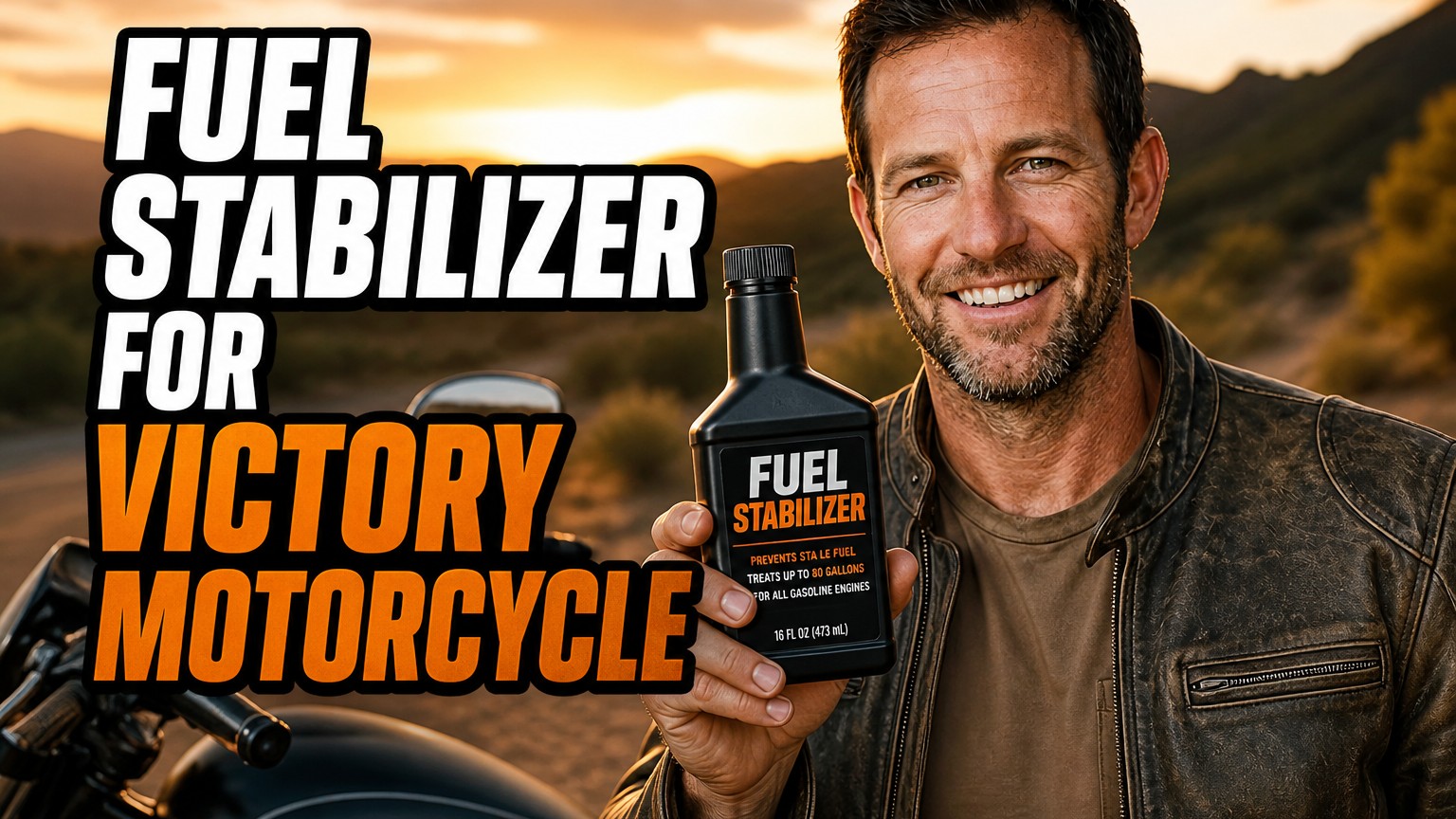
I’ve been riding and wrenching on V-twin cruisers for years, and few things annoy me more than a bike that won’t start after winter. Victory owners know the feeling. These Polaris-built machines, from the Vegas and Kingpin to the Cross Country, Judge, and Octane, are brilliant when they’re running. But they don’t love sitting on stale gas.
Modern pump gas is usually E10, and ethanol attracts moisture. Over a few months, it can turn into gummy varnish that clogs injectors, filters, and carb jets. A good stabilizer is the cheapest fix I know.
Below are the six fuel stabilizers and treatments I trust or have used on my own bikes. I’ll tell you what each does well, where it falls short, and how I use it.
- My top overall pick for Victory storage is STA-BIL Storage Fuel Stabilizer, which is affordable and easy to find.
- For ethanol protection with extra cleaning, I like Star Tron Enzyme Fuel Treatment.
- Always add stabilizer to a nearly full tank and run the engine for 10 to 15 minutes so treated fuel reaches the injectors.
- Fuel-injected and carbureted Victory models both benefit, because ethanol varnish does not care what delivers your fuel.
Why Your Victory Needs a Fuel Stabilizer
Victory built its bikes around the big air/oil-cooled Freedom V-twin, and most models since the mid-2000s are fuel injected. Injectors have tiny passages. A little varnish can make for rough idling, hesitation, or a no-start.
Older carbureted Victory models are even more sensitive. Stale fuel leaves deposits in the jets and bowl, and that’s a chore to clean out.
What Stabilizers Actually Do
A stabilizer slows oxidation, the chemical breakdown that turns fresh gasoline into varnish and gum. Many formulas also add corrosion inhibitors and help manage moisture. They do not bring truly rotten fuel back to life, so add them while the gas is still fresh.
When I Use Them
I add stabilizer whenever the bike will sit for more than about 30 days. That means winter storage, a long work trip, or a project bike parked in the garage. It takes about two minutes and costs a few dollars per tank.
1. STA-BIL Storage Fuel Stabilizer — Best Overall for Victory Storage
STA-BIL Storage Fuel Stabilizer is the one I reach for first. It’s the product most riders recognize, you can find it at nearly any hardware or auto parts store, and it’s reasonably priced. The 8 oz and 32 oz bottles are the sizes I see most.
The label calls for about 1 oz per 2.5 gallons for storage. On a Victory Vegas or Judge with a tank around 4.5 gallons, that’s roughly 2 oz. The formula is designed to protect fuel for up to 24 months and to guard against ethanol-related corrosion.
What I Like
- Easy to find: I’ve bought it on road trips when I forgot to pack my own.
- Simple dosing: The bottle has clear measurement marks.
- Corrosion protection: This matters for steel tanks, like those on several Victory cruisers.
What to Watch
It’s a stabilizer first and not a heavy-duty cleaner. If your bike already runs rough, pair it with a dedicated fuel system cleaner before storage. For a healthy Victory going to bed for the winter, though, it’s hard to beat.
2. Star Tron Enzyme Fuel Treatment — Best for Ethanol Fuel Problems
Star Tron Enzyme Fuel Treatment takes a different approach. It uses an enzyme formula that breaks down fuel into smaller, more uniform molecules. It’s also said to help with ethanol-related phase separation and water.
The usual ratio is 1 oz per 16 gallons, so a little goes a long way. That makes it one of the most economical options per tank. The cap is also designed to make measuring easy.
My Experience
I used Star Tron on a Cross Country that lived at the back of my garage through a long, cold winter. The bike started on the second crank in spring, and idle was smooth. I can’t prove the additive was the only reason, but I’ve had consistent results.
If your local gas stations run E10 only, and most do, this is a strong pick. I’d say it’s best for riders who want stabilizing and cleaning in one step.
Downsides
The smell is distinctive, and I mean that politely. It’s a little strong, so wash your hands after pouring. Some riders also prefer a traditional stabilizer for extreme long-term storage.
3. Sea Foam Motor Treatment — Best Multi-Purpose Pick
Sea Foam Motor Treatment has been around for decades and is popular with riders who like a multi-tasker. It works as a stabilizer, a fuel system cleaner, and even a light lubricant for fuel system components.
For fuel stabilization and general cleaning, the common guidance is about 1 oz per gallon of fuel. That’s more product per tank than STA-BIL or Star Tron, so it costs more over time. Still, the versatility is nice.
Where It Shines on a Victory
I like it for bikes that have been sitting a bit longer than they should. If you bought a used Victory and don’t know how old the fuel is, a dose of Sea Foam is a sensible first step. Pair it with fresh gas and a new fuel filter if needed.
If you’re curious how fuel quality affects mileage, I wrote about the causes of high fuel consumption in motorcycle engines. Dirty injectors and old fuel are right at the top of that list.
Things to Consider
Sea Foam is petroleum-based and has a strong odor. I also wouldn’t use it as my only long-term storage solution for a bike that will sit a year or more. For that, I’d go with a product built for storage.
4. Lucas Safe Stor Fuel Stabilizer — Best Budget-Friendly Alternative
Lucas Safe Stor is a solid option if you want something dependable without paying premium prices. Lucas is a well-known name among motorcycle and powersports riders, and the brand has a loyal following.
The formula is designed to protect fuel in storage, resist ethanol-related issues, and keep fuel system parts from corroding. I follow the dosing printed on the bottle, since it differs from other brands.
Why I Keep It in the Garage
It works well in the small engines I own, including my generator and mower. Buying one product for everything saves me money. It also means I’m never scrambling when winter prep time arrives.
For a Victory, it’s a perfectly reasonable choice. I’d rank it just behind STA-BIL for simplicity and availability.
5. AMSOIL Gasoline Stabilizer — Best Premium Choice for Long Layups
AMSOIL Gasoline Stabilizer is my pick if you want a premium option and don’t mind paying extra. AMSOIL has a strong reputation in the lubricant world, and the stabilizer is marketed for use in gas engines, including motorcycles.
The formula is designed to resist oxidation, protect against ethanol-related issues, and help keep fuel system components clean. It’s a good fit for a Victory that may sit over an extended winter or a long deployment.
Pairing It With the Right Oil
Fuel is only half of the storage story. Before winter, I also change my oil so acids and contaminants aren’t sitting in the crankcase. If you’re deciding what to run, my guides to the best motor oil for 4 stroke motorcycle engines and the top engine oil for 4 stroke motorcycle picks can help.
Is It Worth It?
For most riders, a cheaper stabilizer does the job. But if you want that extra margin of confidence, AMSOIL is a fine option. I see it as premium insurance.
6. STA-BIL 360 Protection — Best for Bikes Near Humidity or Coastal Air
STA-BIL 360 Protection (the updated successor to the brand’s marine formula) is aimed at riders dealing with ethanol and moisture. If you live near the coast, or somewhere with big swings in humidity, this one makes sense. The formula is designed to help guard against corrosion and fuel breakdown.
I tend to recommend it to friends who park their Victory in a detached garage or shed. Moisture can build up in those spaces, and ethanol fuel loves to absorb it.
My Take
It costs a bit more than basic STA-BIL Storage. I’d only choose it if moisture is a real concern where you live. Otherwise, the standard version is plenty.
How I Add Stabilizer to My Victory the Right Way
The best stabilizer won’t help if you add it wrong. Here’s the routine I follow every fall.
Step-by-Step Process
- Fill the tank with fresh fuel, ideally premium that meets your owner’s manual recommendation. A full tank leaves less room for moisture-laden air.
- Add the stabilizer in the amount printed on the bottle. Measure it. Don’t eyeball it.
- Ride or idle for 10 to 15 minutes so treated fuel circulates through the lines, pump, and injectors.
- Change the oil and filter while the engine is warm.
- Connect a battery tender and store the bike in a dry spot.
A Quick Note on Fuel Petcocks
If you ride an older carbureted model or another bike with a manual fuel valve, learn how it works. I explain the basics in my guide to the motorcycle fuel switch on off reserve positions. Most modern Victory models use a fuel-injected setup with no manual valve, but it’s good knowledge to have.
Common Mistakes I See Riders Make
I’ve made a few of these myself. Learn from my scars and save yourself some wrenching time.
- Adding stabilizer to old fuel: It can only protect fuel that’s still fresh.
- Skipping the run-through: If treated fuel never reaches the injectors, they’re unprotected.
- Overdosing: More isn’t better. Follow the label.
- Storing with a low tank: Empty space invites condensation.
- Ignoring the rest of the bike: Battery, tires, and oil all matter too.
Does Stabilizer Affect Fuel Economy?
Not in any noticeable way when used correctly. However, clean injectors and fresh fuel do help your engine run efficiently. I’ve seen smaller bikes show the same pattern, which I touched on in my breakdown of 125cc motorcycle fuel consumption per km.
A heavy cruiser like a Victory will always drink more than a small commuter. But a clean fuel system keeps it running the way Polaris engineered it to.
My Final Recommendation
If you just want one product to buy today, I’d pick STA-BIL Storage Fuel Stabilizer. It’s simple, affordable, and easy to find. For ethanol-heavy areas or bikes that need a bit of cleaning, Star Tron Enzyme Fuel Treatment is my close second.
Whichever one you choose, the habit matters more than the brand. A few ounces and a short ride in the fall can save you from a springtime headache. Your Victory has plenty of miles left, so give it the care it deserves.
Frequently Asked Questions
How much fuel stabilizer should I add to my Victory motorcycle?
Always follow the ratio on the bottle, since it varies by brand. As a general example, STA-BIL Storage calls for about 1 oz per 2.5 gallons for storage. Add it to a mostly full tank, then ride for 10 to 15 minutes so treated fuel reaches the injectors or carburetor.
Do I need fuel stabilizer if my Victory has fuel injection?
Yes. Fuel injection does not make gasoline immune to aging. Ethanol blends can absorb moisture and form varnish that clogs injectors, fuel filters, and the in-tank pump screen. A stabilizer is cheap insurance for any bike that sits more than 30 days.
How long does stabilized fuel last in a motorcycle?
Most storage stabilizers claim protection for 12 months, and some claim up to 24 months. In practice, I treat about 6 to 12 months as a safe window and refresh the fuel if the bike sits longer than that.
Can I use Sea Foam or Star Tron as a stabilizer and a cleaner?
Yes. Both are marketed as multi-purpose additives that stabilize fuel and help clean fuel system deposits. If you want the most dedicated long-term storage protection, a product built specifically for storage can still be the better choice.

Related Articles
7 Best Batteries for Motorcycles I’ve Tested and Trust in 2026
I've tested dozens of motorcycle batteries to find the best performers. From AGM to lithium, here are my top picks…
Jake Miller
15 min read

The Perfect Battery for Your Harley Davidson Softail: A Rider’s Complete Guide
Discover the perfect battery for your Harley Davidson Softail. I've tested multiple options and share real-world performance data, maintenance tips,…
Jake Miller
14 min read

The Best Battery for Your Harley Davidson: My Complete Guide After Years of Testing
Discover which battery truly performs best for Harley Davidson motorcycles. Real rider experience with AGM, lithium, and OEM options to…
Jake Miller
12 min read