
Average Motorcycle Gas Tank Size: Capacity by Bike Type and Real-World Range
 Jake Miller
9 min read
Jake Miller
9 min read
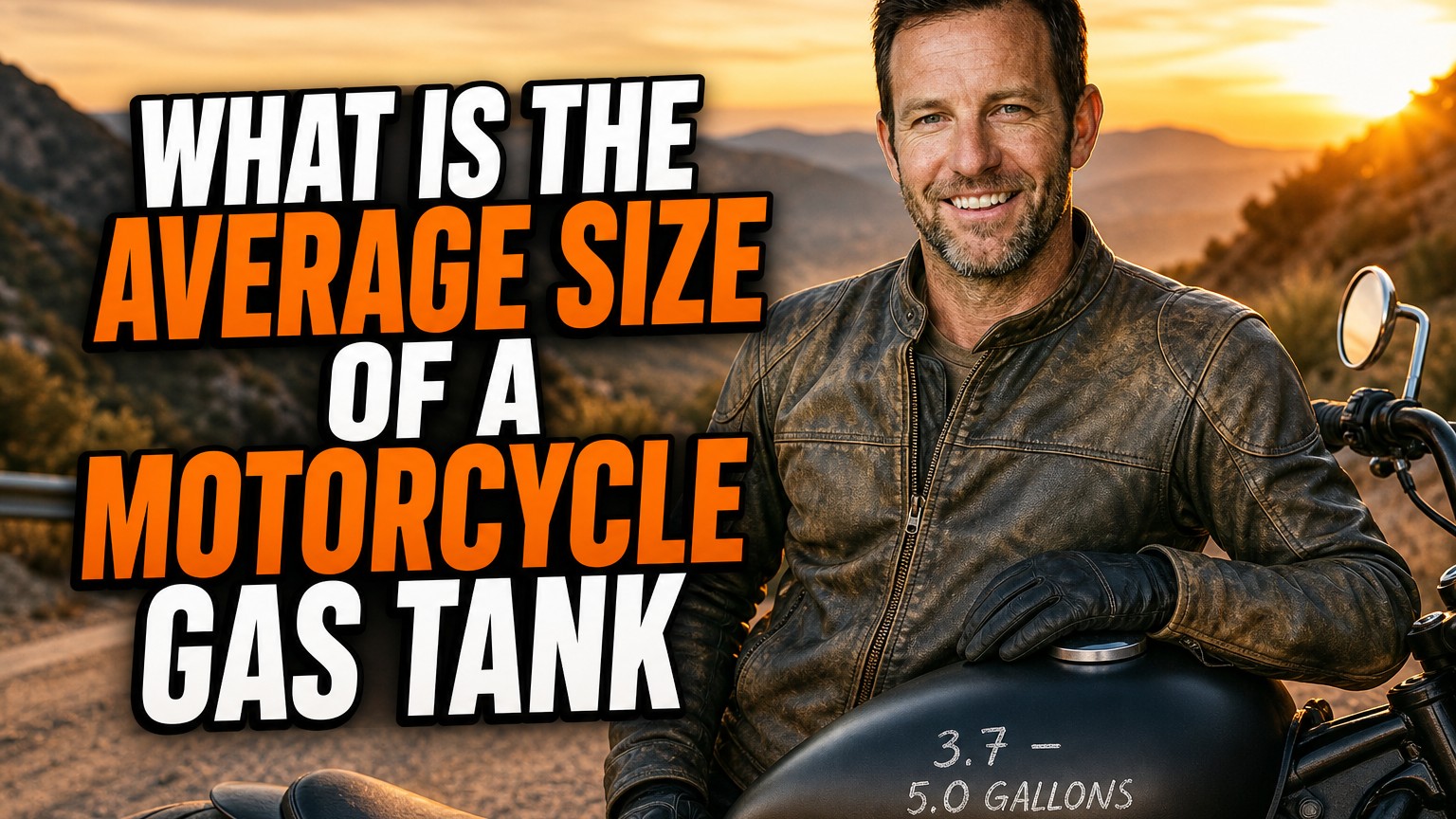
The first time I rode a bike with a tiny 2.5-gallon tank on a long, empty highway, I learned a lesson fast. Tank size matters far more than most new riders think. I spent half that ride staring at the fuel gauge instead of enjoying the scenery.
Since then, I’ve ridden everything from lightweight commuters to big touring rigs. I’ve watched my range swing from “no worries” to “where’s the next station?” That experience is what I’m drawing on here to explain what tank sizes you can actually expect.
If you’re shopping for a bike, comparing models, or just curious, this guide gives you real numbers and real-world context. I’ll also share the tips I use to get the most out of whatever tank I’m riding with.
- The average motorcycle tank holds about 3.5 to 5 gallons (13 to 19 liters).
- Small commuters and scooters hold 1 to 3 gallons, while adventure and touring bikes can hold 5 to 8 gallons.
- Real-world range usually lands between 120 and 250 miles per tank, depending on mpg and riding style.
- Tank size is only half the story. Fuel economy, reserve capacity, and tank care matter just as much.
So, How Big Is a Typical Motorcycle Tank?
If I had to pick one number, I’d say around 4 gallons (roughly 15 liters). That’s the sweet spot where most mid-size street bikes land. It balances weight, styling, and a useful riding range.
But “average” hides a lot of variety. A Honda Grom holds under 1.5 gallons, while a big adventure bike can carry more than 6. The type of motorcycle matters more than any single figure.
A Quick Reference Table
Here’s the cheat sheet I keep in my head. These are approximate ranges, and individual models vary.
| Motorcycle Type | Typical Tank Size (Gallons) | Typical Tank Size (Liters) |
|---|---|---|
| Scooters | 1 to 2 | 4 to 8 |
| Mini / Small Commuters | 1.5 to 3 | 6 to 11 |
| Dirt / Dual-Sport | 2 to 3.5 | 8 to 13 |
| Standard / Naked | 3.5 to 5 | 13 to 19 |
| Sportbikes | 3.5 to 4.5 | 13 to 17 |
| Cruisers | 3.5 to 5.5 | 13 to 21 |
| Adventure Bikes | 4.5 to 8 | 17 to 30 |
| Touring Bikes | 5 to 6.5 | 19 to 25 |
Tank Sizes by Motorcycle Category
Let me walk through each category the way I’ve experienced them on the road. The numbers matter, but so does how they feel in daily riding.
Scooters and Small Commuters
Small bikes carry small tanks, and that’s fine. A typical scooter holds 1 to 2 gallons. Because these machines often return 70 mpg or better, you can still squeeze out 100 miles or more.
Bikes like the Honda Grom hold around 1.4 gallons. I’ve found these tanks perfect for city riding, where a gas station is never far away. They’d be frustrating on a rural highway, though.
Sportbikes
Sportbikes usually carry about 3.5 to 4.5 gallons. A Kawasaki Ninja 400 is around 3.7 gallons, and many liter-class machines sit near 4.5. Manufacturers keep the tank compact to save weight and keep the rider tucked in.
Here’s my honest take: sportbike range can be deceptive. Ride hard and a 4-gallon tank drains much faster than the spec sheet suggests. I plan fuel stops conservatively on spirited days.
Cruisers
Cruisers tend to fall between 3.5 and 5.5 gallons. Some Harley Sportsters hold around 3.3 gallons, while Softails and touring-oriented cruisers reach 5 gallons or more. The tank is a big part of the bike’s look, so styling often drives capacity.
A cruiser’s relaxed pace and torquey engine can stretch range nicely. Still, a smaller-tank cruiser with 40 mpg only gives you around 130 miles. I learned to treat that as a hard limit, not a suggestion.
Standard and Naked Bikes
These all-rounders typically hold 3.5 to 5 gallons. A Yamaha MT-07 sits near 3.7 gallons, while some larger nakeds go a bit higher. This is the group that pulls the “average” toward 4 gallons.
I love these bikes for versatility. They’re comfortable around town, capable on weekend rides, and rarely demand extreme fuel planning.
Adventure and Dual-Sport Bikes
This is where tank size gets exciting. Large adventure bikes often carry 5 to 8 gallons. The BMW R 1250 GS, for example, holds around 6.6 gallons.
Those big tanks exist for a reason. When you’re riding remote roads, a 250-mile or longer range is peace of mind. Smaller dual-sport bikes, however, may hold only 2 to 3.5 gallons.
Touring Bikes
Touring bikes usually carry 5 to 6.5 gallons. The Honda Gold Wing is around 5.5 gallons, and Harley’s touring models sit near 6 gallons. Combined with a smooth engine, that gives excellent highway range.
On long multi-day trips, I really appreciate how a bigger tank reduces the number of stops. It’s a small thing that makes a big difference to the day’s rhythm.
Tank Size Is Not the Same as Range
Here’s something I wish someone had told me earlier. A bigger tank doesn’t automatically mean a longer range. Fuel economy is the other half of the equation.
The simple formula is: tank size in gallons × miles per gallon = theoretical range. A 4-gallon tank at 50 mpg gives roughly 200 miles. A 5-gallon tank at 35 mpg gives only about 175.
Real-World Range Examples
- Small commuter: 2 gallons × 70 mpg = about 140 miles
- Mid-size standard: 4 gallons × 50 mpg = about 200 miles
- Sportbike ridden hard: 4 gallons × 35 mpg = about 140 miles
- Adventure bike: 6 gallons × 45 mpg = about 270 miles
These are theoretical numbers. I always knock off 10 to 15 percent for headwinds, luggage, passengers, and my own throttle enthusiasm.
The Reserve Factor
Most bikes have a reserve of roughly 0.5 to 1 gallon once the low-fuel light comes on. That reserve is a safety net, not a plan. I never ride into it on purpose.
Also remember that the tank’s stated capacity usually includes a little unusable fuel. Your real fill-up will often be slightly under the spec sheet number.
What Affects How Much Fuel a Tank Can Hold?
Tank volume isn’t random. Designers weigh several competing priorities, and understanding them helps explain why a bike has the tank it does.
Weight and Handling
Fuel is heavy, about 6 pounds per gallon. A 6-gallon tank adds roughly 36 pounds when full, and it sits high on the bike. That affects handling, especially on sporty or off-road machines.
Ergonomics and Styling
The tank is where your knees grip and where the bike’s personality shows. A slim tank may feel better for shorter riders. A wide tank might hold more but feel bulky between your legs.
Intended Use
A city bike doesn’t need a huge tank. An expedition bike does. Manufacturers match capacity to the kind of riding the bike is designed for.
Engine Efficiency
Efficient engines can get away with smaller tanks while still offering good range. That’s why some modern small-displacement bikes feel surprisingly capable on longer trips.
Choosing the Right Tank Size for Your Riding
When I’m helping a friend pick a bike, I ask about their typical ride before anything else. Tank size should match your life, not just a spec sheet.
For Daily Commuting
Anything from 2 to 4 gallons works. You’ll refuel regularly anyway, and a lighter, smaller tank often makes the bike nimbler in traffic.
For Weekend Rides
I prefer 3.5 to 5 gallons here. It gives you a comfortable 150 to 200 miles, enough for a full morning of riding before a fuel and coffee stop.
For Long-Distance Touring
Aim for 5 gallons or more, or at least a bike with excellent mpg. Fewer fuel stops mean more riding time, and you’re less stressed in sparse regions.
For Off-Road and Remote Travel
Look at adventure bikes or consider an aftermarket long-range tank. I’d rather carry the extra weight than gamble on a station that might be closed or empty.
Filling Up Without Making a Mess
Big tank or small, how you fill it matters. I’ve seen riders top off aggressively and end up with fuel dripping down the paint. It’s a surprisingly common mistake.
Many bikes have overflow or vent lines that can push fuel out if you overfill. If you want the full rundown, I put together a guide on can you overfill a motorcycle gas tank risks and consequences. It’s worth reading before your next fill-up.
My rule is simple: stop when the fuel reaches the bottom of the filler neck. Then I wait a moment and check that nothing has bubbled up.
Keeping Your Tank Healthy, No Matter Its Size
A tank’s capacity means little if the inside is rusty or full of varnish. I’ve pulled caps off neglected bikes and found things that made me wince. Regular care protects your fuel system.
Cleaning a Neglected Tank
If your bike has been sitting, you’ll want to inspect the inside. My go-to resource is this walkthrough on how to clean a motorcycle gas tank. It covers the basics step by step.
For light rust, some riders swear by a household solution. If that appeals to you, here’s a detailed look at how to clean a motorcycle gas tank with vinegar. I’d suggest reading it fully before you start.
Stopping Rust Before It Starts
Once a tank is clean and bare, it can develop surface rust in hours. That’s why I always treat it quickly. This guide on how to prevent flash rust in a motorcycle gas tank explains the steps I follow.
A mostly full tank during storage also helps, because less air means less condensation. That’s one small advantage of a larger tank.
Fuel Additives
Additives are a common topic in rider circles. One question I get a lot is whether can i put seafoam in my motorcycle gas tank is a safe move. The linked article walks through it, and I’d always check your owner’s manual too.
In my experience, a good stabilizer in the off-season is more valuable than most “miracle” products. Keep it simple and consistent.
Tips to Stretch Every Gallon
Whatever size tank you have, you can squeeze more miles out of it. These are habits I’ve built up over years of riding.
- Smooth throttle inputs: Jackrabbit starts burn fuel fast.
- Check tire pressure: Underinflated tires increase rolling resistance.
- Lighten the load: Extra luggage costs mileage.
- Mind your speed: Wind resistance rises quickly above 65 mph.
- Maintain the bike: Clean air filters and fresh spark plugs help efficiency.
I’ve gained a noticeable 5 to 10 percent range just from these basics. That’s often the difference between making it to the next station comfortably and sweating it out.
My Final Take on Tank Size
If you want one takeaway, it’s this: the average motorcycle tank holds about 4 gallons, but the right tank is the one that fits how you ride. I’d rather have a slightly larger tank than ever need it and not have it.
Look at the whole picture: capacity, mpg, reserve, and how you plan to use the bike. Then keep that tank clean and properly filled. Do that, and you’ll spend a lot more time riding and a lot less time worrying about the fuel light.
Ride safe, and fill up smart.
Frequently Asked Questions
What is the average motorcycle gas tank size?
Most street motorcycles carry between 3.5 and 5 gallons (13 to 19 liters). Small commuters and scooters go lower, while adventure and touring bikes often reach 5 to 8 gallons.
How far can a motorcycle go on a full tank?
Most bikes get roughly 120 to 250 miles per tank, depending on tank size, fuel economy, riding style, and load. A 4-gallon tank at 45 mpg gives about 180 miles.
Which type of motorcycle has the biggest gas tank?
Adventure-touring bikes and big touring machines usually have the largest tanks, often 5.5 to 8 gallons. Many riders also add aftermarket long-range tanks for remote travel.
Can you overfill a motorcycle gas tank?
Yes. Filling past the neck can push fuel into the vent or overflow lines and damage paint, so stop when fuel reaches the bottom of the filler neck.

Related Articles
7 Best Batteries for Motorcycles I’ve Tested and Trust in 2026
I've tested dozens of motorcycle batteries to find the best performers. From AGM to lithium, here are my top picks…
Jake Miller
15 min read

The Perfect Battery for Your Harley Davidson Softail: A Rider’s Complete Guide
Discover the perfect battery for your Harley Davidson Softail. I've tested multiple options and share real-world performance data, maintenance tips,…
Jake Miller
14 min read

The Best Battery for Your Harley Davidson: My Complete Guide After Years of Testing
Discover which battery truly performs best for Harley Davidson motorcycles. Real rider experience with AGM, lithium, and OEM options to…
Jake Miller
12 min read