
8 Best Fuel System Cleaners to Keep Your Motorcycle Carb Running Clean
 Jake Miller
11 min read
Jake Miller
11 min read
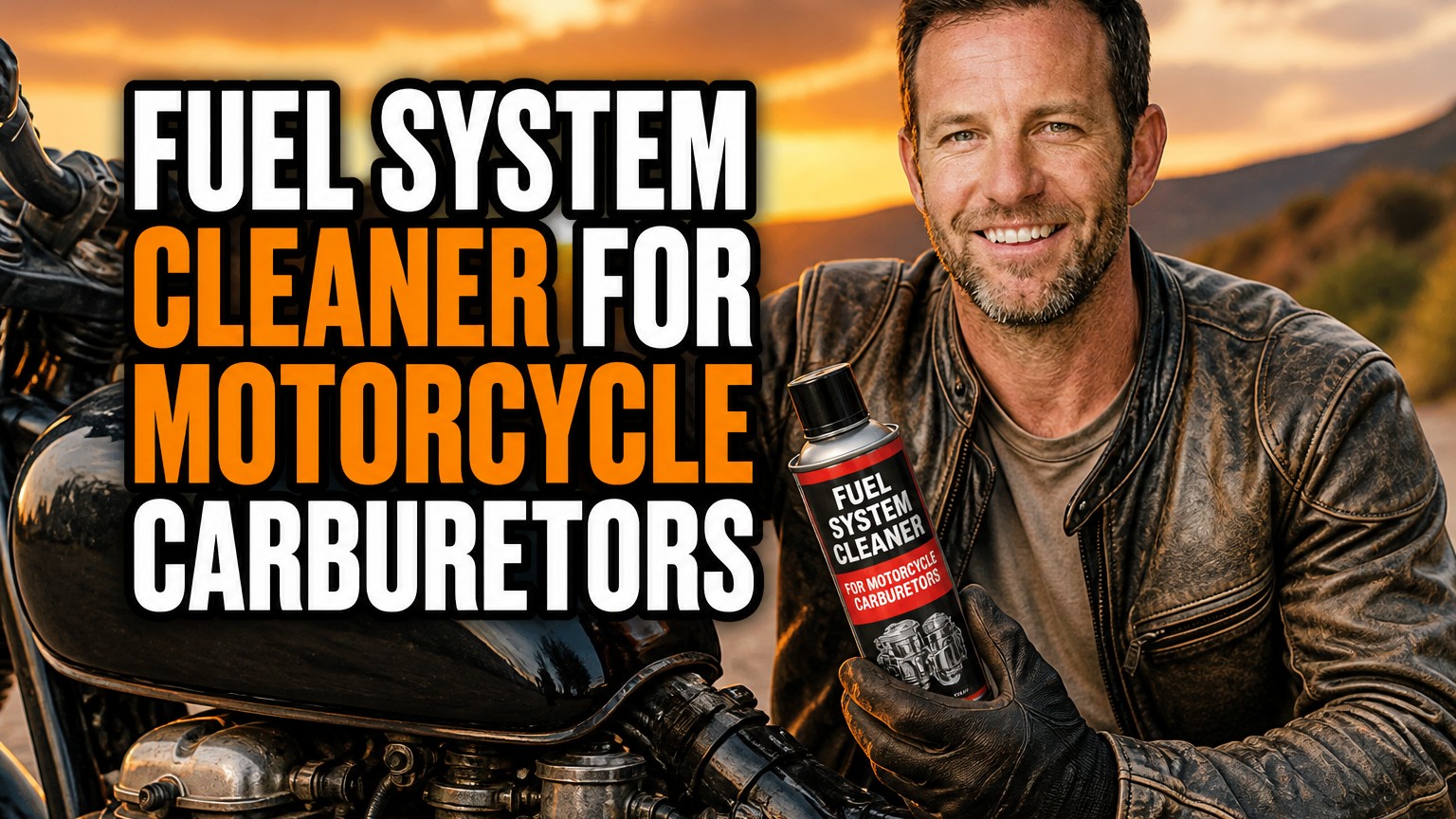
I’ve been wrenching on carbureted bikes for years, and nothing makes me groan like a bike that stumbles off idle because of tiny passages gummed up with varnish. Modern fuel, especially ethanol blends, is rough on old-school carbs. Pilot jets are the size of a pinhole, and it doesn’t take much to choke them.
Over the seasons I’ve run a lot of additives through my own bikes, from a tired old commuter to a vintage thumper that lives in the garage most of the winter. This list is my honest shortlist of the best fuel system cleaner for motorcycle carburetors, based on what actually worked for me, what didn’t, and where each product shines.
- My all-around pick is Sea Foam Motor Treatment for its mix of cleaning, lubricating, and stabilizing.
- For stubborn varnish and rough idle, Berryman B-12 Chemtool and Red Line SI-1 are my strongest performers.
- If your bike sits often, STA-BIL 360 Protection or Star Tron is the smarter buy.
- No additive replaces a proper carb teardown when jets are fully blocked.
How I Chose These Fuel System Cleaners
I didn’t pick these based on flashy labels. I looked at how each one handled real problems: hesitation off idle, hard cold starts, and the sticky float-bowl residue I find after a bike sits.
I also weighed price, ease of use, and how safe each product is around the rubber and metal parts in older carbs. A cleaner that’s too aggressive can do more harm than good, so I stayed with products that are widely used and well established.
What I Look For in a Carb-Friendly Additive
First, ethanol compatibility. Most pump gas in my area is E10, so a cleaner that ignores water and ethanol isn’t much use to me.
Second, the detergent package. I want something that dissolves varnish without leaving a heavy residue. Third, stability: if the bike will sit, I want the fuel to stay fresh for months, not weeks.
1. Sea Foam Motor Treatment: Best Overall Fuel Cleaner
Sea Foam Motor Treatment is the first bottle I reach for, and it’s been in my garage longer than almost anything else. It’s a petroleum-based formula that cleans, lubricates, and stabilizes fuel in one shot. A 16 oz can usually runs about $10 to $14.
I run roughly 1 oz per gallon in my commuter every few tanks. The idle smooths out, and I notice less hesitation on cold mornings. It’s also gentle enough that I don’t worry about my carb’s rubber seals.
Why It Earns the Top Spot
What I love about Sea Foam Motor Treatment is its versatility. I’ve used it as a regular maintenance additive, as a storage stabilizer, and as a pilot-circuit soak when I didn’t want to pull the carb yet.
It isn’t the strongest cleaner for heavy gum, but it’s the most dependable all-rounder. If you only buy one product from this list, this is the one I’d suggest.
2. Berryman B-12 Chemtool Carb and Fuel System Cleaner: Best for Stubborn Varnish
When a bike comes to me with a rough idle and a questionable fuel history, I try Berryman B-12 Chemtool before I tear anything apart. It’s a powerful solvent-based cleaner that has been around for decades, usually about $8 to $12 for a 15 oz can.
I’ve used B-12 on an old 4-stroke single that had been neglected. After a couple of tanks, the throttle response was noticeably crisper and the idle settled down.
Things to Keep in Mind
This stuff is strong. Don’t pour a double dose and assume it will work faster, because more isn’t better with solvent cleaners.
I also use it as a periodic “reset” rather than every fill-up. For routine upkeep, I switch to something gentler like Sea Foam.
3. Red Line SI-1 Complete Fuel System Cleaner: Best Premium Detergent
Red Line SI-1 is a polyetheramine-based cleaner, and it’s what I use when I want a thorough, high-quality clean without harsh solvents. A 15 oz bottle runs about $10 to $15.
It’s formulated to handle deposits in injectors, but in my experience it also does well in carbureted engines. After a couple of treatments, my vintage twin idled noticeably smoother.
Where It Shines
I like Red Line SI-1 for bikes that see regular use and get higher-quality fuel. It cleans steadily instead of dramatically, which suits routine maintenance.
If your carb is badly gummed up, it may take multiple tanks to notice a difference. I treat it as a long-term cleaner, not a quick fix.
4. Star Tron Enzyme Fuel Treatment: Best for Ethanol Fuel Problems
If ethanol is your main headache, Star Tron Enzyme Fuel Treatment deserves a look. It uses an enzyme-based formula to break down fuel components and help keep gasoline stable. A 16 oz bottle costs around $15 to $20.
The dosage is lean, around 1 oz per 8 gallons, so a bottle goes a long way. That makes it economical despite the higher sticker price.
My Experience With It
I tried Star Tron on a seasonal bike that I only ride in summer. After a few months of storage, it started and idled better than it had in previous years.
It won’t aggressively scrub heavy varnish, so don’t expect miracle cleaning. It’s more of a prevention tool, and a very good one.
5. STA-BIL 360 Protection: Best for Winter Storage
I wouldn’t call STA-BIL 360 Protection a hardcore cleaner, but it earns a place here because stale fuel is the number one carb killer I see. It’s a stabilizer with ethanol protection and corrosion inhibitors, typically $10 to $15 for an 8 to 16 oz bottle.
Before parking a bike for winter, I add it to a full tank and run the engine a few minutes so it reaches the carb. That’s it.
Why Storage Prep Matters
Fuel left in float bowls turns to varnish quickly. STA-BIL 360 helps slow that process so the pilot circuit stays open.
If your bike is a seasonal toy, pair this with a periodic cleaner treatment in spring. That combo has kept my garage queen starting on the first or second crank.
6. Lucas Oil Fuel Treatment: Best Budget-Friendly Option
Lucas Oil Fuel Treatment is a popular, affordable additive designed to clean deposits and add some lubrication to the fuel system. A 16 oz bottle usually costs $8 to $12, and I’ve found it on shelves almost everywhere.
I’ve used it as a routine additive on a small commuter bike. It didn’t transform anything overnight, but it kept things running smoothly and my idle stayed steady.
Who It Suits Best
I’d recommend Lucas Oil Fuel Treatment to riders who want an inexpensive, easy-to-find maintenance product. It’s a good “every few tanks” option for a daily rider.
If you’re chasing a specific symptom like a bad hesitation, I’d step up to B-12 or SI-1 for a stronger clean.
7. Chevron Techron Concentrate Plus Fuel System Cleaner: Best for High-Mileage Bikes
Techron Concentrate Plus is Chevron’s well-known cleaner, built around a robust detergent package. A bottle is usually $10 to $15. It’s mostly marketed for cars, but plenty of riders use it in small gasoline engines with success.
I tested it on an older bike with a lot of miles. After two treatments, cold-start behavior improved and I felt less stumbling off the bottom end.
A Word of Caution
Because it’s a car-oriented product, read the label and follow the dosing. Motorcycle tanks are small, so it’s easy to overdose by accident.
I measure carefully and treat a full tank only. If you ride a wet-clutch bike, keep in mind that fuel additives stay in the fuel path and shouldn’t contact your clutch, so avoid spills.
8. Gumout Carb and Choke Parts Cleaner: Best Spray for Hands-On Cleaning
Sometimes an additive isn’t enough, and the carb has to come off. For that, I keep Gumout Carb and Choke Parts Cleaner in my toolbox. It’s an aerosol, roughly $6 to $10 per can, that dissolves gum and varnish on external carb parts.
I spray the body, throttle linkage, and choke components after removal. It cuts through grime fast, and it flushes passages when used with the straw.
How I Use It Safely
I always remove rubber O-rings, diaphragms, and plastic parts first, since strong solvents can damage them. Then I spray the metal body and blow everything out with compressed air.
Gumout isn’t a fuel additive, so don’t pour it into your tank. Think of it as a partner to the other products here, not a substitute.
How to Choose the Right Cleaner for Your Bike
Picking the right product comes down to your bike’s condition and how you ride. A daily commuter needs something different from a once-a-month cruiser.
Match the Product to the Problem
- Mild hesitation or routine upkeep: Sea Foam or Lucas Oil.
- Rough idle or varnish buildup: Berryman B-12 or Red Line SI-1.
- Storage and ethanol issues: STA-BIL 360 or Star Tron.
- Carb is off the bike: Gumout Carb and Choke Parts Cleaner.
Don’t Forget the Basics
An additive can’t fix a bad float valve, a torn diaphragm, or a wrong jet. If symptoms stick around after a couple of treatments, I move on to a proper inspection.
Signs Your Carb Needs Cleaning
I’ve learned to watch for the early warning signs. Catching a dirty carb sooner makes cleaning much easier.
Common Symptoms I See
- Rough or hunting idle, especially when warm
- Hard starting after the bike has sat
- Flat spots or stumbling off the throttle
- Black exhaust smoke or a rich smell
- Noticeably worse mileage
That last one catches many riders off guard. If you’re curious about what might be behind it, I wrote about the causes of high fuel consumption in motorcycle engines, and a dirty carb is often near the top of the list.
Track Your Mileage Before and After
I like to log my numbers so I can see if a treatment actually helps. For small bikes, it helps to know a baseline, and this guide on 125cc motorcycle fuel consumption per km gives a useful reference point.
Tips for Getting the Most From Any Fuel Cleaner
The product matters, but technique matters just as much. A few habits have made a real difference for me.
My Go-To Habits
- Add cleaner before filling up so the fuel mixes thoroughly.
- Use the correct dose. Overdosing can cause problems rather than solve them.
- Ride the bike after treatment so the mixture reaches the carb and warms up.
- Turn the fuel tap correctly. Make sure you understand your motorcycle fuel switch on off reserve settings, since running on reserve stirs up tank sediment.
Don’t Neglect the Oil Side
Clean fuel is only half the story. If you’re servicing the engine anyway, I recommend checking out the best motor oil for 4 stroke motorcycle engines.
For a deeper comparison, here’s my breakdown of the top engine oil for 4 stroke motorcycle picks. Fresh oil and clean fuel make a great pair.
When an Additive Isn’t Enough
I’ll be honest: additives have limits. If you’ve run two or three treatments and the bike still stumbles, it’s time to pull the carb.
A full teardown lets you clear the jets, check the float height, and replace worn O-rings. Pair that with a spray like Gumout, and you’ll solve most problems that an additive can’t touch.
My Simple Maintenance Routine
For a regularly ridden bike, I add Sea Foam every second or third tank. Before storage, I switch to STA-BIL 360 or Star Tron and run the engine for a few minutes.
Once a year, I do a stronger clean with B-12 or SI-1, and I inspect the carb if anything feels off. That routine has kept my carbureted bikes reliable with very little drama.
Final Thoughts
If you want one product to keep on the shelf, I’d go with Sea Foam Motor Treatment. For tougher jobs, Berryman B-12 and Red Line SI-1 are my go-to cleaners, and for storage, STA-BIL 360 and Star Tron have earned my trust.
Whichever you choose, be consistent and follow the label. A few dollars of additive and a little attention can save you hours of carb work, and keep your bike starting and idling the way it should.
Frequently Asked Questions
Can fuel system cleaner really fix a clogged motorcycle carburetor?
It can fix light to moderate varnish and deposits, especially in the pilot circuit. A fully blocked jet or a carb that sat for years with stale fuel usually needs a manual teardown and ultrasonic or spray cleaning.
How often should I add cleaner to my carbureted motorcycle?
For regular riders, one treatment every 2 to 3 tanks is plenty, or once per season for light maintenance. If the bike sits for weeks at a time, use a stabilizer or cleaner every fill-up during storage periods.
Is it safe to use car fuel system cleaners in a motorcycle?
Many are safe if the label allows gasoline engines and you use the correct ratio. Be careful with wet-clutch bikes and strong solvents, and never overdose. Always follow the label and start with a lower dose if unsure.
Will ethanol fuel damage my motorcycle carburetor?
Ethanol attracts moisture and can cause corrosion, gummy residue, and degraded rubber parts in older carbs. Using an ethanol-safe cleaner or stabilizer and avoiding long-term storage with E10 fuel helps a lot.

Related Articles
7 Best Batteries for Motorcycles I’ve Tested and Trust in 2026
I've tested dozens of motorcycle batteries to find the best performers. From AGM to lithium, here are my top picks…
Jake Miller
15 min read

The Perfect Battery for Your Harley Davidson Softail: A Rider’s Complete Guide
Discover the perfect battery for your Harley Davidson Softail. I've tested multiple options and share real-world performance data, maintenance tips,…
Jake Miller
14 min read

The Best Battery for Your Harley Davidson: My Complete Guide After Years of Testing
Discover which battery truly performs best for Harley Davidson motorcycles. Real rider experience with AGM, lithium, and OEM options to…
Jake Miller
12 min read