
8 Best Full Synthetic Oils for Your Super Sport Motorcycle in 2025
 Jake Miller
9 min read
Jake Miller
9 min read
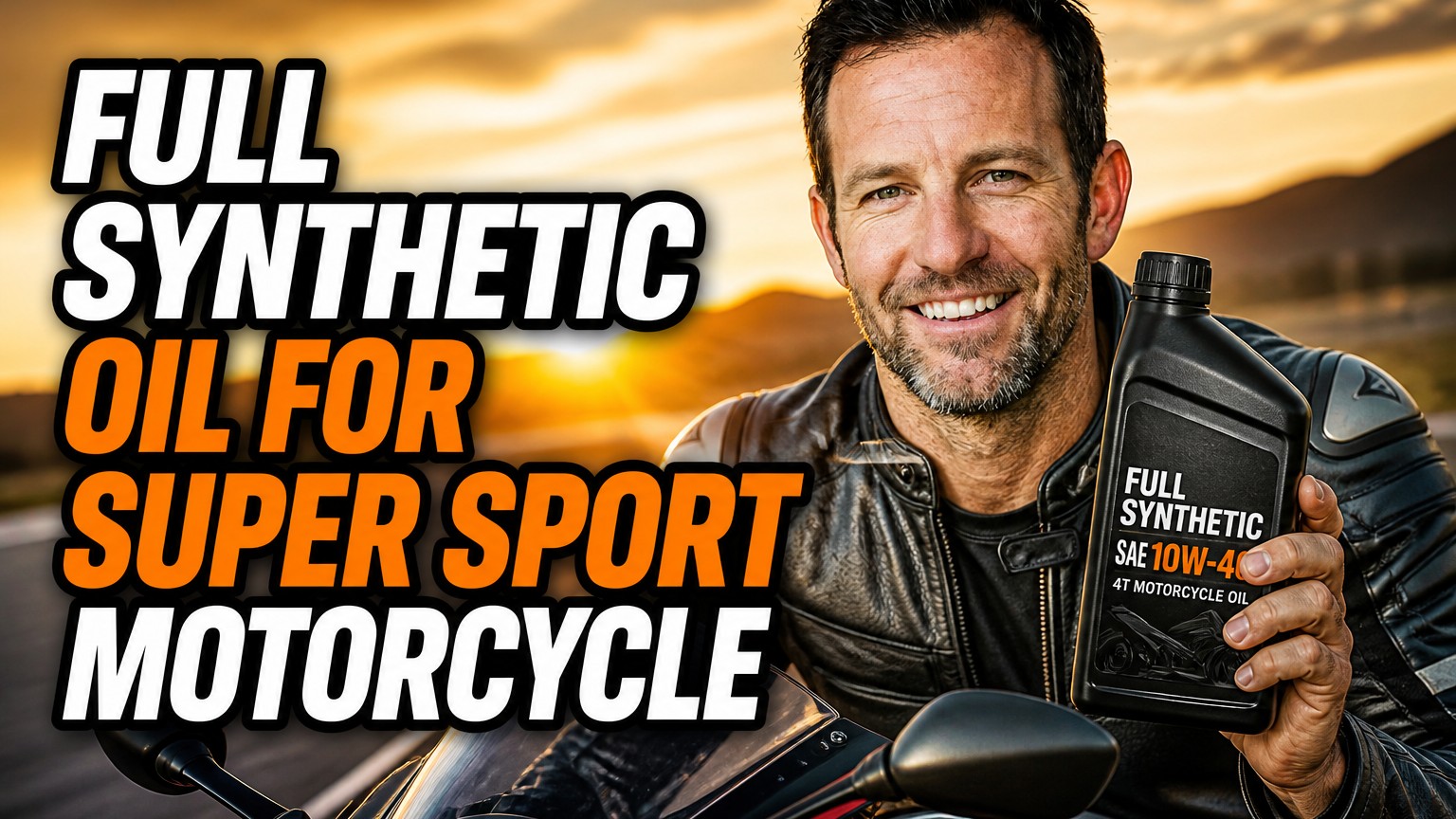
I’ve been riding super sport bikes for years, and if there’s one thing I’ve learned, it’s that oil is the cheapest performance upgrade you’ll ever buy. It’s also the easiest one to get wrong. A 1,000cc inline-four screaming past 12,000 rpm asks a lot more of its oil than a cruiser does.
Your sport bike’s engine, transmission, and wet clutch all share the same oil. That means the oil has to lubricate at high rpm, survive gear shear, and still let the clutch grab cleanly. Not every bottle on the shelf can do that.
Here are the eight full synthetic oils I trust (or would trust) in a super sport motorcycle. I’ve included real specs, rough prices, and the type of rider each one suits best.
- My top overall pick is Motul 300V Factory Line 10W-40 for its ester-based protection and race-bred stability.
- For daily street and canyon riding, Motul 7100 and Shell Advance Ultra 4 give the best value.
- Always choose a JASO MA2 rated oil to avoid clutch slip, and stick to the viscosity in your manual.
- Track days justify shorter change intervals, no matter how good the oil is.
What I Look For in a Sport Bike Oil
Before the list, here’s how I judge an oil. These are the same things I check at the parts counter.
JASO MA2 Rating
This is non-negotiable for me. JASO MA2 means the oil has been tested for high friction performance in wet clutches. It’s what keeps your clutch from slipping when you launch hard out of a corner.
If you want a deeper look at this topic, I put together a guide to the best synthetic motorcycle oil for wet clutch setups that covers it in detail.
Base Oil Quality
Not all “synthetic” oils are equal. Some use group III hydrocracked base stocks, while premium oils use PAO or ester bases. Esters cling to hot metal surfaces and resist heat breakdown, which is exactly what a revving sport bike engine needs.
Viscosity
Most super sport bikes call for 10W-40. Some manufacturers, especially for hot climates or track use, allow 10W-50 or 15W-50. I always follow the manual first and only adjust within the approved range.
1. Motul 300V Factory Line 10W-40 — Best Overall Performance
If I could only run one oil in my bike, Motul 300V Factory Line 10W-40 would be it. It uses Motul’s Ester Core technology, a blend of select synthetic esters that gives incredibly strong film strength under load.
It’s also JASO MA2 rated, so the clutch behaves normally. Shifts feel crisp, and I’ve noticed the engine feels a touch smoother at high rpm.
Why I Like It
- 100% synthetic ester-based formulation
- Race-proven in MotoGP and World Superbike paddocks
- Excellent shear stability and heat resistance
- Price: roughly $18 to $25 per liter
Downsides
It’s pricey. For a daily commuter that sees stop-and-go traffic, I think Motul 300V is a bit of overkill. But for spirited riding and track days, it’s my gold standard.
2. Motul 7100 10W-40 — Best for Street and Canyon Riding
The Motul 7100 10W-40 is the little brother of the 300V, and honestly, it’s what I recommend to most friends. It’s a 100% synthetic ester oil that’s cheaper and still excellent.
It meets JASO MA2 standards and works with catalytic converters. That matters if your sport bike has a cat in the exhaust.
Why I Like It
- Ester-based synthetic with strong thermal stability
- Smooth clutch engagement, even in heavy traffic
- Widely available in 1L and 4L bottles
- Price: roughly $14 to $18 per liter
The only reason it’s not number one is that the 300V has an edge under extreme track conditions. For street use, I honestly can’t feel much difference.
3. Mobil 1 Racing 4T 10W-40 — Best for Easy Availability
Sometimes you need oil on a Sunday afternoon and your local shop only has the big-name brands. That’s where Mobil 1 Racing 4T 10W-40 shines. It’s a fully synthetic oil built specifically for high-performance four-stroke motorcycles.
It carries a JASO MA2 rating and uses a robust additive package designed to resist viscosity breakdown. I’ve found it keeps shifts light and consistent between changes.
Highlights
- Fully synthetic with strong anti-wear additives
- Designed for high-rpm engines and extended heat cycles
- Easy to find at big-box and powersports retailers
- Price: roughly $12 to $16 per quart
It’s a dependable, no-drama choice. If you’re comparing options for general riding, my breakdown of the best motor oil for 4 stroke motorcycle engines covers a broader range of picks.
4. Shell Advance Ultra 4 10W-40 — Best Value Full Synthetic
The Shell Advance Ultra 4 10W-40 is a fully synthetic oil made with Shell’s PurePlus technology, which converts natural gas into a very pure base oil. That cleanliness shows up in how well it keeps the engine tidy.
It’s JASO MA2 rated and designed for modern sport bikes. I’ve seen it recommended widely in Asia and Europe, and it holds up well in warm climates.
Highlights
- Fully synthetic with PurePlus base oil
- Strong cleaning performance and clutch feel
- Great price-to-performance ratio
- Price: roughly $10 to $15 per liter
If you’re shopping in South Asia, you might also like my guide to the best engine oil for 4 stroke motorcycle in india, since Shell is easy to find there.
5. Castrol Power1 Racing 4T 10W-40 — Best for Everyday Throttle Response
Castrol’s Power1 Racing 4T 10W-40 is built around what the company calls Trizone technology. The idea is that it protects across the engine, gearbox, and clutch, which are exactly the three areas a sport bike stresses.
I like how responsive the engine feels on this oil. It has a slightly lighter, livelier character on the throttle, and it meets JASO MA2 requirements.
Highlights
- Synthetic formulation designed for high-revving engines
- Good protection against shear in the gearbox
- Easy to find worldwide
- Price: roughly $10 to $15 per liter
It’s not as exotic as an ester-heavy oil like Motul 300V. But for daily use and weekend rides, it’s a solid and affordable pick.
6. Liqui Moly Street Race 10W-40 — Best European Alternative
The Liqui Moly Street Race 10W-40 is a fully synthetic oil that uses synthetic ester technology. Liqui Moly built it specifically for powerful sport and super sport bikes, and it’s popular with riders across Europe.
It’s JASO MA2 rated and designed for high thermal loads. I like that it keeps the clutch feel consistent, even after a hard day of riding.
Highlights
- Fully synthetic with ester-based components
- Optimized for high-performance four-stroke engines
- Strong wear protection at high temperatures
- Price: roughly $15 to $22 per liter
It can be harder to find in some regions, so you may need to order online. If you do, it’s well worth it.
7. AMSOIL Synthetic Motorcycle Oil 10W-40 — Best for Long Drain Confidence
AMSOIL has a strong reputation for durability, and its Synthetic Motorcycle Oil 10W-40 lives up to it. It’s a 100% synthetic oil designed for motorcycles, with a JASO MA2 rating for wet clutch compatibility.
What I like is the strong anti-wear package and shear stability. It’s built to resist thinning out in the gearbox, which is a common weak spot on high-revving bikes.
Highlights
- 100% synthetic with robust anti-wear additives
- Strong shear resistance in the transmission
- Great for riders who want extra confidence between changes
- Price: roughly $14 to $18 per quart
That said, I’d still change it at the manufacturer’s interval, especially on a sport bike. Even the best oil can’t beat fresh oil.
8. Bel-Ray EXS Full Synthetic Ester 4T 10W-40 — Best for Track-Focused Riders
The Bel-Ray EXS Full Synthetic Ester 4T 10W-40 is designed for riders who push their bikes hard. As the name suggests, it uses a full synthetic ester base, and it’s built to deliver strong film strength at high temperatures.
It’s JASO MA2 rated, so it’s perfectly safe for wet clutches. I find it especially appealing for track riders who want an ester-based oil without paying the very top price.
Highlights
- Full synthetic ester formulation
- Designed for high-rpm, high-heat operation
- Good clutch feel and smooth shifting
- Price: roughly $14 to $19 per quart
It’s not as widely stocked as Mobil 1 or Castrol, but it’s easy to order online. For the track, it’s a strong option.
How to Choose the Right Oil for Your Riding Style
With eight good options, the choice comes down to how you ride. Here’s how I think about it.
For Daily Commuting and Weekend Rides
Go with Shell Advance Ultra 4, Mobil 1 Racing 4T, or Castrol Power1 Racing 4T. They’re affordable, easy to find, and more than capable for street use.
For Canyon Carving
I’d pick the Motul 7100 or Liqui Moly Street Race. The ester content gives extra margin when the engine sits at high rpm for long stretches.
For Track Days
Go for the Motul 300V or Bel-Ray EXS. Track use puts the oil under extreme heat and shear, so I want the strongest film protection I can get.
If you want a broader overview of what’s out there, my roundup of the best engine oil for motorcycle riders covers more bike types and budgets.
Common Mistakes I See Riders Make
Using Car Oil
Many automotive oils contain friction modifiers that make wet clutches slip. On a sport bike, that’s a recipe for a burnt clutch and a very expensive repair. Stick to motorcycle-specific oil.
Ignoring Viscosity
Going thicker “for protection” can actually hurt. Oil that’s too thick flows slowly on cold start, which is when most engine wear happens. I always stay within the manual’s approved range.
Stretching Change Intervals
Even the best synthetic oil gets contaminated with fuel, moisture, and metal particles. On my bikes, I change oil early if I do a lot of short trips or track days. It’s cheap insurance.
Skipping the Filter
A fresh oil filter matters just as much as the oil itself. I replace the filter at every oil change, no exceptions.
My Quick Oil Change Tips
A few habits have saved me headaches over the years.
- Warm the engine first. Warm oil drains faster and carries more contaminants out.
- Replace the crush washer. It’s a tiny part that prevents leaks.
- Check the level on a level surface. Use the sight glass or dipstick after a few minutes of settling.
- Torque the drain bolt correctly. Overtightening can strip the aluminum threads.
For deeper background on selecting oil across different bikes, check out this guide to the top engine oil for 4 stroke motorcycle models.
Final Thoughts
After comparing all of these, my overall favorite remains the Motul 300V Factory Line 10W-40. It’s expensive, but if you ride hard, it gives me the most peace of mind.
For most riders, though, the Motul 7100 or Shell Advance Ultra 4 is the smarter buy. They deliver excellent protection at a friendlier price.
Whichever you choose, confirm the JASO MA2 rating, match the viscosity to your manual, and change it on schedule. Do that, and your super sport engine will reward you with smooth, reliable power for years.
Frequently Asked Questions
What viscosity is best for a super sport motorcycle?
Most modern super sport bikes run 10W-40 from the factory, and it’s the safest choice for street riding. Some riders on high-mileage or track-focused bikes move to 10W-50 or 15W-50 in hot conditions. Always check your owner’s manual first.
Is full synthetic oil worth the extra cost on a sport bike?
Yes. Super sport engines rev high, run hot, and share oil between the engine, gearbox, and clutch. Full synthetic oil resists shear and heat breakdown far better than mineral or semi-synthetic oil, which protects the engine and keeps shifting consistent.
Can I use car oil in my super sport motorcycle?
I wouldn’t. Many car oils contain friction modifiers that can cause wet clutch slip. Look for a motorcycle-specific oil with a JASO MA or MA2 rating.
How often should I change full synthetic oil on a sport bike?
Follow your manufacturer’s interval, usually 6,000 to 8,000 miles for street use. Track riders should change it much sooner, often every 1,000 to 2,000 miles or after a few track days. Heavy city traffic and hot weather also justify shorter intervals.

Related Articles
7 Best Batteries for Motorcycles I’ve Tested and Trust in 2026
I've tested dozens of motorcycle batteries to find the best performers. From AGM to lithium, here are my top picks…
Jake Miller
15 min read

The Perfect Battery for Your Harley Davidson Softail: A Rider’s Complete Guide
Discover the perfect battery for your Harley Davidson Softail. I've tested multiple options and share real-world performance data, maintenance tips,…
Jake Miller
14 min read

The Best Battery for Your Harley Davidson: My Complete Guide After Years of Testing
Discover which battery truly performs best for Harley Davidson motorcycles. Real rider experience with AGM, lithium, and OEM options to…
Jake Miller
12 min read