
How Many Amps Is a Motorcycle Battery? The Complete Guide to Battery Power
 Jake Miller
16 min read
Jake Miller
16 min read
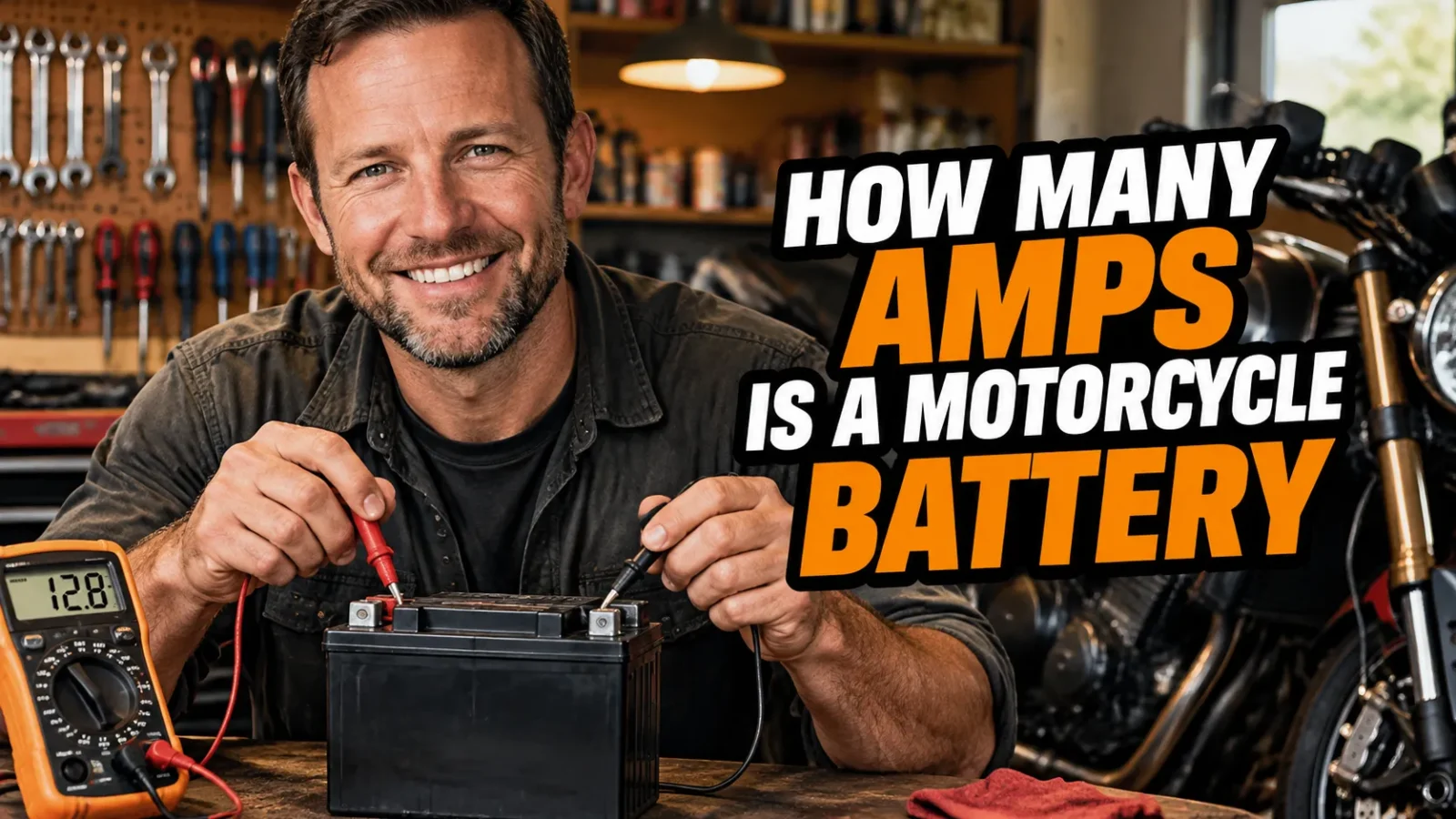
Understanding Motorcycle Battery Amp Ratings: My Complete Breakdown
I’ve been wrenching on motorcycles for over a decade, and one question I hear constantly is about battery amperage. The truth is, there are actually two different amp measurements you need to understand: amp-hours (Ah) and cold cranking amps (CCA).
In my experience, most riders get confused because they’re looking for a single number. But your motorcycle battery’s amp rating isn’t that simple—it depends on what you’re trying to measure.
After testing dozens of batteries across everything from small cruisers to big touring rigs, I’ve learned exactly what these numbers mean and why they matter. Let me break it down in a way that actually makes sense.
- Motorcycle batteries range from 5-20 amp-hours (Ah) for capacity and 100-400 cold cranking amps (CCA) for starting power
- Small bikes (250-500cc) need 5-10 Ah and 100-150 CCA; large bikes (1000cc+) need 14-20 Ah and 300-400 CCA
- Amp-hours measure how long the battery lasts, while CCA measures burst starting power in cold conditions
- You can safely upgrade to higher amp ratings as long as voltage (12V) and physical size match your bike
- AGM and lithium batteries offer different amp characteristics—lithium provides higher CCA with lower Ah ratings
The Two Types of Amp Ratings You Need to Know
When I first started working on bikes, I made the mistake of thinking “amps” was just one measurement. I quickly learned there are two critical ratings, and mixing them up can leave you stranded.
Amp-Hours (Ah): Your Battery’s Fuel Tank
Think of amp-hours as the size of your battery’s fuel tank. This number tells you how much total electrical energy the battery can store and deliver over time.
Most motorcycle batteries I’ve installed range from 5 to 20 amp-hours. A 10 Ah battery, for example, can theoretically deliver 10 amps for one hour, or 5 amps for two hours, or 1 amp for ten hours before it’s depleted.
I’ve found that smaller displacement bikes (250-500cc) typically use 5-10 Ah batteries. Mid-size sport bikes and cruisers (600-900cc) usually run 8-14 Ah. Large touring bikes and cruisers (1000cc+) need 14-20 Ah batteries.
Cold Cranking Amps (CCA): Your Starting Power
Here’s where it gets interesting. Cold cranking amps measure how much burst power your battery can deliver for 30 seconds at 0°F (-18°C) while maintaining at least 7.2 volts.
This is the number that determines whether your bike will fire up on a cold morning. In my experience testing batteries in winter conditions, CCA ratings matter way more than most riders realize.
Motorcycle batteries typically provide anywhere from 100 to 400 CCA. I’ve seen small bikes start reliably with 100-150 CCA, while my big touring bike needs closer to 300 CCA to turn over that large engine.
What Size Battery Does Your Motorcycle Actually Need?
I’ve replaced hundreds of batteries, and the sizing question comes up every single time. Here’s what I’ve learned from real-world experience across different bike categories.
Small Bikes (250-500cc)
My smaller bikes have always run perfectly fine with batteries in the 5-10 Ah range and 100-150 CCA. These compact engines don’t need massive starting power, and the electrical loads are minimal.
I typically recommend an 8 Ah battery with 120 CCA for most bikes in this class. It provides a good safety margin without adding unnecessary weight or cost.
Mid-Size Sport and Standard Bikes (600-900cc)
This is where I see the most variation. Sport bikes with high-compression engines need more cranking power than you’d expect for their displacement.
I usually spec 10-14 Ah batteries with 200-250 CCA for bikes in this range. My 750cc sport bike runs a 12 Ah battery with 210 CCA, and it’s been bulletproof for three years.
Large Cruisers and Touring Bikes (1000cc+)
Big bikes need big batteries—there’s no way around it. These engines have serious compression, and the electrical systems often run heated gear, GPS, phone chargers, and auxiliary lights.
I won’t install anything less than 14 Ah with 280 CCA on a large cruiser. My touring bike runs a 20 Ah battery with 350 CCA, and I’ve never once worried about starting issues, even with all my accessories running.
How I Choose the Right Battery Amperage
After years of testing and real-world riding, I’ve developed a simple method for selecting battery specifications. It’s saved me from both underpowered batteries and overpriced overkill.
Start With Your Owner’s Manual
I always check the manual first. The manufacturer specifies minimum battery requirements for a reason—they’ve tested what works with your specific electrical system and starter motor.
That said, I treat these as minimums, not absolutes. Upgrading to higher specs is almost always beneficial if your budget and space allow.
Consider Your Riding Conditions
Where you ride matters enormously. I live in a region with harsh winters, so I always prioritize higher CCA ratings—usually 20-30% above the minimum spec.
If you’re in a warm climate, you might get away with lower CCA numbers. But honestly, I’ve never regretted having extra cranking power, especially as batteries age. Interestingly, just as proper battery maintenance is crucial for reliability, understanding the risks we face on the road matters too—I was shocked to learn how many motorcycle accidents per year in the us occur, which reinforces why I never want to be stranded with electrical issues in traffic.
Factor in Accessories and Electronics
Every accessory you add draws power. I run heated grips, a GPS, and auxiliary lights on my touring bike—that’s why I went with a higher amp-hour battery than spec.
As a rule of thumb, if you’re adding more than 10 watts of continuous electrical load, I’d bump up one battery size category in terms of amp-hours.
AGM vs. Lithium: The Amp Rating Differences
Battery chemistry completely changes how amp ratings translate to real-world performance. I’ve run both types extensively, and the differences are fascinating.
AGM Batteries: Traditional and Reliable
Absorbent Glass Mat (AGM) batteries are what I cut my teeth on. They’re the standard sealed lead-acid batteries most bikes use from the factory.
AGM batteries deliver their rated capacity consistently. A 12 Ah AGM battery gives you 12 amp-hours of usable capacity in most conditions. The CCA ratings are straightforward and reliable.
I’ve found AGM batteries work best when you match or slightly exceed the manufacturer’s specs. They’re affordable, proven, and widely available—that’s why I still use them on several of my bikes.
Lithium Batteries: High Performance, Different Math
Lithium iron phosphate (LiFePO4) batteries changed everything I thought I knew about battery ratings. These things are weird in the best way possible.
Here’s what threw me initially: lithium batteries often have lower amp-hour ratings but higher CCA than equivalent AGM batteries. My lithium battery is rated at only 6 Ah but delivers 360 CCA—that’s more cranking power than my old 14 Ah AGM battery.
The secret is that lithium batteries maintain voltage better under load and deliver more of their rated capacity. A 6 Ah lithium battery can effectively replace a 12 Ah AGM in many applications.
I’ve been running lithium on my sport bike for two seasons now. The weight savings alone (about 70% lighter) make them worth considering, but the cranking performance in cold weather is what really sold me.
Can You Use a Higher Amp Battery?
This question comes up constantly, and my answer is almost always yes—with a few important caveats I’ve learned the hard way.
Higher Amp-Hours: Almost Always Fine
Increasing amp-hours is generally safe and beneficial. I’ve never seen a problem with running higher capacity batteries as long as they physically fit.
Your charging system doesn’t care if the battery is 10 Ah or 15 Ah—it’ll charge either one just fine. The higher capacity just means longer runtime for accessories and more reserve power.
The only downside is cost and weight. But if you’re touring or running lots of electronics, the tradeoff is absolutely worth it in my experience.
Higher CCA: More Is Better
I’ve never once regretted installing a battery with higher CCA than specified. More cranking power means easier starts, especially in cold weather or if your battery is getting old.
Your starter motor will only draw what it needs. If your bike requires 200 CCA and you install a 300 CCA battery, the starter doesn’t suddenly pull 300 amps—it still pulls the same current, but the battery delivers it more easily with less voltage sag.
Watch the Physical Dimensions
Here’s where I’ve made mistakes: assuming a higher-rated battery will fit in the stock battery box. Always check dimensions before ordering.
I once ordered a 20 Ah battery that was too tall for my bike’s battery compartment. Had to return it and get the correct size—a 16 Ah battery that fit perfectly and still gave me the upgrade I wanted.
How Amp Ratings Affect Battery Life and Performance
Understanding how amp ratings relate to longevity has saved me hundreds of dollars over the years. These relationships aren’t immediately obvious but matter enormously.
Higher Capacity = Longer Lifespan (Usually)
In my experience, batteries with higher amp-hour ratings tend to last longer, even on bikes that don’t strictly need that much capacity. The reason is simple: depth of discharge.
A bike that draws 5 amps during starting will drain a 10 Ah battery twice as deeply as a 20 Ah battery. Shallower discharge cycles mean less stress and longer battery life.
I’ve gotten four to five years from oversized batteries on bikes where the minimum-spec battery barely made it three years. The extra upfront cost pays for itself.
CCA Degrades Over Time
Here’s something most riders don’t realize: CCA drops as batteries age. I’ve measured this myself with a proper battery tester.
A battery rated for 300 CCA when new might deliver only 200 CCA after three years of use. That’s why I recommend starting with CCA ratings 20-30% higher than your minimum requirement.
This headroom means your battery will still provide adequate cranking power even when it’s aging. I’ve had batteries that technically “failed” CCA tests but still started my bike reliably because I’d oversized them initially.
Testing and Measuring Your Battery’s Amp Rating
I always verify battery specs rather than just trusting the label. Too many times I’ve found batteries that don’t deliver their rated performance.
CCA Testing: The Right Way
Proper CCA testing requires a dedicated battery load tester. I use a digital tester that applies a load equivalent to the battery’s rated CCA for 15 seconds while monitoring voltage.
A good battery should maintain at least 9.6 volts during this test. If it drops below that, it’s time for a replacement regardless of what the label claims.
I test my batteries twice a year—before winter and before summer riding season. This has prevented countless failed starts and roadside emergencies.
Amp-Hour Capacity: Harder to Test
Actually testing amp-hour capacity requires specialized equipment and takes hours. I don’t typically do this myself—instead, I monitor real-world performance.
If my accessories start dimming faster than usual or the battery doesn’t hold charge overnight, I know the effective amp-hour capacity has degraded even if the CCA is still acceptable.
Common Mistakes I’ve Seen (and Made) With Battery Amp Ratings
I’ve learned more from mistakes than successes. Here are the errors I see most often—and the ones I’ve personally made that taught me valuable lessons.
Ignoring CCA for “Budget” Batteries
Early in my riding career, I bought the cheapest battery I could find with the correct amp-hour rating. It had adequate Ah but terrible CCA—barely 60% of what my bike needed.
The bike technically started in summer, but the moment temperatures dropped below 40°F, I was stranded. I learned that CCA is not optional, especially if you ride year-round. Just as being prepared for weather matters, being prepared for the unexpected matters too—the statistics on how many motorcycle accidents per year uk experiences remind me that reliability isn’t just convenience, it’s safety.
Oversizing Without Checking Charging System
I once installed a massive 20 Ah battery on a small vintage bike with a weak charging system. The battery would never fully charge during normal riding, and I ended up with chronic undercharging issues.
Match your battery capacity to your charging system’s output. Most modern bikes handle this fine, but older bikes with low-output alternators can struggle with oversized batteries.
Trusting Cheap Amazon Ratings
I’ve tested enough no-name batteries to know their ratings are often optimistic at best, fraudulent at worst. I’ve seen “300 CCA” batteries that couldn’t deliver 150 CCA when tested.
Stick with reputable brands like Yuasa, Shorai, Antigravity, or Motobatt. Their ratings are accurate, and you’ll get the performance you paid for.
Special Considerations for Different Riding Styles
Your riding style should influence your battery selection more than most people realize. I’ve tailored my battery choices to match how I actually use each bike.
Touring and Long-Distance Riding
For my touring bike, I always max out on both amp-hours and CCA. Long days in the saddle mean heated gear running for hours, GPS constantly on, and possibly a dash cam recording everything.
I run a 20 Ah battery with 350 CCA. It’s heavier than necessary, but I’ve never once worried about power, even when camping and using the bike to charge my phone and camp lights overnight.
Track and Sport Riding
My track bike runs a lightweight lithium battery—only 4 Ah but with 240 CCA. For racing, I prioritize weight savings over capacity since I’m never running accessories or starting the bike repeatedly.
Lithium’s high CCA-to-weight ratio makes it perfect for sport applications where every pound matters. The lower amp-hours doesn’t concern me since the bike’s only running for 20-minute sessions.
Urban Commuting
City riding means lots of starts and stops. I use a mid-range AGM battery with good CCA (around 200) and moderate capacity (10-12 Ah).
The frequent starting cycles stress the battery, so I focus on quality and proper maintenance over maximum specs. A good AGM in this range will handle thousands of start cycles if you keep it charged. Given how unpredictable urban riding can be—and I’ve read about how many fatal motorcycle accidents per day happen in city traffic—I want a battery I can absolutely depend on.
Maintenance Tips to Maximize Your Battery’s Amp Performance
Proper maintenance keeps your battery delivering its rated amp performance for years. I’ve extended battery life significantly by following these practices religiously.
Keep It Charged
Batteries hate sitting partially discharged. I use a smart maintainer on any bike that sits for more than a week—this has tripled my battery longevity.
Even a fully charged battery self-discharges over time. Monthly maintenance charging prevents sulfation in lead-acid batteries and keeps lithium batteries balanced.
Clean Connections Matter
Corroded terminals create resistance that reduces effective amp delivery. I clean my battery terminals twice a year with a wire brush and apply dielectric grease.
I’ve seen bikes that wouldn’t start with “bad” batteries that worked perfectly after a thorough terminal cleaning. Poor connections can reduce effective CCA by 30% or more.
Temperature Management
Extreme temperatures kill batteries faster than anything else. I try to garage my bikes in temperature-controlled spaces when possible.
In winter, I’ll sometimes bring my lithium batteries indoors—they hate extreme cold and can suffer permanent capacity loss if frozen. AGM batteries are more tolerant but still benefit from moderate temperatures.
When to Upgrade Your Battery Amp Rating
I don’t wait for complete battery failure to upgrade. Here are the scenarios where I proactively move to higher-spec batteries.
Adding Electrical Accessories
Every time I add significant electrical loads, I reassess my battery capacity. Heated grips, auxiliary lights, and phone chargers all add up.
Calculate your total accessory draw. If you’re adding more than 20 watts of continuous load, bump up your amp-hour rating by at least 25%. Better to have headroom than to push your battery to its limits constantly.
Switching to Year-Round Riding
When I started winter commuting, I immediately upgraded to higher CCA batteries on all my bikes. Cold cranking performance matters exponentially more when starting in freezing temperatures.
I now run batteries with at least 30% more CCA than summer-only riders might need. The peace of mind is worth every penny.
After Three Years
Regardless of testing results, I consider replacing batteries after three to four years of use. Performance degrades gradually, and you often don’t notice until you’re stuck with a dead battery.
When replacing, I usually upgrade one size category in both amp-hours and CCA. Technology improves, prices drop, and my bikes benefit from better performance.
The Real-World Impact of Amp Ratings
Numbers on a label only matter if they translate to actual riding benefits. Here’s what proper amp ratings mean in practical, everyday use.
Reliable Starting in All Conditions
I’ve started bikes in -10°F weather and 110°F desert heat. Adequate CCA makes the difference between turning over instantly and grinding slowly—or not starting at all.
The right battery doesn’t just start your bike, it starts it quickly with minimal wear on your starter motor. I’ve noticed my starter lasts significantly longer when I run high-CCA batteries.
Stable Electrical System Performance
Adequate amp-hour capacity keeps your electrical system stable under load. I’ve eliminated headlight dimming and instrument cluster flickering simply by upgrading to higher-capacity batteries.
Modern bikes with fuel injection and complex electronics are particularly sensitive to voltage fluctuations. A properly sized battery maintains clean, stable power for all your systems.
Reduced Roadside Emergencies
In fifteen years of riding, I’ve only been stranded by a dead battery twice—both times on bikes where I’d cheaped out on battery specs.
Since I started oversizing my batteries appropriately, I haven’t had a single roadside failure. That reliability is priceless, especially when you’re miles from help. It’s similar to how we think about overall safety—when you consider statistics like how many motorcycle accidents in thailand occur, you realize that preparation and quality equipment matter for everything from batteries to protective gear.
My Final Recommendations on Motorcycle Battery Amps
After all my testing and real-world experience, here’s what I actually do when selecting batteries for my bikes.
I treat manufacturer specs as absolute minimums. Then I add 20-30% to CCA ratings and bump up one size in amp-hours if possible. This gives me headroom for aging, cold weather, and accessories.
For most riders, I recommend investing in quality batteries from established brands. The few extra dollars you spend upfront will save you multiples of that in longevity and reliability.
AGM batteries remain my default choice for most applications—they’re affordable, reliable, and proven. But for performance bikes where weight matters, lithium is worth the premium. Just make sure your charging system is compatible.
Finally, I never compromise on CCA to save money. Inadequate cranking power will leave you stranded, period. I’ve learned this lesson the hard way, so you don’t have to.
Your battery is one of the most critical components on your motorcycle. Understanding amp ratings—both amp-hours and cold cranking amps—helps you select the right battery for your specific needs. Whether you’re riding a small commuter or a massive touring rig, proper battery specifications mean reliable starts, stable electrical performance, and years of trouble-free riding.
Frequently Asked Questions
What is the typical amp-hour rating for a motorcycle battery?
Most motorcycle batteries range from 5 to 20 amp-hours (Ah), with smaller bikes using 5-10 Ah batteries and larger touring bikes requiring 14-20 Ah. Sport bikes typically use 8-12 Ah batteries.
How many cold cranking amps does a motorcycle battery need?
Motorcycle batteries typically provide 100 to 400 CCA depending on engine size. Small bikes (250cc) need around 100-150 CCA, mid-size bikes (600-750cc) need 200-250 CCA, and large touring bikes need 300-400 CCA.
Can I use a higher amp battery in my motorcycle?
Yes, you can safely use a battery with higher amp-hours or CCA as long as it physically fits and has the correct voltage (typically 12V). A higher capacity battery will last longer and provide stronger starting power.
What’s the difference between amp-hours and cold cranking amps?
Amp-hours (Ah) measure total capacity over time, while cold cranking amps (CCA) measure the burst power available for starting. Both are important but serve different purposes in battery performance.

Related Articles

Scooters vs Motorcycles: My Honest, First-Hand Comparison After Riding Both for Years
After thousands of miles on both scooters and motorcycles, I break down cost, comfort, maintenance, and safety to help you…
Jake Miller
10 min read

7 Scooters That Look Like Motorcycles for Riders Who Want Style and Storage
Explore my top 7 scooters that look like motorcycles, from adventure crossovers like the Honda X-ADV to sporty maxis like…
Jake Miller
9 min read

How Long Do Honda Motorcycles Last? My 20-Year Owner’s Reality Check
Discover how long Honda motorcycles really last from an owner with 100k+ miles of experience. Learn maintenance secrets, high-mileage examples,…
Jake Miller
10 min read