
How I Avoid Motorcycle Accidents: Essential Safety Strategies That Keep Me Riding
 Jake Miller
15 min read
Jake Miller
15 min read
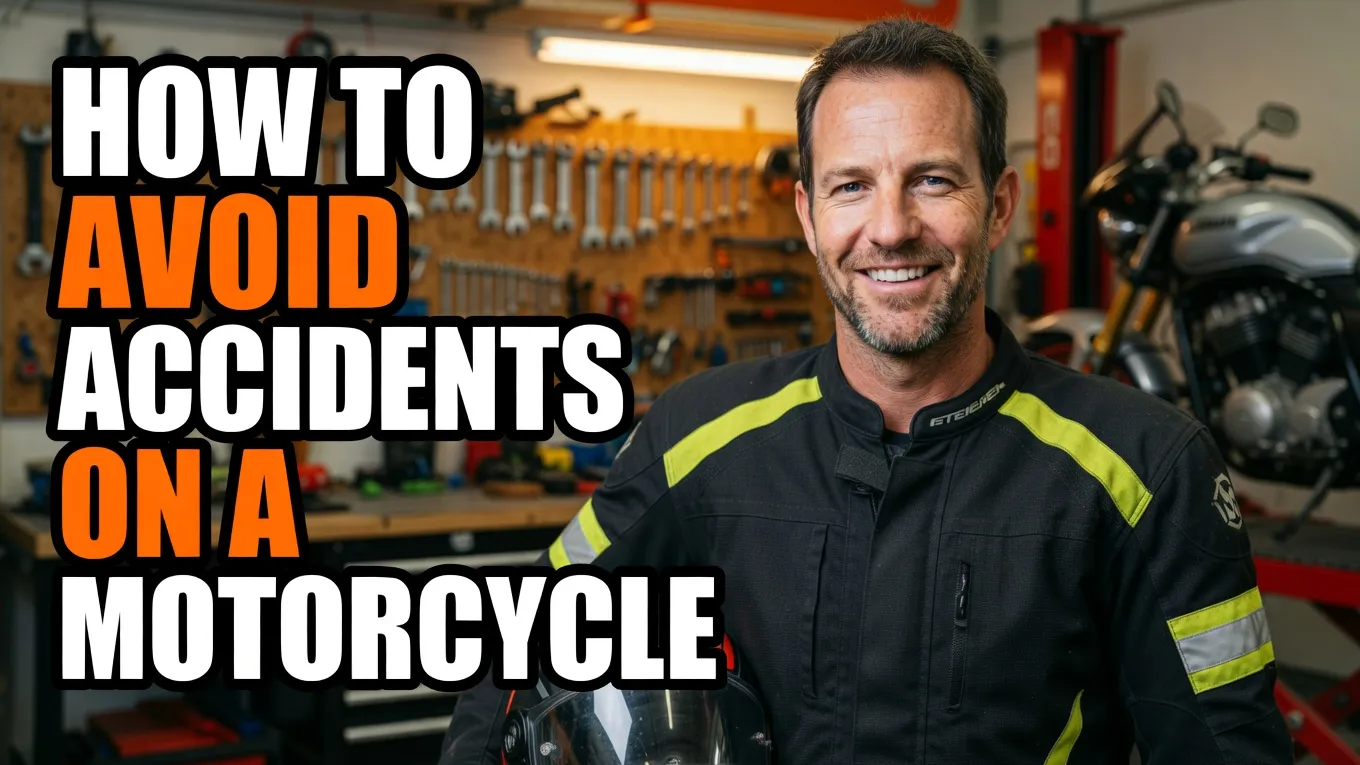
I’ve been riding motorcycles for over a decade, and I can tell you honestly that every time I swing my leg over the saddle, I’m thinking about safety. Not in a fearful way, but with the calm awareness that comes from experience and respect for the machine and the road.
Motorcycle accidents are a serious reality, but they’re not inevitable. Through years of riding in all conditions—from rush hour traffic to mountain twisties—I’ve developed habits and strategies that have kept me upright and safe.
In this article, I’m sharing everything I’ve learned about avoiding motorcycle accidents, from the gear I wear to the mental techniques I use every single ride.
- Visibility and defensive positioning prevent most car-vs-motorcycle collisions
- Quality safety gear and regular motorcycle maintenance are non-negotiable for accident prevention
- Mastering emergency braking and swerving techniques through practice saves lives
- Riding within your skill level and avoiding impairment are fundamental safety principles
- Continuous education and hazard awareness keep your riding skills sharp
The Foundation: Proper Safety Gear
I’ll start with the most obvious but often overlooked aspect: gear. Every single time I ride, I wear full protective equipment, even for short trips to the grocery store. I’ve seen too many “I was just going around the corner” accidents to take chances.
My helmet is always DOT-approved (or better yet, Snell-certified). I’ve upgraded to a modular helmet with high-visibility colors because being seen is just as important as protection. Yellow, white, or bright red helmets make you significantly more noticeable to drivers.
Beyond the helmet, I never skip my armored riding jacket, reinforced gloves, proper riding pants, and over-the-ankle boots. Yes, it’s hot in summer. Yes, it takes an extra minute to put on. But I’ve gone down once at low speed, and my gear saved me from road rash and broken bones.
Investing in Visibility
Here’s something I learned the hard way: being right doesn’t matter if you’re invisible. I now wear high-visibility gear with reflective strips, especially for dawn, dusk, and night riding. I also added reflective tape to my helmet and bike.
I run my headlight on high beam during the day (modulating headlights are even better). Some riders worry about annoying other drivers, but I’d rather be seen than polite. The statistics are clear—daytime headlight use reduces accidents significantly.
Master Defensive Riding Techniques
Defensive riding has become second nature to me, but it took conscious practice. The core principle is simple: assume every vehicle is about to do the worst possible thing. It sounds paranoid, but this mindset has saved me countless times.
I always ride as if I’m invisible to other drivers—because often, I am. The “looked but failed to see” phenomenon is real. Drivers look right at you and genuinely don’t register your presence because they’re scanning for cars.
Strategic Lane Positioning
I constantly adjust my position within my lane based on what gives me the best visibility and escape routes. In traffic, I typically ride in the left third of my lane, where I’m visible in drivers’ mirrors and have space to maneuver.
I avoid riding directly alongside cars, especially in their blind spots. If I can’t pass quickly, I either drop back or accelerate past. Lingering next to a vehicle is asking for trouble when they decide to change lanes.
At intersections, I position myself where left-turning drivers can see me clearly. I also cover my brakes and watch their wheels—wheels tell you what a car is about to do before the turn signal does (if they even use it).
The Two-Second Rule (Minimum)
I maintain at least a two-second following distance in good conditions, and I increase it to four seconds or more in rain or on unfamiliar roads. This buffer gives me time to react when the unexpected happens—and it always does.
Tailgating is suicide on a motorcycle. I need that space not just for braking, but for swerving around hazards. My bike can stop faster than most cars in ideal conditions, but ideal conditions are rare on real roads.
Regular Motorcycle Maintenance
A mechanical failure at 60 mph isn’t just inconvenient—it’s potentially fatal. That’s why I’ve become religious about maintenance. I check my motorcycle oil before every long ride and at least weekly for regular riding.
My pre-ride inspection checklist includes tires (pressure and tread), brakes (both front and rear), lights (all of them), chain tension and lubrication, and fluid levels. It takes five minutes and has caught problems before they became dangerous.
Tire Maintenance Is Critical
Tires are literally the only thing connecting me to the road, so I’m obsessive about them. I check pressure every week with a proper gauge—not the gas station air pump’s built-in gauge, which is usually inaccurate.
I inspect the tread for wear, cracks, and embedded objects. I’ve replaced tires that technically had tread left because the rubber was aged and hardened. Old tires don’t grip, period.
Brakes and Chain
I test my brakes every ride before hitting traffic. Spongy brakes or unusual sounds get addressed immediately. I also keep my chain properly tensioned and lubricated—a chain that snaps or comes off can lock the rear wheel instantly.
If you’re not comfortable with maintenance, find a trusted mechanic. But learn at least the basics yourself. Knowing how to clean a motorcycle gas tank and understanding how to diagnose an overheating engine has helped me catch problems early and avoid breakdowns in dangerous situations.
Develop Advanced Riding Skills
Taking a basic safety course was required for my license, but I didn’t stop there. I’ve taken multiple advanced riding courses, and each one taught me techniques that have proven invaluable in real-world situations.
The emergency braking drills I practiced in a parking lot became muscle memory. When a car pulled out in front of me last year, I didn’t think—I just squeezed both brakes with the right pressure and stopped inches from impact.
Emergency Swerving
Countersteering and emergency swerving aren’t intuitive. I spent hours practicing low-speed and high-speed swerves around cones until the movements became automatic. In an emergency, you don’t have time to remember the technique—your body just has to do it.
I also practiced target fixation avoidance. Your bike goes where you look, so training yourself to look at the escape route instead of the obstacle is crucial. It’s harder than it sounds under stress.
Continuous Learning
I read accident reports and analysis, not to scare myself, but to learn from others’ mistakes. I watch crash analysis videos (the educational ones, not the shock value compilations) to understand what went wrong and how to avoid similar situations.
Every year, I try to take some form of additional training—whether it’s a track day to practice emergency maneuvers at speed, an advanced cornering clinic, or even a dirt bike course to improve my bike control skills.
Road Awareness and Hazard Recognition
I’ve trained myself to constantly scan the road ahead, identifying potential hazards before they become problems. This isn’t passive observation—it’s active threat assessment that happens continuously while riding.
I look at least 12 seconds ahead on highways, watching for brake lights, traffic patterns, and anything unusual. In urban areas, I’m scanning intersections, driveways, and parked cars for any sign of movement.
Reading the Road Surface
Road conditions that barely affect cars can be deadly on a motorcycle. I’ve learned to spot gravel, oil patches, painted lines, metal plates, and wet leaves from a distance. My line through corners is chosen to avoid questionable surfaces.
Rain grooves in concrete, tar snakes on hot days, and debris in the roadway all get my attention. I adjust my speed and positioning accordingly. I’ve learned that slowing down slightly and staying alert prevents way more accidents than aggressive riding and hoping for the best.
Weather Considerations
I ride in rain when necessary, but I significantly modify my approach. I reduce speed, increase following distance, avoid painted surfaces and metal, and stay smooth with all controls. No sudden braking, no aggressive acceleration, no sharp turns.
In heavy rain, I’ve learned that visibility becomes the bigger danger—both seeing and being seen. My bright gear and modulating headlight are essential. If visibility drops too low, I pull over and wait it out. No destination is worth riding in conditions where I can’t see or be seen.
Speed Management and Riding Within Limits
This one’s tough for many riders to hear, but speed kills—especially when combined with other risk factors. I’ve found that riding at or near the speed limit gives me time to react, time to assess situations, and time to execute proper responses.
I’m not saying never exceed the speed limit (though legally, that’s what you should do). I’m saying that excessive speed—particularly in traffic, unfamiliar areas, or challenging conditions—dramatically reduces your margin for error.
Matching Speed to Skill and Conditions
I know my skill level, and I don’t exceed it just to keep up with faster riders. On unfamiliar roads, I reduce my pace significantly. When I’m tired, distracted, or not feeling 100%, I ride even more conservatively or postpone the trip.
In corners, I’ve learned to enter slower than I think necessary. I can always add throttle mid-corner if I’ve got room, but trying to scrub speed mid-corner is how riders lowside into guardrails.
Avoid Impairment at All Costs
I have a zero-tolerance policy for riding impaired. Not even one beer. Not when I’m exhausted. Not when I’m emotionally distressed or on medication that might affect my reaction time. Never.
The data is unambiguous: alcohol and drugs (including legal prescriptions that cause drowsiness) are factors in a huge percentage of fatal motorcycle accidents. Impairment reduces reaction time, judgment, and coordination—all things you absolutely need on a motorcycle.
Recognizing Subtle Impairment
I’ve learned to recognize when I’m not at my best, even without substances involved. Fatigue, stress, anger, and distraction all impair riding ability. If I’m fuming about something that happened at work, I take a few minutes to center myself before riding home.
On long trips, I stop every 90 minutes to stretch, hydrate, and mentally reset. Dehydration and fatigue creep up slowly, and by the time you notice you’re impaired, you’ve already been making poor decisions.
Special Situations That Demand Extra Caution
Certain riding scenarios statistically involve higher accident rates. I’ve identified these and developed specific strategies for each.
Intersections
Most of my close calls have happened at intersections. I approach every intersection assuming someone will run the red light or turn left across my path. I slow down slightly even when I have the green, position myself for maximum visibility, and keep my fingers on the brake lever.
I make eye contact with drivers when possible, but I don’t trust it. Just because someone looked at me doesn’t mean they saw me or will yield.
Parking Lots and Driveways
I’m hyper-alert when riding past parking lots, strip malls, and residential driveways. Cars backing out or pulling in often don’t look for motorcycles. I’ve had countless near-misses from vehicles entering the road without stopping at the sidewalk.
My solution is to slow down and create space when passing these hazard zones. I also watch for the telltale signs: brake lights illuminating, reverse lights, or wheels turned toward the road.
Group Riding
Group rides introduce unique risks. I’ve learned to ride my own ride, not someone else’s. If the group is going too fast for my comfort or skill level, I drop back or split off. Peer pressure isn’t worth a crash.
I also maintain proper spacing within the formation. The staggered formation works well, but I never ride directly beside another rider. If something goes wrong, I need escape routes.
Reduce Distractions
I don’t use my phone while riding, period. No texts, no calls, no navigation fiddling. I either pull over to check something or use voice-only navigation through a Bluetooth headset (legal in my state).
Even legal distractions can be dangerous. I’ve learned to minimize passenger conversations when riding in challenging conditions. Music is fine, but I keep the volume low enough to hear traffic and emergency vehicles.
Mental Focus
Riding requires constant attention. I don’t let my mind wander into planning mode, replaying conversations, or daydreaming. When I catch myself distracted, I actively refocus on the road, my surroundings, and potential hazards.
This mental discipline improves with practice. Think of it as active meditation—being fully present in the moment, aware of everything around you.
Motorcycle-Specific Maintenance for Safety
Beyond basic maintenance, certain motorcycle-specific issues affect safety. For example, I pay attention to my exhaust system—not just for sound, but for function. Learning how to quiet motorcycle exhaust helped me understand exhaust flow and backpressure, which affects engine performance and reliability.
If you’re interested in exhaust modifications, understanding how to make motorcycle baffles can help you maintain proper performance while keeping noise levels reasonable—something that improves community relations and keeps you focused on riding rather than mechanical issues.
Night Riding Requires Extra Vigilance
I limit night riding when possible, but when I do ride after dark, I’m extra cautious. Visibility drops dramatically, depth perception becomes unreliable, and hazards like animals or debris are harder to spot.
My strategy includes using high beam whenever there’s no oncoming traffic, reducing speed by about 10%, and increasing following distance. I also keep my visor clean—even minor smudges scatter headlight glare and reduce visibility significantly at night.
Watch for Animals
Deer, dogs, and other animals are most active at dawn and dusk. I’ve had deer jump out in front of me twice. Both times, I survived because I was scanning the sides of the road for eye reflection and movement, and I wasn’t riding at excessive speed.
If an animal appears suddenly, I’ve learned not to swerve radically—hitting a deer is bad, but lowsiding into a guardrail or oncoming traffic is worse. The best strategy is prevention: slow down in areas with animal crossing signs, especially during prime hours.
Continuous Risk Assessment
Every ride, I’m making hundreds of micro-decisions based on risk assessment. Is that car at the intersection going to wait? Is this road surface too slippery for my current speed? Do I have enough space to pass safely?
I’ve developed a mental framework: identify the hazard, assess the risk, determine the response, execute smoothly. This process happens in seconds, but it’s systematic rather than reactive.
The Acceptance of Risk
Here’s something important I’ve come to terms with: riding motorcycles involves inherent risk. I can’t eliminate that risk entirely, only manage it to acceptable levels. Accepting this truth has made me a better rider because I don’t take safety for granted or assume I’m invulnerable.
Every time I ride, I’m making a conscious choice that the joy, freedom, and practicality of motorcycling outweigh the managed risks. That conscious choice keeps me from becoming complacent.
Building a Safety Culture
I try to promote safety among my riding friends without being preachy. I lead by example—wearing gear, riding responsibly, and being honest about close calls and mistakes. When someone shares a near-miss story, I don’t judge; I ask what they learned and what they’ll do differently next time.
The motorcycle community can be its own worst enemy when it comes to safety. The “loud pipes save lives” crowd who neglect everything else, the squid culture that glorifies reckless behavior, the veterans who haven’t updated their skills in decades—all of these perpetuate unsafe riding.
Mentoring New Riders
When I ride with newer riders, I make a point to explain my decisions. Why I chose that lane position, why I slowed before that intersection, how I identified that hazard. Teaching others reinforces my own good habits and helps build competent, safe riders.
Final Thoughts on Staying Safe
After thousands of miles and more than a decade of riding, I can tell you that avoiding motorcycle accidents isn’t about one magic technique or piece of gear. It’s about building layers of defense: proper equipment, maintained machinery, developed skills, defensive strategies, and constant awareness.
Every ride is a fresh opportunity to practice these principles. I’ve never had a serious accident, and while luck certainly plays a role, I genuinely believe that the habits I’ve described here have kept me safe far more than chance alone.
Riding safely doesn’t mean riding scared or missing out on the joy of motorcycling. It means riding smart, staying alert, and respecting the fact that you’re piloting a powerful machine in an environment full of hazards.
The freedom and exhilaration of riding are incredible, but they’re only sustainable if you make it home safely. That’s why I approach every ride with these principles in mind—they’ve become second nature, and they’ve kept me upright, healthy, and loving motorcycles for years.
Stay safe out there, keep the rubber side down, and never stop learning. Your future self will thank you for the caution and preparation you invest today.
Frequently Asked Questions
What is the most common cause of motorcycle accidents?
In my experience, the most common causes are driver inattention (cars not seeing motorcycles), excessive speed, and poor road conditions. About 40% of accidents involve another vehicle violating the rider’s right of way.
How can I make myself more visible on a motorcycle?
I always wear bright or reflective gear, use my headlight at all times, position myself in the lane where drivers can see me, and avoid lingering in blind spots. High-visibility helmets and jackets make a huge difference.
What safety gear is essential for preventing motorcycle injuries?
At minimum, I never ride without a DOT-approved helmet, reinforced riding jacket, gloves, long pants (preferably with armor), and over-the-ankle boots. Full gear has saved me from serious injury multiple times.
Should I take a motorcycle safety course even if I’m experienced?
Absolutely. I’ve been riding for years and still take advanced courses. They teach emergency braking techniques, swerving skills, and hazard recognition that you simply can’t learn on your own.

Related Articles
7 Best Batteries for Motorcycles I’ve Tested and Trust in 2026
I've tested dozens of motorcycle batteries to find the best performers. From AGM to lithium, here are my top picks…
Jake Miller
15 min read

The Perfect Battery for Your Harley Davidson Softail: A Rider’s Complete Guide
Discover the perfect battery for your Harley Davidson Softail. I've tested multiple options and share real-world performance data, maintenance tips,…
Jake Miller
14 min read

The Best Battery for Your Harley Davidson: My Complete Guide After Years of Testing
Discover which battery truly performs best for Harley Davidson motorcycles. Real rider experience with AGM, lithium, and OEM options to…
Jake Miller
12 min read