
How to Diagnose an Overheating Engine: A Rider’s Step-by-Step Guide
 Jake Miller
10 min read
Jake Miller
10 min read
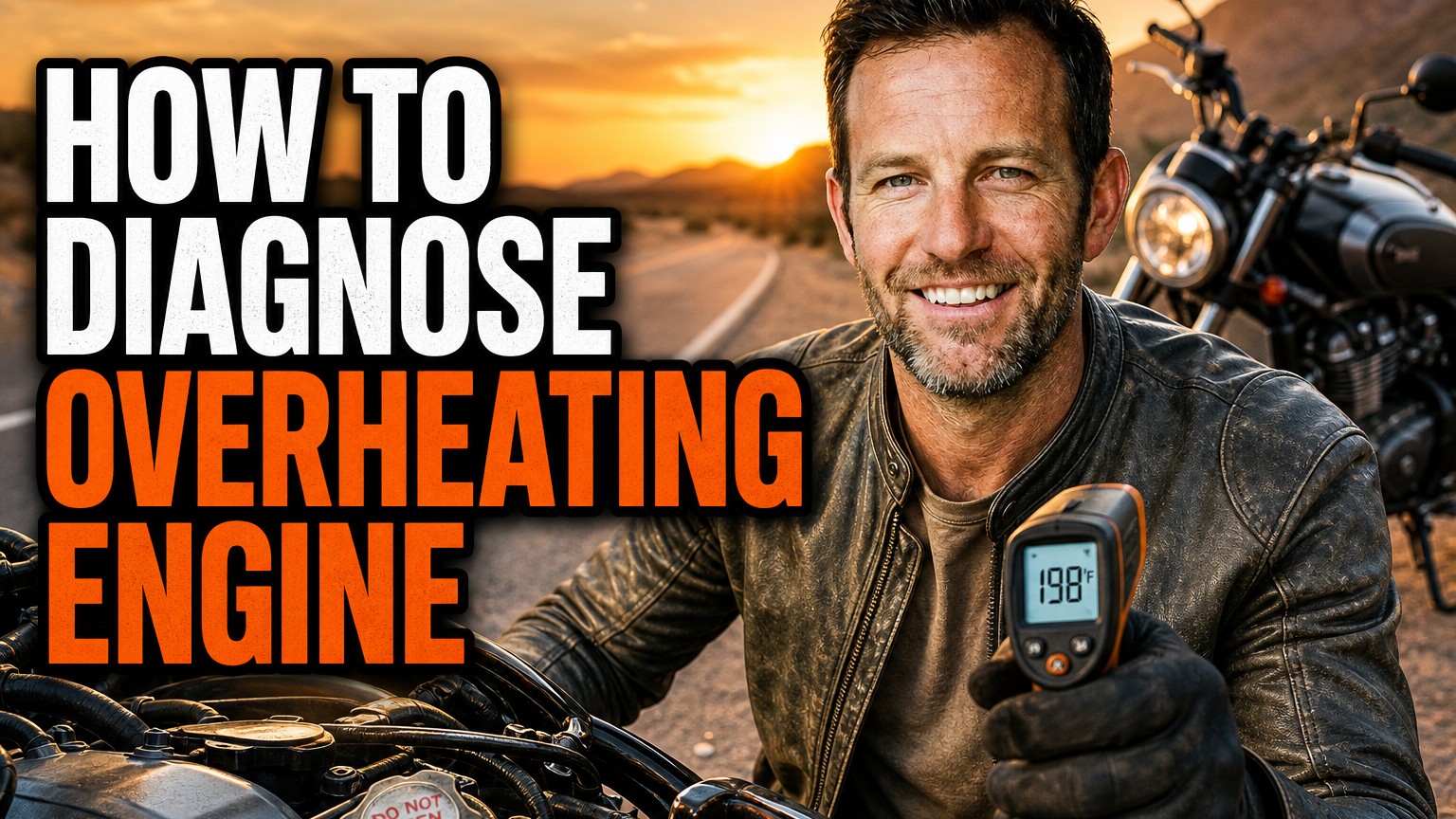
I still remember the first time my temperature gauge crept into the red. I was stuck in summer traffic, the fan wasn’t kicking in, and I could smell hot metal and coolant. I made every mistake possible that day, including panicking and revving the engine.
Since then, I’ve learned that overheating almost always leaves clues. If you know what to look for and the order to check things in, you can find the cause without guessing or throwing parts at the problem. Here’s the exact process I use.
- Shut the engine off safely and let it cool before touching anything.
- Check the cheap, simple things first: coolant level, oil level, and the cooling fan.
- Work through the thermostat, radiator, water pump, and airflow in order.
- Watch for warning signs like white smoke, milky oil, or bubbling coolant, which can point to a head gasket failure.
- Regular maintenance and the right oil prevent most overheating problems.
First Things First: Stop Safely and Let It Cool
Before any diagnosis, deal with the immediate problem. If your gauge is climbing or you smell something hot, pull over as soon as it’s safe. Switch off the engine.
I know it’s tempting to keep going “just a little further.” Don’t. A few extra miles on an overheated engine can warp a cylinder head and turn a $20 fix into a four-figure repair.
Safety Rules I Never Break
- Never open a hot radiator cap. Pressurized coolant can cause severe burns.
- Wait at least 30 to 45 minutes before touching coolant parts.
- Keep your hands and clothing away from the fan, which can start on its own even with the engine off.
- Park on level ground so your fluid level readings are accurate.
Recognizing the Early Warning Signs
Overheating rarely arrives out of nowhere. In my experience, the bike or car usually whispers before it shouts. Catching these signs early saves a lot of grief.
Symptoms I Watch For
- A temperature gauge reading higher than normal
- A warning light on the dash
- Steam or vapor coming from the engine area
- A sweet, syrupy smell, which is usually leaking coolant
- Pinging, knocking, or a sudden loss of power
- A fan that runs constantly, or never runs at all
If you notice more than one of these, treat it seriously. Multiple symptoms together often mean the problem has been building for a while.
My Step-by-Step Diagnosis Process
The secret to good diagnosis is order. I start with the easiest, cheapest checks and work toward the harder ones. That way I don’t tear apart a water pump when the real issue was an empty coolant reservoir.
Step 1: Check the Coolant Level and Condition
Once the engine is fully cool, I look at the coolant reservoir first. If it’s below the minimum mark, I’ve probably found my culprit, or at least a major clue.
Then I open the radiator cap (only when cold) and look inside. The radiator should be full to the neck. Low coolant means there’s either a leak or the engine is burning it.
What the Coolant Color Tells Me
- Bright and clean: healthy coolant.
- Rusty or brown: corrosion inside the system, which restricts flow.
- Oily or sludgy: possible head gasket leak letting oil mix in.
- Milky: another red flag for internal leaks.
Step 2: Hunt for External Leaks
If the coolant was low, it went somewhere. I inspect the hoses, clamps, radiator seams, water pump area, and the ground beneath the engine. Dried coolant often leaves a crusty white, green, or pink residue.
I squeeze the hoses, too. A hose that feels crunchy, mushy, or swollen is nearing failure. I’d rather replace it now than on the side of the highway.
Step 3: Check the Engine Oil
Oil does more than lubricate. It also carries heat away from internal parts. Low or worn-out oil is one of the most overlooked causes of overheating, especially on air-cooled engines.
I pull the dipstick or check the sight glass and look at both the level and the condition. Dark, gritty, or burnt-smelling oil needs changing. If it looks like a chocolate milkshake, stop right there, because coolant is mixing with the oil.
The type of oil matters too. I’ve learned a lot from researching the best engine oil for motorcycle engines, and the biggest lesson is to follow the viscosity and rating in your manual. If you’re unsure where to start, my guide on which engine oil is best for motorcycle use breaks it down.
Step 4: Test the Cooling Fan
A fan that doesn’t spin is a classic cause of overheating in traffic. Highway speeds push enough air through the radiator to hide the problem, but at a stoplight the temperature shoots up.
I let the engine warm up while idling and watch for the fan to kick on. If it never does, I check the fuse, the relay, the temperature sensor, and the fan motor itself, in that order.
A Quick Fan Test I Use
With the engine cold, I unplug the fan connector and run power directly to the fan using a jumper wire from the battery. If it spins, the motor is fine and the problem is in the switch, sensor, or relay. If it doesn’t, the motor is dead.
Step 5: Inspect the Thermostat
The thermostat is a small valve that controls coolant flow. When it sticks closed, coolant can’t circulate to the radiator, and the engine overheats fast.
A telltale sign is an upper radiator hose that stays cool while the engine is clearly hot. I can also remove the thermostat and test it in a pot of hot water. It should open as the water heats up.
Step 6: Examine the Radiator and Cap
A radiator can fail without any visible leak. Internal clogs, bent fins, or a layer of dirt and bugs can all reduce heat transfer. I look for blocked fins and clean them gently with low-pressure water.
The radiator cap is another sneaky one. It holds the system at the right pressure, and a weak cap lowers the coolant’s boiling point. They’re cheap, so I replace suspicious ones without a second thought.
Step 7: Check the Water Pump
The water pump keeps coolant moving. When the impeller wears out or the bearing fails, flow drops and temperatures climb.
I look for coolant weeping from the pump’s weep hole, listen for a grinding or whining sound, and check for play in the pulley. With the engine running and the cap off (carefully), I also watch for coolant movement in the radiator.
Serious Causes I Check Last
If everything above checks out and the engine still runs hot, it’s time to consider internal problems. These are less common, but they’re the ones nobody wants to hear about.
Blown Head Gasket
A failing head gasket lets combustion gases into the cooling system. The signs include bubbles in the coolant, white exhaust smoke with a sweet smell, and coolant disappearing without any external leak.
A combustion leak test kit, which is inexpensive, can confirm it. If you suspect a head gasket problem, stop riding or driving the vehicle. Continuing makes the damage much worse.
Lean Fuel Mixture and Ignition Timing
Not every overheating issue is about coolant. A lean air-fuel mixture burns hotter, and incorrect ignition timing can add extra heat. This is especially common after installing an aftermarket exhaust or air filter without retuning.
If I’ve recently modified anything on the intake or exhaust, I check the jetting or fuel map before blaming the cooling system.
Air-Cooled and Two-Stroke Engines Need Special Attention
Air-cooled engines don’t have a radiator, so they depend on airflow and clean oil. Stop-and-go riding in hot weather is brutal on them. I keep a close eye on oil level and avoid long idling.
Two-strokes add another wrinkle, because the oil is part of the fuel supply. A poor mix or the wrong oil can cause overheating and even seizure. If you ride one, take time to pick the best engine oil for 2 stroke motorcycle engines and use the correct ratio every time.
When Overheating Shows Up After Maintenance
One of the most frustrating situations is when a bike runs hot right after you’ve serviced it. I’ve been there. Often it’s an overfilled or underfilled crankcase, the wrong viscosity, or air trapped in the cooling system.
If that sounds familiar, my write-up on bike engine overheating after oil change causes solutions walks through what to check. And if you suspect your oil choice, comparing a trusted best motorcycle engine oil brand list against what’s in your engine can be eye-opening.
Bleeding Air From the Cooling System
Air pockets act like insulation and prevent coolant from reaching hot spots. After any coolant service, I bleed the system according to the manual. Many bikes have a bleed screw, while many cars need the heater on high and the front raised slightly.
A Quick Diagnostic Cheat Sheet
- Overheats only in traffic: suspect the fan, a weak radiator, or low coolant.
- Overheats at highway speed: suspect a clogged radiator, a stuck thermostat, or a failing water pump.
- Overheats with white smoke: suspect a head gasket.
- Overheats with low oil: top up, check for leaks, and inspect for burning oil.
- Overheats after modifications: suspect a lean mixture or timing issue.
How I Prevent Overheating in the First Place
Diagnosing is useful, but preventing is better. A few habits keep my engines cool season after season.
My Maintenance Routine
- Flush and replace coolant on the schedule in the manual.
- Check oil and coolant levels before every long ride.
- Change oil on time with the correct grade.
- Inspect hoses and clamps at every service.
- Keep the radiator fins clean and straight.
- Don’t let the engine idle for long in hot weather.
These steps take minutes, but they’ve saved me from roadside breakdowns more times than I can count.
When to Call a Professional
I’m a big believer in doing your own diagnosis, but I also know my limits. If you find signs of a head gasket failure, warped head, or internal damage, a qualified mechanic with the right tools is worth every penny.
The same goes if you’ve checked everything on this list and the engine still runs hot. A shop can pressure test the system, scan for fault codes, and find problems that are hard to spot in a garage.
Final Thoughts
An overheating engine is stressful, but it doesn’t have to be a mystery. By stopping safely, checking coolant and oil, testing the fan, thermostat, radiator, and pump, and only then suspecting the serious stuff, you can pinpoint most problems yourself.
My best advice is to act at the first sign of trouble. A temperature gauge creeping up is your engine asking for help. Listen to it, work through the steps above, and you’ll keep your ride healthy for the long haul.
Frequently Asked Questions
What is the most common cause of an overheating motorcycle engine?
In my experience, low or degraded coolant is the most common cause on liquid-cooled bikes, followed by a stuck fan or thermostat. On air-cooled bikes, low oil level and heavy stop-and-go riding are the usual culprits.
Can I keep riding if my engine is overheating?
No. Pull over safely, shut the engine off, and let it cool. Riding on an overheated engine can warp the head, blow the head gasket, or seize the engine, which turns a cheap fix into a very expensive one.
Can the wrong engine oil cause overheating?
Yes. Oil that is too thick, too thin, old, or low on level can increase friction and heat. Always use the grade and specification listed in your owner’s manual and check the level regularly.
How long should I wait before opening a hot radiator cap?
Wait until the engine is completely cool, usually at least 30 to 45 minutes. Opening the cap on a hot system can spray scalding coolant and cause serious burns.

Related Articles
7 Best Batteries for Motorcycles I’ve Tested and Trust in 2026
I've tested dozens of motorcycle batteries to find the best performers. From AGM to lithium, here are my top picks…
Jake Miller
15 min read

The Perfect Battery for Your Harley Davidson Softail: A Rider’s Complete Guide
Discover the perfect battery for your Harley Davidson Softail. I've tested multiple options and share real-world performance data, maintenance tips,…
Jake Miller
14 min read

The Best Battery for Your Harley Davidson: My Complete Guide After Years of Testing
Discover which battery truly performs best for Harley Davidson motorcycles. Real rider experience with AGM, lithium, and OEM options to…
Jake Miller
12 min read