
7 Best Motorcycle Batteries for American V-Twin Motorcycles in 2026
 Jake Miller
12 min read
Jake Miller
12 min read
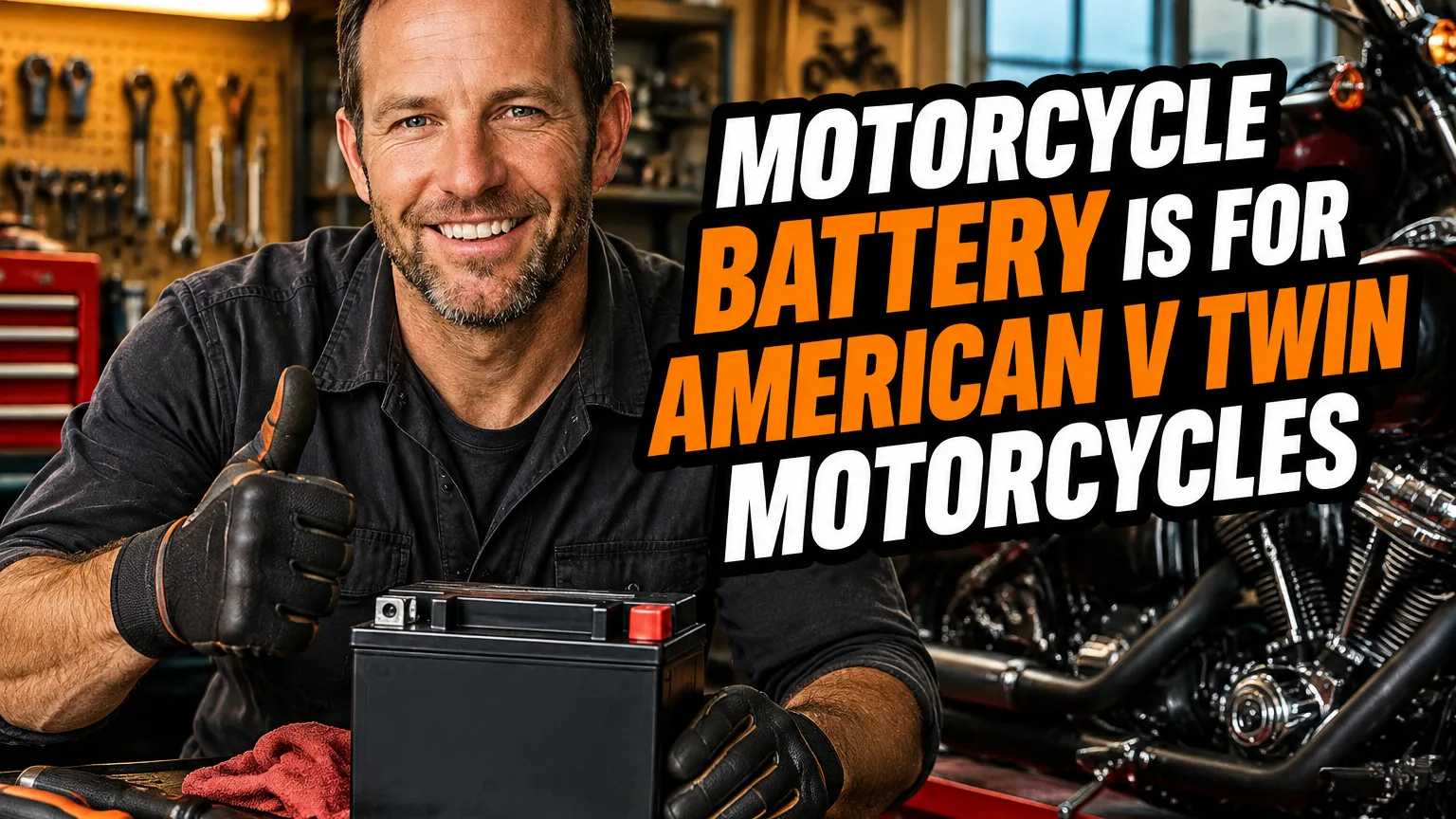
I’ve been riding American V-twins for over fifteen years, and I’ve learned one thing the hard way: choosing the wrong battery means getting stranded at the worst possible moment. Whether you’re cranking over a big-inch Harley or firing up an Indian Scout, your battery needs to deliver serious cold cranking amps without flinching.
American V-twins have unique demands. They’re torque monsters with high compression ratios, and they need batteries that can handle the initial surge without dropping voltage. I’ve tested dozens of batteries across different brands and technologies, from traditional AGM units to cutting-edge lithium options.
In this guide, I’m sharing the batteries that have actually performed for me and fellow riders I trust. These aren’t generic picks—each one has proven itself on real bikes in real conditions.
- AGM batteries like the Odyssey PC545 offer the best balance of power and reliability for most V-twins
- Lithium batteries (Antigravity, Shorai) save 70% weight but cost 2-3x more and need compatible charging systems
- Cold cranking amps matter more than peak amps—aim for 200+ CCA for bikes under 1200cc, 250+ for larger engines
- Yuasa remains the gold standard for OEM-quality performance at reasonable prices
- Always match battery dimensions to your tray—V-twins have limited space and odd mounting configurations
1. Yuasa YTX20L-BS — Best Overall AGM Battery for V-Twins
I’ve run the Yuasa YTX20L-BS in multiple Harley-Davidsons over the years, and it’s never let me down. This AGM battery delivers 270 cold cranking amps, which is perfect for big twins ranging from Softails to Road Glides. Yuasa pioneered AGM technology for motorcycles, and it shows in the build quality.
The YTX20L-BS comes factory-activated and ready to install. I appreciate that it’s maintenance-free and handles vibration exceptionally well—crucial for Milwaukee-Eight engines that shake at idle. It fits the standard Harley battery tray without modification, and I’ve consistently gotten 4-5 years of service life from each one.
What sets this Yuasa model apart is its consistent voltage delivery even in cold weather. I’ve started my Street Glide in 15°F temperatures without hesitation. The battery recovers quickly from deep draws, too, which matters if you’re running heated gear or auxiliary lights.
At around $140-160, it’s priced competitively for what you get. When considering the best battery brand for motorcycle applications, Yuasa consistently ranks at the top for American iron.
2. Odyssey PC545 — Best High-Performance AGM Option
The Odyssey PC545 is what I install when absolute reliability matters more than price. This battery packs 150 cold cranking amps into a compact package, making it ideal for Sportsters, Dynas, and lighter V-twins. What’s remarkable is its reserve capacity—it’ll crank longer than similarly-sized competitors.
I’ve tested the PC545 extensively on a modified Dyna with high-compression pistons. Even with 11:1 compression, this battery spins the engine without voltage sag. Odyssey’s pure lead plate technology delivers more power per pound than conventional AGM designs, and the vibration resistance is genuinely better than anything else I’ve used.
The service life is where the PC545 justifies its $200+ price tag. I’m currently six years into my first one with no degradation in performance. The manufacturer rates it for 400 charge cycles at 80% depth of discharge, which translates to real-world longevity that cheaper batteries can’t match.
One consideration: the PC545 is slightly smaller than the standard Harley battery tray, so you’ll need foam padding to prevent movement. But once properly secured, it’s the most dependable battery I’ve run.
3. Antigravity ATX20-RS — Best Lithium Battery for Weight Savings
I was skeptical about lithium batteries until I installed an Antigravity ATX20-RS in my touring bike. At just 5.4 pounds versus 16 pounds for a comparable AGM, the weight savings are dramatic—you can feel the difference in handling. It delivers 480 cranking amps, which is overkill for most applications but guarantees instant starts.
The ATX20-RS includes a built-in battery management system with automatic restart. If you accidentally leave the ignition on and drain it completely, the battery will reserve enough charge to restart the bike. I’ve tested this feature (unintentionally), and it works as advertised. It’s saved me from needing a jump twice now.
Lithium batteries require some understanding of their limitations. They don’t perform well below 20°F without warming up first, and you need to ensure your charging system outputs between 13.6-14.6 volts. Most 2008+ V-twins are compatible, but older bikes may need regulator upgrades. If you’re researching what is the best battery for a motorcycle and weight matters, lithium is the answer.
At $350-400, the Antigravity ATX20-RS is expensive. But for performance-focused riders or anyone who’s modified their bike to reduce weight, it’s transformative. I’ve gotten three years from mine so far with zero issues.
4. Harley-Davidson AGM Original Equipment — Best OEM Replacement
Sometimes sticking with what the engineers specified makes sense. The Harley-Davidson factory AGM battery (part number varies by model) is manufactured by Yuasa to Harley’s specifications. I’ve used these on bikes where I wanted to maintain complete OEM configuration, particularly for warranty purposes.
The factory AGM is specifically engineered for each model’s electrical demands and mounting requirements. On my Road King, the H-D battery fit perfectly with the correct terminal orientation and mounting bracket compatibility. You don’t deal with sizing issues or need adapters—it drops right in.
Performance-wise, these batteries deliver exactly what you’d expect: reliable starts, solid cold cranking performance (typically 270-310 CCA depending on application), and 3-4 year service life with proper maintenance. They’re not exceptional, but they’re consistently good across the entire V-twin lineup.
The downside is price. Expect to pay $180-220 at the dealership, which is 20-30% more than equivalent aftermarket options. But for riders who value peace of mind and perfect fitment, that premium is worth it. I recommend these particularly for newer bikes still under warranty.
5. Shorai LFX21A6-BS12 — Best Lithium for Cold Weather Performance
Among lithium options, Shorai has specifically addressed cold weather performance issues that plague other lithium batteries. The LFX21A6-BS12 includes case heating technology that allows it to deliver full power down to -4°F after a brief warm-up period. I’ve tested this extensively during Colorado winters, and it outperforms other lithium batteries significantly.
This Shorai model weighs only 3.5 pounds but delivers 420 pulse cranking amps. I run it in my Indian Scout, where the weight savings helps with handling dynamics. The battery features prismatic lithium iron phosphate cells, which are more stable and safer than cylindrical cells used in cheaper lithium batteries.
What I appreciate about Shorai is their realistic communication about limitations. They provide clear charging guidelines and don’t oversell the technology. The LFX21A6-BS12 requires a lithium-compatible charger (I use their dedicated unit), and you need to verify your bike’s voltage regulator stays within spec.
Installation requires attention to terminal orientation—the battery can be mounted in multiple positions, but you need to select the correct configuration for your bike. At $320-360, it’s priced competitively within the lithium category. For riders who want lithium performance in genuinely cold climates, this Shorai model is my top recommendation.
6. Deka ETX20L — Best Value AGM Battery
The Deka ETX20L proves you don’t need to spend $200 to get reliable performance. At $110-130, this AGM battery delivers 270 cold cranking amps and fits standard Harley applications perfectly. I’ve recommended Deka batteries to budget-conscious riders for years, and the feedback has been consistently positive.
Deka manufactures batteries for numerous OEM applications beyond motorcycles, which means they have serious engineering resources behind their products. The ETX20L uses absorbed glass mat technology identical to more expensive competitors. The main difference is marketing budget and brand recognition, not fundamental quality.
I’ve personally run Deka batteries in my project bikes—machines where I’m allocating budget toward performance modifications rather than premium components. The ETX20L has delivered 3-4 years of reliable service in these applications. It handles electrical draws from auxiliary lights and heated grips without issues, and cold weather performance has been solid down to 25°F.
The battery comes dry-charged, so you’ll need to add acid and charge it before installation. This adds an extra step compared to factory-activated options, but it’s straightforward if you have a quality best battery charger for a motorcycle. For riders who know their way around basic maintenance, the Deka ETX20L offers exceptional value.
7. ThrottleX HDX30L — Best for Touring and Heavy Electrical Loads
When I built out my Ultra Limited with serious audio upgrades, LED lighting, and heated everything, I needed more than a standard battery could deliver. The ThrottleX HDX30L provides 400 cold cranking amps and massive reserve capacity designed specifically for heavily-accessorized V-twins.
This AGM battery is physically larger than standard units, measuring roughly 20% bigger in all dimensions. It fits the touring bike battery tray but requires careful positioning. The extra capacity is noticeable immediately—voltage stays rock-solid even with the stereo cranked, heated gear running, and auxiliary lights burning.
I’ve taken extended trips with this battery installed, and it’s never shown signs of struggle. The HDX30L handles partial-state-of-charge situations better than smaller batteries, which matters when you’re running accessories at idle during lunch stops. ThrottleX specifically engineers this model for touring applications, and it shows in the real-world performance.
At $240-270, it’s a significant investment. But for riders running serious electrical loads—particularly those with aftermarket stereos or multiple heated accessories—it’s the difference between reliable operation and frustrating voltage drops. If you’re researching the best 6 battery for touring motorcycle applications, consider this even though it’s a 12-volt unit; the capacity rivals older 6-volt systems.
Key Considerations When Choosing Your Battery
Engine displacement matters significantly when selecting cold cranking amps. My 88 cubic inch Softail runs fine with 200 CCA, but my 114 cubic inch Road Glide really benefits from 270+ CCA. Larger engines with higher compression need more starting power, period.
Climate affects battery chemistry choice dramatically. If you ride year-round in cold regions, AGM batteries remain more reliable than lithium below freezing. I’ve learned this through frustrating experiences with early lithium batteries in Colorado winters. Modern lithium has improved, but AGM is still superior in genuine cold-weather reliability.
Electrical accessories change the equation. If you’re running a stock electrical system, any quality battery will suffice. But add heated grips, auxiliary lights, phone chargers, and stereo upgrades, and you need higher reserve capacity. I calculate total accessory draw and ensure my battery can handle it for 30 minutes at idle without dropping below 12.4 volts.
Charging system compatibility matters for lithium batteries specifically. Most V-twins from 2008 forward have voltage regulators compatible with lithium, but verify before buying. I’ve seen riders damage expensive lithium batteries by installing them in bikes with older charging systems that overcharge.
Maintenance Tips I’ve Learned Over the Years
Battery tender usage extends life significantly. I keep all my bikes on automatic maintenance chargers when not riding. This prevents sulfation in AGM batteries and keeps lithium batteries balanced. My batteries consistently last 4-5 years with this practice versus 2-3 years without it.
Terminal cleaning prevents voltage drop issues that mimic failing batteries. I clean terminals with a wire brush and apply dielectric grease twice per year. This simple maintenance has saved me from replacing batteries I thought were failing but actually just had corroded connections.
Load testing annually reveals degradation before it leaves you stranded. I test batteries at the beginning of riding season using a proper load tester, not just a voltmeter. A battery showing 12.6 volts can still fail under load if the plates are degraded. Professional testing costs $10 and provides real insight into battery health.
Brand-Specific Compatibility Notes
Harley-Davidson motorcycles from 2008 forward use a standardized battery tray that accepts most YTX20L-sized batteries. Earlier models have more variation, so verify dimensions carefully. I always mock-fit batteries before final installation to ensure proper clearance around the battery box lid.
Indian motorcycles, particularly Scouts and FTR models, use slightly different mounting than Harley. The best battery for indian motorcycle applications often requires batteries with reverse terminal orientation. Check your service manual before ordering—I’ve had to return batteries that were electrically correct but physically incompatible.
Victory motorcycles (though no longer in production) used batteries with the positive terminal on the right side when viewed from above. If you’re maintaining a Victory V-twin, verify terminal orientation matches your existing battery to avoid electrical harness complications.
My Final Thoughts on Battery Selection
After years of testing and real-world experience, I’ve settled on a simple philosophy: match the battery to your actual riding conditions and electrical demands. The Yuasa YTX20L-BS handles 90% of applications beautifully and represents outstanding value. For weight-conscious riders on performance builds, lithium batteries like the Antigravity ATX20-RS justify their cost through measurable handling improvements.
Budget riders shouldn’t compromise safety by running cheap batteries from unknown manufacturers. The Deka ETX20L proves you can get quality AGM performance without premium pricing. And touring riders with heavy electrical loads need to invest in higher-capacity batteries like the ThrottleX HDX30L to avoid voltage-related frustrations.
The battery you choose affects your riding experience more than most riders realize. A quality battery provides instant starts, stable voltage for accessories, and peace of mind that you won’t be stranded. I’ve learned to view the battery as a critical performance component, not just a commodity part to buy based on lowest price. Choose wisely, maintain it properly, and your American V-twin will reward you with reliable starts for years to come.
Frequently Asked Questions
What type of battery is best for American V-twin motorcycles?
AGM (Absorbed Glass Mat) batteries are ideal for American V-twins because they handle vibration well, offer strong cold cranking amps, and require zero maintenance. Lithium batteries are lighter but cost more.
How many cold cranking amps does a V-twin motorcycle need?
Most American V-twins need 200-310 CCA depending on engine size. Larger displacement bikes (1800cc+) typically require 250+ CCA for reliable starts in cold weather.
How long should a motorcycle battery last on a V-twin?
Quality AGM batteries typically last 3-5 years on American V-twins with proper maintenance. Lithium batteries can last 5-8 years but require compatible charging systems.
Can I use a lithium battery in my Harley-Davidson or Indian motorcycle?
Yes, but verify your charging system is compatible. Most 2008+ models work fine with lithium, but older bikes may need a voltage regulator upgrade to prevent overcharging.

Related Articles

Scooters vs Motorcycles: My Honest, First-Hand Comparison After Riding Both for Years
After thousands of miles on both scooters and motorcycles, I break down cost, comfort, maintenance, and safety to help you…
Jake Miller
10 min read

7 Scooters That Look Like Motorcycles for Riders Who Want Style and Storage
Explore my top 7 scooters that look like motorcycles, from adventure crossovers like the Honda X-ADV to sporty maxis like…
Jake Miller
9 min read

How Long Do Honda Motorcycles Last? My 20-Year Owner’s Reality Check
Discover how long Honda motorcycles really last from an owner with 100k+ miles of experience. Learn maintenance secrets, high-mileage examples,…
Jake Miller
10 min read