
7 Best Motorcycles for an Alaska Tour: Rider-Tested Picks for the Last Frontier
 Jake Miller
8 min read
Jake Miller
8 min read
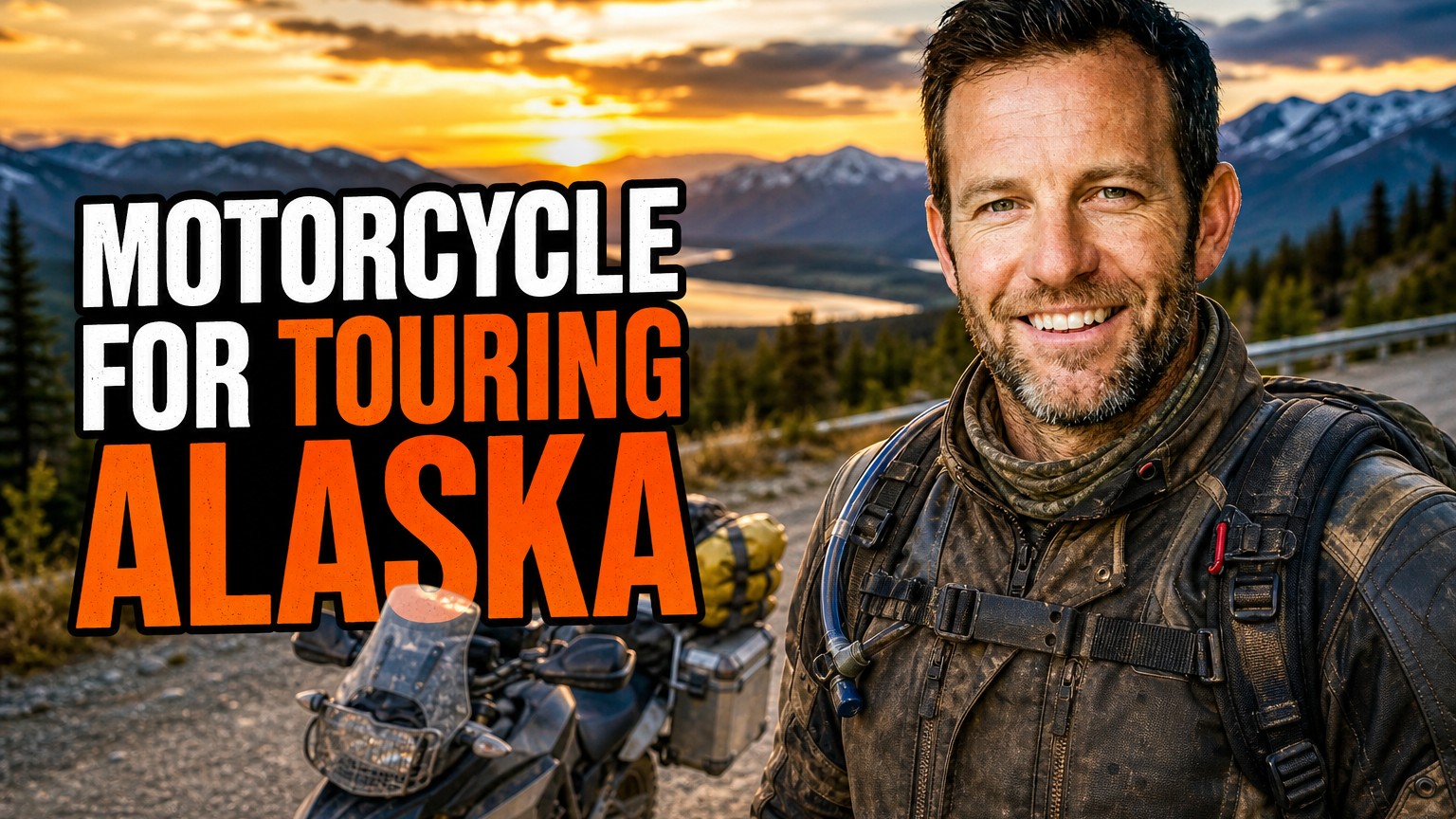
I’ve been dreaming about Alaska since my first long-distance ride. When I finally pointed my front wheel north, I learned fast that the right bike matters far more here than it does on a typical road trip. You get frost heaves, gravel, mud, 200-mile fuel gaps, and weather that changes every hour.
Over the years I’ve ridden, borrowed, and compared plenty of bikes for this kind of trip, and I’ve talked with countless riders at gas stations from Dawson Creek to Deadhorse. Here are my seven picks for the Last Frontier, with honest pros and cons for each.
- My overall pick is the BMW R 1300 GS Adventure, which has the range, comfort, and tech for nearly every Alaskan road.
- For gravel-heavy routes like the Dalton Highway, lighter bikes such as the Yamaha Ténéré 700 and Suzuki V-Strom 800DE are easier to handle.
- On a budget, the Kawasaki KLR650 is cheap, simple, and fixable almost anywhere.
- Prioritize fuel range (200+ miles), reliable service support, and tires that suit both pavement and gravel.
What Makes a Great Alaska Touring Bike?
Before I get to the list, here’s the checklist I use. Alaska isn’t hard on bikes because of speed. It’s hard because of distance, remoteness, and surface variety.
Fuel Range Is King
The Dalton Highway has roughly 240 miles between Coldfoot and Deadhorse with no fuel. Other stretches, like the Denali Highway and parts of the Alaska Highway, have long gaps too. I won’t tour up there on anything with less than about 200 miles of real range unless I’m carrying a spare fuel bladder.
Weight and Seat Height
A 600-pound bike is fine on pavement. On wet, loose gravel with a loaded rack, I want something I can pick up alone after a slip. Weight matters more the farther you are from help.
Reliability and Serviceability
You might be a day’s ride from the nearest dealer. I favor proven engines, simple electronics, and brands with decent dealer coverage in Anchorage, Fairbanks, and Whitehorse.
1. BMW R 1300 GS Adventure — Best Overall Alaska Tourer
If money weren’t an issue, this is the bike I’d ride up the Alaska Highway tomorrow. The BMW R 1300 GS Adventure pairs a 1,300cc boxer twin making about 145 hp with a massive fuel tank of roughly 30 liters (around 6.6 gallons). That easily gives me 250+ miles between fills.
The semi-active suspension is the real star. On the frost-heaved sections of the Alaska Highway, the R 1300 GS Adventure smooths out hits that would rattle me on a basic bike. Heated grips, cruise control, and adjustable windscreen are all welcome in 45-degree drizzle.
Pros and Cons
- Pros: Huge range, plush ride, excellent wind protection, strong dealer network.
- Cons: Heavy (roughly 590+ lb wet), expensive (typically $23,000 and up), and complex electronics.
I’d happily take the R 1300 GS Adventure on the Dalton Highway too, but I’d be careful and ride slowly in the mud.
2. Honda Africa Twin Adventure Sports ES — Best for Reliability and Peace of Mind
When I want a bike that just keeps going, the Honda Africa Twin Adventure Sports ES is my pick. Its 1,084cc parallel twin makes around 100 hp with a friendly, tractable character. The tank holds about 6.4 gallons, which gives it excellent range.
The optional DCT automatic is brilliant in Alaska. Stop-and-go construction zones are common, and not working a clutch hand for hours is a real perk. The Africa Twin’s electronic suspension and wide-ranging rider modes also let me tune the bike for gravel or pavement in seconds.
- Pros: Proven engine, great off-road manners for its size, optional DCT, comfortable ergonomics.
- Cons: Tall seat, weighs well over 500 lb, and wind protection is just average without an aftermarket screen.
Expect to pay roughly $17,000 to $19,000 depending on options.
3. Yamaha Ténéré 700 — Best for Gravel and the Dalton Highway
The Yamaha Ténéré 700 is the bike I recommend most to riders who plan on serious dirt. Its 689cc CP2 twin makes about 72 hp, which is plenty, and the bike weighs around 450 lb wet. That’s a huge difference from the big adventure bikes when the road turns to slop.
The long-travel suspension and 21-inch front wheel soak up washboard gravel beautifully. The catch is the stock tank at about 4.2 gallons. On the Ténéré 700, I’d either add a larger aftermarket tank (Rally Raid and Safari both make them) or carry a 1-gallon fuel bladder for the Coldfoot to Deadhorse stretch.
- Pros: Light, durable, affordable (about $10,500 to $11,500), and easy to work on.
- Cons: Small tank, firm stock seat, and limited wind protection for long highway days.
4. Kawasaki KLR650 — Best Budget Alaska Bike
The KLR650 has a reputation as the old reliable of adventure touring, and it earned it. Its air-cooled-era roots are gone, but the current Kawasaki KLR650 still has a simple 652cc liquid-cooled single, a roughly 6.1-gallon tank, and a price around $7,000. That makes it one of the cheapest ways to get to Alaska properly equipped.
I’ve seen KLRs fixed at roadside with basic tools and a bit of ingenuity. It isn’t fast, and it vibrates on long highway stretches, but it’s tough. If you’re comparing options on a tight budget, my guide to the best cheap motorcycle for touring goes deeper on affordable bikes that can still cover big distances.
- Pros: Very affordable, big tank, simple mechanicals, huge aftermarket.
- Cons: Underpowered, buzzy at 70 mph, and heavy for a single-cylinder at about 450+ lb.
5. Suzuki V-Strom 800DE — Best Value Middleweight
The Suzuki V-Strom 800DE surprised me. Its 776cc parallel twin makes about 83 hp, the bike has a 21-inch front wheel, and it comes with long-travel suspension. At around $11,000 to $12,000, it’s a strong value for a modern, capable adventure tourer.
It’s a very friendly bike on paved roads like the Richardson and Glenn Highways, and it handles graveled sections like McCarthy Road with more confidence than I expected. The V-Strom 800DE has a tank of about 5.3 gallons and gets great fuel economy, so real-world range often tops 220 miles.
- Pros: Excellent value, balanced handling, good fuel economy, simple electronics.
- Cons: Stock windscreen is basic, and the suspension is only mid-grade for heavy loads.
6. Triumph Tiger 900 Rally Pro — Best Handling and Character
I love a good triple, and the Triumph Tiger 900 Rally Pro is one of my favorite engines for a long trip. The 888cc three-cylinder makes about 106 hp with a soulful growl. Fully adjustable Marzocchi suspension, a 21-inch front wheel, and a roughly 5.3-gallon tank make it a very capable dirt-road machine.
On the winding bits near Valdez and Haines, the Tiger 900 Rally Pro feels playful without being twitchy. It runs about $15,000 to $16,000. My only reservation is dealer support: Triumph service points are sparse across the north, so I’d do a thorough pre-trip service.
- Pros: Superb suspension, fun engine, comfortable ergonomics, quality electronics.
- Cons: Fewer dealers in the north, and a seat that’s tall for shorter riders.
7. Honda Gold Wing Tour — Best for Pavement Comfort
Not everyone wants dirt. If your Alaska plan is the Alaska Highway, the Seward Highway, and the Parks Highway, the Honda Gold Wing Tour will treat you like royalty. Its 1,833cc flat-six makes around 125 hp, and it comes with a big fairing, a comfy seat, Apple CarPlay and Android Auto, and an optional DCT.
At roughly 830 lb and $28,000+, it isn’t the bike for gravel. But I’ve met Gold Wing riders who happily covered 10,000-mile Alaska loops with it, and they were far less tired than I was at the end of each day. The 5.5-gallon tank is adequate when you plan your fuel carefully.
- Pros: Unmatched comfort, weather protection, smooth power, luggage space.
- Cons: Heavy, expensive, and not suited to the Dalton or other gravel roads.
Prepping Your Bike for the Long Haul
Whatever bike you pick, preparation matters. I do a full service before I leave: fresh tires, brake pads, chain and sprockets, coolant, and a fresh oil change. Alaska can throw a wide range of temperatures at you, so oil choice is not a small detail.
Choosing the Right Oil
I’ve written about which grade oil is the best motorcycle oil for touring, and my short answer for cool northern climates is a quality full-synthetic 10W-40 or 5W-40 (check your manual first). Synthetics flow better on cold mornings and hold up better under long, loaded days.
If you’re shopping around, my breakdowns of the best motor oil for 4 stroke motorcycle and the top engine oil for 4 stroke motorcycle should help you compare. And if you’re riding abroad before or after Alaska, I even covered the best engine oil for 4 stroke motorcycle in india.
Tires, Gear, and Spares
I run a 50/50 dual-sport tire such as the Michelin Anakee Wild or Continental TKC 70 for mixed-surface riding. I also carry a tire repair kit, a compact pump, spare levers, a tube, zip ties, and duct tape. Waterproof gear and heated layers are non-negotiable.
My Final Advice for Choosing Your Alaska Bike
If you want one bike that can do almost everything, I’d choose the BMW R 1300 GS Adventure. If your priority is dirt and you want to keep weight down, the Yamaha Ténéré 700 is my choice. For riders watching the budget, the KLR650 and V-Strom 800DE give you real capability without the sticker shock.
The truth is that the best bike is the one you’re comfortable on and willing to maintain. Alaska rewards preparation, patience, and a sense of adventure. Pack smart, ride within your limits, and enjoy every mile of the journey.
Frequently Asked Questions
What is the best motorcycle for touring Alaska overall?
For most riders, the BMW R 1300 GS Adventure is the best all-rounder thanks to its huge fuel range, comfort, and electronics. If you want something lighter and cheaper, the Yamaha Ténéré 700 or Suzuki V-Strom 800DE are excellent choices.
Do I need a dual-sport or adventure bike to ride in Alaska?
Not for the main paved routes. A touring bike like the Honda Gold Wing can handle the Alaska Highway and Richardson Highway. But if you want the Dalton Highway, McCarthy Road, or the Denali Highway, an adventure bike with spoked wheels and long-travel suspension makes the trip safer and far more enjoyable.
How much fuel range do I need for Alaska?
Plan for at least 200 miles of real-world range. On the Dalton Highway there are about 240 miles between Coldfoot and Deadhorse with no fuel, so smaller-tank bikes should carry an extra fuel cell.
When is the best time to ride a motorcycle in Alaska?
Mid-June through mid-August is the sweet spot, with long daylight and mostly clear roads. Expect rain, cold snaps, and construction delays even in summer, so pack proper layers and waterproof gear.

Related Articles
7 Best Batteries for Motorcycles I’ve Tested and Trust in 2026
I've tested dozens of motorcycle batteries to find the best performers. From AGM to lithium, here are my top picks…
Jake Miller
15 min read

The Perfect Battery for Your Harley Davidson Softail: A Rider’s Complete Guide
Discover the perfect battery for your Harley Davidson Softail. I've tested multiple options and share real-world performance data, maintenance tips,…
Jake Miller
14 min read

The Best Battery for Your Harley Davidson: My Complete Guide After Years of Testing
Discover which battery truly performs best for Harley Davidson motorcycles. Real rider experience with AGM, lithium, and OEM options to…
Jake Miller
12 min read