
9 Best Dirt-Ready Motorcycles for Trail Riding: My Real-World Picks for Every Skill Level
 Jake Miller
8 min read
Jake Miller
8 min read
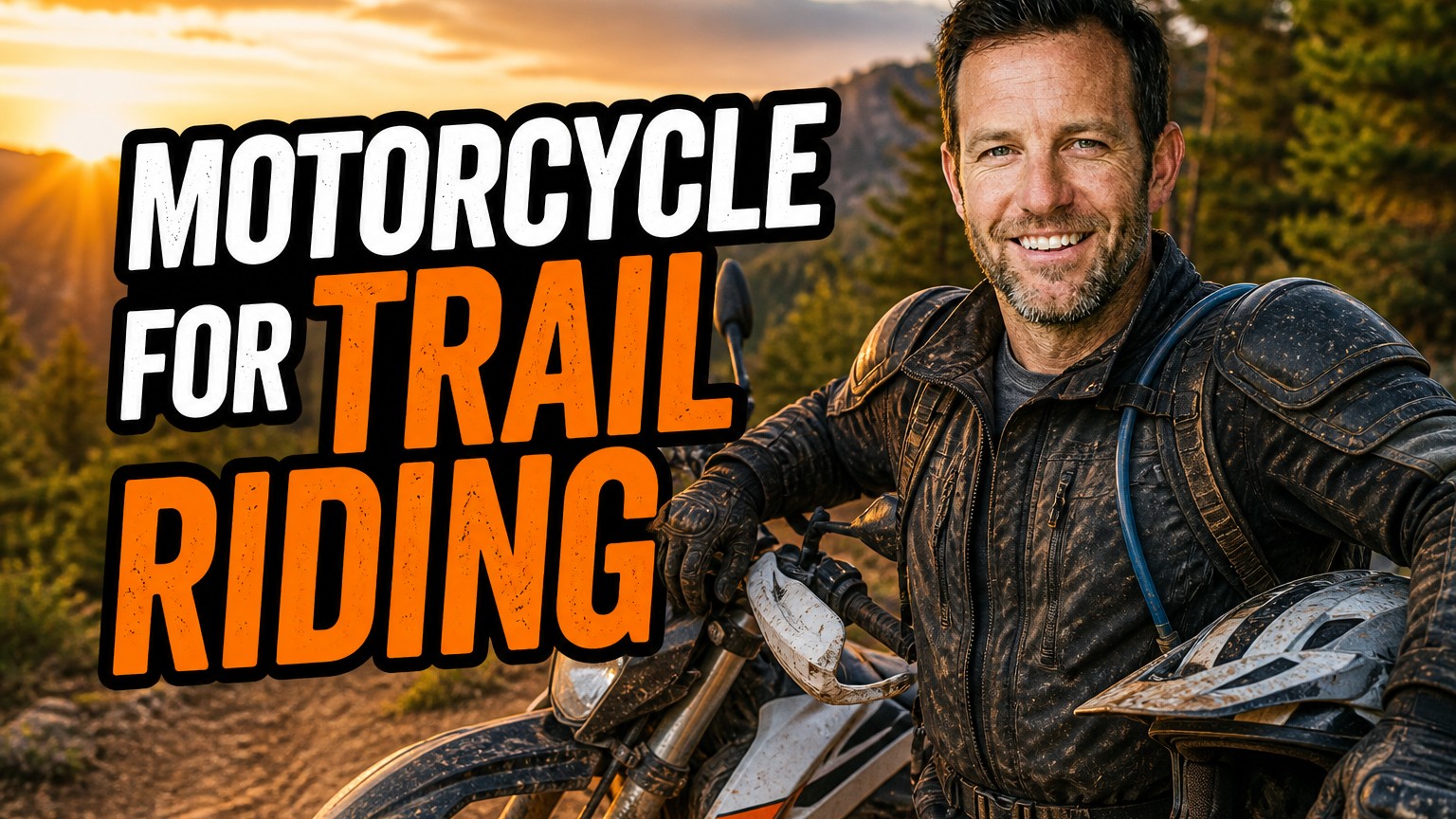
I’ve spent more weekends than I can count covering singletrack, rocky climbs, and muddy forest roads on a wide range of bikes. Some were brilliant. Others left me exhausted, frustrated, or staring at a bent shift lever.
Picking the right trail bike isn’t about chasing the biggest horsepower number. It’s about matching weight, suspension, seat height, and power delivery to the way you actually ride.
Below are the nine bikes I’d recommend, with the real specs I look at and the quirks I’ve noticed. Prices are approximate US MSRP ranges and vary by year and dealer.
- My top all-rounder is the Honda CRF300L: friendly, reliable, and street legal.
- Beginners and budget riders should look at the Yamaha XT250 or Kawasaki KLX230R.
- For aggressive trails and woods racing, the KTM 350 EXC-F and Beta 300 RR are in a different league.
- For long, loaded adventure trails, the Royal Enfield Himalayan 450 and Yamaha Ténéré 700 shine.
How I Chose These Trail Bikes
I judged each bike on five things: weight, suspension travel, engine character, reliability, and how easy it is to live with. I also considered cost of ownership, because a cheap bike that eats money isn’t a bargain.
The Factors That Matter Most
Weight is the big one. Every extra pound shows up when you’re picking a bike up on a hillside.
Seat height matters nearly as much. If you can’t get a foot down in a rut, your confidence drops fast, and confidence is what keeps you upright on trails.
1. Honda CRF300L — Best Overall Trail Bike
If a friend asked me for one bike to buy, I’d say the Honda CRF300L almost every time. Its 286cc liquid-cooled single makes smooth, tractable power that never feels intimidating.
You get around 10 inches of suspension travel up front and 10.2 in the rear, a 34.7-inch seat, and a curb weight near 340 lb. Prices land around $5,500 to $5,800.
Why I Love It
The CRF300L is quiet, fuel-injected, and nearly bulletproof. I’ve ridden one through cold starts at altitude, and it fired up every time without fuss.
The stock suspension is a bit soft for aggressive riders, but a spring swap fixes that. If you’re also curious about how this displacement class handles a passenger, I covered the best 300cc motorcycle for 2 up riding separately.
2. Kawasaki KLX230R — Best Lightweight Value Pick
The Kawasaki KLX230R is the bike I recommend when someone wants real off-road capability without the price tag. Its air-cooled 233cc fuel-injected engine is simple and easy to maintain.
It weighs roughly 300 lb, has a tall 35.4-inch seat, and costs around $4,500 to $5,000. It’s the more trail-focused sibling of the street-legal KLX230S.
On the Trail
The KLX230R feels light and flickable in tight woods. Power is modest, so I found myself carrying momentum through corners rather than relying on grunt.
Note: the R model is more of an off-road machine, so check your local laws before expecting to ride it on public roads.
3. Yamaha XT250 — Best for Beginners
The Yamaha XT250 isn’t flashy, and that’s exactly why I like it. Its 249cc air-cooled, fuel-injected single is gentle, smooth, and very hard to upset.
The seat sits at about 31.7 inches, making it one of the most approachable bikes here for shorter riders. It weighs around 292 lb and costs roughly $5,300 to $5,600.
Strengths and Limits
New riders will love how forgiving it is. I’ve watched complete beginners pick up the XT250 in an afternoon and be riding smooth fire roads by sundown.
The trade-off is power and suspension. On rough, fast terrain you’ll outgrow it, but for easy to moderate trails it’s a joy.
4. Suzuki DR-Z400S — Best Old-School Powerhouse
The Suzuki DR-Z400S has been around for ages, and it still earns its place. The 398cc liquid-cooled single pulls strongly from low revs and keeps going.
It weighs around 317 lb, has a 35.4-inch seat, and sells for roughly $7,000 to $7,500. The suspension is long-travel and quite capable.
My Take
I find the DR-Z400S more rewarding on open, faster trails than the 300-class bikes. It’s a great choice if you want torque and a tough, proven design.
It’s a bit tall and not the lightest, so shorter riders should sit on one before buying.
5. KTM 350 EXC-F — Best for Aggressive Trail and Enduro Riding
When I want to ride hard, the KTM 350 EXC-F is the one I reach for. It’s a 349cc, fuel-injected race-bred enduro bike with an electric start and WP XACT suspension.
At roughly 245 lb wet, it feels remarkably light for the power it makes. Expect to pay in the neighborhood of $11,000 to $12,000.
The Catch
This bike is sharp and rewards good technique. It’s also more maintenance-intensive than a Honda, with tighter service intervals.
That’s where good oil matters. I always recommend reading up on the best motor oil for 4 stroke motorcycle before you set your service routine, since high-revving enduro engines are hard on lubricants.
6. Beta 300 RR — Best Two-Stroke for Technical Trails
The Beta 300 RR is my favorite two-stroke for the woods. Its 293cc engine uses oil injection, so there’s no pre-mixing, and an electric start saves your knee.
It weighs about 230 lb without fuel and costs around $10,000 to $11,000. Power is smooth and wide, and traction in slippery climbs is superb.
Why It Works
I’ve ridden the 300 RR up ledges that would have stopped other bikes cold. It lugs along at low rpm without complaint, then wakes up when you need it.
It isn’t street legal in most trims, so plan on trailering it to the trailhead.
7. Royal Enfield Himalayan 450 — Best Budget Adventure Trail Bike
The Royal Enfield Himalayan 450 surprised me. Its liquid-cooled 452cc single makes about 40 hp, and it’s built around mellow, usable power.
It has a 21-inch front wheel, around 7.9 inches of travel, and a price near $5,999 in the US. It weighs roughly 432 lb wet, so it’s heavier than the dirt bikes above.
Great for Loaded Touring
This is a bike for exploring, not racing. I’d happily take it on a multi-day gravel and forest trail trip with luggage.
If you plan to carry a passenger, check out my guide to the best adventure motorcycle for 2up riding for more options.
8. Yamaha Ténéré 700 — Best Big Adventure Bike for Rugged Trails
The Yamaha Ténéré 700 is the big-bike answer that actually works off-road. Its 689cc CP2 parallel twin makes around 72 hp and loads of usable torque.
It has about 8.3 inches of front travel and 9.4 inches rear, a 34.4-inch seat, and weighs around 452 lb wet. Pricing runs near $10,500 to $11,500.
My Experience
I’ve ridden a Ténéré 700 over rocky tracks, sand, and long highway stretches in the same day. It handles all of it with confidence.
It’s still a big bike, so I’d only suggest it to riders with some experience. Drop it on a steep trail and you’ll feel every pound.
9. Honda CRF450RL — Best High-Performance Dual-Sport
The Honda CRF450RL is basically a street-legal dirt bike with serious performance. Its 449cc engine is the same family as Honda’s motocross bikes, with a trail-friendly tune.
It has a lightweight chassis, long-travel Showa suspension, and a price around $10,000 to $11,000. It’s far more bike than most casual riders need.
Who It Suits
If you’re an experienced rider who wants to connect trails by road without trailering, this is a dream. Power is strong yet controllable.
New riders will find it too much, and the maintenance is more involved than on the CRF300L.
Keeping Your Trail Bike Running Strong
Whichever bike you choose, maintenance decides how long it lasts. Dust, mud, and heat punish engines, so oil changes and air filter cleaning matter even more than on a street bike.
I like to compare options in the top engine oil for 4 stroke motorcycle roundup before choosing. Riders in warmer, dustier climates may find the best engine oil for 4 stroke motorcycle in india guide useful as well.
My Quick Maintenance Checklist
- Air filter: clean or replace after every dusty ride.
- Chain: clean and lube regularly, and check tension often.
- Oil: change on a tighter schedule than the street interval.
- Bolts: check critical fasteners, since vibration loosens them.
How to Pick the Right One for You
Start with your skill level and be honest. A forgiving bike like the XT250 or CRF300L will make you a better rider faster than a powerful bike you’re afraid of.
Then think about where you’ll ride. Tight woods favor light bikes like the KLX230R and Beta 300 RR, while long mixed routes suit the Himalayan 450 or Ténéré 700.
Don’t Forget the Gear
A good helmet, boots, and knee protection matter as much as the bike. I’ve never regretted spending money on protection, but I’ve definitely regretted skimping.
Final Thoughts
There’s no single perfect trail bike, but there’s a perfect one for you. For most riders, my recommendation stays the Honda CRF300L: capable, dependable, and fun.
If you can, test ride a few before buying. The one that makes you grin at the end of a muddy afternoon is the one to take home.
Frequently Asked Questions
What is the best motorcycle for trail riding for beginners?
For most new riders I recommend the Honda CRF300L or Yamaha XT250. Both have manageable power, reliable fuel injection or simple engines, and forgiving suspension, and both are street legal for linking trails.
Is a two-stroke or four-stroke better for trail riding?
Four-strokes like the CRF300L or KTM 350 EXC-F deliver smooth, predictable traction. Two-strokes like the Beta 300 RR are lighter and punchier, which makes them excellent in technical terrain, but they take a bit more skill to ride smoothly.
Do I need a dual-sport bike or a dedicated off-road bike?
If you need to ride on pavement to reach trailheads, choose a street-legal dual-sport. If you trailer your bike, a dedicated off-road model usually gives you lighter weight and better suspension.
How often should I change the oil on a trail bike?
Hard trail riding is tough on oil, so I change mine far more often than the street schedule suggests. Check your manual, but many riders change it every 10 to 15 hours of off-road use, or sooner in dusty or wet conditions.

Related Articles
7 Best Batteries for Motorcycles I’ve Tested and Trust in 2026
I've tested dozens of motorcycle batteries to find the best performers. From AGM to lithium, here are my top picks…
Jake Miller
15 min read

The Perfect Battery for Your Harley Davidson Softail: A Rider’s Complete Guide
Discover the perfect battery for your Harley Davidson Softail. I've tested multiple options and share real-world performance data, maintenance tips,…
Jake Miller
14 min read

The Best Battery for Your Harley Davidson: My Complete Guide After Years of Testing
Discover which battery truly performs best for Harley Davidson motorcycles. Real rider experience with AGM, lithium, and OEM options to…
Jake Miller
12 min read