
7 Best Starter Motorcycles for Older Beginners Who Want Confidence
 Jake Miller
11 min read
Jake Miller
11 min read
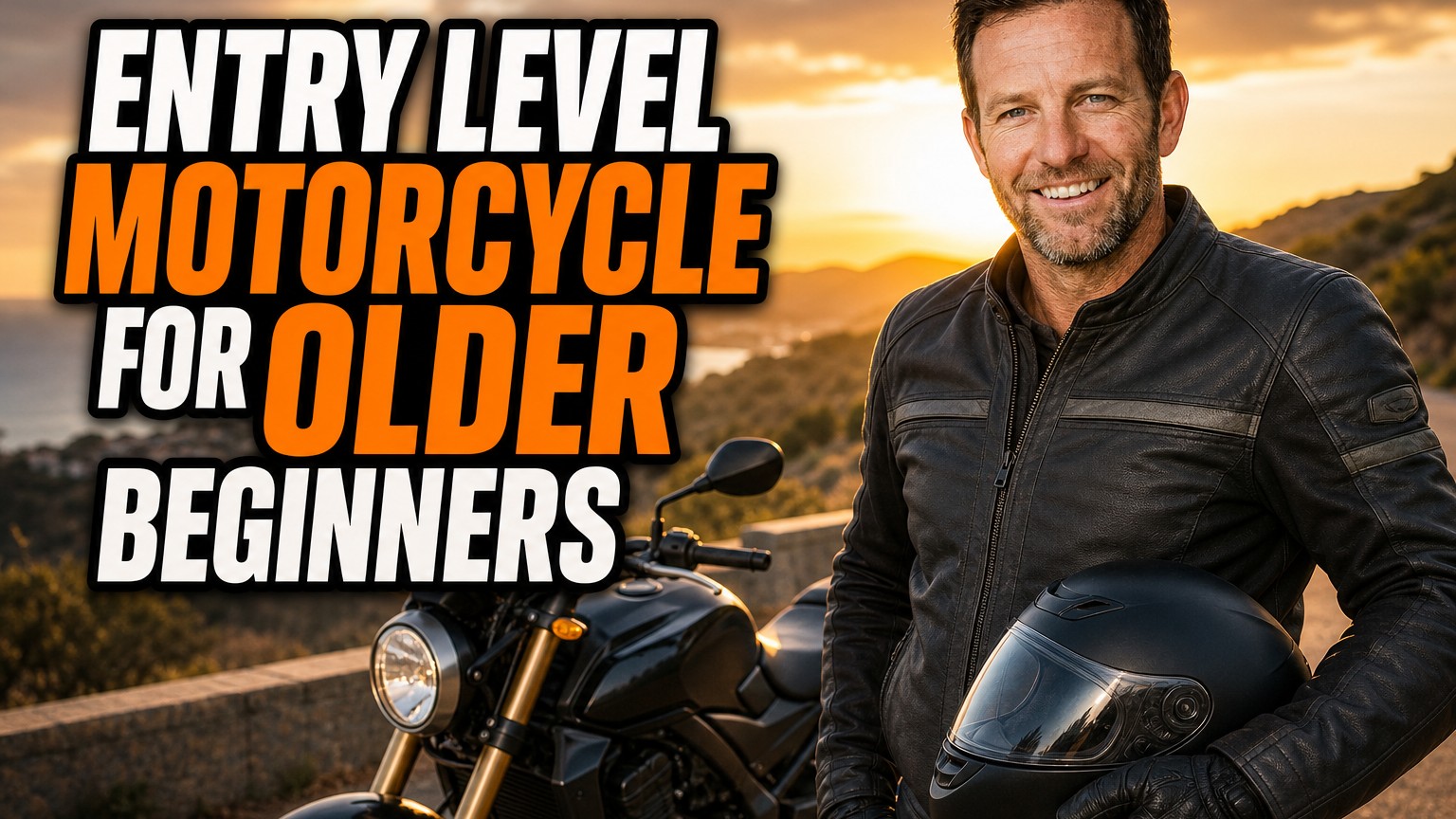
I started riding later than most of my friends, and I remember how it felt. I was excited, a little nervous, and wondering whether I had waited too long. Here’s what I learned: the best bike for a rider starting later in life isn’t the fastest or the flashiest. It’s the one that makes you feel calm, balanced, and in control.
Over the years I’ve ridden, borrowed, and helped friends shop for dozens of starter bikes. The seven below are the ones I’d confidently recommend to a rider in their 40s, 50s, 60s, or beyond. I’ll share real specs, honest pros and cons, and the small details that matter when your priorities are comfort, confidence, and long-term enjoyment.
- My top overall pick for most older beginners is the Honda Rebel 300: low, light, forgiving, and affordable.
- Look for a low seat, manageable weight (under about 450 lb), ABS, and smooth, predictable power.
- If you want more power without drama, the Suzuki SV650 and Triumph Speed 400 are excellent step-ups.
- Take a rider safety course and buy quality gear before you buy a fancier bike.
What I Look for in a Bike for Older Beginners
Age by itself isn’t the issue. What matters is how a bike fits your body and your goals. After a few decades of life, most of us have a stiff knee, a tender back, or a bit less patience for muscling a heavy machine around a parking lot.
My Criteria
Here’s the checklist I use when I’m evaluating any starter bike for a rider who is new later in life:
- Manageable weight: Under roughly 450 lb wet makes parking, pushing, and low-speed turns far less intimidating.
- Reasonable seat height: Being able to plant both feet builds confidence quickly.
- Upright, relaxed ergonomics: Your wrists, shoulders, and lower back will thank you.
- Smooth throttle and predictable power: No surprises, no lurching.
- ABS: It is a cheap insurance policy at any age.
- Good reliability and dealer support: I want to ride, not wrench.
One more thing: don’t let ego pick your bike. I’ve seen too many new riders buy something huge to “grow into,” then lose their nerve after one scary moment. A bike that’s slightly too easy is far better than one that’s slightly too much.
1. Honda Rebel 300 — Best Overall for Older Beginners
If a friend asked me for one bike to start on, the Honda Rebel 300 would be my answer almost every time. It has a 286cc single-cylinder engine, a seat height of about 27.2 inches, and a curb weight of roughly 364 lb. That combination is about as unintimidating as a real motorcycle gets.
Why I Love It
The Rebel 300’s low, narrow seat lets almost everyone flat-foot the ground at a stop. The riding position is relaxed, with a slight forward reach to the bars and feet-forward pegs that feel natural. I’ve put friends in their late 50s on this bike and watched their shoulders drop within five minutes.
The clutch pull is light, the throttle is gentle, and the six-speed gearbox is smooth. ABS is standard, and pricing usually lands around $4,700 to $5,000 new, which is hard to beat.
What to Watch
You will outgrow the power eventually if you start riding highways a lot. It tops out comfortably at highway speeds, but you’ll have to plan passes. If you want to explore even smaller options, I put together my picks for the best 250cc motorcycle for beginners.
2. Royal Enfield Meteor 350 — Best for Relaxed, Classic-Style Cruising
The Royal Enfield Meteor 350 is the bike I recommend to riders who care more about the experience than the spec sheet. It uses a 349cc air/oil-cooled single that makes around 20 horsepower. That’s modest, but the delivery is smooth and torquey right where you need it.
Why It Works for Me
The Meteor weighs about 421 lb and has a seat height near 30 inches. It’s heavier than the Rebel, but the weight sits low and the bike feels planted. The footpegs are forward and the bars are close, so you sit upright like you’re in a comfortable armchair.
I especially like the thumping character and the optional Tripper navigation pod on some trims. Prices typically run about $4,500 to $5,200 depending on the variant. Dual-channel ABS is standard.
Things to Consider
Highway work is possible but not its forte. Expect it to feel happiest on back roads and around town. Royal Enfield’s dealer network is also smaller than Honda’s, so check for a nearby shop before you buy.
3. Triumph Speed 400 — Best for Riders Who Want a Little Spark
Not every older beginner wants a mellow cruiser. If you want something with more personality, the Triumph Speed 400 is my pick. Its liquid-cooled 398cc single makes around 40 horsepower, and it pulls with real enthusiasm without feeling frantic.
My Experience
The Speed 400 weighs about 375 lb ready to ride and has a seat height around 31.1 inches. It’s a bit taller than the Rebel, so shorter riders should sit on one first. The riding position is upright and neutral, and the brakes and suspension feel more refined than the price suggests.
It also comes with ride-by-wire throttle, switchable traction control, and ABS. Prices generally land around $5,000 to $6,000. Honestly, it feels like a much more expensive motorcycle. For more in this displacement class, check out my list of the best 400cc motorcycle for beginners.
Caveat
The clutch and throttle are a notch more responsive than the Rebel’s, so you’ll want a few weeks to settle in. I’d call it ideal for confident beginners or riders who have some experience on bicycles or scooters.
4. Kawasaki Eliminator 400 — Best Modern Cruiser with Real Character
The Kawasaki Eliminator brought a classic name back with a friendly new personality. It uses a 398cc parallel twin derived from the Ninja 400, but it’s tuned for smooth, usable midrange power. In my experience, it feels refined and calm.
What Stands Out
Seat height is about 29.5 inches, and the low-slung shape makes it look longer and more imposing than it really is. Weight is around 450 lb, so it’s on the heavier end of my range, but it’s well balanced. The riding position is relaxed, and the forward foot controls are comfortable for longer legs.
Pricing starts around $5,800 to $6,500, depending on trim. The SE version adds a few upgrades like a fork with better damping. ABS is standard, and the optional Kawasaki Smartphone connectivity is a nice touch.
Who It Fits
I’d recommend it to riders who love the cruiser look but want a modern engine that can comfortably cruise at highway speed. It’s also friendly to riders who may someday want something more spirited.
5. Yamaha MT-03 — Best Lightweight Naked Bike
The Yamaha MT-03 is for the older beginner who wants an upright, sporty-feeling bike without the aggressive crouch of a race replica. It has a 321cc parallel twin, around 42 horsepower, and a curb weight near 370 lb. It’s light, narrow, and very easy to place in a corner.
Why I Recommend It
The handlebars are wide and the seating position is upright, which keeps your wrists comfortable. The seat height is about 30.7 inches, so it’s a bit tall, but the bike’s narrow waist helps shorter riders reach the ground. Yamaha’s reputation for reliability is well earned.
Expect to pay around $5,000 to $5,500. ABS is standard, and the LED lighting and digital display are surprisingly modern for the class. If you’re comparing similar bikes, I’ve listed my favorites in the best 300cc motorcycle for beginners guide.
Downsides
The stock seat is firm on long rides, and the engine likes revs, so it feels a little busy on the highway. Still, for city and backroad riding, I haven’t found many better lightweight options.
6. Suzuki SV650 — Best Step-Up Standard with Smooth V-Twin Power
The Suzuki SV650 is a legend for good reason. It has a 645cc V-twin that makes about 75 horsepower with a wonderfully linear power delivery. I’ve recommended it to many riders who wanted something more capable without being scary.
My Take
Weight is around 430 lb, and the seat height is a friendly 30.9 inches with a narrow profile. The riding position is upright and neutral, with a slight lean forward that’s comfortable for most adults. Suzuki’s Low RPM Assist helps prevent stalls, which I love for new riders.
ABS is standard, and prices usually run about $7,500 to $8,000 new, though used examples are plentiful and affordable. It’s a great fit for riders who want one bike that will last for years. For more middleweight options, see my roundup of the best 650cc motorcycle for beginners.
Be Honest with Yourself
The throttle is smooth, but 75 horsepower can get you into trouble if you get overconfident. I’d suggest this bike for people with good self-discipline and a plan to complete a rider course first.
7. Honda NC750X DCT — Best for Comfort and Easy Operation
The Honda NC750X with the optional Dual Clutch Transmission is the most unusual pick on my list, but I’m a big fan. Its 745cc parallel twin makes around 58 horsepower and focuses on low-end torque. There’s no clutch lever to worry about.
Why It’s Special
With the DCT, you simply twist the throttle and ride. You can let the bike shift automatically or switch to manual mode with paddle-style buttons. I’ve watched nervous riders gain confidence quickly because they could focus on steering, braking, and traffic.
The NC750X also has a 22-liter storage compartment where a fuel tank would normally sit, so you can stash a full-face helmet or groceries. Seat height is about 31.8 inches, and weight is around 500+ lb with the DCT. Prices usually fall around $8,000 to $9,500.
Trade-Offs
It’s the heaviest bike here, and it isn’t the sportiest. But for a rider who wants comfort, practicality, and zero clutch fuss, I can’t think of many better choices.
How to Choose Between These Bikes
Still undecided? Here’s how I would break it down based on your riding goals.
If You Want the Easiest Possible Start
Pick the Honda Rebel 300 or the Royal Enfield Meteor 350. Both are low, light, and forgiving, and both will help you learn the basics without stress.
If You Want Room to Grow
The Triumph Speed 400, Kawasaki Eliminator, and Suzuki SV650 all offer more performance while staying beginner-friendly. I think of these as bikes you can keep for five or more years.
If Comfort Is Your Top Priority
Go for the Honda NC750X DCT or one of the cruisers. Neutral ergonomics, relaxed ergonomics, and easy controls matter far more than horsepower numbers.
Does Engine Size Really Matter?
It matters, but not as much as people think. Weight, throttle response, and ergonomics all affect how approachable a bike feels. A 650cc V-twin can feel easier than a peaky 300cc sportbike.
That said, I’d still steer most older beginners away from supersport machines at first. If you’re curious about that segment, my breakdown of the best 600cc motorcycle for beginners explains who can handle those bikes and who should wait.
My Tips for Starting Later in Life
Take a Rider Course First
I can’t stress this enough: take a certified rider safety course before you buy. The Motorcycle Safety Foundation course in the U.S. teaches braking, cornering, and emergency skills in a controlled setting. Many insurers also offer discounts for completing one.
Invest in Quality Gear
Budget at least $800 to $1,200 for a quality helmet, armored jacket, gloves, riding pants, and over-the-ankle boots. Your gear matters more than your bike. I always tell new riders to spend on gear before upgrading the motorcycle.
Be Honest About Fitness and Flexibility
Sit on every bike before you buy. Check whether you can comfortably reach the ground, whether the bars feel natural, and whether you can lift the bike off its side stand. A little stretching and core strength go a long way toward making riding more enjoyable.
Ride Your Own Ride
Starting later means you’ve probably got patience and judgment that younger riders lack. Use them. Practice in empty parking lots, ride in good weather, and don’t feel pressured to keep up with anyone.
Final Thoughts
Starting to ride later in life is one of the best decisions I ever made. The right motorcycle makes the learning curve feel like an adventure instead of a hurdle. Whether you choose the friendly Honda Rebel 300, the stylish Triumph Speed 400, or the capable Suzuki SV650, you’ll be joining a huge community of riders who started later and never looked back.
Sit on a few, take a test ride if you can, and trust your gut. The best bike is the one that makes you grin every time you pull out of the driveway.
Frequently Asked Questions
Is it too late to learn to ride a motorcycle at 50 or 60?
No. Many riders start in their 50s, 60s, and beyond. The key is taking a certified rider course, choosing a manageable bike, wearing proper gear, and building skills gradually.
What size engine is best for an older beginner?
Most older beginners do well with 300cc to 650cc. Bikes in this range are usually light enough to handle easily and still have the power to keep up with highway traffic.
Should an older beginner choose a cruiser or a standard bike?
Either can work. Cruisers like the Honda Rebel 300 have low seats and relaxed positions, while standards like the Suzuki SV650 offer upright, neutral ergonomics and more versatility.
Is an automatic or DCT motorcycle a good idea for beginners?
It can be. A bike like the Honda NC750X DCT removes clutch and shifting duties, which lets new riders focus on braking, balance, and traffic awareness.

Related Articles
7 Best Batteries for Motorcycles I’ve Tested and Trust in 2026
I've tested dozens of motorcycle batteries to find the best performers. From AGM to lithium, here are my top picks…
Jake Miller
15 min read

The Perfect Battery for Your Harley Davidson Softail: A Rider’s Complete Guide
Discover the perfect battery for your Harley Davidson Softail. I've tested multiple options and share real-world performance data, maintenance tips,…
Jake Miller
14 min read

The Best Battery for Your Harley Davidson: My Complete Guide After Years of Testing
Discover which battery truly performs best for Harley Davidson motorcycles. Real rider experience with AGM, lithium, and OEM options to…
Jake Miller
12 min read