
Motorcycle Smoking From the Engine? What Each Smoke Color Means and How to Fix It
 Jake Miller
11 min read
Jake Miller
11 min read
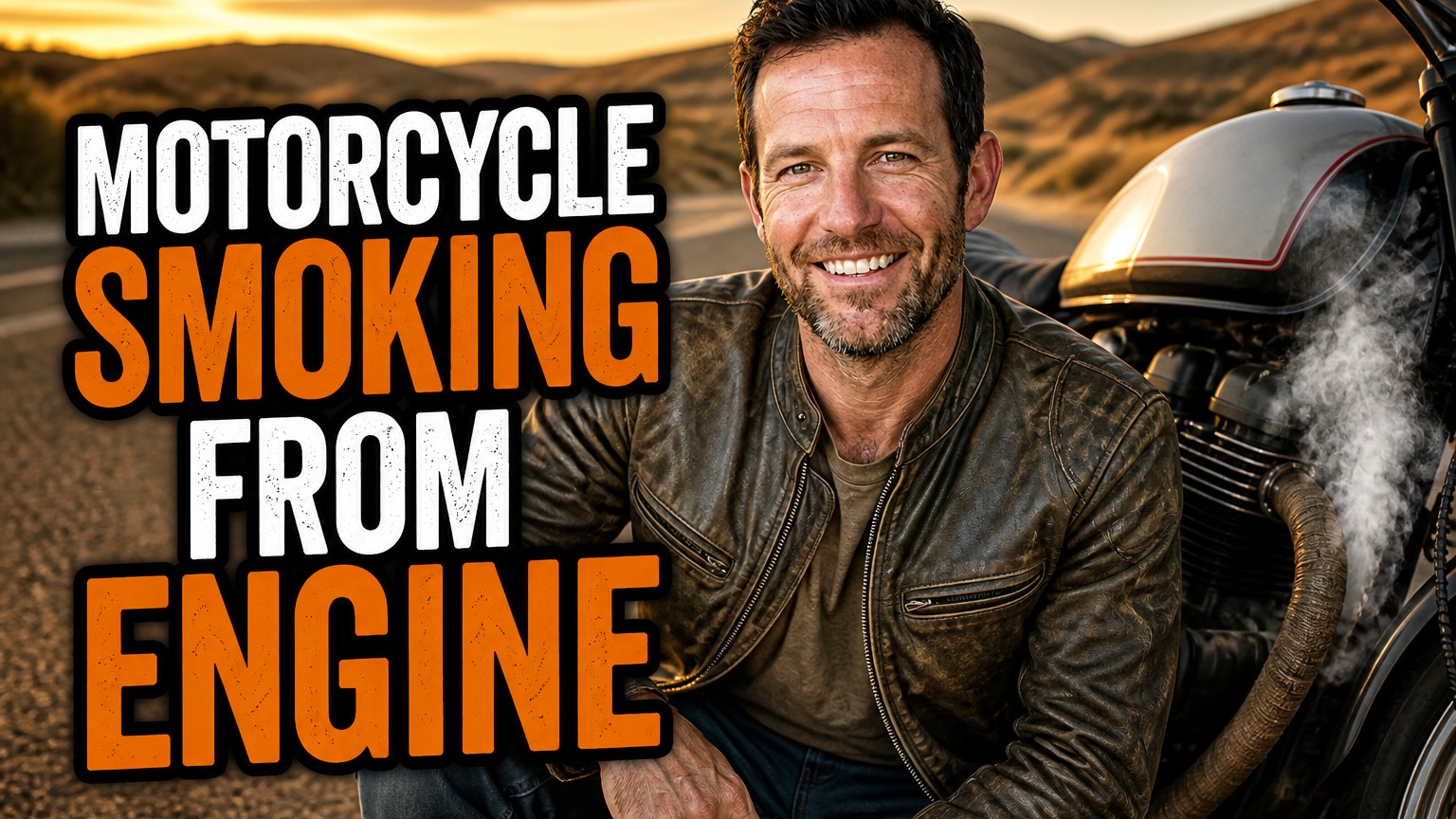
The first time my bike puffed smoke at a red light, my stomach dropped. I immediately started running worst-case numbers in my head: blown engine, empty wallet, a long walk home.
Over the years I’ve learned that a motorcycle smoking from the engine isn’t always a disaster. Sometimes it’s harmless condensation. Sometimes it’s a cheap fix. And sometimes it’s a clear warning to shut things down right now.
In this guide I’ll walk you through what I look for, what the smoke color tells you, and how I decide between a driveway fix and a trip to the shop.
- Smoke color is your best clue: white usually means moisture or coolant, blue means burning oil, and black means too much fuel.
- A thin puff of white vapor on a cold morning is normal. Thick, lingering smoke is not.
- Start with the cheap checks: oil level, air filter, choke, and the type of oil you’re using.
- Stop riding if you see heavy smoke, a rising temp gauge, or milky oil.
First, Figure Out Where the Smoke Is Actually Coming From
Before you panic, pin down the source. “Smoke from the engine” can mean three very different things, and I’ve been fooled by each of them.
Exhaust smoke vs. smoke from the engine body
Smoke from the tailpipe means something is burning inside the combustion chamber. That’s the category most of this article covers.
Smoke or vapor rising from the engine case, cylinder, or header pipes is usually oil or fluid dripping onto hot metal. It looks scary but is often a leaking gasket or a spilled drop from your last oil change.
The “oops” I’ve made myself
After one oil change, I rode off and saw wisps of smoke from under the engine. I’d spilled a little oil on the exhaust header and never wiped it off.
It burned off in about ten minutes. Now I always wipe down the engine and pipes after any fluid work, and I’d suggest you do the same.
Decoding Smoke Color: My Quick Reference
When a friend calls me about a smoking bike, my first question is always, “What color is it?” That one answer narrows the problem down fast.
White smoke
White smoke can be harmless or serious, depending on how thick it is and how long it lasts. Thin, vapor-like white puffs that vanish within a minute or two are usually just condensation burning off.
Thick white smoke with a sweet smell is a different story. That points to coolant entering the combustion chamber, often from a failing head gasket or a cracked cylinder head.
If your bike is puffing white but the temperature gauge stays normal, I’d read my deeper breakdown on white smoke from engine but not overheating to narrow down the cause.
Blue or blue-gray smoke
Blue smoke means oil is getting into the combustion chamber and burning. It has a sharp, acrid smell that’s hard to mistake once you’ve caught it.
The usual suspects are worn piston rings, worn cylinders, tired valve stem seals, or simply too much oil in the crankcase. I’ve seen all four.
Black smoke
Black smoke means the engine is running rich, with too much fuel and not enough air. You’ll often notice poor mileage, a fuel smell, and sooty tailpipe tips.
Common causes include a clogged air filter, a stuck choke, a dirty carburetor, or a faulty fuel injector or sensor.
Gray smoke
Gray is the confusing one. It can be a mix of oil and fuel burning, or the early stage of a blue-smoke problem.
I treat gray smoke as a yellow flag. I check oil level and air filter first, then watch whether it gets worse under throttle.
Common Causes of White Smoke (and What I Check First)
Condensation
On cold or humid mornings, moisture builds up inside the exhaust. When the engine warms up, it turns to steam and puffs out the back.
This is normal if it clears within a few minutes. If you only see it on short, cold rides, I wouldn’t lose sleep.
Coolant leak into the cylinder
This is the one that worries me. A blown head gasket lets coolant seep into the cylinder, where it burns and creates thick white smoke.
Look for a dropping coolant level, a sweet smell, bubbles in the radiator, and milky, coffee-colored oil on the dipstick or sight glass. If you see any of these, stop riding.
Water in the fuel or oil
A bad tank of fuel or a leaking seal can introduce moisture where it doesn’t belong. It’s less common, but I’ve seen it after bikes sat in damp storage over winter.
Common Causes of Blue Smoke (Burning Oil)
Overfilled oil
This is the easiest fix, so I always check it first. Too much oil gets whipped into foam and pushed past the rings into the cylinder.
Park the bike upright on level ground, let it settle for a few minutes, and check the level. If it’s high, drain a little and see if the smoke disappears.
Worn piston rings or cylinder walls
Rings seal the combustion chamber and scrape oil off the cylinder wall. When they wear out, oil slips by and burns.
The typical sign is blue smoke under acceleration, along with falling compression and rising oil consumption. This usually means an engine rebuild or top-end overhaul.
Worn valve stem seals
Worn valve seals often cause a puff of blue smoke on startup or after engine braking down a long hill. The oil pools on top of the valves and then burns when you open the throttle.
I find this one easier to live with than worn rings, but it still deserves attention before it gets worse.
The wrong oil for the job
Oil that’s too thin, old, or low quality can burn off faster, especially in a hot-running air-cooled engine. I learned this the hard way with a cheap bottle of oil that vanished between changes.
If you’re not sure what to run, my guide on the best engine oil for motorcycle riders covers viscosity and ratings in plain language. And if you want to compare options, I also rounded up the best motorcycle engine oil brand choices I trust.
Common Causes of Black Smoke (Running Rich)
Clogged air filter
A choked air filter starves the engine of air, so the fuel mix goes rich. It’s cheap, quick to check, and one of the most overlooked maintenance items.
If yours looks dark and clogged, replace it. If it’s a foam filter, clean and re-oil it according to your manual.
Stuck choke or enrichener
On carbureted bikes, a choke left partially on will pour extra fuel into the mix. I’ve done this on a cold morning and ridden for miles before noticing the sooty smell.
Dirty carburetor or faulty injection parts
A leaking float needle, a bad jet, or a failing oxygen or temperature sensor can all push the mixture rich. Fuel-injected bikes may also throw a check-engine light.
If basic checks don’t fix it, a carb clean or a diagnostic scan is the next logical step.
What About 2-Stroke Bikes?
Two-strokes are their own world. They burn oil by design, so some smoke is completely normal, especially on startup and under load.
The question is how much. Heavy blue smoke that hangs in the air and coats your boots usually means the oil-to-fuel ratio is off, the oil injection is set too rich, or the carburetor jetting is wrong.
The type of oil matters here too. Cheap or incorrect two-stroke oil can create excess smoke and carbon buildup, so check out my guide to the best engine oil for 2 stroke motorcycle engines before your next fill-up.
My Step-by-Step Diagnostic Routine
When smoke shows up, I follow the same routine every time. It saves me from guessing and from throwing parts at a problem.
Step 1: Shut it down and observe
I stop riding, let the engine cool, and note the smoke color, smell, and when it happens. Is it on startup, under throttle, or at idle?
Writing it down on my phone helps, especially if I end up talking to a mechanic.
Step 2: Check fluids
I check the oil level and condition, then the coolant. Milky oil, low coolant, or oil that smells like fuel tells me a lot.
If the oil looks like a chocolate milkshake, I don’t start the engine again.
Step 3: Inspect the air filter and intake
A dirty filter is a five-minute check. I look for oil-soaked or clogged elements and any loose intake boots.
Step 4: Look for leaks
With a flashlight, I check around the head gasket, valve cover, oil filter, and exhaust headers. Fresh oil on the pipes will smoke dramatically even if the engine itself is fine.
Step 5: Run a compression or leak-down test
If I suspect internal wear, I do a compression test. Low numbers, especially when one cylinder is much lower than the others, point to rings or valves.
A leak-down test is even better because it tells you where the air is escaping. If you don’t own the tools, a shop can do it quickly.
Can the Oil You Choose Really Make a Difference?
Yes, more than many riders think. Motorcycle engines, especially those with a shared engine-and-gearbox sump, need oil built for wet clutches and high revs.
Car oils with friction modifiers can cause clutch slip, and the wrong viscosity can increase oil consumption. I always stick with the grade and JASO rating my manual calls for.
If you’re still on the fence, it’s worth reading up on which engine oil is best for motorcycle use based on your engine type and riding style. A fresh change with the right oil won’t fix worn rings, but it can rule out one big variable.
When Can You Keep Riding, and When Should You Stop?
Usually okay to keep riding
- A thin white vapor that disappears within a couple of minutes on a cold start
- A brief puff of blue smoke after sitting for a long time
- A small amount of smoke from spilled oil that burns off quickly
Stop riding and get it checked
- Thick white smoke that doesn’t clear after warm-up
- Constant blue smoke or fast-dropping oil level
- A rising temperature gauge or coolant loss
- Milky oil or a strong fuel smell in the oil
- Sudden power loss, knocking, or rough running
My rule is simple: when in doubt, shut it off. Pushing a bike home is annoying, but a seized engine is a much bigger headache.
What Will It Cost to Fix?
Costs vary a lot by bike and by shop, but here’s how I think about it. Cheap fixes include an air filter, oil change, or choke adjustment, usually a small amount in parts and an hour of your time.
Mid-range fixes include valve stem seals, gasket replacement, or carb cleaning. Big jobs like a head gasket replacement or ring and cylinder rebuild can run into the hundreds or thousands, depending on the bike.
That’s why I always rule out the cheap stuff first, and why I never ignore early warning signs.
How I Prevent Smoke Problems Before They Start
Change oil on schedule
Fresh oil protects rings, seals, and valve guides. I stick to the manual’s interval, and shorten it if I ride hard or in dusty conditions.
Let the engine warm up gently
I give the bike a minute or two before riding off and keep revs moderate until it reaches temperature. This reduces condensation and wear.
Keep the air filter and fuel system clean
A clean air filter and fresh fuel go a long way toward keeping the mixture right. If a bike sits for months, I use a fuel stabilizer.
Watch your fluids
I check oil and coolant levels often, especially before long rides. Catching a slow drop early has saved me from more than one big repair.
Final Thoughts From My Garage
Seeing smoke come off your bike is stressful, but it’s also useful information. The color, smell, and timing tell you a lot if you slow down and pay attention.
Start with the simple checks, respect the warning signs, and don’t be afraid to bring in a professional when compression or coolant is involved. I’d rather spend an afternoon diagnosing than a season rebuilding.
Ride safe, keep your fluids topped up, and if your bike starts smoking, remember: it’s trying to tell you something.
Frequently Asked Questions
Is it safe to ride a motorcycle that is smoking from the engine?
It depends on the smoke. A brief puff of white vapor on a cold start is usually harmless. Thick blue, black, or persistent white smoke means something is wrong, and riding on can cause expensive damage. If the temperature gauge climbs or you smell coolant, stop immediately.
What does blue smoke from a motorcycle mean?
Blue or bluish-gray smoke means oil is burning in the combustion chamber. Common causes are worn piston rings, worn valve stem seals, or overfilled oil. On a 2 stroke, some blue smoke is normal because oil is mixed with the fuel.
Why is my motorcycle blowing white smoke but not overheating?
The usual causes are condensation burning off in the exhaust, a small amount of moisture in the system, or oil seeping past seals. If the white smoke is thick, sweet-smelling, and lasts after warm-up, get the head gasket and coolant system checked.
Can the wrong engine oil cause smoke?
Yes. Oil that is too thin for your engine, or a poor-quality oil that breaks down under heat, can burn off more easily. Always follow the viscosity and specification in your owner’s manual and change it on schedule.

Related Articles
7 Best Batteries for Motorcycles I’ve Tested and Trust in 2026
I've tested dozens of motorcycle batteries to find the best performers. From AGM to lithium, here are my top picks…
Jake Miller
15 min read

The Perfect Battery for Your Harley Davidson Softail: A Rider’s Complete Guide
Discover the perfect battery for your Harley Davidson Softail. I've tested multiple options and share real-world performance data, maintenance tips,…
Jake Miller
14 min read

The Best Battery for Your Harley Davidson: My Complete Guide After Years of Testing
Discover which battery truly performs best for Harley Davidson motorcycles. Real rider experience with AGM, lithium, and OEM options to…
Jake Miller
12 min read