
7 Best Motorcycle Oils for Pacific Northwest Riders: Rain-Ready Picks I Trust
 Jake Miller
9 min read
Jake Miller
9 min read
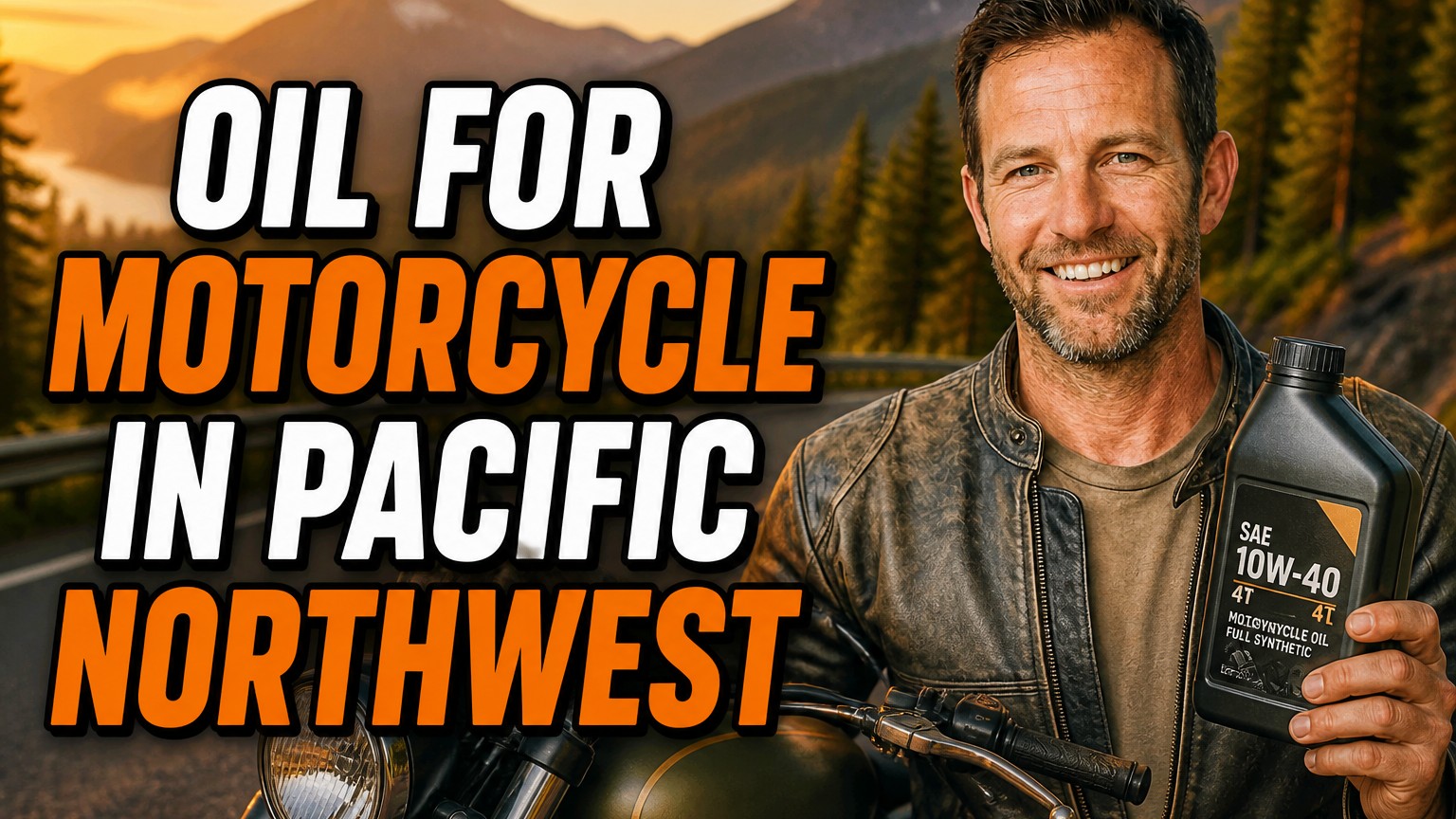
I’ve been riding in Oregon and Washington for years, and I can tell you this region is hard on a motorcycle’s engine oil. We get long stretches of damp air, cool mornings, short commutes, and sudden temperature swings between the coast and the high desert.
That combination quietly punishes oil. Moisture builds up, cold starts are frequent, and many of us park our bikes for weeks during the wet months.
So I’ve put together the oils I actually trust for Pacific Northwest riding. Each one is a real product I’d put in my own crankcase, and I’ve explained where each one shines and where it doesn’t.
- My overall pick for Northwest riding is Motul 7100 4T 10W-40, a full ester synthetic that handles cold starts and wet weather well.
- Stick with a JASO MA/MA2 oil for wet clutches, and choose 10W-40 unless your manual says otherwise.
- Short rides and winter storage are the real enemies here, so change oil at least once a year no matter the mileage.
- Good budget options like Castrol Power1 4T work fine if you change them on time.
Why the Pacific Northwest Changes the Oil Conversation
Most oil advice is written for hot, dry climates. Here, the issues are different, and they affect which oil I reach for.
Cool, Damp Starts
Typical Northwest mornings sit between 38°F and 55°F for much of the year. Oil that’s too thick at startup takes longer to reach the top end, and the first few seconds are when most engine wear happens.
That’s why the first number in a viscosity grade (the “10W” in 10W-40) matters more here than people think.
Moisture and Short Trips
When you ride short distances, the engine never gets hot enough to burn off condensation. That water and unburned fuel end up in the oil, forming sludge and acids over time.
Good synthetic oils with strong additive packages resist this far better than cheap conventional oils. I learned this the hard way after opening up a commuter bike that had sat through two wet winters.
Winter Storage
A lot of riders here park their bikes from November to March. Old oil sitting in a cold garage is a recipe for corrosion, so I always change oil before storage, not after.
If you want a broader foundation before choosing, I’d recommend reading this guide to the best motor oil for 4 stroke motorcycle engines.
1. Motul 7100 4T 10W-40 — Best Overall for Northwest Riding
When I’m asked what to run in a bike that sees all four seasons, Motul 7100 4T 10W-40 is my first answer. It’s a 100% synthetic ester-based oil, and it’s JASO MA2 certified for wet clutches.
Esters cling to metal surfaces, which gives extra protection during those chilly, damp cold starts. I’ve noticed smoother shifting and a quieter top end on my own bike after switching.
What I Like
- Full ester synthetic formulation with excellent cold-flow behavior
- JASO MA2 and API SN rated
- Available in 10W-30, 10W-40, 15W-50 and 20W-50
Things to Consider
It typically runs about $14 to $18 per liter, so it’s not the cheapest. For a bike I ride year-round, I consider it worth it.
2. Mobil 1 Racing 4T 10W-40 — Best for Sport and Performance Bikes
If you’re riding a sportbike through the Cascades or along the Oregon Coast, Mobil 1 Racing 4T 10W-40 is a standout. It’s a full synthetic built for high-revving engines and shared-sump transmissions.
I’ve used it in a liter-class bike on twisty mountain roads. It held up well to heat on climbs and still flowed freely on cold morning starts.
Why It Works Here
Mobil 1 Racing 4T meets JASO MA2 and offers strong shear stability. That means the oil keeps its viscosity even after a lot of gear and clutch abuse.
Expect to pay around $13 to $17 per quart or liter, depending on where you buy.
3. Castrol Power1 4T 10W-40 — Best Budget Pick
Not everyone wants to spend premium money on every oil change, and I get that. Castrol Power1 4T 10W-40 is a partly synthetic oil that delivers solid protection at a friendly price, usually $9 to $12 per liter.
I’ve recommended it to friends with commuters and older standards. It’s JASO MA2 rated and widely available at local shops across Washington and Oregon.
My Honest Take
It’s not as robust as a full ester synthetic in extreme conditions. But if you change it every 3,000 miles or at least once a year, it does the job well.
For another viewpoint on value options, I like this roundup of the top engine oil for 4 stroke motorcycle owners.
4. Shell Advance Ultra 4T 10W-40 — Best for Daily Commuters
For riders who put on steady miles through Portland or Seattle traffic, Shell Advance Ultra 4T 10W-40 is a smart choice. It’s a fully synthetic oil built with Shell’s PurePlus-style base technology and is JASO MA2 certified.
Stop-and-go traffic in drizzle is hard on oil because of heat cycling. This oil resists breakdown well and keeps engines feeling smooth at low speeds.
Highlights
- Full synthetic formulation designed for clutch-friendly performance
- Strong detergent package to fight sludge from short trips
- Typically $12 to $16 per liter
5. Amsoil Synthetic Motorcycle Oil 10W-40 — Best for Long Intervals and Storage
Amsoil Synthetic Motorcycle Oil 10W-40 is the oil I choose when I know a bike will sit for a while. It has strong corrosion inhibitors and a robust additive package that resists breakdown.
It’s JASO MA2 rated and meets API SN specs. I like it for adventure bikes and cruisers that see seasonal use.
The Trade-Off
Amsoil is sold mostly through dealers and online, so you may not find it on a local shelf. Pricing runs about $14 to $18 per quart.
Even with the extended-drain claims, I still change it yearly in our damp climate. Time matters as much as mileage here.
6. Liqui Moly Motorbike 4T Synth 10W-40 Street Race — Best European-Bike Option
If you ride a BMW, Ducati, Triumph or KTM, Liqui Moly Motorbike 4T Synth 10W-40 Street Race is a strong match. It’s a fully synthetic oil that’s popular among European-bike owners.
I’ve found it keeps engines running smoothly in wet conditions, and it has JASO MA2 certification for clutch performance.
Why It Earns a Spot
It uses an ester-boosted formulation that provides good film strength under load. Expect to spend roughly $15 to $20 per liter.
You can compare this with the picks in this article on best engine oil for motorcycle models to see how brands stack up.
7. Bel-Ray EXS Full Synthetic Ester 4T 10W-40 — Best for Hard Riding and Off-Road
The Northwest is full of forest roads, gravel and dual-sport routes. Bel-Ray EXS Full Synthetic Ester 4T 10W-40 is made for riders who push hard and ride in mud and wet.
It’s a full synthetic ester oil with high shear stability, which matters if your engine and gearbox share oil. It’s also JASO MA2 certified.
What Stands Out
I like it for dirt bikes and adventure rides where engines get hot and dirty. It typically costs around $15 to $19 per quart.
It’s more oil than a gentle commuter needs, but if you ride aggressively, it’s a great choice.
How I Choose the Right Oil for My Bike
Picking from this list is simple if you follow a few steps. These are the checks I run through every time.
Start With Your Owner’s Manual
Your manufacturer’s viscosity and specification chart always comes first. If the manual says 10W-40, don’t try to outsmart it.
Check for JASO MA or MA2
Most motorcycles share oil between the engine, gearbox and wet clutch. Automotive oils with friction modifiers can cause clutch slip, so always look for the JASO MA or MA2 mark.
Match the Oil to How You Ride
- Year-round commuter: Shell Advance Ultra or Motul 7100
- Sportbike: Mobil 1 Racing 4T
- Budget-minded rider: Castrol Power1 4T
- Adventure or off-road: Bel-Ray EXS or Amsoil
If you’re still comparing, this article on what is the best engine oil for 4 stroke motorcycle engines gives a helpful second opinion.
Seasonal Oil Tips for Pacific Northwest Riders
Change Oil Before Winter Storage
I always drain old oil before parking my bike for the season. Used oil holds acids and moisture that can slowly damage bearings and cylinder walls.
Warm Up Gently, Not Endlessly
On cold mornings, I let the engine idle for 30 to 60 seconds and then ride gently until the temperature gauge rises. Long idling in the driveway just adds fuel dilution.
Take a Longer Ride Now and Then
If your bike mostly does short hops, take it on a 20-30 minute ride every couple of weeks. That gets the oil hot enough to burn off moisture.
Watch Your Oil Level and Color
Milky or foamy oil on the dipstick or sight glass is a red flag for water contamination. If I ever see that, I change the oil immediately and investigate the cause.
A Quick Note on Climate Differences
Oil recommendations vary a lot depending on where you ride. For instance, hot-weather riders face different challenges, which is covered in this piece on the best engine oil for 4 stroke motorcycle in india.
Reading about those conditions reminded me that our cool, wet climate calls for its own approach. What works in a heat wave isn’t always right for a drizzly November commute.
Final Thoughts From My Garage
If I had to choose just one, I’d put Motul 7100 4T 10W-40 in almost any bike that lives in the Pacific Northwest. It handles cold starts, moisture and varied riding without drama.
That said, every oil on this list is a solid performer when matched to the right bike and changed on schedule. The best oil is the one that fits your engine, your riding style and our soggy, beautiful climate.
Pick one, change it on time, and enjoy the ride. I’ll see you out on those wet, twisty roads.
Frequently Asked Questions
What viscosity oil is best for a motorcycle in the Pacific Northwest?
For most air-cooled and liquid-cooled four-strokes, 10W-40 is the safest year-round choice here. Riders who wheel out on cold winter mornings may prefer a 10W-30 or 5W-40 if the owner’s manual allows it. Always follow your manufacturer’s viscosity chart first.
Should I use synthetic or conventional oil in the rainy Northwest?
I recommend full synthetic or a quality synthetic blend. Synthetics flow better on cold starts and resist moisture and short-trip contamination better. Both matter when your bike sees damp air and frequent short rides.
How often should I change motorcycle oil in a wet climate?
Follow your manual’s interval, but shorten it if you ride mostly short trips or store the bike through winter. I change oil at least once a year even if I haven’t hit the mileage, because condensation and fuel dilution build up in cool, humid weather.
Do I need JASO MA or MA2 oil?
If your bike has a wet clutch, which is true of most motorcycles, look for JASO MA or MA2 on the label. That rating means the oil won’t cause clutch slip. Avoid automotive oils labeled Energy Conserving.

Related Articles
7 Best Batteries for Motorcycles I’ve Tested and Trust in 2026
I've tested dozens of motorcycle batteries to find the best performers. From AGM to lithium, here are my top picks…
Jake Miller
15 min read

The Perfect Battery for Your Harley Davidson Softail: A Rider’s Complete Guide
Discover the perfect battery for your Harley Davidson Softail. I've tested multiple options and share real-world performance data, maintenance tips,…
Jake Miller
14 min read

The Best Battery for Your Harley Davidson: My Complete Guide After Years of Testing
Discover which battery truly performs best for Harley Davidson motorcycles. Real rider experience with AGM, lithium, and OEM options to…
Jake Miller
12 min read