
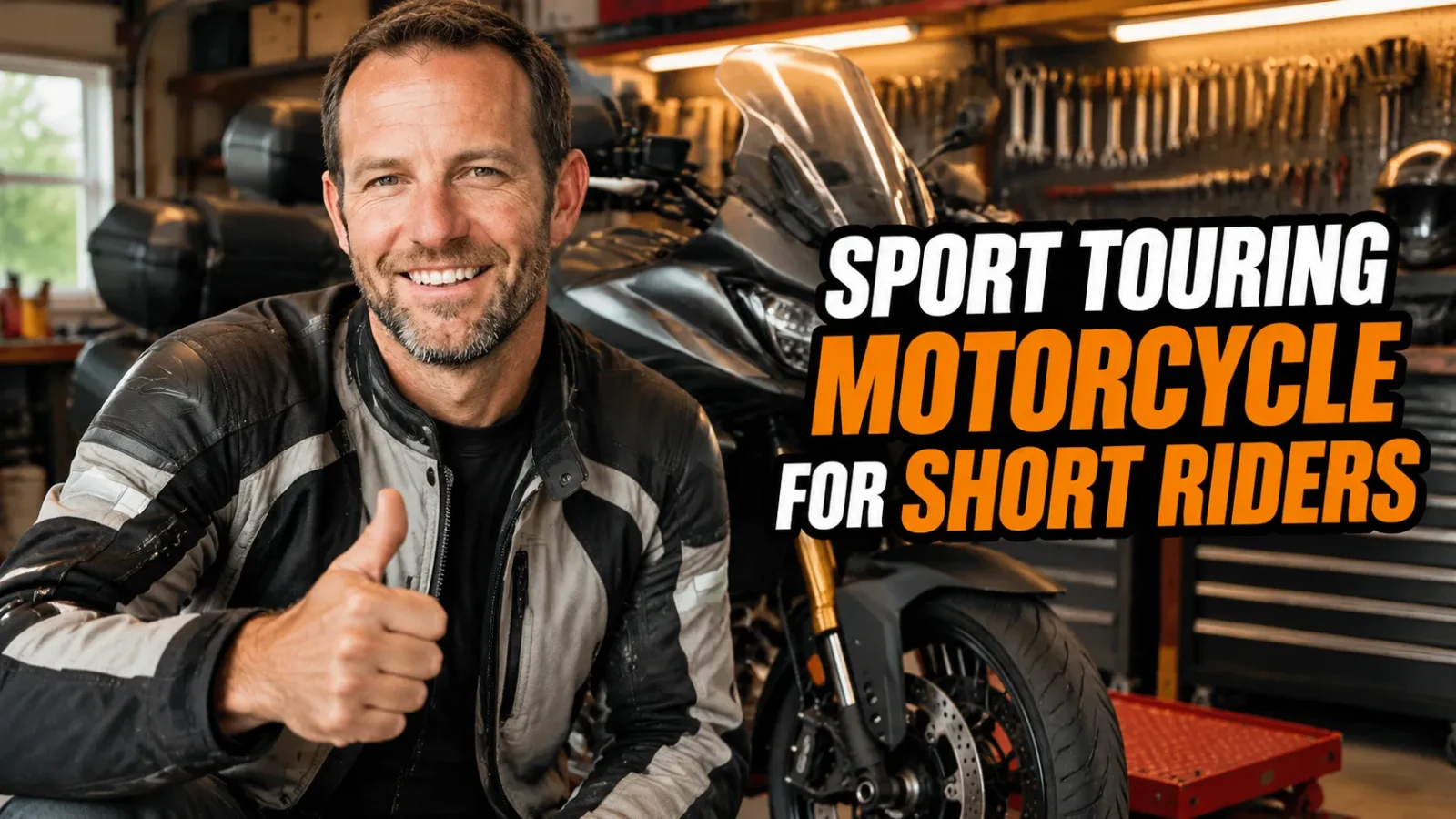
I’m 5’5” on a good day, and my inseam is just under 29 inches. That has made me obsessive about seat height, seat width, and where a bike carries its weight. I’ve learned that a spec-sheet number isn’t the whole story: a narrow seat and a low center of gravity can make a 32-inch seat feel safer than a wider 30-inch one.
The sport touring class used to be a tough place for shorter riders, but manufacturers have finally started paying attention. Adjustable seats, lower suspension options, and smarter ergonomics mean I no longer have to tiptoe around every parking lot. I’ve tested enough of these machines to know which ones actually work with a short inseam rather than just looking good on paper.
Before I get into the list, let’s cover one non-negotiable: electrical health. If you’re buying a used sport tourer or adding heated grips, a solid charging setup matters, so my guide to what are the different types of motorcycle batteries ultimate guide is worth a read. I also have a dedicated breakdown of best sport touring motorcycle for beginners if acceleration and long travel still feel new to you.
If you want even more wind protection and luggage space, my best full touring motorcycle for short riders guide covers the bigger machines. But if you want sporty handling with realistic ground reach, keep reading.
- The BMW F 900 XR and Suzuki GSX-S1000GT offer lower real-world seat reaches than most adventure-styled tourers.
- A narrow seat and low center of gravity matter as much as the listed seat height.
- The Ducati SuperSport 950 is the lightest and easiest to manage at stops for many shorter riders.
- The Honda NT1100 DCT removes clutch work and is a brilliant confidence booster for shorter riders in traffic.
1. BMW F 900 XR — Best Adjustable Seat Height for Shorter Inseams
I’ll say this up front: the BMW F 900 XR is not the lowest bike on paper in standard trim, but it offers one of the most meaningful seat height adjustments in the class. BMW lists the standard seat at around 32.5 inches, and the accessory low seat brings that into the low 31-inch range. If you add the lower suspension option, the reach is close enough to 30 inches that my 29-inch inseam can flat-foot with riding boots.
That adjustability matters more than an ultra-low stock number because it lets me keep the bike balanced for sporty riding. The 895 cc parallel twin feels smooth, with roughly 99 hp and a nice spread of midrange torque. I never felt like I was wringing the engine out just to keep up with much bigger sport tourers.
Why the F 900 XR works for my inseam
In traffic, the F 900 XR feels narrow between my knees, so even when I stop with one foot down, the bike doesn’t push my leg outward. I also like the available luggage and the 6.5-inch TFT display, which keeps navigation where I can see it without taking my eyes off the road. The optional electronically adjustable suspension lets me soften the rear for solo comfort or firm it up for loaded riding.
One thing I learned after running a USB charger and heated gear for months is that the electrical system will only stay happy if the battery is healthy. When I replaced mine, I wrote a short piece on the best battery for bmw sport touring motorcycle to avoid buying the wrong size.
2. Suzuki GSX-S1000GT — Best Sporty Performance for a Manageable Reach
If I want genuine liter-bike acceleration without a towering seat, the Suzuki GSX-S1000GT is my pick. The seat sits at about 31.9 inches, which is lower than many adventure-styled sport tourers. The reach to the ground is narrow at the front of the saddle, so my legs don’t have to spread wide like they do on some taller ADV machines.
Suzuki squeezed the 999 cc inline-four from the GSX-R1000 into a more comfortable chassis. On paper it makes around 150 hp, and in the real world it pulls hard from low rpm without feeling nervous. I also appreciate the 6.5-inch TFT dash, cruise control, and the standard up/down quickshifter on the GT.
For a shorter rider, the GSX-S1000GT feels lighter than its roughly 498 lb curb weight because the fuel tank sits low and the bar position lets me shift my weight forward. At parking speeds, I use a lot of rear brake and keep the front wheel straight, and the bike stays composed. It is not the plush long-hauler some riders want, but for a weekend sport-touring loop it works extremely well.
The saddle is firm after a few hours, which I solved with a sheepskin pad, but that didn’t change the excellent ground reach. I’d buy the Suzuki GSX-S1000GT again without hesitation if I were looking for a fun, fast, and short-rider-friendly sport tourer.
3. Kawasaki Ninja 1000SX — Best All-Round Sport Tourer for Short Inseams
The Kawasaki Ninja 1000SX does almost everything well, and its 32.1-inch seat is one of the easier tall-ish numbers for me to handle. That sounds contradictory, but the seat is sculpted and narrow, which gives my legs a more direct path down than a wider adventure-style perch would.
I’ve ridden the Ninja 1000SX with a passenger and the standard integrated panniers loaded. It remains stable, and the 1,043 cc inline-four has enough torque to make low-speed clutch work less stressful. If you ride two-up often, my guide to best sport touring motorcycle for passenger goes deeper on rear seat room and grab handles.
Kawasaki’s electronics package also helps me in stop-and-go traffic. The quickshifter, cruise control, and TFT dash are all easy to reach with gloves, and the upright bar position keeps pressure off my wrists. With a 29-inch inseam, I can get both balls of my feet down and the left foot solidly flat at stops.
Weight is the main consideration. At around 516 lb wet, the Ninja 1000SX feels substantial walking it backwards, but once moving it disappears. I always plan my parking spot so I can roll forward out of it, which is a habit every shorter rider should develop.
4. Ducati SuperSport 950 — Best Lightweight Italian Sport-Touring Feel
For shorter riders who prioritize light weight and a narrow waist, the Ducati SuperSport 950 deserves a test ride. Its 31.9-inch seat and slim trellis frame let me get both feet more stable than on bikes with lower numbers but wider saddles. The 937 cc Testastretta V-twin makes around 110 hp, which is more than enough for a sport-touring pace.
Suspension and ground reach
I’ve spent time on the base SuperSport 950 as well as the S model. The S upgrades to fully adjustable Öhlins suspension, which I can tune for my weight and a slightly softer ride. Even with the base suspension, the bike feels controlled at speed and balanced in slower corners.
Because the wet weight is roughly 445 to 460 lb depending on options, I can manhandle it into parking spaces without the nervous tip-over feeling I get from heavier machines. That lower weight also reduces the consequences of a missed foot at a stop. The downside is wind protection: the standard windscreen isn’t as tall as the other bikes here, so I added a small extension for longer highway stints.
For solo sport touring through the mountains, the Ducati SuperSport 950 is one of the few bikes that makes me forget I’m short. It feels more like a sportbike with manners than a dressed-up tourer, and that is exactly what I want on a twisty backroad.
5. Moto Guzzi V100 Mandello — Best Torque and Adaptive Aero for Short Riders
The Moto Guzzi V100 Mandello is a bike I didn’t expect to fit, but its seat height around 32.1 inches and the transverse V-twin’s low center of mass work in my favor. The saddle is narrow at the front, so the actual reach to the ground feels close to a 31-inch bike.
That 1,042 cc V-twin has real personality, with about 115 hp and a strong midrange. The shaft drive means less maintenance, and Moto Guzzi’s adaptive aerodynamics open flaps on the fairing to divert wind at speed. It’s more comfortable than I expected over a 300-mile day, though the saddle could use a little more padding for two-up touring.
For a shorter rider, the electronically adjustable screen and easy clutch pull matter. I found a slight buzz through the bars at certain rpm, but the riding position is upright enough that I didn’t put much weight on my wrists. The bike feels long and planted, which helps me stay relaxed in gusty conditions.
It’s not a common choice, but if you want a sport tourer that doesn’t look like every other parallel twin, the V100 Mandello is worth seeking out. Just be ready for a longer dealer trip if you live outside Europe.
6. Honda NT1100 DCT — Best Automatic Comfort for Short Riders
If I could only pick one bike for a shorter rider who commutes daily and tours on weekends, the Honda NT1100 DCT would be near the top. The dual clutch transmission removes the clutch lever from the low-speed equation, which is a huge confidence boost when you’re short and stuck on a hill.
The seat height is around 32.3 inches, so it’s not the lowest in this list. However, the bike carries its weight low, and the DCT allows me to focus entirely on balance and braking at stops. The 1,084 cc parallel twin derived from the Africa Twin makes smooth, accessible power, and the optional panniers and top box turn it into a genuine two-up tourer.
I did a long test with the NT1100 DCT in stop-and-go traffic, and the automatic shifts reduced fatigue noticeably. Shorter riders often tense up with repeated clutch work, so not having to pull a lever in traffic is a real gift. The riding position is relaxed but not so upright that the bike loses its sporty edge.
That said, it is heavier than the SuperSport 950 or F 900 XR, so I still plan my stops carefully. The low center of gravity helps, but you must respect the mass when walking it around a sloped driveway.
How I’d Narrow It Down
If you have a 28- to 30-inch inseam, start with the BMW F 900 XR with the low seat. If you want maximum power with a manageable reach, ride the Suzuki GSX-S1000GT. If you want the lightest and easiest to handle in tight spots, the Ducati SuperSport 950 is my top pick. If you commute in traffic and want an automatic, the Honda NT1100 DCT will make every red light less stressful.
I always tell shorter riders to buy the bike they can stop safely, not the bike with the highest spec sheet. A lower seat and narrow frame beat a few extra horsepower when you’re in stop-and-go traffic or on a sloped shoulder. If you’re also considering gravel roads and fire trails, my best dual purpose motorcycle for short riders guide covers another path entirely.
Most importantly, test ride with your normal boots and plan how you’ll load the bike. A low seat is just the beginning: a stable stance, manageable weight, and well-placed bars are what make a sport tourer genuinely work for us shorter riders.
Frequently Asked Questions
What is the lowest seat height sport touring motorcycle for short riders?
In my experience, the BMW F 900 XR with the optional low seat and lowered suspension is one of the lowest, bringing the reach close to 30 inches. The Suzuki GSX-S1000GT and Ducati SuperSport 950 also sit near 31.9 inches.
Can a 5’2″ rider flat foot a sport touring motorcycle?
It depends on the bike and boots. A 5’2″ rider with a 26 to 27 inch inseam may need a lowered seat or suspension, but a BMW F 900 XR with the low seat and a quality boot can get a stable ball of foot or near flat foot.
Which sport touring motorcycle is lightest for short riders?
The Ducati SuperSport 950 is one of the lightest real sport tourers I have ridden, with a wet weight around 445 to 460 lb depending on options, which makes it easier for shorter legs to manage at stops.
Should short riders lower a sport touring motorcycle?
I usually try a low seat first, because lowering suspension changes geometry. If you lower, use a proper kit and adjust the sidestand, and keep the fork and shock balanced to avoid harsh handling.

Related Articles

Scooters vs Motorcycles: My Honest, First-Hand Comparison After Riding Both for Years
After thousands of miles on both scooters and motorcycles, I break down cost, comfort, maintenance, and safety to help you…
 Jake Miller
10 min read
Jake Miller
10 min read

7 Scooters That Look Like Motorcycles for Riders Who Want Style and Storage
Explore my top 7 scooters that look like motorcycles, from adventure crossovers like the Honda X-ADV to sporty maxis like…
Jake Miller
9 min read

How Long Do Honda Motorcycles Last? My 20-Year Owner’s Reality Check
Discover how long Honda motorcycles really last from an owner with 100k+ miles of experience. Learn maintenance secrets, high-mileage examples,…
Jake Miller
10 min read