
8 Best Touring Motorcycles for Short Riders (2025 Low Seat Height Picks)
 Jake Miller
14 min read
Jake Miller
14 min read
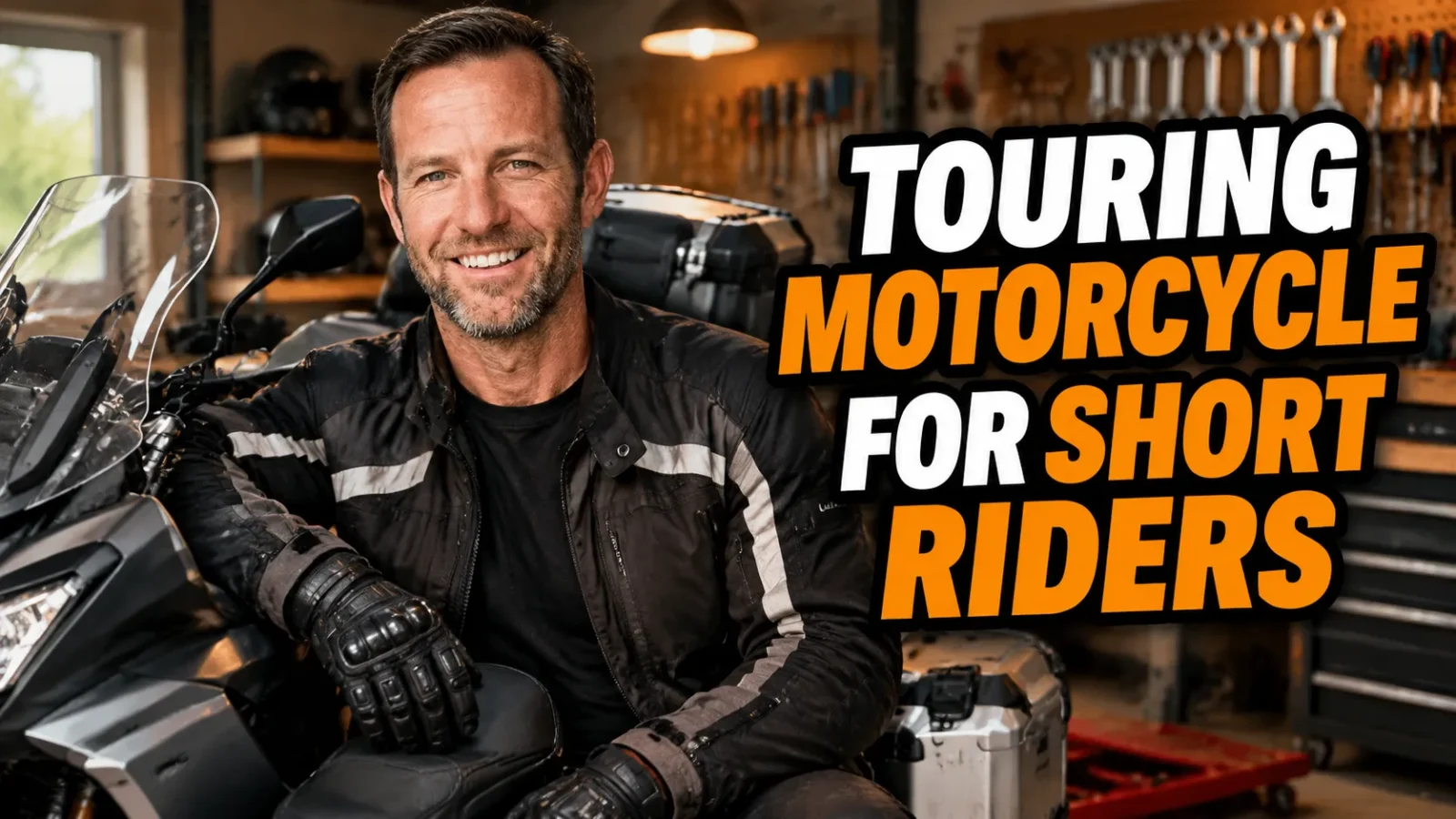
I’m 5’5” with a 28-inch inseam, so I know exactly how scary it feels to back a tall touring bike down a sloped driveway while balancing on my toes. Over the years I’ve thrown a leg over most of the low-slung tourers on the market. Some looked great on paper but felt wide and top-heavy in parking lots, while others let me plant both boots and ride for hours without stress.
The truth I’ve learned is that seat height alone is not the whole story. Seat width, suspension sag, footboard position, and how low the bike carries its weight matter just as much as the number on a spec sheet. In this guide I’m sharing the motorcycles I’d genuinely buy or recommend to a shorter friend who wants real touring comfort.
Dead batteries have ended more of my trips than any seat-height problem, so I always check the charging system before a long ride. I keep the what are the different types of motorcycle batteries ultimate guide handy because knowing whether your bike uses an AGM, gel, or lithium battery changes how you maintain and replace it.
- Seat height between 26 and 29 inches is ideal for most short riders, but seat width and balance matter just as much.
- The Harley-Davidson Heritage Classic 114 and Indian Chieftain Limited offer the lowest real-world seat heights I’ve tested.
- The Honda Rebel 1100T is the lightest, most approachable touring option if heavy baggers intimidate you.
- DCT automatic options like the Gold Wing and Rebel 1100T reduce clutch stress in traffic and parking lots.
How I Evaluate Touring Motorcycles for Short Inseams
I want a bike that lets me put both feet down without stretching, shifting my hips, or hanging off one side. If I can’t get at least the balls of both feet firmly planted at a stop, I’m already planning how to lower the suspension or find a different seat. That first contact patch with the ground changes everything about my confidence.
Weight still matters to me, but not in the way most people think. A 700-pound bike with a low center of gravity can feel easier to manage than a 500-pound bike that carries its mass high. I focus on whether I can duck-walk the bike backward on level ground without feeling like it is about to tip away from me.
Seat Width and Reach Are Just as Important as Seat Height
A spec sheet might list a 27-inch seat height, but if that seat is broad and pushes my legs out, my feet suddenly don’t reach the pavement. I always sit on the bike in riding gear and bounce the suspension before judging. A narrow front section on the seat can give me an extra inch of effective leg reach without lowering anything.
Handlebar reach also matters more than I expected. If the grips force me to lean too far forward, I lose low-speed control. I look for bars that sweep back naturally so my elbows stay bent and my shoulders relax during a long day in the saddle.
1. Harley-Davidson Heritage Classic 114 — The Low-Slung Classic Cruiser I Trust
The Heritage Classic 114 has a seat height around 26.8 inches, which is one of the lowest in Harley’s touring lineup. With its narrow solo portion and low floorboards, I can flat-foot it comfortably even with a shorter inseam. It weighs roughly 728 pounds wet, but most of that mass sits low in the chassis, so it does not feel lumbering once I’m moving.
Power comes from the Milwaukee-Eight 114 V-twin, which pulls hard from just off idle. I love the relaxed throttle response for touring. The detachable windshield and leather-wrapped saddlebags give me real long-haul ability without making the bike feel like a full-dress bagger in city traffic.
What I appreciate most is the Heritage Classic’s cruise control and soft floorboards. My feet sit naturally under my hips, and the low seat lets me stay planted at stoplights without pointing my toes. For a shorter rider who wants a classic Harley touring feel, this is my default answer.
Price is around $20,000 to $22,000 depending on color and options. It is not cheap, but the resale value and dealer support soften the blow. I would still practice slow-speed turns in a parking lot because the bike is long, but the low seat makes that practice feel productive rather than frightening.
2. Indian Chieftain Limited — The Lowest Full-Dress Bagger I’ve Ridden
The Indian Chieftain Limited is the only full-dress touring bike I’ve swung a leg over that lets me plant both boots with my knees slightly bent. Its seat height is just 25.6 inches, which is remarkable for a bike with a frame-mounted fairing, hard saddlebags, and a full infotainment system. Yes, it is heavy at about 829 pounds wet, but the weight sits so low that I can paddle it around flat parking lots without panic.
The Thunderstroke 116 air-cooled V-twin is smooth and torquey. I don’t need to rev it to make quick passes. Ride Command with Apple CarPlay, keyless ignition, and electronic cruise control make it a legitimate cross-country machine. The power windshield is a real asset when the weather changes at interstate speed.
For short riders who want a full-dress tourer without making seat compromises, this is my top pick. If you want to compare more dedicated full-dress options, I’ve also broken down the best full touring motorcycle for short riders in a separate guide.
The Chieftain Limited starts around $29,000, so it is an investment. But if you want the lowest seat on a true touring bagger, the fit is hard to beat. I’d budget for frame sliders and practice slow-speed maneuvers because the fairing adds visual width, even though the bars clear my knees easily.
3. Yamaha Star Venture — A Low-Armchair Touring Experience
The Yamaha Star Venture surprised me with how approachable it feels for a bike that weighs about 963 pounds. Its seat height is around 27.4 inches, and the wide but low saddle lets me settle in like I’m sitting in a lounge chair. My feet reach the ground with less stretch than many lighter adventure tourers I’ve ridden.
That massive 113-cubic-inch V-twin is paired with a smooth belt final drive, and the bike comes loaded with heated seats, heated grips, cruise control, and a full infotainment package. Yamaha’s Sure-Park system gives me forward and reverse crawling assist, which is a lifesaver when I need to back out of a tight parking spot on a slight grade.
I won’t pretend the Star Venture is light. It is a big motorcycle, and shorter or lighter riders need to respect that mass at low speed. The difference is that the low seat and excellent balance make it feel manageable rather than intimidating. If I were planning a coast-to-coast ride two-up, this would be near the top of my list.
Pricing starts in the high $20,000 range. The rider triangle is short enough that I do not feel like I am reaching for the bars or stretching to cover the brake pedal. After a long day, my knees and hips thank me.
4. Honda Gold Wing Tour DCT — The Heavyweight That Feels Lighter Than It Is
On paper the Honda Gold Wing Tour’s 29.3-inch seat height sounds too tall for me, but I was shocked by how flat I could stand once I got on the bike. The seat is sculpted narrow at the front, and the low, forward-canted engine keeps the center of gravity incredibly low. I can get both boots down with more confidence than on several bikes with lower spec-sheet numbers.
The DCT automatic transmission is the real short-rider secret here. I never have to balance a heavy bike while feathering a clutch or hunting for neutral. The Gold Wing crawls smoothly at parking speeds, and reverse gear helps me back out without paddling like a duck. It removes the two biggest obstacles I face as a shorter rider: stalling on a hill and losing footing during a U-turn.
The 1833cc flat-six is silky, and the shaft drive means no chain maintenance on a long trip. Heated grips, cruise control, luggage, and the best wind protection I’ve tested make this a true long-distance tool. It weighs around 845 pounds in Tour trim, so I always plan stops where I can see the pavement and avoid loose gravel.
Price starts near $29,000 and climbs fast with airbag and DCT packages. If you want a famously competent tourer that does not feel tall once you sit on it, put the Gold Wing at the top of your test-ride list.
5. Kawasaki Vulcan 900 Classic LT — The Lightweight Budget Tourer I Recommend Often
The Kawasaki Vulcan 900 Classic LT is one of my favorite hidden gems for shorter or newer tourers. Its 26.8-inch seat height is very low, and at roughly 657 pounds wet, it is far lighter than most bikes on this list. I can walk it backward on flat ground with one hand on the bars and feel completely in control.
The 903cc V-twin has enough power for two-lane touring and relaxed highway cruising without being overwhelming. Kawasaki uses a low-maintenance belt drive, and the Classic LT comes from the factory with a windshield, saddlebags, and a passenger backrest. That is a complete touring setup for less money than a bare Harley.
What I like most is how forgiving the Vulcan 900 is in parking lots. The clutch is light, the bars are close, and the seat is supportive without being wide. If a heavier bagger makes you nervous, this is the bike I tell you to start on before moving up.
Pricing is usually around $10,000 to $12,000, which leaves room in the budget for riding gear and a quality battery before a long trip. The engine is air-cooled and simple, so maintenance does not require deep dealer-only knowledge.
6. Honda Rebel 1100T — The Lightest Touring Option for Short Riders
The Honda Rebel 1100T is not a traditional touring bagger, but it is the lightest real touring option I have tested for short riders. It has a 27.5-inch seat height and a very narrow midsection, so my legs drop straight down instead of bowing out. At about 500 pounds wet, it is hundreds of pounds lighter than a full-dress tourer.
The 1083cc parallel twin borrowed from the Africa Twin makes strong midrange power, and the optional DCT removes clutch work entirely. Honda adds a small fairing, cruise control, and lockable saddlebags to turn the Rebel into a surprisingly practical long-distance machine. I have spent all-day rides on it without feeling beaten up by wind or vibration.
This is the bike I recommend to shorter riders who want touring capability but hate the weight of traditional baggers. The Rebel 1100T is street-focused, but if you plan to explore gravel or dirt, check my picks for the best dual purpose motorcycle for short riders and the best off road motorcycle for short riders.
Pricing starts around $11,000 with the manual transmission and climbs a bit for DCT. It does not have the locked storage or weather protection of a Gold Wing, but the low weight and easy handling make it far more fun in the real world for me.
7. Suzuki Boulevard C50T — A Forgotten Low-Seat Touring Value
The Suzuki Boulevard C50T has been around long enough that many riders overlook it, but I think that is a mistake. Its 27.6-inch seat height works well for shorter inseams, and the narrow cruiser saddle does not spread my legs too wide. At around 644 pounds wet, it splits the difference between a lightweight Rebel and a heavyweight bagger.
Power comes from an 805cc V-twin that is famously understressed and reliable. The C50T includes a windshield, saddlebags, and a passenger backrest from the factory, so it is ready for a weekend trip without any modifications. Shaft drive means I never worry about chain slack on a multi-day route.
I like the Boulevard C50T because it feels smaller than it is. The steering is light, the seat is low, and the engine is smooth enough for long highway stints. It is also one of the most affordable genuine touring motorcycles on the market, usually priced near $9,000.
If you want a no-drama tourer that does not demand a huge payment or a weight-lifting class, the C50T deserves a test ride. I would upgrade the seat before a cross-country trip, but the stock saddle is fine for the kind of two- and three-day rides I do most often.
8. BMW R 18 Classic — The Characterful Low Cruiser With Touring Kit
The BMW R 18 Classic is not what most people picture when they think of a touring motorcycle, but for a shorter rider who wants real character, it is worth a look. Its seat height is about 28.3 inches, which is low for a big boxer cruiser. The narrow front section of the saddle lets me reach the ground better than the number suggests.
The enormous 1802cc boxer twin is smooth and filled with torque, but the bike is not trying to be a sport tourer. It thumps along with a relaxed cadence that makes highway miles feel effortless. The Classic trim adds a windshield, saddlebags, and cruise control, so it is genuinely usable for touring.
At around 805 pounds wet, the R 18 Classic is heavy, but the boxer engine keeps the mass low. I can plant my feet and feel stable at a stop. The floorboards are positioned fairly far forward, which gives me a knees-bent cruiser stance without stretching for the controls.
Price starts around $19,000, and BMW’s build quality is excellent. The bike is not a full-dress tourer, but it fills a niche for riders like me who want low-seat comfort with a bit more mechanical personality than a traditional V-twin bagger.
Battery and Charging System Prep Before a Long Tour
Once I find a touring bike that fits, I never hit the road without verifying the battery and charging system. A weak battery is the quickest way to ruin a trip, especially if you are running heated gear, GPS, and phone chargers at the same time. I have learned to test the battery before every long ride and carry a compact jump starter.
When it is time to replace a battery, I pull from my shortlist in the best battery for touring motorcycle comparison. If you ride an older machine with a six-volt electrical system, the best 6 battery for touring motorcycle guide is the one to use.
I also make it a habit to check the charging system output at idle and at 3,000 rpm before leaving. A healthy stator or alternator and a fresh battery mean I can focus on the road instead of wondering whether the bike will restart after a fuel stop.
Final Thoughts on Touring as a Shorter Rider
Being short does not have to keep you off a comfortable touring motorcycle. The bikes I have listed all let me ride with confidence because they combine low seat heights, narrow saddles, and low centers of gravity. The best advice I can give is to sit on as many as possible and pay attention to how the bike feels when you push it backward, not just when you are moving forward.
I started out convinced that I would never own a full-dress bagger because of my height. After time on the Indian Chieftain Limited and the Yamaha Star Venture, I realized the right low seat and balance matter more than the curb weight number. Practice, proper boots with a slight heel, and maybe a lower seat or suspension kit can close the gap on almost any bike.
Start with a lighter machine if you are nervous, then move up as your parking-lot skills improve. The Honda Rebel 1100T and Kawasaki Vulcan 900 Classic LT are forgiving platforms that build confidence quickly. Whichever you choose, get the ergonomics right first, and the miles will come easily after that.
Frequently Asked Questions
What seat height should a short rider look for in a touring motorcycle?
Look for a seat height between 26 and 29 inches, but also check seat width, suspension sag, and how far forward your feet sit.
Which touring motorcycle has the lowest seat height?
The Indian Chieftain Limited is one of the lowest at 25.6 inches, with the Harley-Davidson Heritage Classic close behind at 26.8 inches.
Can a short rider safely handle a heavy touring bike?
Yes, if the bike is well balanced and you can get the balls of both feet down. Low center of gravity and practice make heavy bikes manageable.
Are there automatic touring motorcycles for short riders?
Yes, the Honda Gold Wing DCT and Honda Rebel 1100T DCT both offer automatic shifting, which helps shorter riders stay in control.

Related Articles

Scooters vs Motorcycles: My Honest, First-Hand Comparison After Riding Both for Years
After thousands of miles on both scooters and motorcycles, I break down cost, comfort, maintenance, and safety to help you…
Jake Miller
10 min read

7 Scooters That Look Like Motorcycles for Riders Who Want Style and Storage
Explore my top 7 scooters that look like motorcycles, from adventure crossovers like the Honda X-ADV to sporty maxis like…
Jake Miller
9 min read

How Long Do Honda Motorcycles Last? My 20-Year Owner’s Reality Check
Discover how long Honda motorcycles really last from an owner with 100k+ miles of experience. Learn maintenance secrets, high-mileage examples,…
Jake Miller
10 min read